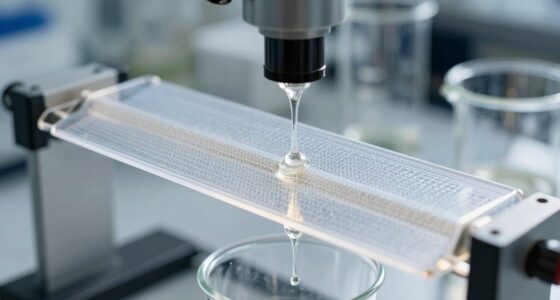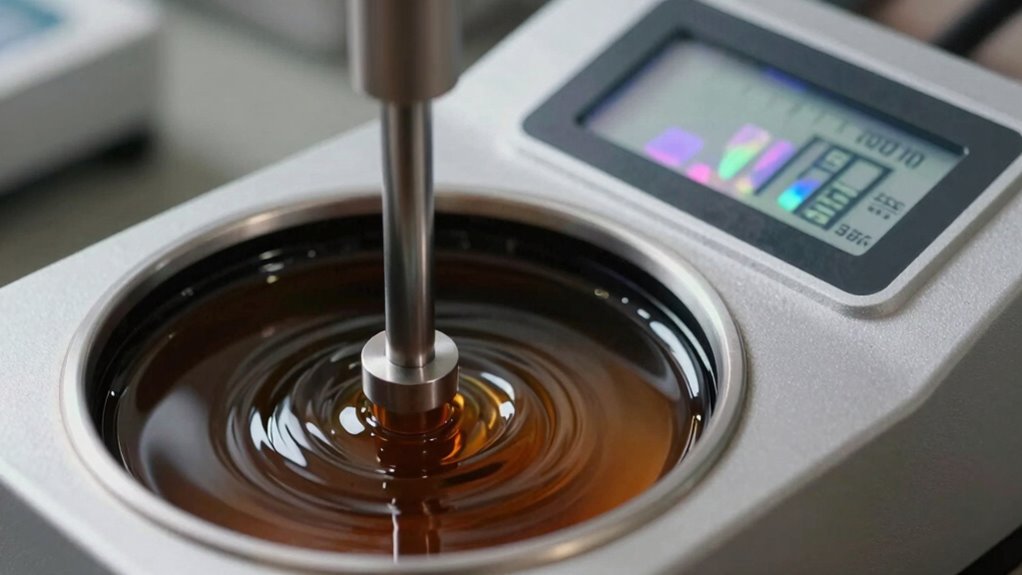

In rotational viscometers, adjusting speed settings can change your measurements because different speeds highlight various fluid behaviors, like shear thinning or turbulence. Higher speeds work better for low-viscosity liquids, while lower speeds suit thicker samples. Proper calibration, maintenance, and environmental control are vital to guarantee accurate results at each setting. If you want to understand how to optimize your measurements and avoid errors, keep exploring these essential factors.

Get school and study supplies delivered free — and shop member deals
- Fast, free delivery on millions of items
- Access to Prime Big Deal Days deals on October 6–7
- Prime Video, Amazon Music and more included
Key Takeaways
- Different speeds can reveal various fluid behaviors, such as shear thinning or turbulence.
- Adjusting speed affects measurement accuracy depending on liquid viscosity.
- Proper calibration at each speed ensures reliable and consistent viscosity readings.
- Mechanical and environmental factors influence how speed settings impact results.
- Regular maintenance prevents errors caused by wear, dirt, or mechanical fatigue at different speeds.

Have you ever wondered how scientists measure the thickness or viscosity of liquids? When you’re working with rotational viscometers, understanding the importance of speed settings becomes crucial. These devices rely on rotating spindles immersed in a sample to determine its viscosity, but the speed at which you set the instrument can significantly influence your readings. To get accurate and reliable results, you need to pay close attention to sample calibration and maintenance procedures, which ensure your viscometer functions properly across different speed settings. Proper equipment calibration and regular maintenance are essential to maintain the accuracy of your measurements over time. Sample calibration is the foundation for precise measurements. Before starting any testing, you should calibrate your viscometer using standard fluids with known viscosities. This process helps you identify if your instrument is providing accurate readings at various speeds. Calibration isn’t a one-time task; it requires regular checks, especially if you’re switching between different samples or operating under different conditions. Consistent calibration ensures that when you adjust the speed, the device responds correctly, and your viscosity measurements remain trustworthy. Additionally, understanding how environmental factors like temperature can affect calibration results is vital for accuracy. Proper environmental control during testing can help reduce variability in measurements. Regular instrument inspection is also key to catching early signs of wear or contamination that could compromise your results. Maintenance procedures are equally vital. Over time, components like the spindle, bearings, and motor can wear out or become contaminated, affecting your readings. Regular cleaning and inspection of these parts prevent errors caused by dirt, residue, or mechanical fatigue. When you perform maintenance, always follow the manufacturer’s guidelines, and make sure to check the device’s performance at different speeds afterward. Proper maintenance guarantees that your viscometer’s motor and sensor systems are functioning smoothly, so changes in speed don’t produce inconsistent results. Adjusting the speed setting isn’t just about changing the number on the dial; it’s about understanding how different speeds influence the measurement process. Higher speeds can be useful for measuring low-viscosity liquids quickly, but they might introduce turbulence or shear thinning effects in more viscous samples. Conversely, slower speeds are better suited for delicate or highly viscous fluids to prevent overstressing the sample or damaging the instrument. By calibrating your samples and maintaining your device properly, you ensure that each speed setting provides data that truly reflects the sample’s properties, rather than artifacts of equipment malfunction or measurement error. In essence, the story your rotational viscometer tells depends heavily on how well you manage calibration and maintenance. Speed settings are tools that, when used correctly, reveal the nuanced behavior of liquids. But if you neglect calibration routines or skip maintenance, your results can be misleading. Always treat your instrument as a precision tool, and your viscosity measurements will tell a more accurate story—no matter what speed you choose.
rotational viscometer with adjustable speed
As an affiliate, we earn on qualifying purchases.
As an affiliate, we earn on qualifying purchases.
Frequently Asked Questions
How Do Different Materials Affect Viscometer Speed Settings?
Different materials impact viscometer speed settings because of their viscosity measurement and material compatibility. Thicker, more viscous substances require lower speeds to guarantee accurate readings without damaging the device. Conversely, less viscous materials work well at higher speeds. You need to adjust the speed carefully to match each material’s properties, confirming precise results and protecting the viscometer from improper use or damage caused by incompatible substances.
Can Speed Settings Be Standardized Across Different Viscometer Models?
Think of standardizing speed settings across viscometer models as tuning a fleet of musical instruments. While some harmony is possible, each instrument’s unique design affects calibration consistency and user safety. You can establish guidelines, but perfect standardization is challenging. It’s essential to prioritize user safety and guarantee proper calibration, recognizing that slight variations may persist. Always verify settings for each specific device to maintain accuracy and safety.
What Are the Maintenance Requirements for Rotational Viscometers at Various Speeds?
You need to regularly perform calibration protocols to guarantee your rotational viscometer stays accurate at various speeds. Keep the instrument clean and check the spindle and bearing conditions. Proper sample preparation, such as ensuring consistent viscosity and temperature, is essential before testing at different speeds. Also, periodically verify speed accuracy, especially when switching speeds, to maintain reliable measurements and extend the device’s lifespan.
How Does Temperature Influence the Impact of Speed Adjustments?
Think of temperature as the conductor of an orchestra, guiding viscosity and stability. When temperature fluctuates, it disrupts your viscometer’s harmony, making speed adjustments less predictable. Maintaining temperature stability guarantees your readings stay consistent, regardless of speed changes. Without stable temperature, viscosity consistency suffers, and your measurements become unreliable. So, controlling temperature keeps your viscometer performing smoothly, ensuring accurate, repeatable results across different speed settings.
Are There Specific Industries That Prefer Certain Speed Ranges?
You’ll find that industry preferences often dictate preferred speed ranges for rotational viscometers, especially in sectors like pharmaceuticals, food, and cosmetics. These industries require precise measurements for product consistency, so they prioritize speed customization to match their specific viscosity testing needs. By adjusting speed settings, you guarantee accurate results tailored to your industry’s standards, helping maintain quality and compliance in your production processes.
Conclusion
As you explore the nuances of rotational viscometers, you realize that adjusting the speed settings isn’t just a simple tweak—it can dramatically alter your measurements. What secrets lie beneath these changing readings? The story is far from over. With each test, you uncover more about the fluid’s true nature, but the real revelation awaits you in the next experiment. Are you ready to turn the knob and reveal what’s hidden just beyond the surface? The next reading could change everything.
Halloween Picks
halloween
As an affiliate, we earn on qualifying purchases.