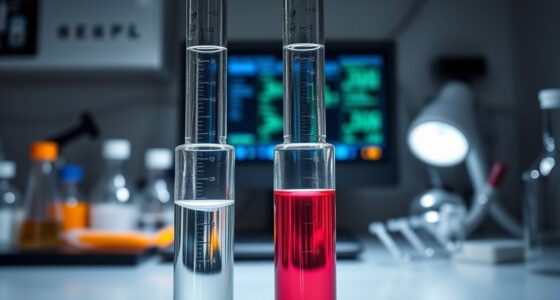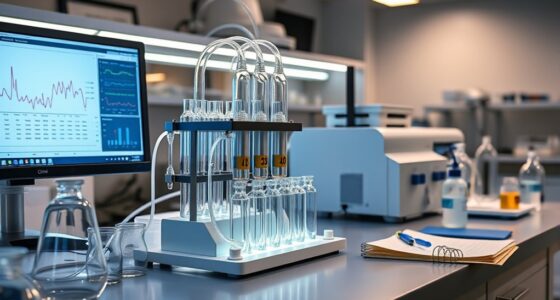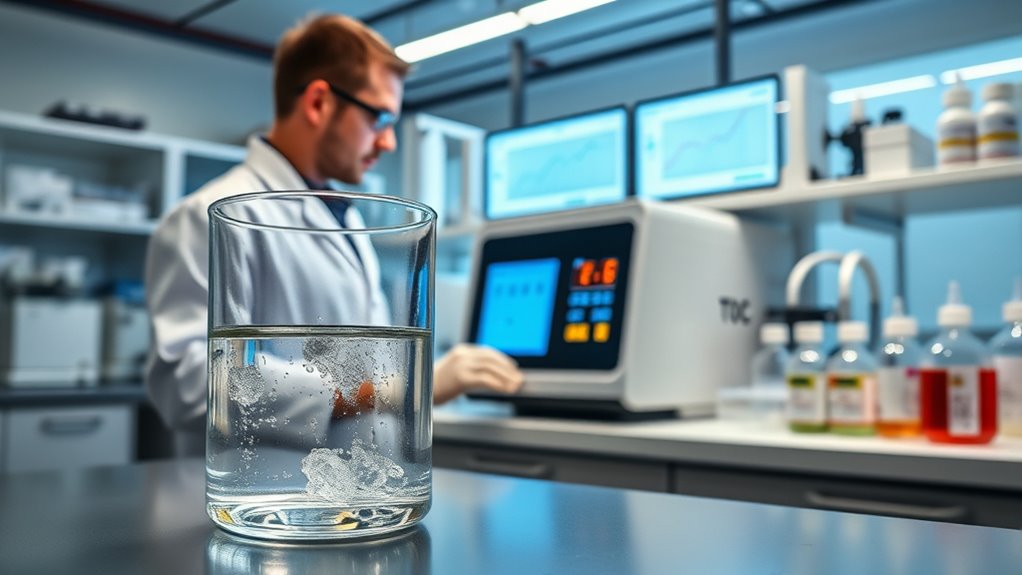

TOC analysis in pharma and water helps you measure organic carbon levels to ensure product safety and purity. It’s crucial for detecting contaminants early, meeting strict regulatory standards, and maintaining high-quality production. By evaluating organic impurities, you can prevent potential issues with drug stability or water safety. Automated testing makes the process efficient and reliable. Keep exploring to discover how TOC analysis helps you maintain compliance and safeguard public health.
Key Takeaways
- TOC analysis measures organic carbon levels to assess water and pharmaceutical ingredient purity.
- It helps ensure compliance with safety standards by detecting organic contaminants early.
- The testing involves combustion and infrared detection to quantify organic pollutants accurately.
- Regular TOC testing supports process optimization and troubleshooting in purification systems.
- It safeguards product quality and public health by preventing organic impurities from reaching consumers.
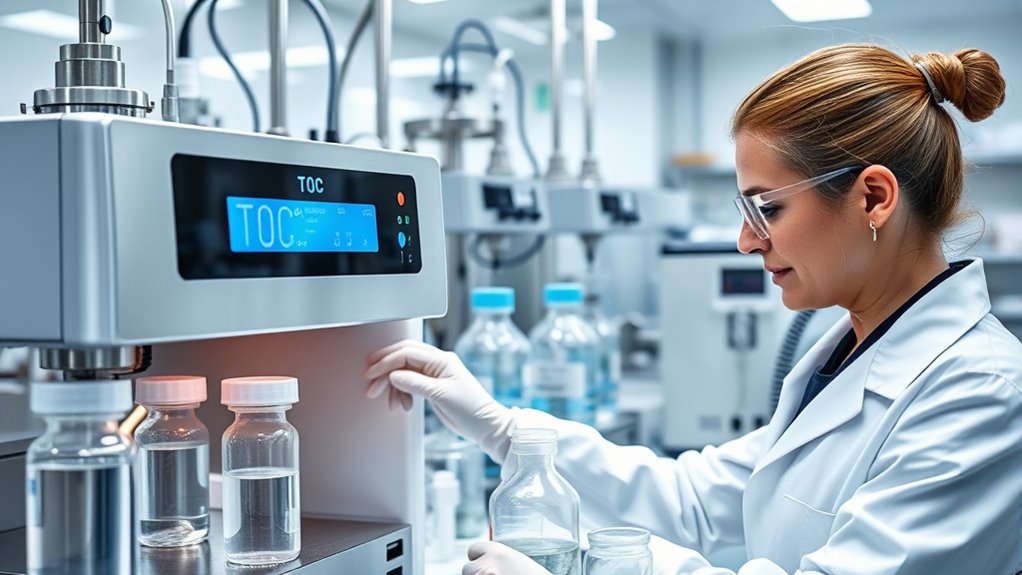
Have you ever wondered how pharmaceutical companies and water treatment facilities make certain their products are safe and pure? The answer lies in rigorous testing methods, with Total Organic Carbon (TOC) analysis playing an essential role. TOC analysis is a powerful tool used to evaluate the purity of water and pharmaceutical ingredients by measuring the amount of organic carbon present. This process helps guarantee that the products meet strict safety standards and are free from harmful contaminants. When performing a TOC test, you’re fundamentally evaluating the organic content, which can originate from natural sources or contamination during production. By accurately measuring TOC levels, you can determine whether the water or pharmaceutical product is sufficiently pure for use or needs further purification.
Purity evaluation is critical because even tiny amounts of organic contaminants can compromise product safety or efficacy. In pharmaceuticals, residual organics may interfere with drug stability or cause adverse reactions. Similarly, in water treatment, organic impurities can harbor pathogens or react with disinfectants, creating harmful byproducts. That’s why contaminant detection through TOC analysis is so essential. It provides a quantitative measure that reveals the presence of organic pollutants, allowing you to identify potential issues early. If TOC levels are higher than acceptable limits, it indicates contamination or insufficient purification, prompting further cleaning or process adjustments.
The process itself is straightforward but requires precision. You typically start with a sample of water or pharmaceutical solution and subject it to a combustion process, where organic compounds are burned at high temperatures. The resulting CO2 is then measured, often using infrared detection, to determine the amount of organic carbon present. This direct measurement makes TOC analysis highly sensitive and reliable. You can quickly identify even minute organic concentrations, ensuring that your products adhere to regulatory standards. Regular TOC testing becomes part of your quality control protocol, giving you confidence that your water and drugs are safe and meet purity standards. Incorporating automated testing can further improve accuracy and efficiency in your testing procedures.
In addition to detecting contamination, TOC analysis helps you optimize your purification processes. If you notice rising TOC levels, you can troubleshoot and refine filtration or disinfection steps to improve purity. This proactive approach minimizes the risk of releasing contaminated products to consumers. Overall, understanding and utilizing TOC analysis for purity evaluation and contaminant detection is indispensable for maintaining the integrity of pharmaceuticals and water supplies. It empowers you to uphold the highest safety standards, protect public health, and ensure compliance with industry regulations.

9-in-1 Water Quality Tester with UV Absorbance for COD/TOC/UV275, EC/TDS/Salinity/GH/S.G./Temp, Water Quality Tester for Home, RV, Hiking, Camping, Travel, Well – Tap, Purified, Ground, Seawater
- 9-in-1 Water Quality Parameters: Measures COD, TOC, UV275, TDS, EC, Salinity, GH, S.G., Temp
- UV Absorbance for Organic Testing: Detects organic pollutants using UV275 technology
- Instant Water Quality Indicator: 4-color TFT backlight shows water quality at a glance
As an affiliate, we earn on qualifying purchases.
As an affiliate, we earn on qualifying purchases.
Frequently Asked Questions
How Does TOC Analysis Improve Pharmaceutical Product Safety?
You can improve pharmaceutical product safety through TOC analysis by enabling precise environmental monitoring and quality assurance. By detecting organic contaminants early, you prevent potential product contamination and guarantee compliance with safety standards. Regular TOC testing helps you identify contamination sources quickly, maintain high product quality, and reduce risks to patients. This proactive approach keeps your manufacturing environment safe, supporting consistent, high-quality pharmaceuticals and protecting public health.
What Are the Latest Advancements in TOC Testing Technology?
Aren’t you curious about how cutting-edge technology is transforming testing? Recent advancements include innovative sensors that provide real-time, highly sensitive measurements, and automation techniques that streamline the process, reducing human error. These innovations enable faster, more accurate TOC testing, ensuring higher product safety standards. By adopting these new tools, you can enhance your lab’s efficiency and reliability, staying ahead in quality control and regulatory compliance.
How Often Should TOC Be Monitored in Water Systems?
You should monitor TOC in water systems regularly, typically daily or weekly, depending on your sampling frequency and system requirements. Consistent testing helps you detect contamination early and maintain water quality standards. If your system is critical or prone to contamination, increase sampling frequency to guarantee prompt detection. Regular monitoring allows you to take swift action, ensuring safety, compliance, and ideal performance of your water system.
What Are Common Challenges in TOC Analysis Implementation?
You’re facing hurdles with TOC analysis implementation that can feel like climbing Everest! Common challenges include meticulous sample preparation, which demands precision to avoid contamination, and guaranteeing consistent instrument calibration for accurate results. These issues can cause delays or inaccuracies. To overcome them, develop strict protocols, train staff thoroughly, and perform regular calibration checks. Staying vigilant and meticulous ensures reliable data, making your TOC analysis both efficient and trustworthy.
How Does TOC Impact Regulatory Compliance in Pharma?
You see, TOC impacts regulatory compliance in pharma by helping you meet strict standards and guarantee your water and product quality. By accurately monitoring organic carbon levels, you can consistently meet compliance metrics set by regulatory authorities. This helps you avoid violations, recalls, and penalties, demonstrating your commitment to safety and quality. Ultimately, TOC analysis supports ongoing compliance efforts, making it easier to stay aligned with evolving regulatory standards.
Conclusion
You might think that TOC analysis is just a routine test, but it plays a vital role in ensuring pharmaceutical and water purity. While some believe organic content always correlates with contamination, recent studies suggest that low TOC levels don’t guarantee safety—certain contaminants can still slip through. So, it is necessary to use TOC analysis alongside other methods, understanding that it’s a valuable tool, but not the sole indicator of water or pharma purity.