
When using probe sonicators, sample heating can sneak up on you because cavitation produces rapid, intense heat that’s hard to control. The collapsing bubbles release thermal energy, which quickly raises the temperature, especially at lower frequencies or with high power. Viscosity and sample volume also influence heat buildup. Without proper monitoring or cooling, this sudden heat can affect your results. Keep exploring to discover effective ways to prevent unexpected heating during sonication.

Get school and study supplies delivered free — and shop member deals
- Fast, free delivery on millions of items
- Access to Prime Big Deal Days deals on October 6–7
- Prime Video, Amazon Music and more included
Key Takeaways
- Intense cavitation from probe sonicators rapidly converts ultrasonic energy into heat, causing unexpected temperature increases.
- Lower ultrasonic frequencies produce stronger cavitation, leading to higher heat buildup unnoticed by users.
- Larger sample volumes and higher viscosity can amplify cavitation effects and heat generation.
- Inadequate cooling or lack of temperature monitoring allows heat to accumulate unexpectedly.
- Improper frequency selection and process settings can cause heat to sneak up during sonication.
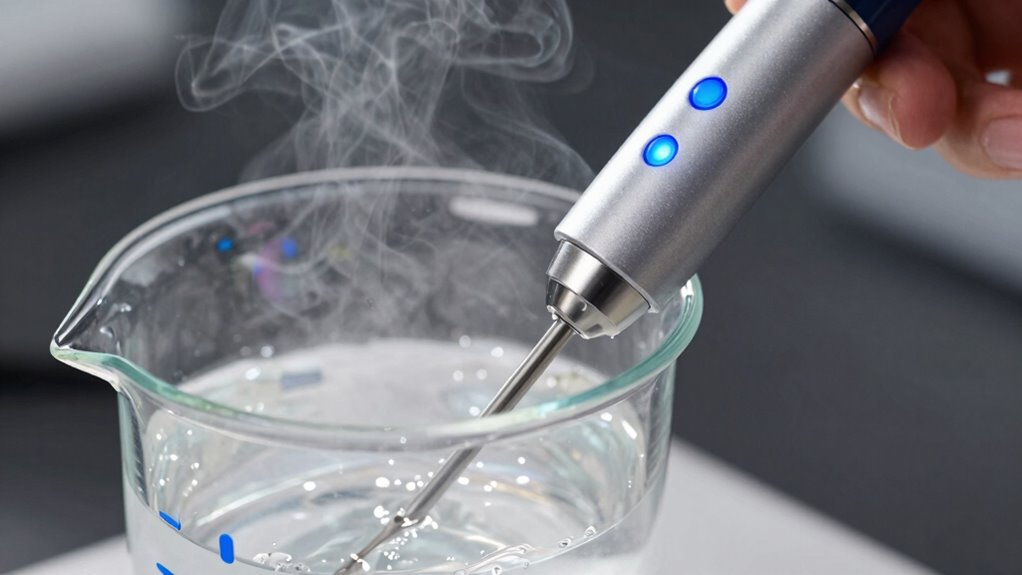
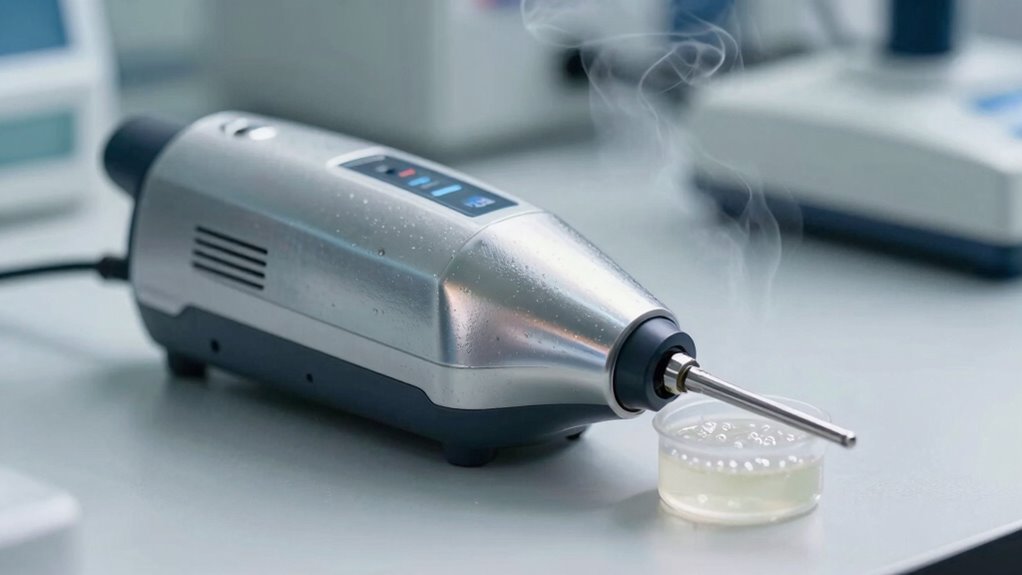
Probe sonicators are essential tools in laboratories and industrial settings for applying ultrasonic energy to liquids. They generate high-frequency vibrations that cause cavitation effects—powerful, microscopic bubbles that rapidly form and collapse within the liquid. This process is vital for cell disruption, emulsification, cleaning, and many other applications. However, while cavitation effects are highly effective, they can also be a double-edged sword, especially when it comes to sample heating. Many users find themselves surprised by how quickly their samples warm up during sonication, often without realizing that the underlying cause is linked to the ultrasonic process itself.
One key factor influencing sample heating is frequency optimization. Ultrasonic devices operate across a range of frequencies, but not all frequencies produce the same cavitation effects. At lower frequencies, cavitation tends to be more intense, resulting in more vigorous bubble formation and collapse. This increased activity leads to higher localized energy release, which can cause rapid temperature rises in the sample. Conversely, higher frequencies generate less intense cavitation, often resulting in gentler processing but also less heat buildup. Understanding and optimizing the frequency for your specific application can help manage unwanted heating. For instance, selecting a frequency that balances effective cavitation with minimal heat generation can preserve sample integrity and reduce the need for cooling measures.
Optimizing ultrasonic frequency balances cavitation effectiveness and minimizes sample heating.
Despite the importance of frequency optimization, many users overlook the role that cavitation effects play in sample heating. They might focus solely on amplitude or duration without considering how the cavitation dynamics at different frequencies influence heat production. It’s important to recognize that intense cavitation not only improves the breakdown or mixing process but also releases significant thermal energy. As bubbles collapse, they convert ultrasonic energy into heat, which can accumulate rapidly if not controlled. This is especially problematic when working with temperature-sensitive samples, such as biological tissues or delicate chemical compounds. Additionally, the liquid viscosity and sample volume can significantly alter the cavitation process, further influencing heat production during sonication. Properly Monitoring temperature and adjusting settings accordingly are crucial for maintaining sample stability. Employing advanced control features like automatic temperature regulation can also help prevent overheating.
Another important consideration is that cavitation effects can be influenced by factors like liquid viscosity and sample volume, which can further alter heat production during sonication. To prevent sample overheating, you should monitor temperature closely during sonication and adjust your settings accordingly. Using cooling systems like ice baths or water jackets can help dissipate heat. Additionally, optimizing the sonicator’s frequency setting enables you to harness the benefits of cavitation without the unwanted side effect of excessive heating. By understanding how cavitation effects are influenced by frequency, you gain better control over your process, ensuring consistent results and protecting sample integrity throughout your sonication procedures.
ultrasonic probe sonicator cooling system
As an affiliate, we earn on qualifying purchases.
As an affiliate, we earn on qualifying purchases.
Frequently Asked Questions
How Can I Prevent Sample Overheating During Sonication?
To prevent sample overheating during sonication, monitor your sample composition closely, as denser samples tend to heat more quickly. Make certain your sonicator is properly calibrated for consistent energy delivery. Use short, controlled pulses instead of continuous sonication, and keep your samples cool with ice baths or cooling systems. Regular calibration and adjusting sonication parameters help maintain safe temperatures, protecting your samples from unwanted heat damage.
What Are the Signs of Excessive Sample Heating?
You’ll notice signs of excessive sample heating through increased sample viscosity and bubbling or boiling during sonication. The sample may become cloudy or change in texture. To prevent this, make sure your equipment is properly calibrated, and monitor temperature closely. If you observe these signs, pause sonication, cool the sample, and adjust settings like power or duration to maintain safe temperatures and avoid damage.
Are There Specific Sonicator Settings to Minimize Heating?
Ever wondered how to prevent sample overheating during sonication? You should lower the ultrasonic frequency and enable power modulation settings on your sonicator. Reducing the ultrasonic frequency minimizes heat buildup, while power modulation allows the device to cycle power, preventing continuous energy transfer. These adjustments help maintain consistent sample temperatures, protecting your samples from unintended thermal effects. Always start with lower settings and monitor temperature closely for ideal results.
How Does Sample Volume Affect Heating Risk?
Your sample volume greatly influences heating risk during sonication. Smaller volumes heat up faster because there’s less space for heat dissipation, increasing the chance of overheating. Larger volumes dissipate heat more effectively, reducing this risk. To manage sample heating, always match your sonicator settings to your volume, and consider using cooling methods like ice baths or cooling jackets, especially when working with smaller sample sizes.
Can Cooling Systems Fully Prevent Sample Temperature Rise?
Cooling systems can’t fully prevent sample temperature rise because ultrasound frequency and acoustic damping influence heating. Higher ultrasound frequency generates more heat, and acoustic damping varies with sample composition, affecting heat dissipation. While cooling helps, it can’t entirely counteract these factors. You need to optimize ultrasound settings and consider sample properties to minimize temperature increases effectively, rather than solely relying on cooling systems.
Conclusion
So, next time you’re battling your sample’s sudden temperature rise, remember: probe sonicators aren’t just sonic wizards—they’re sneaky heat villains in disguise. Don’t let their quiet warmth fool you into a science meltdown. Keep a close eye on temperature, or risk turning your delicate experiment into a fiery fiasco. After all, who knew that the real enemy was a tiny probe with a big attitude? Stay vigilant, or face the fiery consequences!
Fall Picks
fall essentials
As an affiliate, we earn on qualifying purchases.