Resistivity measures water’s ability to conduct electricity, but it doesn’t reveal all about purity. Small contamination breaches or organic residues might not lower resistivity but can still affect quality. Biofilms and endotoxins are hard to detect with resistivity alone. Regular contamination control, system maintenance, and monitoring are essential to guarantee water’s safety. If you want to understand what resistivity misses and how to truly maintain water purity, keep exploring these critical factors.
Key Takeaways
- Resistivity measurements may not detect biofilms or organic residues that compromise water purity.
- Microbial activity and endotoxins require specific testing beyond resistivity to ensure contamination control.
- Small system breaches or degraded components can allow impurities without immediately affecting resistivity.
- Resistivity alone cannot identify contamination sources; comprehensive monitoring and maintenance are essential.
- Environmental cleanliness and system integrity are critical factors influencing water quality, not reflected solely by resistivity.
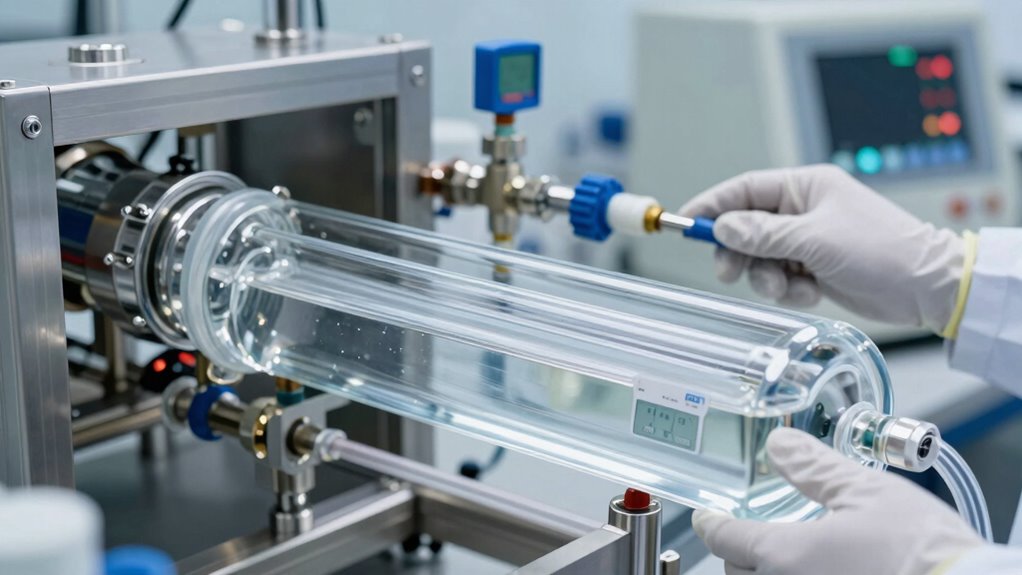
To truly ensure the purity of ultrapure water, you must prioritize contamination prevention. Regularly monitoring for microbial activity, endotoxins, and organic residues is just as important as measuring resistivity. You should implement strict protocols for system sanitization and validate cleaning procedures to eliminate biofilms and other potential sources of contamination. Keep in mind that even small breaches in cleanliness can introduce impurities that resistivity measurements won’t detect. Therefore, routine checks, sterilization, and proper handling are essential to prevent contamination from entering your water supply. Maintaining a clean environment also helps reduce the risk of biofilm formation, which can be particularly difficult to detect with resistivity alone. Incorporating contamination control strategies into your operations is crucial for maintaining consistently high water quality. Additionally, paying attention to system integrity ensures that all components function correctly, reducing the likelihood of leaks or other issues that could compromise water purity. System maintenance plays a pivotal role in maintaining ultrapure water quality. Components such as filters, reverse osmosis membranes, and UV sterilizers need routine inspection and timely replacement. Over time, these parts can become fouled or degraded, reducing their effectiveness and allowing impurities to slip into the water. Neglecting maintenance not only risks contamination but also causes system inefficiencies, increasing operational costs. Implementing preventative maintenance practices can help identify potential issues before they develop into major problems. This proactive approach often involves predictive diagnostics to assess system performance and anticipate failures. Establish a proactive maintenance schedule that includes cleaning, calibration, and component replacement to keep your system operating at peak performance. This approach minimizes downtime and ensures the water quality stays consistent over time. Regular system monitoring can help detect early signs of component failure before they impact water purity.

Express Water Whole House Water Filter System, Ultimate Protection, 3-Stage
- Whole House Water Filtration: 3-stage process for entire home
- Reduces Heavy Metals & Contaminants: Chlorine, lead, arsenic, PFAs, and more
- Protects Pipes & Appliances: Prevents scale buildup and damage
As an affiliate, we earn on qualifying purchases.
As an affiliate, we earn on qualifying purchases.
Frequently Asked Questions
How Often Should Ultrapure Water Systems Be Maintained?
You should perform maintenance on your ultrapure water system regularly, following the manufacturer’s recommended maintenance schedules. It’s crucial to schedule routine system calibration and inspections at least quarterly or as specified. Regular upkeep helps prevent contamination and guarantees peak performance. Keep an eye on filters, membranes, and sensors, and replace or service components promptly, so your system stays reliable and produces ultrapure water consistently.
What Are Common Contaminants Not Detected by Resistivity?
Think of resistivity as a mirror that reflects certain details, but not everything. Organic compounds and particulate matter are like hidden shadows, often invisible to resistivity tests. These contaminants don’t change water’s electrical conductivity considerably, so they slip past detection. You need additional methods like filtration and organic-specific testing to catch these invisible threats, ensuring your ultrapure water truly meets the purity standards.
How Does Temperature Affect Water Resistivity Readings?
Temperature notably affects water resistivity readings because resistivity varies with temperature. As temperature increases, resistivity decreases, and vice versa. To guarantee accurate measurements, you need proper temperature calibration of your resistivity meters. Without calibration, resistivity variation due to temperature changes can lead to misleading results. Always measure and compensate for temperature effects to maintain reliable ultrapure water quality assessments.
What Are the Alternatives to Resistivity for Water Quality?
You can assess water quality using alternatives like measuring Total Organic Carbon (TOC) to detect organic impurities, or employing ion exchange techniques to identify specific ion contaminants. These methods provide insights into organic impurities and ionic content that resistivity alone can’t reveal. By combining these approaches, you get a thorough view of water purity, ensuring your ultrapure water meets strict quality standards.
Can Resistivity Indicate Microbial Contamination Levels?
You might be surprised, but resistivity isn’t a reliable indicator of microbial contamination. While 99.9% of microbes are too small to affect electrical properties, microbial indicators like ATP or plate counts are much better at revealing biological contamination. Resistivity measures ion concentration, not microorganisms. So, if you’re concerned about biological contamination in ultrapure water, rely on microbial indicators rather than resistivity, which only gauges ionic purity.
Conclusion
Just like a clear lake hides hidden depths beneath its surface, ultrapure water systems can seem pure with high resistivity alone. But don’t be fooled—resistivity doesn’t reveal everything. To truly guarantee water purity, you need to look beyond the numbers and consider other factors like organic contaminants and particle counts. Stay vigilant and dive deeper, because what resistivity misses can make all the difference in your system’s performance and your product’s safety.