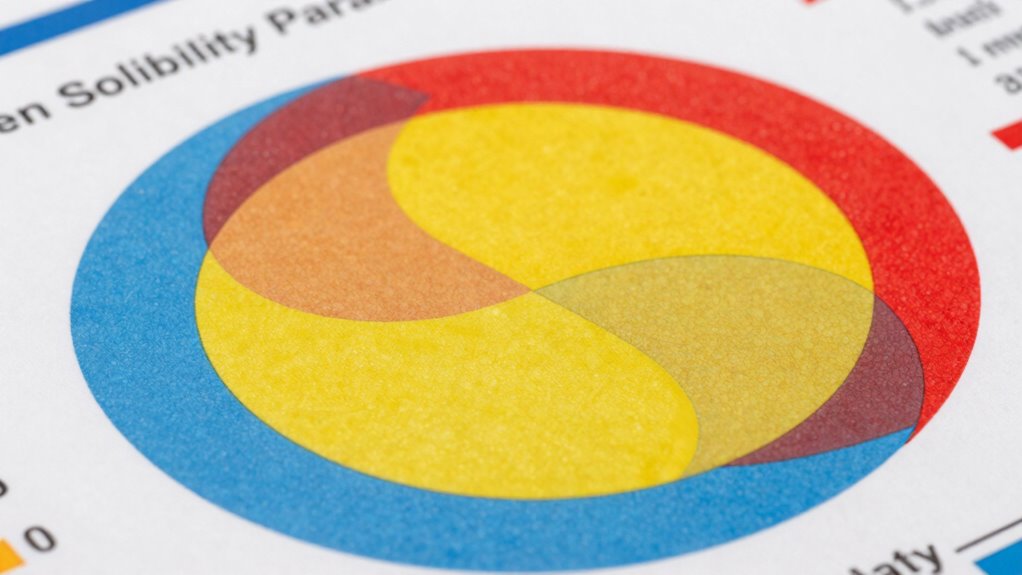
Hansen Solubility Parameters help you predict solvent and solute compatibility more accurately than traditional trial-and-error methods. They consider dispersion, polar, and hydrogen bonding forces, giving you a clear picture of molecular interactions. This allows you to select suitable solvents, optimize formulations, and reduce development time and costs. With HSPs, you can make smarter decisions early in the process, and you’ll discover how this powerful tool can improve your formulation strategy as you explore further.
Play games included with Prime
Start a Prime free trial and play with Amazon Luna on your devices.
As an affiliate, we earn on qualifying purchases.
Key Takeaways
- HSPs provide a three-dimensional molecular interaction map to predict solvent-solute compatibility more reliably.
- They enable targeted solvent selection, reducing extensive testing and accelerating formulation development.
- HSPs improve prediction accuracy by considering dispersion, polar, and hydrogen bonding forces.
- Using HSPs helps identify potential compatibility issues early, saving time and costs.
- They support innovation by allowing confident exploration of new ingredients and formulations.
You can think of HSPs as a three-dimensional map that describes the interactions between molecules. These include dispersion forces, polar interactions, and hydrogen bonding. By comparing the HSP values of a solvent and a solute, you can determine how likely they are to be compatible. When the parameters are close, dissolution tends to be successful; if they are far apart, the solute probably won’t dissolve well. This approach lets you predict solubility more reliably than traditional methods, enabling you to make smarter choices during product development. Understanding the molecular interactions involved can help you optimize formulations even further. Using HSPs for solubility prediction impacts your formulation process by reducing guesswork. Instead of testing dozens of solvents, you can narrow down your options based on their HSP values. This targeted approach helps you identify the best solvent or mixture for your specific application, whether you’re working on pharmaceuticals, paints, or cosmetics. It also allows you to fine-tune formulations to enhance stability, performance, and shelf life. When you understand how different components interact at a molecular level, you’re in a stronger position to engineer formulations that perform consistently and meet customer expectations. Moreover, HSPs facilitate innovation. When you explore new materials or ingredients, referencing their solubility parameters helps you anticipate compatibility issues before investing in costly experiments. This predictive power accelerates development timelines and minimizes waste. Additionally, understanding the specific contributions of dispersion, polar, and hydrogen bonding forces can further refine your predictions. As you gain experience with HSPs, you’ll notice that they make the entire formulation process more logical and systematic. Incorporating scientific principles like HSPs into your workflow can significantly improve the accuracy of your predictions and streamline decision-making in product development.
Hansen Solubility Parameters kit
As an affiliate, we earn on qualifying purchases.
As an affiliate, we earn on qualifying purchases.
Frequently Asked Questions
How Do Hansen Parameters Compare to Other Solubility Prediction Methods?
You’ll find Hansen parameters offer improved prediction accuracy over traditional solubility theories like Hildebrand or Hildebrand-Scott. Unlike other methods, Hansen’s approach considers three distinct interactions—dispersion, polar, and hydrogen bonding—making it more precise in predicting compatibility between materials. This thorough view helps you better anticipate solubility behavior, especially for complex mixtures, reducing trial-and-error and saving time in formulation or material selection processes.
Can Hansen Parameters Be Used for Complex or Multi-Component Mixtures?
Hansen parameters act like a compass guiding you through complex waters—yes, they can be used for multi-component mixtures. They help predict polymer compatibility and multi-component interactions, but their accuracy diminishes as systems grow more intricate. For complex blends, you might need additional modeling or experimental validation. Still, Hansen parameters provide a valuable starting point to understand and navigate the interactions within multi-component systems.
What Are the Limitations of Hansen Solubility Parameters?
You should be aware that Hansen solubility parameters have limitations, especially when it comes to solubility challenges. They rely on simplified models that may not accurately capture complex interactions in multi-component systems, leading to potential parameter accuracy issues. These parameters work well for straightforward substances but can fall short when predicting compatibility in intricate mixtures, so always verify with experimental data for more reliable results.
How Are Hansen Parameters Experimentally Determined?
You determine Hansen parameters through experimental techniques that observe polymer interactions and surface tension. Using methods like solvent blending, you measure how well a solvent dissolves a polymer, indicating compatibility. Surface tension measurements help assess the solvent’s affinity for the polymer. These experiments involve delicate adjustments and precise readings, revealing the dispersive, polar, and hydrogen bonding components of the Hansen parameters, which guide predictions of solubility and compatibility effectively.
Are Hansen Parameters Applicable to Non-Organic Solvents?
Hansen parameters mainly apply to organic solvents, but they have limitations with inorganic interactions. You might find them less accurate because these parameters don’t fully account for ionic or metallic bonds common in inorganic substances. While you can try to adapt Hansen parameters, remember their limitations. For inorganic solvents, exploring other models that consider ionic interactions offers better predictions of compatibility, especially where traditional Hansen parameters fall short.
Conclusion
Think of Hansen solubility parameters like a matchmaking service for materials—you just need to find the perfect pair. When I first used them to predict solvent compatibility, it was like discovering a secret recipe that always turns out right. With these parameters, you don’t have to guess or waste resources. Instead, you can confidently mix and match, knowing you’ve got the perfect fit. It’s your shortcut to smoother, more reliable results every time.
Fall yard work Picks
leaf blowers
As an affiliate, we earn on qualifying purchases.