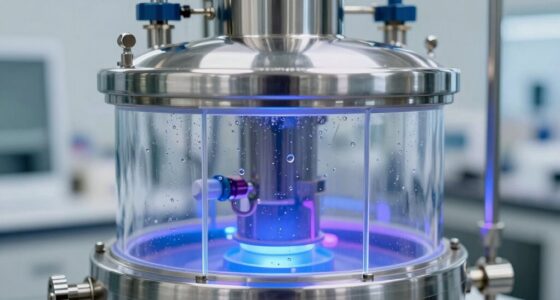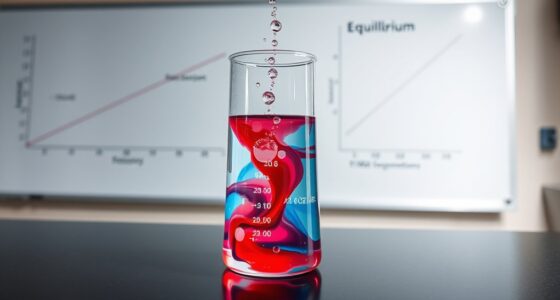
Your flocculants can fail before they start if the make-down system isn’t compatible with your chemicals, leading to premature precipitation or deactivation. If the system design is poor or maintenance is neglected, residual chemicals may clog or react unexpectedly. Environmental factors and handling mistakes also compromise performance. Proper system setup, regular upkeep, and safety protocols are essential. Keep exploring to discover how to guarantee your make-down process keeps your flocculants effective from the start.

Prime made for students and young adults
- Fast, free delivery for dorm and study essentials
- Prime Video and Amazon Music included
- Member-only deals
Key Takeaways
- Incompatible chemicals in the make-down system can deactivate or cause premature precipitation of flocculants.
- Poor system design or inadequate maintenance leads to residual chemicals that hinder proper flocculant activation.
- Chemical reactions due to improper handling or cleaning can cause clogging and reduce flocculant effectiveness.
- Environmental factors and waste management issues can interfere with proper dispersion and performance.
- Safety protocols and correct chemical selection prevent premature reactions and ensure reliable flocculant activation.
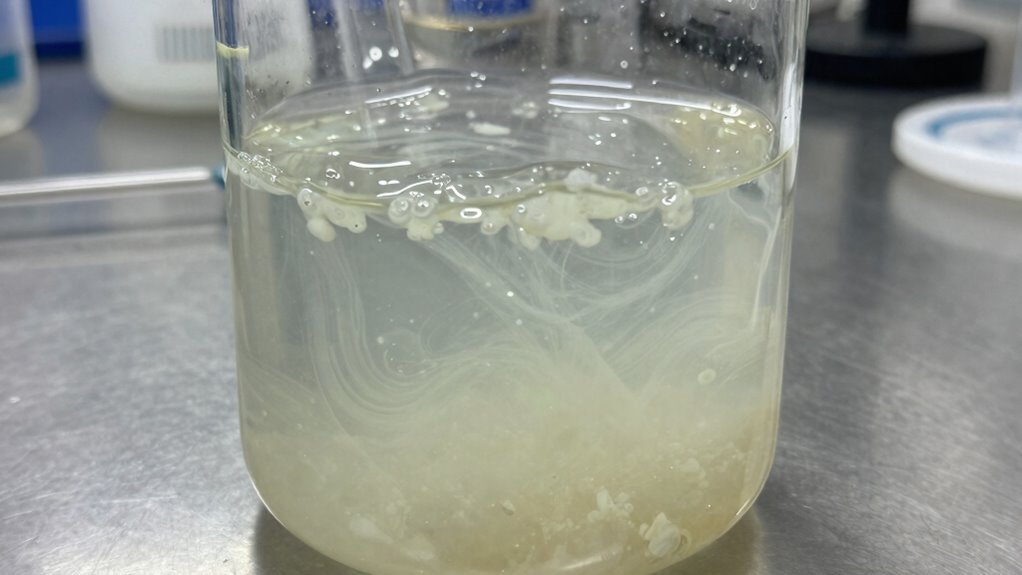
One key reason flocculants fail is due to improper chemical compatibility. When selecting a make-down system, you need to regard the specific chemicals involved. Not all polymers or additives are compatible with every system, and incompatible materials can lead to reactions that deactivate the flocculant or cause it to precipitate prematurely. If your system isn’t designed to handle certain chemicals, it increases the risk of failure right from the start. This underscores the importance of choosing a make-down system that’s tailored to your chemical profile, assuring the flocculants remain active and effective when introduced into your process. Additionally, chemical compatibility plays a crucial role in preventing adverse reactions that compromise performance. Proper system design and ongoing maintenance help prevent chemical interactions that could hinder flocculant activation. Environmental impact also plays a significant role in the success of make-down systems. If your system isn’t environmentally friendly or is incompatible with eco-conscious regulations, you might experience issues with flocculant performance. For example, poorly designed systems can generate excessive waste or emissions, which interfere with the proper dispersion and activation of the flocculants. Additionally, systems that don’t minimize chemical waste or prevent excess runoff can cause contamination, further reducing the efficacy of your flocculants before they even get a chance to work. Choosing a system with a focus on environmental sustainability helps guarantee your operations remain compliant and reduces the risk of flocculant failure caused by environmental factors. Furthermore, the design and maintenance of your make-down system influence chemical compatibility and environmental impact. If your system isn’t properly cleaned or maintained, residual chemicals can interact with new batches, causing clogging or chemical reactions that hinder flocculant performance. Regular calibration and cleaning prevent buildup and ensure the system’s components are compatible with the latest chemicals you’re using. This, in turn, maintains the integrity of the flocculants during dilution and prevents them from failing prematurely. Proper system maintenance ensures consistent performance and helps extend the lifespan of your equipment, ultimately supporting reliable flocculant activation. Incorporating chemical safety protocols can also help mitigate risks associated with incompatible chemicals and safeguard the entire process.
chemical make-down system for flocculants
As an affiliate, we earn on qualifying purchases.
As an affiliate, we earn on qualifying purchases.
Frequently Asked Questions
How Do Temperature Variations Affect Flocculant Performance?
Temperature variations can substantially impact flocculant performance by affecting temperature stability and chemical interactions. When temperatures fluctuate, the effectiveness of the flocculant may decrease because it can alter the chemical properties and hinder proper agglomeration of particles. You’ll notice poorer floc formation or slower settling times. Maintaining consistent temperatures ensures ideal chemical interactions, helping your system work efficiently and preventing flocculant failure before it even begins.
What Are Common Signs of Flocculant Failure Early On?
You notice signs of flocculant failure early on when you see poor floc formation, uneven settling, or increased turbidity. These issues often stem from improper chemical interactions or equipment calibration problems. If the chemicals aren’t reacting as intended or the equipment isn’t calibrated correctly, the flocculants won’t perform efficiently. Regularly checking chemical compatibility and calibrating your systems helps prevent these early signs of failure.
Can Polymer Make-Down Systems Be Customized for Specific Applications?
Yes, you can customize polymer make-down systems for specific applications. By focusing on polymer customization, you guarantee the formulation meets your unique needs. Using application-specific formulations allows you to optimize performance, improve efficiency, and reduce failures. Tailoring the system to your precise requirements helps achieve better flocculation results and ensures compatibility with your process conditions. Customization ultimately leads to more reliable and effective polymer make-down solutions.
How Do pH Levels Influence Flocculant Effectiveness?
pH levels markedly influence flocculant effectiveness because pH imbalance can alter chemical interactions between the flocculant and particles. When pH is too high or low, it weakens the flocculant’s ability to bind particles properly, reducing sedimentation efficiency. You need to monitor and adjust pH carefully to optimize chemical interactions, ensuring the flocculant works effectively from the start and prevents system failure.
What Maintenance Practices Ensure Optimal System Operation?
Imagine a finely tuned orchestra—each instrument precise and synchronized. Regular chemical dosing and equipment calibration are your conductors, ensuring system harmony. You must routinely check and adjust dosing pumps, clean filters, and verify calibration to prevent flocculant failure before it starts. These maintenance practices keep the system running smoothly, ensuring peak performance and preventing costly downtime. Consistent attention to detail guarantees your polymer make-down system operates at maximum efficiency.
Conclusion
So, don’t get discouraged if your polymer make-down system isn’t working as planned. It’s common for flocculants to fail early, but understanding the root causes helps you troubleshoot effectively. Remember, proper dosing, water chemistry, and equipment maintenance make all the difference. Even if it seems complex, staying proactive and informed guarantees your system runs smoothly. With a little patience and the right adjustments, you’ll see better results and avoid costly failures.
Fall Picks
fall essentials
As an affiliate, we earn on qualifying purchases.