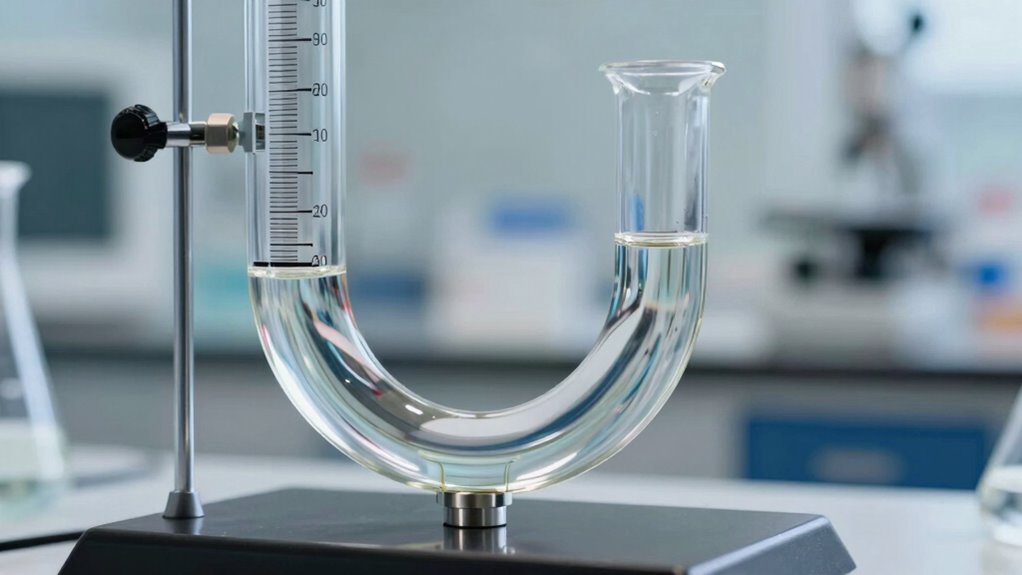

A density meter based on the oscillating U-tube principle works by measuring how quickly a U-shaped tube filled with your sample vibrates. When the sample’s density changes, it affects the tube’s vibrational frequency. The device quickly converts these vibrations into a density reading. To keep the measurements accurate, proper calibration and material selection are essential. If you want to understand the details behind how it all works, there’s plenty more to uncover.

Get school and study supplies delivered free — and shop member deals
- Fast, free delivery on millions of items
- Access to Prime Big Deal Days deals on October 6–7
- Prime Video, Amazon Music and more included
Key Takeaways
- Measures density by analyzing vibrational frequency changes in a U-shaped tube filled with the sample.
- The sample’s mass and volume affect the tube’s oscillation, correlating frequency with density.
- Calibration with known reference materials ensures accurate and reliable measurements.
- The U-tube is made from inert, stable materials like stainless steel or glass for chemical compatibility.
- Proper maintenance and material knowledge are essential for long-term accuracy and device performance.

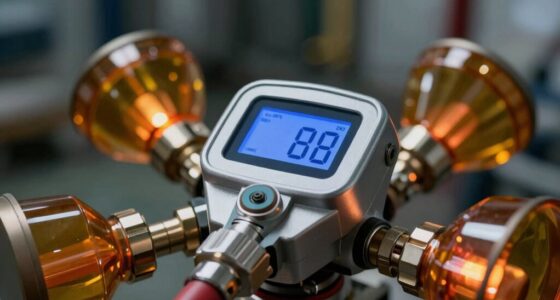
Have you ever wondered how scientists and engineers measure the density of a substance accurately? It’s a fascinating process that relies on precise instruments, and one of the most common tools is the density meter based on the oscillating U-tube principle. This device measures density by analyzing how a U-shaped tube vibrates when filled with a sample. When you introduce a material into the tube, its mass and volume influence the tube’s vibration frequency, allowing you to calculate the density with high precision. But achieving reliable results depends heavily on proper calibration techniques and material selection. Additionally, understanding the oscillating U-tube principle is crucial for troubleshooting and optimizing your measurements. Calibration techniques are essential because they guarantee your density meter provides accurate readings. Typically, calibration involves using reference materials with known densities. By measuring these standards, you can adjust the device to correct any deviations. Regular calibration is indispensable, especially if you’re working in environments with temperature fluctuations or after any maintenance. Some advanced density meters incorporate automated calibration features, making the process quicker and more consistent. Proper calibration minimizes errors and guarantees your measurements reflect the true density of your samples. Material selection also plays a critical role in the accuracy of your density measurements. The U-tube itself must be made from materials that won’t react with or absorb the sample, which could distort the results. Common choices include stainless steel and glass because they are chemically inert and stable under various conditions. When selecting materials, consider the temperature range and chemical compatibility of your samples. If the tube material reacts with the sample or affects its vibration, your measurements could become unreliable. Ensuring the right material selection minimizes these risks and helps maintain the integrity of your readings over time. When using a density meter based on the oscillating U-tube principle, you’ll notice that the device measures the frequency of oscillation to determine density. The core idea is that as the sample’s density changes, so does the vibrational frequency of the U-tube. By applying the correct calibration techniques and choosing appropriate materials, you enhance the accuracy and repeatability of your measurements. This method is not only precise but also quick, making it ideal for laboratories and industrial processes where knowing the exact density is essential. Understanding the material properties is also vital for selecting the appropriate tube material and ensuring long-term measurement stability. Proper maintenance and understanding of instrument calibration can significantly extend the lifespan of your density meter and ensure consistent performance over time.
digital density meter oscillating U-tube
As an affiliate, we earn on qualifying purchases.
As an affiliate, we earn on qualifying purchases.
Frequently Asked Questions
How Accurate Are Oscillating U-Tube Density Meters?
Oscillating U-tube density meters are highly accurate, often within 0.0001 g/cm³, when properly calibrated. You need to follow precise calibration procedures regularly to maintain this accuracy, especially if your measurements are critical. Sensor durability is also essential; a well-maintained sensor resists wear and environmental factors, ensuring consistent readings over time. Proper care and calibration help you achieve reliable, precise measurements with these devices.
What Liquids Can Be Measured With Oscillating U-Tube Meters?
Like a chameleon changing colors, oscillating U-tube density meters adapt to measure various liquids. You can measure liquids such as water, alcohol, oil, and acids, provided you consider material compatibility. To guarantee accuracy, follow proper calibration procedures and check that the materials of the U-tube are compatible with your liquids. This way, you get reliable readings across different fluid types.
How Does Temperature Affect Measurement Accuracy?
Temperature affects measurement accuracy because thermal expansion changes the U-tube’s dimensions, leading to potential errors. As temperature rises, the tube expands, which can shift the oscillation frequency and distort your readings. To maintain calibration stability, you need to guarantee these thermal effects, often by using temperature compensation techniques or calibrating the device at specific temperatures. This ensures your measurements stay precise despite temperature variations.
Are Oscillating U-Tube Density Meters Suitable for Industrial Use?
Yes, oscillating U-tube density meters are suitable for industrial use, provided you follow proper calibration procedures and carefully consider installation considerations. Regular calibration ensures measurement accuracy, especially in demanding environments. Proper installation, including secure mounting and temperature stabilization, helps maintain reliability. These meters are robust and precise, making them ideal for continuous industrial processes, but make sure you adapt calibration and installation to your specific industrial conditions for maximum performance.
What Maintenance Is Required for These Density Meters?
Think of your density meter as a delicate instrument needing gentle care. You should regularly perform calibration procedures to guarantee accuracy, much like tuning an instrument before a concert. Keep an eye on environmental considerations—protect it from extreme temperatures, vibrations, and humidity. Clean the U-tube gently and check for leaks. Proper maintenance guarantees reliable measurements, extending your device’s lifespan and keeping your industrial process running smoothly.
Conclusion
Now that you understand how the oscillating U-tube measures density, it’s like having a tiny, precise scale inside your process. Just as a clock keeps perfect time amidst chaos, this meter provides steady, accurate readings in complex environments. So, while it may seem simple—just a tube—it plays an essential role, balancing precision with practicality. In the world of measurement, it’s the quiet hero that keeps everything running smoothly, one oscillation at a time.
Halloween Picks
halloween
As an affiliate, we earn on qualifying purchases.