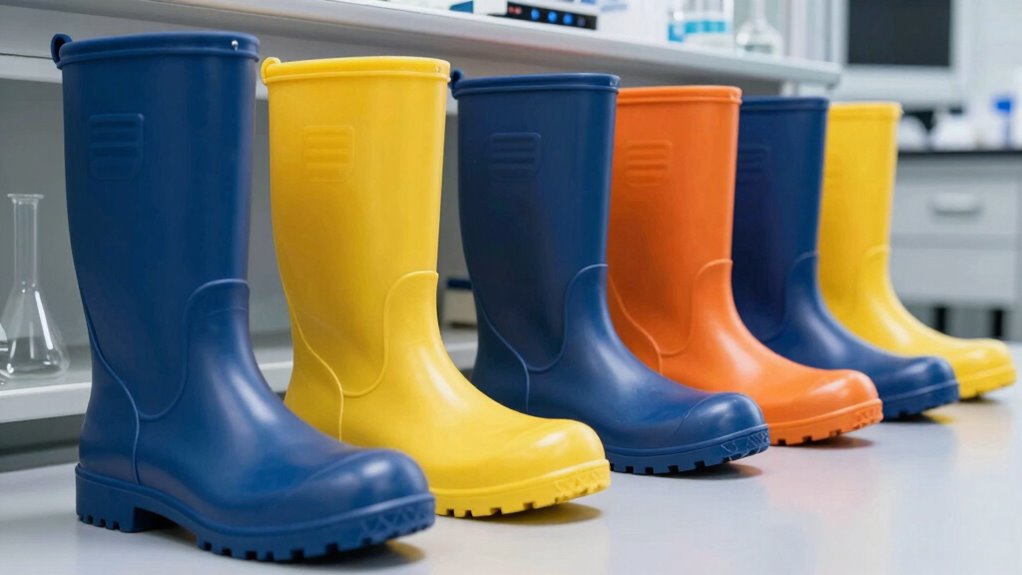
Choosing chemical-resistant boots for lab work means matching the boot’s material and coverage to the chemicals and splash risks in your specific environment. The Honeywell Servus XTP is my best overall pick in this lineup for buyers seeking a tall safety boot, while the Dunlop White PVC Plain Toe stands out for a simpler, unlined waterproof option and the Cordova Hazmat/Nuke Boot for its natural-rubber construction. The main tradeoffs are chemical compatibility, toe protection, comfort, and how much coverage you need—not a single boot being right for every lab. The Hazproof 82330 choices share a model number and differ here by size, so getting the fit right matters as much as choosing a style. Read on for the full comparison and guidance on selecting boots for your workplace’s documented hazards.

Get school and study supplies delivered free — and shop member deals
- Fast, free delivery on millions of items
- Access to Prime Big Deal Days deals on October 6–7
- Prime Video, Amazon Music and more included
Key Takeaways
The Honeywell Servus XTP ranks first because it combines a tall boot format with safety-focused construction, making it the most balanced choice in this particular lineup.
The Dunlop White PVC Plain Toe prioritizes simplicity: it offers a waterproof, chemical-resistant tall boot profile, but does not list a protective toe in its product name.
The Dunlop Goliath adds a steel toe, a useful distinction for work areas with impact or compression hazards, though chemical compatibility still needs confirmation for the substances handled.
The Cordova boot is the material outlier with 0.75 mm natural rubber and an unlined design; buyers should verify suitability against the lab’s chemicals and any required protective standards.
The four Hazproof 82330 listings are size-specific entries rather than clearly distinct boot designs, so the comparison favors fit and verified specifications over assuming each size has different protection.
| Honeywell Servus XTP Chemical Resistant Men’s Safety Hi Boot, Size 12, Black/Yellow/Grey |  | Best for Everyday Industrial Lab Work | Material: PVC and steel | Sole material: PVC | Shaft height: 15 inches | VIEW ON AMAZON | See Our Full Breakdown |
| Hazproof Boots 82330-13 |  | Best for Certified Hazmat Protection | Material: Polymer | Size range: Up to size 16 | Color: Orange/cream | VIEW ON AMAZON | See Our Full Breakdown |
| Hazproof Boots 82330-12 |  | Best for Seamless Liquid Protection | Material: Polymer | Weight: 7 pounds | Shaft height: Calf high | VIEW ON AMAZON | See Our Full Breakdown |
| Hazproof Boots 82330-9 | | Best for Buyers Who Want a Lighter Hazproof Variant | Material: Special polymer | Weight: 6 pounds | Shaft height: Calf high | VIEW ON AMAZON | See Our Full Breakdown |
| Dunlop White PVC Plain Toe Rubber Boots for Men & Women – Waterproof, Chemical Resistant, Slip Resistant, Tall Shaft, Made in USA |  | Best for Slip-Resistant Wet Floors | Material: PVC | Sole material: Polyurethane | Shaft height: Knee high | VIEW ON AMAZON | See Our Full Breakdown |
| Dunlop Goliath Steel Toe Waterproof Work Boots for Men & Women – Black, Size 6 |  | Best for Impact Protection | Material: PVC, Polyblend®, and steel | Shaft material: PVC | Insole material: Memory foam | VIEW ON AMAZON | See Our Full Breakdown |
| Cordova Hazmat/Nuke Boots, 0.75 mm Thickness, Natural Rubber, Yellow, Unlined, 12-Inch, Ribbed Sole, X-Large (Sizes 11-12.5) |  | Best for Large Sizes and Chemical Splash Tasks | Material: Natural rubber latex | Thickness: 0.75 mm | Color: Yellow | VIEW ON AMAZON | See Our Full Breakdown |
| Hazproof Boots 82330-11 | | Best for Hazmat Response | Material: Rubber | Made in: USA | Style: Work boot | VIEW ON AMAZON | See Our Full Breakdown |
| chemical resistant boots for lab | Material | Shaft height | Toe protection | Sole material |
|---|---|---|---|---|
| Honeywell Servus XTP Chemical | PVC and steel | 15 inches | Steel toe | PVC |
| Hazproof Boots 82330-13 | Polymer | Calf high | Steel toe | — |
| Hazproof Boots 82330-12 | Polymer | Calf high | Steel toe | — |
| Hazproof Boots 82330-9 | Special polymer | Calf high | Steel toe | — |
| Dunlop White PVC Plain Toe Rub | PVC | Knee high | Steel toe | Polyurethane |
| Dunlop Goliath Steel Toe Water | PVC, Polyblend®, and steel | — | — | PVC |
| Cordova Hazmat/Nuke Boots | Natural rubber latex | — | — | — |
| Hazproof Boots 82330-11 | Rubber | — | — | Ethylene vinyl acetate |
More Details on Our Top Picks
Honeywell Servus XTP Chemical Resistant Men’s Safety Hi Boot, Size 12, Black/Yellow/Grey
I’d put the Honeywell Servus XTP ahead of the Hazproof models for buyers who want a practical, tall PVC boot for routine wet or chemical-exposure tasks rather than a hazmat-response boot. Its 15-inch shaft and water-resistant construction add coverage against splashes, while the steel toe protects against workplace impacts. The slip-on design is straightforward when boots need to be removed between work areas. Compared with the Hazproof Boots 82330-12, however, the Servus XTP has less documented specialized protection: the supplied details do not list NFPA 1991 or permeation-test certifications. Its 5.7-pound weight and PVC construction also mean less comfort during long shifts and limited breathability. I’d choose it for controlled, routine work only after checking its chemical compatibility against the lab’s specific substances.
Pros:- 15-inch shaft provides coverage above the ankle for splash-prone tasks.
- Steel toe adds protection against impact hazards.
- PVC construction is described as chemical-resistant and water-resistant.
- Slip-on closure makes the boot easy to put on and remove.
Cons:- At 5.7 pounds, it may contribute to fatigue during extended wear.
- PVC offers limited breathability.
- No specific chemical-permeation certification is listed in the supplied details.
Best for: Lab and industrial staff who need a tall, steel-toe PVC boot for routine wet work and splash exposure, with chemical compatibility confirmed for their materials.
Not ideal for: Hazmat-response teams or staff handling chemicals that require documented permeation testing; the supplied product details do not list the specialized standards shown for Hazproof Boots 82330-12.
- Material:PVC and steel
- Sole material:PVC
- Shaft height:15 inches
- Shaft circumference:22 inches
- Toe protection:Steel toe
- Water resistance:Water-resistant
- Closure:Slip-on
- Weight:5.7 pounds
Our verdict“Choose the Servus XTP for routine splash-prone work when its chemical compatibility fits your lab, but choose a certified Hazproof model when documented hazmat protection is required.”
Hazproof Boots 82330-13
For buyers whose work calls for documented hazmat protection, the Hazproof Boots 82330-13 have the strongest stated standards package in this group. The supplied details list NFPA 1991, ASTM F739 permeation resistance, electrical-hazard protection, and tests covering impact, puncture, and slip resistance. That makes this a more defensible choice for hazardous-material cleanup than the Honeywell Servus XTP, whose supplied specifications do not name comparable permeation standards. A cushioned EVA midsole and larger foot area are intended to improve comfort, though they do not remove the tradeoff of a heavy, bulky boot. The calf-high polymer design and orange-and-cream color also suit response work better than a low-profile everyday lab shoe. I’d still match the listed standards to the actual chemicals and site rules before relying on it.
Pros:- NFPA 1991 and ASTM F739 are listed for chemical-protection testing.
- Steel toe and electrical-hazard protection address additional workplace risks.
- Cushioned EVA midsole and larger foot area are designed for comfort.
- The supplied standards also cover impact, puncture, and slip resistance.
Cons:- Heavy, bulky construction may be tiring during prolonged wear.
- Calf-high protective styling is less suited to routine indoor lab movement.
- The supplied information does not state a specific weight or detailed fit measurements.
Best for: Hazmat-response and cleanup personnel who need chemical-permeation documentation alongside impact, puncture, and electrical-hazard protection.
Not ideal for: Lab staff seeking a light, flexible boot for routine bench work or frequent walking; this model is described as heavy and bulky.
- Material:Polymer
- Size range:Up to size 16
- Color:Orange/cream
- Toe protection:Steel toe
- Shaft height:Calf high
- Chemical standard:NFPA 1991
- Permeation standard:ASTM F739
- Midsole:Cushioned EVA
- Electrical hazard protection:ASTM F2413 M/I/C/EH listed
Our verdict“Pick this Hazproof model for response work where its listed certifications match the hazard plan, not for lightweight everyday laboratory wear.”
Hazproof Boots 82330-12
I’d favor the Hazproof Boots 82330-12 when liquid exclusion and specified material testing matter more than keeping footwear light. Its seamless, liquid-proof construction limits obvious entry points, and the supplied specifications list NFPA 1991 alongside ASTM F739 and ASTM F1001. Steel-toe and electrical-hazard protection extend its role beyond chemical resistance alone. Compared with the Hazproof Boots 82330-9, this version provides more detail about its testing, including flame and puncture resistance, which helps buyers check suitability against a written hazard plan. The tradeoff is substantial: it weighs 7 pounds, and its calf-high protective build is more specialized than a routine PVC boot such as the Honeywell Servus XTP. I’d reserve it for work that justifies the bulk and verify the specific chemical against the available test documentation.
Pros:- Seamless construction is described as liquid-proof.
- NFPA 1991 and ASTM F739 are listed in the supplied specifications.
- Steel toe and electrical-hazard protection add impact and electrical safeguards.
- Flame and puncture resistance standards are also specified.
Cons:- At 7 pounds, it is the heaviest option among the supplied Hazproof models with stated weights.
- Its specialized calf-high build may feel excessive for routine splash protection.
- The supplied details do not specify color or shaft measurements.
Best for: Hazmat and laboratory response staff who need seamless liquid-proof construction and a specified set of chemical, flame, puncture, and electrical-hazard standards.
Not ideal for: Workers who spend most of the shift walking or need a lighter routine-use boot; the stated 7-pound weight is a significant tradeoff.
- Material:Polymer
- Weight:7 pounds
- Shaft height:Calf high
- Toe protection:Steel toe
- Chemical certification:NFPA 1991
- Permeation resistance:ASTM F739 and ASTM F1001
- Flame resistance:ASTM F1358
- Puncture resistance:ASTM F1342
- Electrical hazard:ASTM F2413 EH
Our verdict“Choose the 82330-12 when its documented testing and seamless build fit the hazard plan, and skip it if weight and frequent walking are the main concerns.”
Hazproof Boots 82330-9
The Hazproof Boots 82330-9 keep the central appeal of this Hazproof group—chemical and hazmat protection in a calf-high polymer boot—while weighing 6 pounds, one pound less than the 82330-12. That difference may matter over a work shift, although this remains a substantial boot rather than a light everyday option. The supplied details list NFPA 1991 and ASTM F2413 M/I/C EH, plus liquid-proof construction, slip resistance, and steel-toe protection. Compared with the Hazproof Boots 82330-12, the 82330-9 has fewer specific test details supplied, so buyers who need to verify individual flame or puncture performance may prefer that model’s more extensive listed standards. It is still a more specialized choice than the Honeywell Servus XTP, and its orange-and-cream look is built for industrial settings rather than discreet lab use.
Pros:- NFPA 1991 and ASTM F2413 M/I/C EH are listed.
- Liquid-proof design and slip resistance suit wet, hazardous work areas.
- Steel toe adds impact protection.
- Listed weight is lower than the 7-pound Hazproof Boots 82330-12.
Cons:- At 6 pounds, it remains heavy for frequent walking or routine bench work.
- The supplied specifications provide fewer individual test details than the 82330-12.
- Orange-and-cream color and industrial styling may not suit a standard lab environment.
Best for: Hazmat or industrial staff who want a certified, liquid-proof protective boot and prefer the 6-pound listed weight over the 82330-12.
Not ideal for: Buyers who need detailed documentation for specific chemical-permeation, flame, or puncture tests, since those details are not listed in the supplied specifications.
- Material:Special polymer
- Weight:6 pounds
- Shaft height:Calf high
- Size range:Up to size 16
- Color:Orange/cream
- Toe protection:Steel toe
- Certification:NFPA 1991
- Additional standard:ASTM F2413 M/I/C EH
Our verdict“Choose the 82330-9 for listed hazmat protection with a somewhat lower stated weight than the 82330-12, provided its available test documentation meets your site requirements.”
Dunlop White PVC Plain Toe Rubber Boots for Men & Women – Waterproof, Chemical Resistant, Slip Resistant, Tall Shaft, Made in USA
For labs where wet floors are the daily concern, I’d look at these Dunlop white PVC boots before choosing a heavier Hazproof response boot. The polyurethane outsole is paired with an ASTM F3445-21 SR slip-resistance listing, a useful distinction for movement across slick work areas. The product details also describe waterproof, chemical-resistant construction, steel-toe protection, and a knee-high shaft; the supplied standards include ASTM F2413-11 M I/75 C/75 SD. Compared with the Honeywell Servus XTP, this Dunlop lists a slip-resistance standard and a polyurethane sole rather than PVC. It is described as lightweight, but no numeric weight is given, so I wouldn’t assume it matches a low-profile shoe. Its tall shaft can restrict flexibility, and chemical suitability still needs confirmation for the specific substances handled.
Pros:- ASTM F3445-21 SR is listed for slip resistance.
- Knee-high shaft provides more leg coverage than the 15-inch Honeywell Servus XTP.
- Steel toe and ASTM F2413-11 impact and compression ratings are listed.
- Polyurethane outsole differs from the PVC sole used on the Servus XTP.
Cons:- Tall shaft may limit flexibility during frequent bending or movement.
- White is the only listed color, which may show staining in industrial use.
- No specific chemical-permeation test or numeric weight is supplied.
Best for: Lab, processing, and industrial workers who need waterproof knee-high coverage, a steel toe, and a specifically listed slip-resistance standard for slick floors.
Not ideal for: Workers who need a flexible, low-shaft boot or documented chemical-permeation testing for a specific hazardous substance; those details are not supplied here.
- Material:PVC
- Sole material:Polyurethane
- Shaft height:Knee high
- Shaft circumference:10.5 inches
- Toe protection:Steel toe
- Slip-resistance standard:ASTM F3445-21 SR
- Footwear standard:ASTM F2413-11 M I/75 C/75 SD
- Origin:Made in the USA
Our verdict“Choose these Dunlop boots for tall waterproof coverage and listed slip resistance, but confirm chemical compatibility and skip them if you need a flexible or permeation-certified model.”
Dunlop Goliath Steel Toe Waterproof Work Boots for Men & Women – Black, Size 6
The Dunlop Goliath suits lab workers who need a waterproof PVC boot with a protective toe for wet, impact-prone work areas. Its steel toe adds impact and compression protection that the unlined Cordova Hazmat/Nuke Boots do not specify, while the Goliath’s PVC construction offers a sturdier work-boot format than Cordova’s 0.75 mm natural-rubber design. The slip-resistant PVC sole is useful around wet floors, and the memory-foam insole may make long shifts more manageable. The tradeoff is a heavy-duty build that can feel less breathable and less comfortable for casual wear. This listing is specifically size 6, so it is a poor fit for buyers outside that size; its stated chemical resistance also does not identify compatibility with particular lab chemicals.
Pros:- Steel toe provides impact and compression protection.
- Waterproof PVC construction helps keep feet dry in wet areas.
- Slip-resistant outsole supports footing on slick surfaces.
- Memory-foam insole adds cushioning for extended shifts.
Cons:- The heavy-duty PVC construction may feel heavy and less breathable during long wear.
- This listing is limited to size 6.
- The product information does not specify resistance to particular laboratory chemicals.
Best for: Lab and industrial workers who wear size 6 and need waterproof coverage, steel-toe protection, and traction around wet work areas.
Not ideal for: Workers who need a lightweight, breathable boot, buyers outside size 6, or labs requiring documented resistance to specific chemicals.
- Material:PVC, Polyblend®, and steel
- Shaft material:PVC
- Insole material:Memory foam
- Sole material:PVC
- Toe style:Steel toe
- Water resistance:Waterproof
- Size:6
- Made in:USA
Our verdict“Choose the Dunlop Goliath if you wear size 6 and want a waterproof, steel-toe work boot, but not if you need chemical-specific compatibility data or a breathable fit.”
Cordova Hazmat/Nuke Boots, 0.75 mm Thickness, Natural Rubber, Yellow, Unlined, 12-Inch, Ribbed Sole, X-Large (Sizes 11-12.5)
The Cordova Hazmat/Nuke Boots are the more specialized pick here for workers who need a simple, chemical-resistant rubber overboot in sizes 11–12.5. Their natural rubber latex construction is described as protective against acids, alcohols, and light chemicals, giving buyers more specific chemical guidance than the Dunlop Goliath listing provides. A 12-inch height and ribbed sole suit splash-prone floors, though the product data does not claim waterproofing, so I would not treat them as a substitute for a fully waterproof boot. Unlike the Hazproof Boots 82330-11, Cordova’s description does not list a steel toe or electrical-hazard protection. The unlined interior keeps the design simple but may be uncomfortable over long shifts, and the narrow size range rules out most smaller-footed workers.
Pros:- Natural rubber latex is described as resistant to acids, alcohols, and light chemicals.
- Ribbed sole provides textured traction.
- 12-inch height offers coverage above the foot.
- Available in a size range suited to larger feet.
Cons:- Unlined construction may be uncomfortable during extended wear.
- Water resistance is not specified.
- The size range excludes workers with smaller or larger feet.
Best for: Workers with shoe sizes 11–12.5 who need an unlined rubber boot for light chemical exposure, including tasks involving acids or alcohols.
Not ideal for: Lab staff needing confirmed waterproofing, steel-toe or electrical-hazard protection, a lined interior, or sizes outside 11–12.5.
- Material:Natural rubber latex
- Thickness:0.75 mm
- Color:Yellow
- Length:12 inches
- Shoe sizes:11–12.5
- Sole type:Ribbed/textured
- Lining:Unlined
Our verdict“Pick Cordova for large sizes and light-chemical splash work when a simple rubber boot is enough, but choose a listed waterproof, safety-toe option for broader protection.”
Hazproof Boots 82330-11
The Hazproof Boots 82330-11 are the most safety-feature-focused choice in this group for hazardous-material response and cleanup. The listing describes protection for hazardous materials and certain chemical warfare agents, and cites ASTM F2413 and NFPA 1991 standards—details that set it apart from the Dunlop Goliath, whose listing emphasizes general industrial chemical resistance. A steel toe, electrical-hazard protection, and stretch-fastener closure add practical safeguards and make the boots easier to put on and remove. This broad protection comes with a substantial 7-pound weight, which may contribute to fatigue during long shifts. The listing calls the boots water resistant, despite describing them as waterproof, so I would verify the exact protection level and chemical compatibility required for a lab before relying on them.
Pros:- Product information cites ASTM F2413 and NFPA 1991.
- Steel toe and electrical-hazard protection add safety features beyond basic rubber boots.
- Stretch-fastener closure supports easier on-and-off.
- Designed for hazardous-material and cleanup applications.
Cons:- At 7 pounds, the boots may cause fatigue during extended wear.
- Water resistance is listed as water resistant, creating ambiguity alongside the waterproof description.
- The listing does not identify compatibility with specific laboratory chemicals.
Best for: Hazmat response and industrial cleanup teams seeking cited safety standards, steel-toe protection, and a fastener closure for quick donning.
Not ideal for: Lab workers seeking a lightweight boot for routine shifts or buyers who need a clearly specified chemical-resistance chart and unambiguous waterproof rating.
- Material:Rubber
- Made in:USA
- Style:Work boot
- Color:Orange/cream
- Toe style:Steel toe
- Water resistance:Water resistant
- Weight:7 pounds
- Sole material:Ethylene vinyl acetate
- Shoe height:Mid-calf
Our verdict“Choose the Hazproof 82330-11 for hazmat response when its listed standards match your work, but verify chemical compatibility and water protection before lab use.”

How We Picked
I compared these eight listings by the details a lab buyer can act on: stated chemical resistance, boot height or coverage, material, toe protection, waterproof construction, sole description, and available sizing. I gave more weight to clearly stated protective features than to broad claims, since chemical resistance depends on the specific substance, concentration, temperature, and contact time. I also separated protective functions: a steel toe addresses impact and compression hazards, while a chemical-resistant upper addresses exposure, and neither feature substitutes for the other.
The ranking reflects how much useful information each listing provides for choosing a lab boot, alongside its apparent role and tradeoffs. The Honeywell Servus XTP leads as the most balanced safety-oriented option; the Dunlop and Cordova models rank as more specific alternatives based on their listed materials and construction. The Hazproof 82330 entries are grouped in practical terms because the supplied listings distinguish them by size, not by a stated change in design or protection. I would verify the manufacturer’s chemical compatibility data and workplace requirements before treating any product as suitable for a particular exposure.
| chemical resistant boots for lab | Sole material | Color |
|---|---|---|
| Honeywell Servus XTP Chemical | PVC | — |
| Hazproof Boots 82330-13 | — | Orange/cream |
| Hazproof Boots 82330-12 | — | — |
| Hazproof Boots 82330-9 | — | Orange/cream |
| Dunlop White PVC Plain Toe Rub | Polyurethane | — |
| Dunlop Goliath Steel Toe Water | PVC | — |
| Cordova Hazmat/Nuke Boots | — | Yellow |
| Hazproof Boots 82330-11 | Ethylene vinyl acetate | Orange/cream |
Factors to Consider When Choosing Chemical Resistant Boots For Lab
Boot labels can help narrow the field, but lab footwear should be chosen around the actual exposure and safety rules of the work area. These checks help prevent a common mistake: treating “chemical resistant” as proof that a boot protects against every chemical.
Match the boot material to the chemicals
Start with the chemical name, concentration, temperature, and expected contact pattern, then compare those details with the boot manufacturer’s compatibility chart. A generic chemical-resistant claim does not establish protection against every acid, solvent, base, or mixture. Splash exposure and prolonged immersion place different demands on a boot. Do not infer compatibility from color, thickness, or material name alone. If a chart does not cover the exact substance or conditions, ask your safety officer or the manufacturer before use.
Choose coverage for the exposure route
Boot height matters when liquids could run down a trouser leg, pool on the floor, or splash around the ankle. A tall shaft may add coverage, but it can also make movement and storage less convenient. Check how the boot opening works with the lab’s protective clothing and whether the clothing can overlap the boot without creating a path for liquid to enter. For tasks with little splash risk, a tall boot may add bulk without solving the main hazard. Select coverage based on the written risk assessment rather than assuming taller is always safer.
Separate chemical protection from impact protection
A protective toe and chemical-resistant material serve different purposes, so check both when the job involves chemical exposure and dropped or rolling objects. The Dunlop Goliath listing specifies a steel toe, while the Dunlop White PVC Plain Toe listing does not specify one. That difference can matter in a lab with heavy cylinders, carts, or equipment, but a steel toe alone says nothing about chemical compatibility. Confirm that the boot’s toe protection meets the workplace’s required standard and that its material suits the chemicals handled. Avoid paying for a feature that does not address your actual risk, while never omitting one that policy requires.
Prioritize fit, sizing, and wear conditions
A boot that is too loose can rub or catch; one that is too tight can make long shifts uncomfortable and restrict movement. Check the manufacturer’s size guidance, expected sock thickness, and whether the boot will be worn over protective garments. The four Hazproof 82330 listings in this roundup are presented as different sizes, so buyers should confirm the exact size rather than treating the numbers as separate protection levels. If staff share footwear or need quick changes, consider how easy the boot is to put on, remove, and clean. Fit should be checked with the clothing and conditions used on the job.
Account for soles, floors, and cleaning
Lab floors may be wet, contaminated, or smooth, so sole grip and cleanability affect daily safety as much as the upper material. A product’s slip-resistant claim is useful, but actual traction depends on the floor, residue, and maintenance routine. Ask how the sole performs on the surfaces present in the work area, and follow the maker’s cleaning instructions after exposure. Unlined construction may be easier to rinse and dry, but it can feel less comfortable during extended wear. Do not assume a boot that is easy to clean is automatically suitable for disinfectants or decontamination chemicals.
Verify standards and replacement rules before buying
Check the product documentation for applicable safety standards, limitations, and care instructions; listing language alone may not provide enough detail for workplace approval. Ask whether the boot is intended for splash protection, repeated exposure, or another specific use. Establish when footwear must be removed from service, such as after visible damage, a chemical exposure beyond its stated limits, or deterioration of the sole. Paying more can make sense when documentation, required toe protection, or a better fit for the hazard is available. Do not buy a premium feature as a substitute for written compatibility information or an approved safety assessment.
Frequently Asked Questions
Can any boot labeled chemical-resistant protect against the chemicals in my lab?
No single label confirms protection against every laboratory chemical. Compatibility can change with the chemical, concentration, temperature, exposure duration, and whether contact is a splash or immersion. Check the boot maker’s chart for the exact substance and conditions, and take unresolved questions to your safety officer or the manufacturer. If a chemical is not listed, do not assume that a similar-sounding material or general claim covers it. Use the workplace’s approved selection process before relying on the boot for protection.
Should I choose the Dunlop Goliath steel-toe boot or a plain-toe option?
Choose based on the hazards and footwear rules in your work area, not on toe protection alone. The Goliath listing specifies a steel toe, which may suit tasks with impact or compression risks, while the White PVC Plain Toe listing does not specify a protective toe. Neither detail establishes chemical compatibility, so verify that separately for the substances handled. A steel toe can also change the feel and weight of a boot, which may matter during long shifts. If your workplace requires protective toes, confirm the applicable standard before choosing.
Are the Hazproof 82330-13, 82330-12, 82330-9, and 82330-11 different boot models?
The listings supplied for this roundup identify the four Hazproof 82330 entries by different numbers, but do not provide evidence of different materials or protective designs. Treat them as size-specific listings only if the seller or manufacturer confirms that interpretation. Compare the product documentation and exact size details before ordering, rather than assuming the numbers represent different chemical protection. Fit can affect comfort and safe movement, so check sizing guidance and intended socks or work clothing. If specifications differ between listings, rely on the manufacturer’s documentation for the exact item.
Is natural rubber or PVC the better choice for lab chemical exposure?
Neither material is universally better for laboratory use; compatibility depends on the particular chemical and exposure conditions. This roundup includes a natural-rubber Cordova boot and Dunlop PVC options, but material names alone do not prove suitability. Compare the manufacturer’s chemical data for the exact substance, concentration, and duration, then check any workplace requirements. Also consider cleaning, comfort, and how the boot will be used alongside other protective clothing. If the compatibility information is unclear, get guidance before putting the boot into service.
What should I verify before ordering boots for several lab workers?
Confirm each wearer’s size, the required toe protection, and the chemical compatibility needed for the work they perform. A single model may not fit every person or suit every task, even when the workplace has one general footwear policy. Check the manufacturer’s sizing information and documentation for the precise listing, including size-specific variants. Plan how boots will be cleaned, stored, inspected, and replaced after damage or exposure outside their stated limits. For a group purchase, get safety approval before placing the order rather than relying only on the product title.
Conclusion
For the broadest mix of listed safety features, I recommend the Honeywell Servus XTP as best overall. Buyers seeking a straightforward waterproof PVC option can look to the Dunlop White PVC Plain Toe as a value-oriented pick, while the Dunlop Goliath is the better fit when steel-toe protection is required. The Cordova natural-rubber boot suits buyers who specifically want its listed material and unlined construction, but chemical compatibility must be checked first. For beginners, I would start with the clearest product documentation and a fit confirmed against the manufacturer’s size guidance, rather than choosing by a broad label alone. Before selecting any boot, verify compatibility for your lab’s actual chemicals and confirm it meets your workplace’s safety requirements.
Fall Picks
fall essentials
As an affiliate, we earn on qualifying purchases.