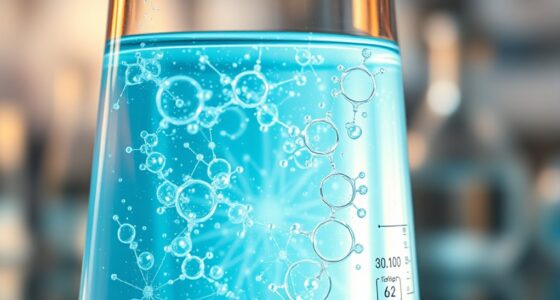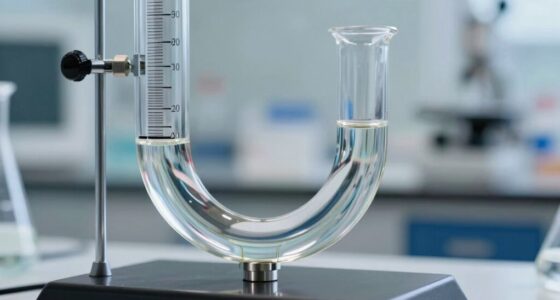

Osmosis goes beyond biology and is essential in many chemical and industrial processes. You’ll find it involved in solutions, chemical reactors, desalination, and membrane technology. It’s driven by the movement of solvent molecules from low to high solute concentrations, aiming to balance differences across barriers. Factors like temperature, membrane permeability, and concentration gradients influence it. Exploring this broader view helps you understand its role in creating more efficient systems—continue to explore to discover more about its diverse applications.

Prime made for students and young adults
- Fast, free delivery for dorm and study essentials
- Prime Video and Amazon Music included
- Member-only deals
Key Takeaways
- Osmosis involves solvent movement from low to high solute concentrations across semi-permeable barriers in chemical and industrial systems.
- It plays a vital role in processes like desalination, filtration, and membrane-based chemical reactions beyond biological contexts.
- Factors such as temperature, membrane permeability, and concentration gradients influence osmosis efficiency in chemical applications.
- Understanding chemical diffusion and membrane properties enables optimization of industrial processes and advanced membrane technologies.
- Osmosis is fundamental to controlling solvent and solute movement, impacting fields like chemical synthesis, environmental engineering, and drug delivery.
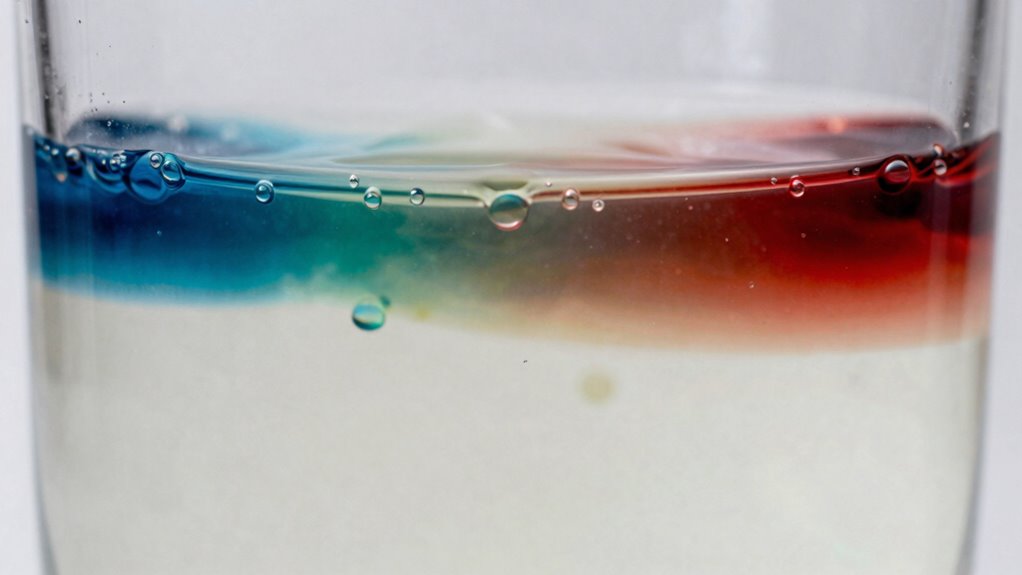
Osmosis, a process most commonly associated with biology, extends far beyond the confines of living organisms and cell membranes. In the domain of chemistry, it reveals itself as a fundamental mechanism that influences how substances interact and move through different environments. At its core, osmosis involves the movement of solvent molecules from an area of lower solute concentration to an area of higher solute concentration, aiming to balance concentrations on both sides of a barrier. This solvent movement isn’t limited to biological membranes; it also occurs in chemical systems, solutions, and industrial processes, driven by differences in chemical diffusion.
In these chemical contexts, osmosis is driven by the tendency of molecules to spread out evenly, a principle known as diffusion. When a semi-permeable barrier separates two solutions with different concentrations, solvent molecules naturally migrate toward the more concentrated side. This movement of solvent is a form of chemical diffusion, where molecules move in response to concentration gradients. You’ll find this process at work in a variety of settings — from desalination plants to chemical reactors — where controlling solvent movement is essential for efficiency and safety. Additionally, understanding these processes helps in designing better membrane materials for specific applications.
Understanding chemical diffusion in osmosis allows you to appreciate how different factors influence solvent movement. Temperature plays an essential role; as it increases, molecules gain energy, accelerating diffusion and making solvent movement more rapid. Conversely, higher solute concentrations create steeper concentration gradients, prompting more vigorous solvent flow toward the more concentrated solution. The properties of the membranes or barriers involved also matter; their permeability determines how easily solvent molecules can pass through, affecting the rate of osmosis and diffusion. Additionally, the diffusion process itself is a key concept that underpins how substances disperse through solutions, impacting the overall movement of molecules. Recognizing these principles helps scientists and engineers optimize processes by adjusting conditions such as membrane permeability.
In industrial applications, regulating osmotic flow enables processes like filtration, dialysis, and even drug delivery systems. By manipulating chemical diffusion, engineers can design systems that selectively allow solvent or solute passage, ensuring desired outcomes. For instance, in chemical synthesis, managing solvent movement helps in maintaining ideal reaction conditions, preventing unwanted side reactions caused by uneven concentration distributions. Understanding the properties of membranes involved is crucial for optimizing these processes. Furthermore, advancements in membrane technology continue to expand the possibilities for more efficient and sustainable chemical processes. A thorough grasp of chemical diffusion enhances our ability to innovate and improve these technologies.
Ultimately, viewing osmosis through a chemical lens highlights its significance beyond biology. It underscores the importance of chemical diffusion and solvent movement as fundamental processes that shape various scientific and technological fields. Whether in natural environments or engineered systems, understanding how substances move through solutions and membranes enables you to manipulate and optimize processes that are essential across chemistry, industry, and beyond.
As an affiliate, we earn on qualifying purchases.
Frequently Asked Questions
How Does Osmosis Influence Chemical Reactions in Non-Biological Systems?
Osmosis influences chemical reactions in non-biological systems by driving molecular diffusion through osmotic gradients, which controls the movement of solvents and solutes. When osmotic gradients exist, they can concentrate reactants or dilute products, affecting reaction rates. You’ll notice that changes in solvent movement alter the local environment, making it more or less favorable for reactions to occur. This interplay emphasizes osmosis’s vital role in regulating chemical processes outside biological contexts.
Can Osmosis Be Harnessed for Industrial Chemical Processes?
You can harness osmosis in industrial processes, with membrane technology leading the way. Remarkably, osmotic power could generate up to 15 gigawatts globally, enough to power millions of homes. This involves using semi-permeable membranes to drive separation or energy production. By leveraging osmotic gradients, industries can develop sustainable solutions, turning osmotic power into a promising energy source and enhancing chemical processing efficiency.
What Role Does Osmosis Play in Environmental Chemistry?
You see, osmosis plays a vital role in environmental chemistry by influencing water movement across cell membranes. Through water diffusion, it helps regulate the balance of water in organisms and ecosystems alike. When pollutants or salts are present, osmosis affects how they infiltrate or are expelled from cells. Understanding this process helps you grasp how natural water systems maintain stability and respond to environmental changes.
Are There Synthetic Materials That Utilize Osmosis for Chemical Separation?
Imagine a super-powered filter that can separate chemicals faster than lightning strikes—synthetic membranes do just that, harnessing osmosis! These osmotic engines use specially designed synthetic materials to create controlled osmotic pressure, efficiently separating salts, toxins, or other molecules. They revolutionize chemical separation processes, offering cleaner, faster, and more sustainable methods, transforming industries from water purification to pharmaceuticals with their incredible osmotic magic.
How Does Osmotic Pressure Affect Non-Living Chemical Systems?
You see that osmotic pressure impacts non-living chemical systems by creating pressure gradients across membranes with selective permeability. When the membrane’s permeability varies, it influences how solvents and solutes move, affecting system stability. As pressure builds, it can drive or hinder diffusion, helping control separation processes. This principle is essential in designing chemical reactors and filtration systems, where managing pressure gradients guarantees efficient separation and reaction control.
Conclusion
You might think osmosis only happens in biology, but it’s a fundamental chemical process too. By examining the theory behind it, you see that osmosis relies on chemical principles like solvent movement and concentration gradients. This proves that osmosis isn’t just a biological curiosity — it’s a universal phenomenon rooted in chemistry. Recognizing this broadens your understanding of how natural processes work across different scientific fields, showing how interconnected science truly is.
Fall Picks
fall essentials
As an affiliate, we earn on qualifying purchases.