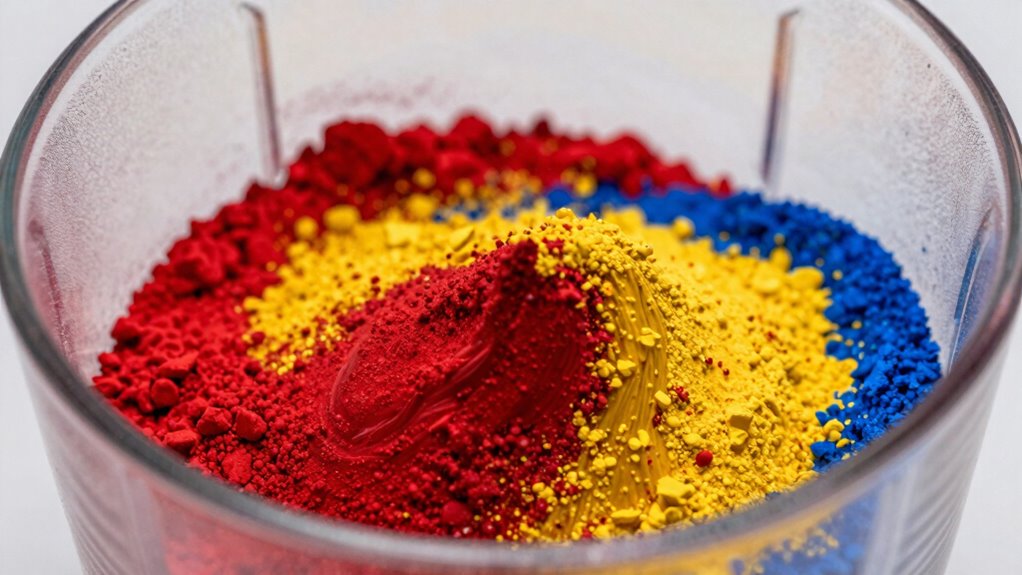

After perfect mixing, segregation can still happen as tiny differences in particle size, moisture, and handling cause the blend to separate over time. Smaller particles tend to sift down or settle at the bottom, while larger or coarser particles stay on top or resist mixing. Environmental factors like humidity and temperature changes can make particles stick or clump, disrupting uniformity. To better understand how to prevent this, keep exploring the factors that influence powder segregation and effective strategies to minimize it.

Get school and study supplies delivered free — and shop member deals
- Fast, free delivery on millions of items
- Access to Prime Big Deal Days deals on October 6–7
- Prime Video, Amazon Music and more included
Key Takeaways
- Differences in particle size cause smaller particles to migrate and separate over time.
- Moisture absorption leads to agglomeration, resulting in uneven particle distribution.
- Handling and transportation can induce movement, promoting segregation of particle sizes.
- Environmental fluctuations like temperature and humidity disturb the uniformity of the mixture.
- Inadequate equipment design can create flow patterns that separate particles after mixing.
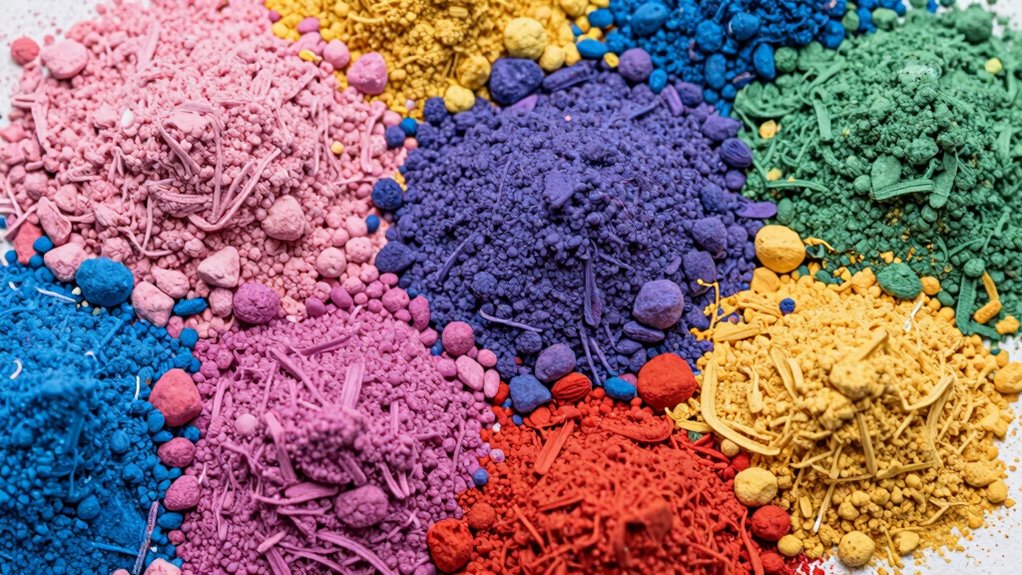
Ever wondered how a batch of perfectly mixed powders can suddenly separate into uneven layers? It’s a common puzzle in industries relying on powder blending. The answer lies in how the powders’ properties, especially particle size and moisture effects, influence segregation. When you mix powders, you aim for uniformity, but subtle differences in particle size can cause separation over time. Smaller particles tend to sift down or find their way between larger ones, creating uneven layers. This process, known as particle segregation, is driven by differences in particle behavior during handling and storage. This happens because particles aren’t all the same size; some are fine, some coarse, and these differences affect how they settle and move within the blend. During transportation or storage, these variations become more pronounced, leading to segregation despite initial thorough mixing. Additionally, environmental factors such as temperature fluctuations can also impact powder flow and segregation tendencies. Recognizing these influences helps in designing better storage conditions and handling procedures. Proper environmental control can significantly reduce the risk of segregation and preserve powder uniformity. Understanding how particle size distribution influences flowability further aids in minimizing separation issues. Moisture in powders plays a significant role too. When you introduce moisture, it can cause particles to stick together or clump, impacting flowability and how the powders distribute. If some particles absorb more moisture than others, they can become heavier or stickier, further promoting segregation. For instance, moisture may cause fine particles to agglomerate, making them heavier and more prone to settle at the bottom. Conversely, dry, coarse particles might stay on top or disperse unevenly. This moisture effect disrupts the initial uniformity, especially if the powders are exposed to humidity during handling or storage, causing layers to form over time. Proper moisture control is essential for maintaining powder homogeneity and preventing segregation. Controlling humidity levels during storage and handling helps maintain consistent powder properties and reduces the likelihood of layers forming. Additionally, selecting powders with more uniform particle sizes can help reduce segregation risks. Understanding particle behavior of powders is crucial for designing effective blending and storage strategies. Implementing a combination of environmental control and appropriate equipment can make a significant difference in maintaining powder uniformity over time. In essence, while your initial mix might be perfect, segregation can still occur because of these subtle yet powerful factors. Particle size differences facilitate separation through percolation or sifting, while moisture effects alter the powders’ physical properties, leading to uneven layers over time. Recognizing this interplay allows you to implement strategies, like controlling humidity and choosing appropriate equipment, to keep your powders evenly blended and prevent the layers from forming. Ultimately, a deep understanding of these factors helps you maintain the quality and consistency of your powdered products, ensuring they perform as intended.
powder blender with anti-segregation features
As an affiliate, we earn on qualifying purchases.
As an affiliate, we earn on qualifying purchases.
Frequently Asked Questions
How Can Segregation Be Prevented During Storage?
To prevent segregation during storage, you should focus on container design and maintain a controlled environment. Use containers that minimize movement and separation of powders, like airtight, smooth-sided options. Keep the storage area climate-controlled to prevent humidity and temperature fluctuations that cause segregation. Regularly inspect and handle powders gently to avoid particle separation, ensuring consistent quality and mixing integrity over time.
Do Different Powder Brands Segregate Differently?
Imagine mixing different powders like blending colors on a palette—some brands, due to better compatibility, blend smoothly, maintaining consistency. Others, with poor compatibility, tend to segregate, much like mixing oil and water. Different powder brands can indeed segregate differently because of their ingredients and particle sizes. Ensuring mixing consistency requires understanding these differences, so selecting compatible brands helps prevent segregation and maintains uniformity in your final product.
What Role Does Humidity Play in Segregation?
Humidity plays a significant role in segregation because moisture impact causes powders to stick together or clump, making uniformity harder. When humidity levels rise, powders become more prone to segregation due to uneven moisture absorption. To prevent this, you need effective humidity regulation, which helps maintain consistent moisture levels. This ensures powders stay evenly mixed, reducing the chances of segregation and preserving product quality after blending.
Can Particle Shape Affect Segregation?
Yes, particle shape can affect segregation. Particle morphology, including shape influence, impacts how powders interact during handling and mixing. Irregularly shaped particles tend to interlock and resist movement, while spherical particles flow more easily, increasing the chance of segregation. When shapes differ greatly, the segregation tendency increases because particles separate based on shape during processes like conveying or vibration, leading to uneven distribution even after initial perfect mixing.
How Does Temperature Variation Influence Segregation?
You might find that temperature variation gently guides segregation, as temperature gradients cause particles to shift subtly. Thermal expansion affects particle sizes differently, encouraging some to migrate and settle separately over time. This process isn’t abrupt but occurs gradually, leading to uneven distribution. By understanding how temperature influences particle behavior, you can better control mixing processes, ensuring a more uniform blend despite these natural tendencies toward segregation.
Conclusion
Now that you understand how easily powders can separate, think of your perfect mix as a delicate dance—one misstep can send everything crashing apart. To keep your blend uniform, you need to stay vigilant, like a watchful guardian. By understanding the causes of segregation, you can prevent your mixture from becoming a patchwork of chaos. Remember, even the best dancers stumble if they don’t pay attention—so stay alert, and keep your powders perfectly in step.
Fall Picks
fall essentials
As an affiliate, we earn on qualifying purchases.