In chemical operations, CAPEX decisions involve evaluating project investments by analyzing costs, expected benefits, and timelines. You consider industry-specific factors like market fluctuations and regulatory changes, along with risk assessments of technology, environment, and supply chains. You prioritize projects based on strategic value, risk, and financial return, ensuring they align with long-term goals. To gain an all-encompassing understanding of how these decisions are made, explore the key factors influencing CAPEX choices further.

Get school and study supplies delivered free — and shop member deals
- Fast, free delivery on millions of items
- Access to Prime Big Deal Days deals on October 6–7
- Prime Video, Amazon Music and more included
Key Takeaways
- Capital expenditure (CAPEX) decisions in chemical operations involve evaluating project feasibility through financial models like NPV and IRR.
- Industry-specific factors such as market trends and regulatory changes significantly influence CAPEX approval processes.
- Risk assessments identify technological, environmental, and supply chain uncertainties, informing mitigation strategies.
- Stakeholder involvement ensures comprehensive analysis of operational, environmental, and financial impacts.
- Projects are prioritized based on strategic alignment, expected returns, risk profile, and monitored throughout implementation for adjustments.
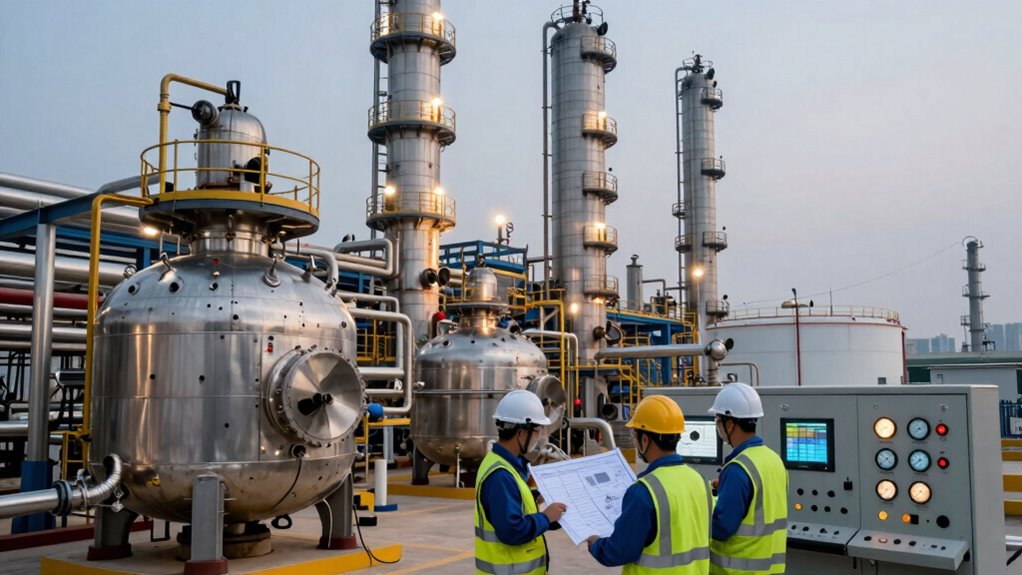
Have you ever wondered how chemical companies decide whether to invest in new equipment or upgrade existing facilities? It all begins with a meticulous process of CAPEX (capital expenditure) decision-making, where every potential investment is carefully evaluated. The first step involves investment analysis, which helps determine the financial viability of a project. You’ll need to examine expected costs, potential benefits, and the timeline for returns. This process often involves detailed financial models, including cash flow projections, net present value (NPV), and internal rate of return (IRR), to guarantee the investment aligns with the company’s long-term strategic goals. Accurate investment analysis provides clarity, enabling you to compare different options objectively and identify the most promising opportunities. Additionally, understanding industry-specific factors is crucial, as market fluctuations and regulatory changes can significantly influence project outcomes.
However, financial metrics alone don’t tell the whole story. Risk assessment plays a critical role in CAPEX decisions, especially in the chemical industry, where safety, regulation, and market volatility are significant factors. You must evaluate potential risks—such as technological uncertainties, environmental impacts, and supply chain disruptions—that could affect the project’s success. This involves identifying possible failure points and estimating their likelihood and severity. By conducting an all-encompassing risk assessment, you can develop mitigation strategies, whether that means choosing more reliable technology or implementing safety protocols to comply with regulations. This step guarantees you’re not just chasing the highest returns but also managing the uncertainties that could threaten those returns. Incorporating risk mitigation strategies into your planning process helps safeguard your investments and maintain operational stability.
Once you’ve completed your investment analysis and risk assessment, you’ll need to take into account other factors like operational efficiency, maintenance costs, and environmental compliance. These elements influence the total cost of ownership and the project’s sustainability. You might also involve stakeholders from different departments—engineering, safety, finance—to get a holistic view of the project’s feasibility. This collaborative approach helps you spot potential issues early and make more informed decisions.
After gathering all this data, you’ll prioritize projects based on their strategic value, risk profile, and financial returns. The decision to proceed hinges on whether the projected benefits outweigh the costs and risks, and if the investment aligns with the company’s growth plans. Once approved, you’ll oversee the implementation process, ensuring the project stays within budget and timeline. Throughout, continual monitoring and reassessment are crucial, as market conditions and technological advances can change the landscape, requiring you to adapt your strategy accordingly. Ultimately, effective CAPEX decisions in chemical operations depend on rigorous investment analysis combined with thorough risk assessment, helping you make confident, informed choices that support sustainable growth.
chemical plant equipment investment analysis tools
As an affiliate, we earn on qualifying purchases.
As an affiliate, we earn on qualifying purchases.
Frequently Asked Questions
How Do Regulatory Changes Impact CAPEX Planning in Chemical Operations?
Regulatory changes profoundly impact your CAPEX planning by necessitating updates for environmental compliance. You must conduct thorough cost analysis to assess the financial implications of new regulations, which can lead to increased capital expenditure for equipment upgrades or new infrastructure. Staying ahead of regulatory shifts allows you to allocate resources efficiently, ensuring your operations remain compliant while minimizing unexpected costs and avoiding potential fines or shutdowns.
What Role Does Sustainability Play in CAPEX Decision-Making?
They say, “You are what you do, not what you say you’ll do,” and in CAPEX decisions, sustainability is a key factor. You prioritize sustainable innovation and eco-friendly practices to reduce environmental impact, cut costs long-term, and meet regulations. By integrating these elements, you guarantee investments align with future-proof goals, enhance brand reputation, and foster responsible growth—making sustainability a central driver in your CAPEX planning.
How Are Technological Advancements Integrated Into CAPEX Evaluations?
You evaluate technological advancements by examining how technology integration can improve operations and reduce costs. You consider innovation adoption to stay competitive, analyzing the potential benefits and risks of new tech. You weigh these factors against capital expenditure, ensuring the investment aligns with strategic goals. By doing so, you make informed decisions that leverage cutting-edge technology, enhance efficiency, and support long-term growth in your chemical operations.
What Is the Typical Timeline for CAPEX Approval Processes?
You typically spend 3-6 months on CAPEX approval processes. During this period, you conduct thorough budget forecasting and risk assessments to guarantee project viability. An interesting stat shows that 70% of delays happen due to lengthy evaluations. Your team reviews proposals, secures executive approval, and aligns with strategic goals. Clear communication and efficient decision-making help streamline this timeline, reducing delays and supporting timely project execution.
How Do Market Fluctuations Influence CAPEX Investments?
Market fluctuations, like volatility, directly impact your CAPEX investments by creating uncertainty about future returns. When markets are volatile, you might delay or scale back investments to minimize risk, adjusting your strategies accordingly. Conversely, stable markets encourage more aggressive investment strategies. Staying adaptable and monitoring market trends helps you make informed decisions, ensuring your CAPEX plans align with current economic conditions and minimize potential losses.
Conclusion
Think of your CAPEX decisions as planting seeds in a vast garden. Each choice you make is like nurturing a sapling, promising growth and transformation. With careful planning and foresight, you turn these seeds into towering trees of innovation and efficiency. Remember, your investments are not just financial; they’re symbols of your commitment to a thriving future. Cultivate wisely, and watch your chemical operations blossom into a resilient, flourishing landscape.
Halloween Picks
halloween
As an affiliate, we earn on qualifying purchases.