
Certification of your biosafety cabinet isn’t optional because it guarantees airflow safety, containment, and protection for you and your work environment. It proves compliance with standards by agencies like OSHA and NIH and helps prevent legal issues or lab shutdowns. Regular checks catch problems early and extend equipment life. Consistent certification shows your commitment to safety, reliability, and compliance—critical factors for successful, safe lab operations. Keep going to discover more about maintaining your biosafety cabinet’s top performance.
Key Takeaways
- Certification verifies airflow integrity, ensuring a safe and contamination-free environment.
- Regular testing maintains compliance with OSHA and NIH standards, avoiding legal and regulatory penalties.
- Ongoing certification detects equipment degradation early, preventing safety breaches and costly repairs.
- Consistent certification safeguards research integrity and protects personnel from hazardous exposure.
- It demonstrates a commitment to safety standards, reinforcing credibility and operational reliability.
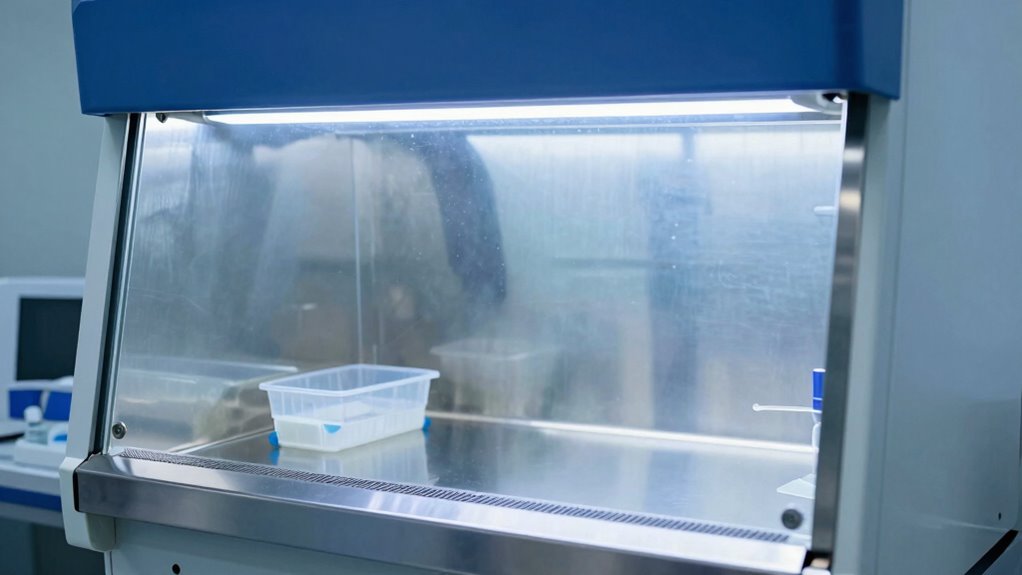
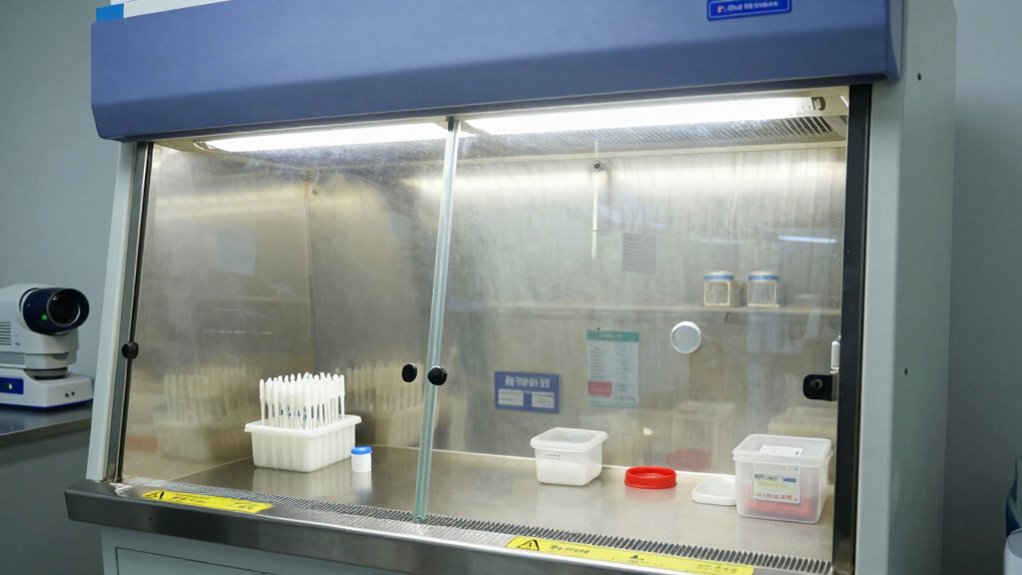
Have you ever wondered why biosafety cabinets must be certified? The answer lies in the critical role they play in protecting both your work environment and the people around you. Certification ensures that a biosafety cabinet meets strict safety standards, particularly in maintaining airflow integrity. When airflow functions correctly, it creates a controlled environment that keeps hazardous agents contained and prevents contamination. If airflow isn’t properly maintained, aerosols or particles could escape, risking exposure and compromising your research or clinical work. Certification verifies that the airflow system performs as intended, giving you confidence in the cabinet’s ability to safeguard your workspace.
Beyond airflow integrity, certification is essential for regulatory compliance. Various health and safety agencies, such as OSHA or NIH, mandate that biosafety cabinets operate within specific standards. When a cabinet is certified, it demonstrates adherence to these regulations, which is imperative if your work involves regulated materials or needs to pass inspections. Non-compliance can lead to legal consequences, fines, or even the shutdown of your laboratory. Certification acts as documented proof that your biosafety cabinet has been tested and meets all necessary standards, reducing liability and guaranteeing your work remains within legal boundaries.
You might think that once a biosafety cabinet is installed, it’s good to go, but that couldn’t be further from the truth. Airflow systems can degrade over time due to filter wear, mechanical issues, or improper maintenance. Regular certification is indispensable to confirm continued airflow integrity and to catch potential problems early. Without periodic testing and certification, you risk operating with a compromised safety system, which could lead to contamination, exposure, or failed compliance inspections. Think of certification as a routine health check for your cabinet—necessary to keep everything functioning safely and effectively. Additionally, consistent certification helps maintain airflow performance and ensures your equipment complies with evolving safety standards. Regular testing also helps detect subtle changes in airflow or filter efficiency that might otherwise go unnoticed until a critical failure occurs. Moreover, proper maintenance and timely certification can extend the lifespan of your biosafety cabinet, ensuring consistent safety over time. Incorporating routine checks can also prevent costly repairs and downtime, safeguarding your research investments.
Investing in proper certification not only protects your lab but also enhances the credibility of your work. When your biosafety cabinet is certified, it demonstrates your commitment to safety standards and regulatory requirements. This assurance is indispensable, especially when your research or clinical results need to stand up to scrutiny. Certification also helps identify any issues that could compromise your experiments, allowing you to address them before they cause significant problems. Ultimately, certification isn’t just a regulatory formality; it’s an essential step in maintaining a safe, compliant, and reliable working environment. Regular certification also helps ensure that smart appliances like air purifiers and other safety equipment are functioning optimally, adding an extra layer of protection.
biosafety cabinet certification kit
As an affiliate, we earn on qualifying purchases.
As an affiliate, we earn on qualifying purchases.
Frequently Asked Questions
How Often Should Biosafety Cabinets Be Recertified?
You should recertify your biosafety cabinet annually to guarantee it meets safety standards. Regular recertification is essential for compliance with maintenance protocols and maintaining peak performance. Don’t delay renewal, as certification renewal guarantees the cabinet’s containment integrity and safety. Staying proactive with annual recertification helps identify and address issues early, protecting both personnel and samples. Make it a priority to schedule your recertification before the certification expiration date.
What Are the Common Signs of a Malfunctioning Biosafety Cabinet?
You might notice your biosafety cabinet malfunctioning if airflow disruption becomes obvious or if the filter integrity is compromised. Imagine your workspace turning into a chaotic storm of particles, risking contamination and safety. Signs include unusual noise, persistent vibrations, or visible dust accumulation. These symptoms suggest the cabinet isn’t functioning properly, and urgent attention is needed to prevent biohazard risks. Regular maintenance helps catch these issues early, keeping your workspace safe.
Are There Different Certification Standards for Various Biosafety Cabinet Types?
Yes, there are different certification standards for various biosafety cabinet types. You need to follow specific biosafety standards and certification procedures depending on whether you’re working with Class I, II, or III cabinets. Each type has unique safety requirements, so adhering to the appropriate standards guarantees proper containment and protection. Regular certification verifies that your cabinet meets these standards, maintaining safety and compliance in your laboratory environment.
How Does Certification Impact Laboratory Work Safety?
Certification impacts your laboratory work safety by ensuring proper airflow validation, which maintains the cabinet’s containment integrity. This process prevents contamination, protecting both your samples and your staff. When your biosafety cabinet is certified, you can trust it functions correctly, reduces risks, and complies with safety standards. Regular certification guarantees that airflow remains consistent, providing a safe environment for sensitive procedures and minimizing hazardous exposure risks.
What Are the Costs Associated With Biosafety Cabinet Certification?
You face costs that include routine maintenance procedures and certification fees, which can feel like an investment in safety. Certification costs vary depending on the cabinet’s size and complexity, often ranging from hundreds to thousands of dollars. While these expenses may seem intimidating, they’re essential for ensuring your biosafety cabinet functions perfectly, protecting your work and your team. Think of it as safeguarding your laboratory’s integrity and your peace of mind.
Conclusion
Think of biosafety cabinet certification as your shield in a dangerous dance—without it, you risk stepping into chaos. It’s not just a box to check but an essential safeguard that keeps your work safe and your environment secure. Skipping certification is like sailing without a compass—risky and reckless. So, embrace the rhythm of proper certification, and let it be the steady beat that ensures your laboratory’s safety marches on, unwavering and strong.