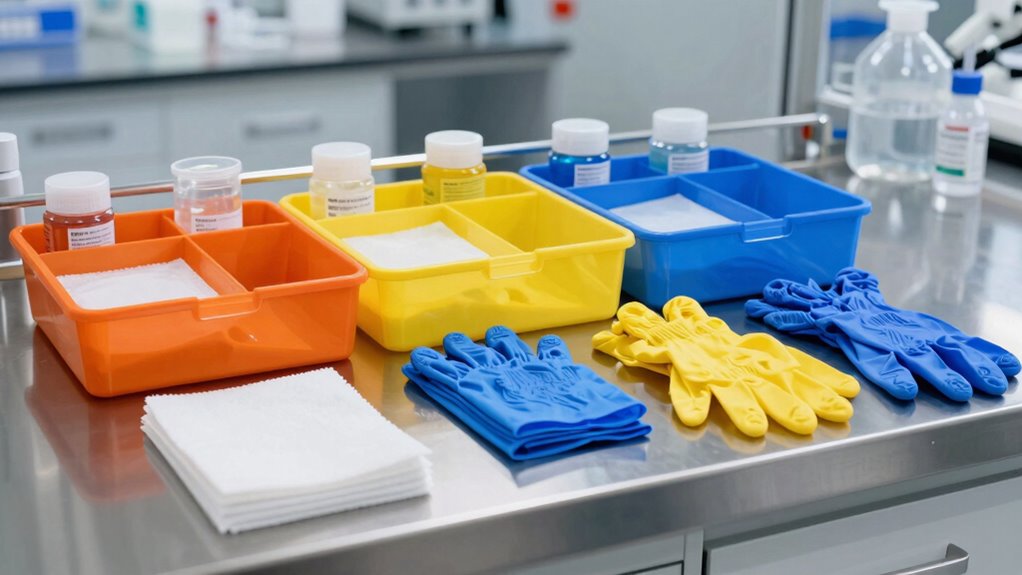

To effectively respond to chemical spills, you need to match your spill kit to the specific hazards you face. Identify the chemicals stored or used on-site and select kits with the appropriate neutralizers, absorbents, and protective gear. For acids, choose neutralizing agents; for flammables, include fire-resistant pads. Properly matching your kit diminishes risks, enhances safety, and guarantees compliance. Continue exploring to discover how to choose the best spill kit for your facility’s unique hazards.

Prime made for students and young adults
- Fast, free delivery for dorm and study essentials
- Prime Video and Amazon Music included
- Member-only deals
Key Takeaways
- Match spill kit contents to the specific chemicals stored or used in the facility.
- Use neutralizing agents suited for acids, caustics, or reactive chemicals.
- Include fire-resistant absorbents for flammable and organic solvents.
- Train staff to recognize chemical types and select appropriate response tools.
- Regularly review and update spill kits based on chemical inventory changes.
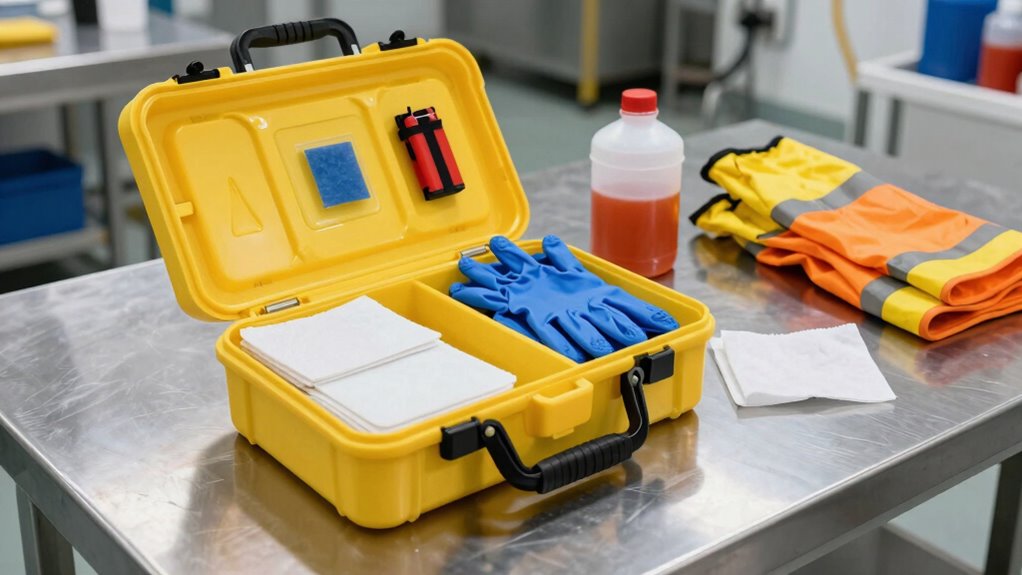
When a chemical spill occurs, quick and effective response is crucial to prevent harm to people, property, and the environment. Having the right chemical spill kit on hand is a critical part of your emergency preparedness plan. The key is matching the kit to the specific risks your facility faces. Different chemicals demand different responses, so understanding the nature of potential spills helps you choose the appropriate kit. Properly selected spill kits enhance industrial safety by enabling swift containment and cleanup, minimizing exposure and damage. When you’re prepared with the right tools, you can act immediately, reducing the likelihood of accidents escalating.
Your focus should be on understanding the types of chemicals stored or used in your facility. For example, if you handle acids or caustics, your spill kit must contain neutralizing agents suited for those substances. For organic solvents or flammables, fire-resistant pads and absorbents are essential. Selecting a kit that matches the risk isn’t just about compliance; it’s about protecting everyone involved. The better your industrial safety practices, the more effectively you can contain a spill before it spreads or causes lasting harm. This also limits environmental contamination and costly cleanup efforts. Incorporating chemical safety principles into your training emphasizes the importance of proper response strategies and helps reduce risks during cleanup. Understanding hazard mitigation techniques, such as containment barriers and spill control methods, can further improve your response effectiveness.
Emergency preparedness involves training your staff to recognize spill types and respond appropriately. Even the most complete spill kit is ineffective if your team isn’t familiar with its contents or the proper procedures. Regular drills ensure everyone knows how to quickly access and utilize the right tools. It’s equally important to keep kits well-maintained and fully stocked, so they’re ready when needed. Including personal protective equipment (PPE) tailored to the chemicals in your facility adds an extra layer of safety and confidence during response efforts. Additionally, understanding chemical safety principles helps guide proper response strategies and minimizes risks during cleanup. Proper documentation and review of spill incidents can also assist in refining your emergency procedures over time.
chemical spill kit for acids and caustics
As an affiliate, we earn on qualifying purchases.
As an affiliate, we earn on qualifying purchases.
Frequently Asked Questions
How Often Should Chemical Spill Kits Be Inspected and Maintained?
You should inspect and maintain your chemical spill kits regularly, ideally monthly, to guarantee they’re ready when needed. Check storage considerations to confirm supplies are intact, properly sealed, and accessible. Additionally, review disposal procedures to ensure used materials are correctly discarded. Regular inspections help identify any damaged components or expired items, keeping your spill kits effective and compliant with safety standards, so you’re prepared for any chemical spill incident.
Are Spill Kits Suitable for Both Small and Large Chemical Spills?
Spill kits are suitable for both small and large chemical spills, but you should be aware of their limitations regarding chemical hazards. For minor spills, a standard spill kit often suffices, but large or highly hazardous spills may require specialized equipment and professional cleanup. Always match the spill kit to the specific chemical hazards present, and remember that kits have limitations in capacity and chemical compatibility, so use them appropriately and promptly.
Can Spill Kits Be Reused After a Spill?
Yes, spill kits can be reused after a spill, especially if they contain reusable components like scoops, brushes, or containers. The durability of these kits depends on the quality of materials used; high-quality spill kits with durable components withstand multiple uses. However, always inspect the absorbent materials, as they often need replacement after a spill. Proper maintenance guarantees your spill kit remains effective and ready for future emergencies.
What Training Is Required to Effectively Use a Spill Kit?
Think of training as your map through a storm—without it, you’re lost. You need to learn how to don personal protective equipment properly, understand spill kit storage, and use the tools confidently. Training should include hands-on practice, hazard recognition, and proper cleanup procedures. This guarantees you act swiftly and safely when a spill occurs, turning chaos into control and minimizing risks effectively.
Are Spill Kits Compliant With OSHA or Other Safety Regulations?
Yes, spill kits are designed to be compliant with OSHA and other safety standards. You need to guarantee the kits meet regulatory compliance by choosing products that follow safety standards for chemical containment and cleanup. Regularly verify that your spill kits adhere to local, state, and federal regulations. Properly maintained and compliant spill kits help you stay prepared, reduce hazards, and avoid penalties during safety inspections.
Conclusion
Choosing the right chemical spill kit is vital for safety—did you know that improper response can increase cleanup costs by up to 40%? By matching your kit to the specific risks in your environment, you’re not just protecting your team but also reducing potential environmental damage and liability. Stay prepared and informed, and guarantee your spill response is swift and effective. Proper kit selection isn’t just smart; it’s fundamental for safeguarding everyone and everything around you.
Halloween Picks
halloween
As an affiliate, we earn on qualifying purchases.


![Terence Tao Explains 6 Essential Mathematical Concepts [Video]](https://chemicalceo.com/wp-content/uploads/2026/09/terence-tao-explains-6-essential-mathematical-concepts-video-featured-560x300.jpg)