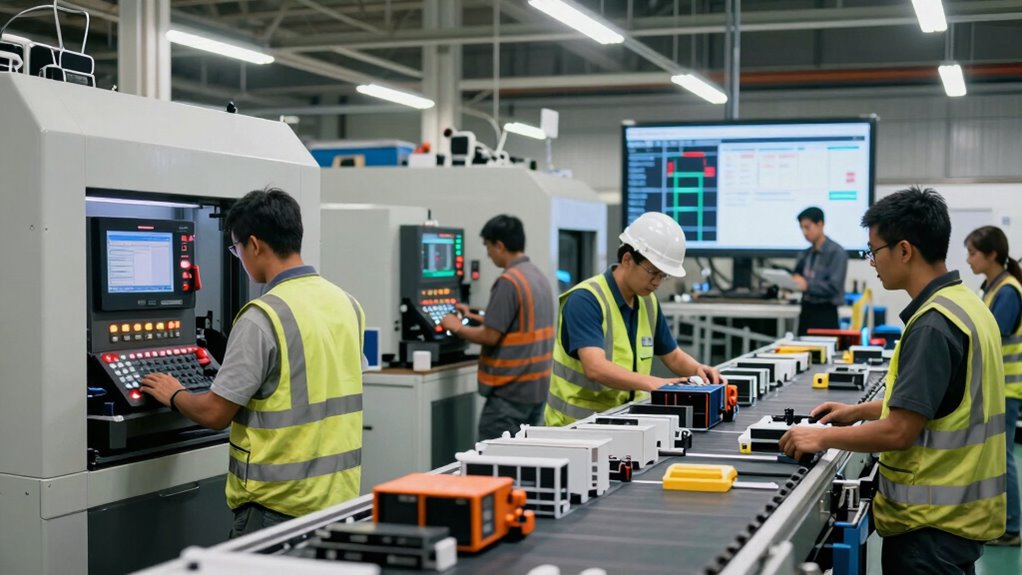

Operations oversee the overall business functions, focusing on managing resources, supply chain, logistics, and maintaining efficiency. Manufacturing is a subset of operations that involves actually creating or assembling products, ensuring quality standards are met. Production roles are specific tasks within manufacturing, responsible for executing plans and maintaining product quality. Understanding how these areas work together helps improve organizational flow and competitiveness. If you keep exploring, you’ll gain deeper insights into how these roles support each other for success.
Key Takeaways
- Operations encompass strategic activities like supply chain management, logistics, and resource allocation for overall business efficiency.
- Manufacturing involves the actual creation or assembly of products through industrial processes.
- Production roles focus on executing specific manufacturing tasks according to plans and schedules.
- Operations focus on optimizing workflows, quality assurance, and cost reduction across functions.
- Manufacturing and production roles are primarily execution-focused, supporting operational strategies for product output.
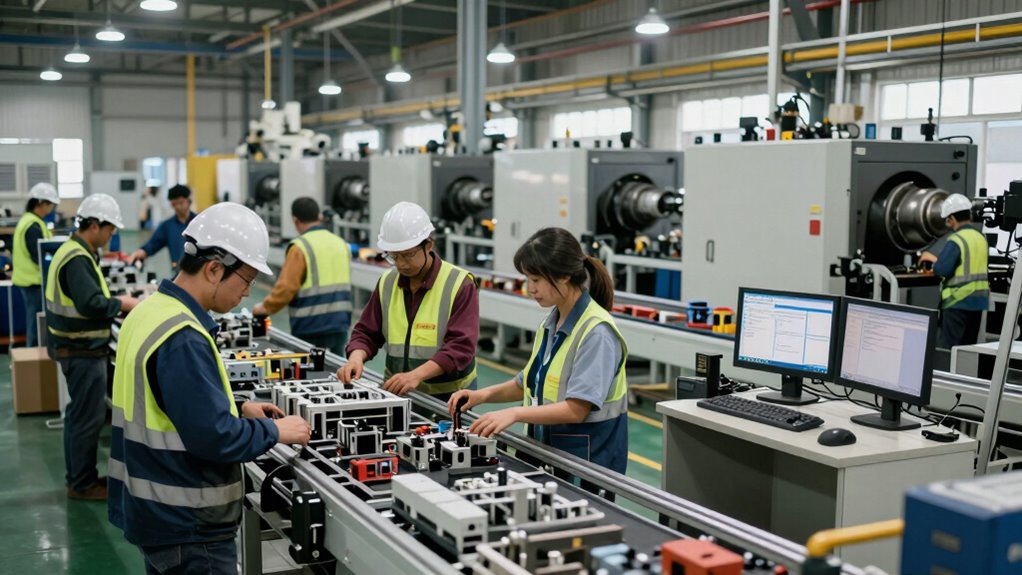
Understanding the distinctions between operations, manufacturing, and production roles is essential if you’re steering or aiming to excel in the industrial sector. These roles, while interconnected, each serve unique functions that contribute to a company’s overall success. Operations encompass the broader strategic activities that keep a business running smoothly, including managing supply chain management, overseeing logistics, and guaranteeing that resources are allocated efficiently. When you focus on operations, you’re looking at the big picture—making sure every part of the process aligns to meet organizational goals. This includes implementing quality assurance measures to maintain product standards and customer satisfaction, as well as optimizing workflows to reduce costs and improve delivery times. Additionally, process optimization plays a crucial role in enhancing operational efficiency and competitiveness. Effective resource allocation is fundamental in ensuring that all departments work cohesively to achieve operational excellence. A solid understanding of industrial processes can further help in identifying areas for improvement and streamlining overall performance. Recognizing how supply chain management integrates with these roles allows for better coordination and responsiveness across the entire production cycle. Developing expertise in continuous improvement strategies can also lead to sustained operational success.

Supply Chain Management For Dummies
As an affiliate, we earn on qualifying purchases.
As an affiliate, we earn on qualifying purchases.
Frequently Asked Questions
How Do These Roles Evolve With Technological Advancements?
As technology advances, your roles in operations, manufacturing, and production evolve through automation integration and digital transformation. You’ll rely more on automated systems, data analytics, and real-time monitoring to streamline processes and improve efficiency. These changes require you to adapt, develop new skills, and embrace digital tools, making your work more strategic and less manual. Overall, technology shifts you toward smarter, more connected workflows that enhance productivity and decision-making.
What Certifications Are Beneficial for Career Growth in These Roles?
Certifications can catapult your career, so consider pursuing pathways like PMP for project management, Lean Six Sigma for process perfection, or OSHA for safety standards. These credential courses cultivate essential skills, sharpen your expertise, and showcase your commitment to continuous growth. By embracing certification pathways, you develop dynamic skill development and demonstrate dedication, positioning yourself as a dependable, knowledgeable professional ready to rise in operations, manufacturing, and production roles.
How Do These Roles Differ Across Various Industries?
In different industries, your operations, manufacturing, and production roles adapt to specific needs. For example, in the supply chain sector, you focus on logistics and timely delivery, while in manufacturing, quality control becomes essential to meet standards. Your role shifts based on industry demands, requiring you to develop specialized skills like supply chain management or quality assurance. Understanding these differences helps you optimize processes and contribute effectively across sectors.
What Are Common Challenges Faced in Each Role?
Imagine juggling flaming torches—each role faces unique challenges. You often struggle with quality control, ensuring products meet standards without delays. Supply chain management can feel like steering through a maze, with disruptions causing delays and increased costs. In operations, balancing efficiency and flexibility is tough. These roles require constant adaptation and problem-solving, especially when unexpected issues threaten to ignite chaos, making effective coordination vital for success.
How Do These Roles Collaborate Within a Company?
You facilitate collaboration by promoting interdepartmental communication and leadership coordination. By sharing information openly, you guarantee each team understands the overall goals, aligning their efforts. You also foster teamwork through regular meetings and clear directives, helping operations, manufacturing, and production roles work seamlessly together. Your proactive approach minimizes misunderstandings, boosts efficiency, and drives the company toward common objectives, making sure everyone pulls in the same direction effectively.
Conclusion
Just like a skilled conductor brings harmony to an orchestra, understanding the distinct roles of operations, manufacturing, and production helps you orchestrate efficiency in your business. Recognize that each plays a crucial part—operations coordinates, manufacturing creates, and production delivers. Mastering these roles ensures your organization runs smoothly, echoing the timeless wisdom of an ancient symphony where every instrument matters. Embrace their differences, and you’ll compose success that resonates far beyond the factory floor.