
To guarantee quick access during emergencies, you should position eyewash and shower stations within 10 seconds of hazard zones, on the same level, and free of obstacles. Make certain they’re clearly marked with reflective signage, illuminated if needed, so you can identify them quickly even in low light or smoky conditions. Regular inspections and proper installation are vital for reliability. Keep these guidelines in mind to enhance safety — and there’s much more to take into account!

Get school and study supplies delivered free — and shop member deals
- Fast, free delivery on millions of items
- Access to Prime Big Deal Days deals on October 6–7
- Prime Video, Amazon Music and more included
Key Takeaways
- Position stations within 10 seconds of hazard zones for immediate access during emergencies.
- Ensure stations are placed on the same level as hazards, avoiding steps or obstacles.
- Use highly visible, illuminated, or reflective signage for quick identification in low light or smoky conditions.
- Regularly inspect and maintain stations to ensure operational readiness and compliance with safety standards.
- Avoid placement in extreme environments prone to freezing or heat, considering workplace hazards for safety and durability.

You should position eyewash and shower stations within quick and easy reach—ideally within 10 seconds of any hazard zone. This means they need to be installed close enough so that, in an emergency, you don’t waste valuable seconds trying to access them. The stations must be on the same level as the hazard, avoiding steps or obstacles that could slow down your response. For instance, if you’re working in a laboratory or manufacturing area, verify the stations are near the point of use but also accessible without obstructions like machinery or storage units. Clear pathways should be maintained at all times, so no clutter interferes with access during a crisis.
Another key rule concerns the visibility of these safety stations. They should be clearly marked with highly visible signage, ideally illuminated or reflective, so you can find them even in low lighting or smoky conditions. This visibility supports emergency preparedness by enabling quick identification, reducing panic, and facilitating faster action. Additionally, stations must be regularly inspected and maintained to assure they’re fully operational—any malfunction could jeopardize safety, breaching safety compliance standards. Regular training helps you and your coworkers understand exactly where they are and how to use them effectively under stress. It’s also important to understand proper installation procedures to ensure they are correctly set up and ready for use when needed.
You also need to take into account environmental factors when placing eyewash and shower stations. For example, avoid installing them in areas prone to freezing or extreme heat, which could compromise their functionality. They should be protected from potential damage while remaining easily accessible at all times. Proper placement also involves considering hazardous substances in the workplace, as they necessitate specific safety measures to prevent injuries during an incident. Understanding the location-specific safety regulations can ensure compliance and optimal placement. Ensuring proper installation procedures are followed is crucial to guarantee the safety stations function correctly when needed. The importance of proper placement cannot be overstated, as it directly influences how quickly a worker can respond to an emergency. By following these placement rules, you certify your workplace adheres to safety regulations and is prepared for emergencies involving hazardous substances. Properly situated eyewash and shower stations allow you to respond swiftly, minimizing injury and supporting a culture of safety compliance. Ultimately, their correct placement isn’t just about following regulations; it’s about safeguarding your health and that of everyone around you.
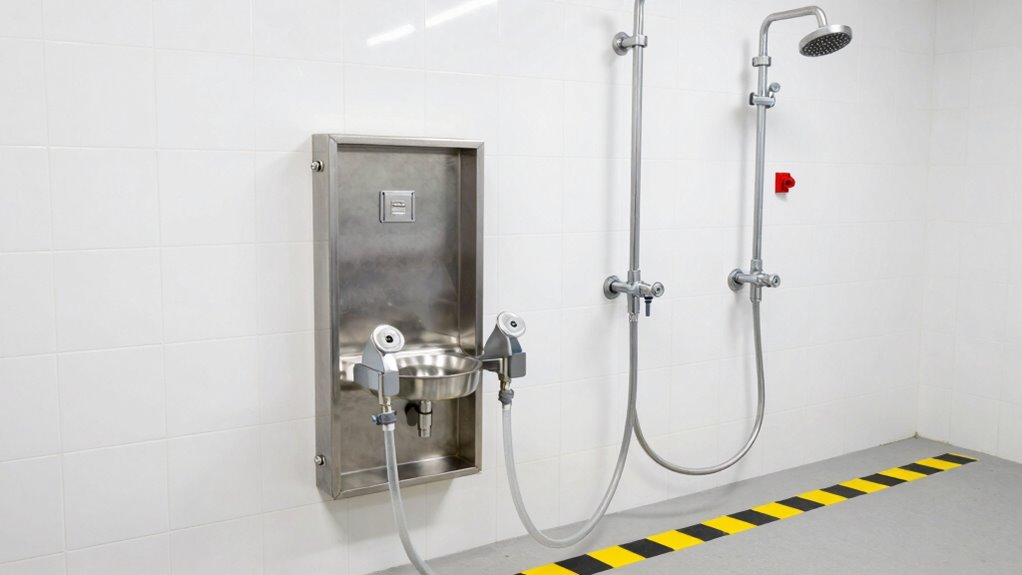
emergency eyewash station with reflective signage
As an affiliate, we earn on qualifying purchases.
As an affiliate, we earn on qualifying purchases.
Frequently Asked Questions
How Often Should Eyewash Stations Be Tested for Functionality?
You should test eyewash stations weekly to guarantee they function properly, as part of your emergency procedures. Regular testing helps verify water flow and clarity, preventing failures during an incident. Additionally, equipment calibration is essential to confirm the proper flow rate and temperature. By maintaining consistent tests, you ensure your eyewash station remains reliable, ultimately protecting your eyes and ensuring safety in emergencies.
Can Eyewash Stations Be Used for Other Safety Purposes?
You shouldn’t use eyewash stations for alternative safety purposes, as they’re specifically designed for eye injuries. Using them improperly can cause further harm or contamination. Instead, depend on designated safety equipment for other emergencies, like fire extinguishers or first aid kits. Proper placement and regular testing guarantee emergency preparedness, so each station remains effective when truly needed. Always follow safety guidelines to avoid misuse and maintain a safe work environment.
What Training Is Needed for Proper Eyewash Station Use?
You need to know the necessary knowledge about eyewash stations to guarantee effective emergency preparedness. You should receive training that covers proper operation, safety protocols, and response procedures. Practice prompts you to quickly activate the station and rinse eyes thoroughly. Regular refreshers reinforce readiness, ensuring you stay sharp in emergencies. Mastering this training helps you minimize injury risks, making safety procedures seamless and swift when it counts most.
Are There Specific Signage Requirements Near Eyewash Stations?
Yes, there are specific signage requirements near eyewash stations. You need clear, visible signage placed at eye level to guarantee quick identification during emergencies. Proper signage placement improves visibility, making it easy for you to locate the station promptly. Use bright colors and universal symbols to enhance understanding. Ensuring signage visibility and strategic placement helps you respond faster, reducing injury severity during accidental exposure to hazardous substances.
How Should Eyewash Stations Be Maintained to Ensure Compliance?
You should regularly perform maintenance procedures on your eyewash stations to guarantee compliance with regulatory standards. For example, check the water flow and temperature weekly, ensuring the station activates properly and delivers lukewarm water. Replace any damaged parts immediately, and keep the station clean and unobstructed. Document all inspections and repairs to stay compliant, demonstrating your commitment to safety and regulatory adherence. Regular maintenance prevents malfunctions during emergencies.
Conclusion
Proper placement of eyewash and shower stations can considerably reduce injury severity in emergencies. Remember, OSHA recommends installing these stations within 10 seconds of the hazard, which is about 55 feet for most workplaces. Did you know that over 70% of eye injuries could be less severe or avoided entirely with quick access to eyewash stations? Ensuring they’re strategically positioned isn’t just compliance — it’s an essential safety measure that can save eyes and lives.
Halloween Picks
halloween
As an affiliate, we earn on qualifying purchases.