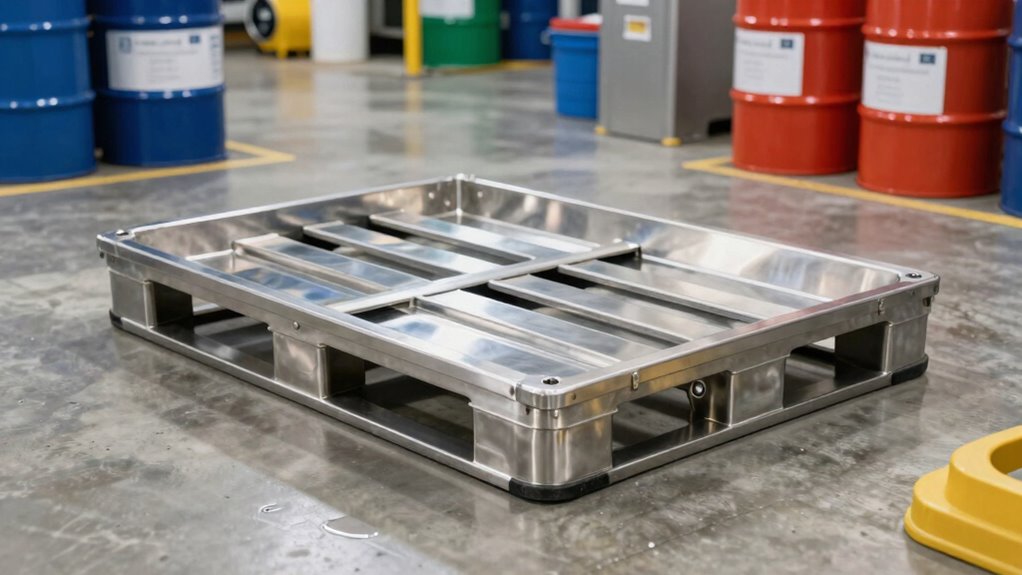

If you’re managing hazardous materials, spill containment pallets help protect your team, environment, and compliance with regulations. They are designed for secondary containment, catching leaks before they escape. Choosing the right pallets means considering safety standards, chemical compatibility, and durability, which reduces risks and simplifies maintenance. Easy-to-use and compliant options boost operational efficiency. Keep these basics in mind, and you’ll discover how smart investments can keep your workplace safe and efficient.

Prime made for students and young adults
- Fast, free delivery for dorm and study essentials
- Prime Video and Amazon Music included
- Member-only deals
Key Takeaways
- Ensure spill containment pallets meet safety standards and regulatory requirements for legal compliance and liability reduction.
- Choose chemically compatible, durable materials to prevent leaks and maintain long-term system integrity.
- Regularly inspect and maintain pallets to ensure ongoing effectiveness and safety.
- Opt for user-friendly designs that facilitate easy loading, unloading, and cleaning to boost operational efficiency.
- Properly selected containment pallets protect personnel, environment, and business continuity in busy operational settings.
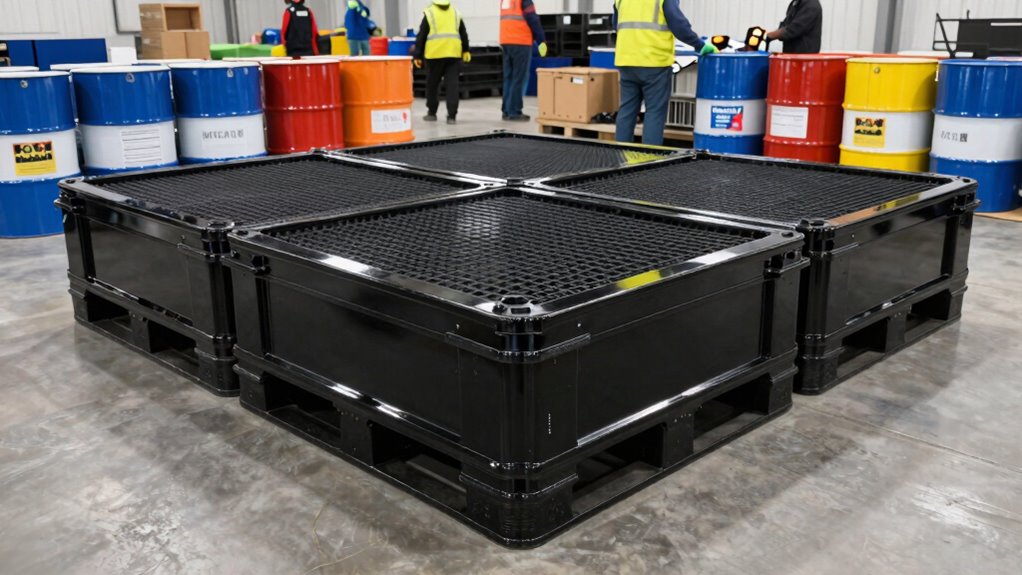
Safety regulations are the backbone of your spill prevention strategy. Governments and industry organizations set standards that require secondary containment for certain hazardous materials, and failing to comply can result in hefty fines or operational shutdowns. As you evaluate spill containment pallets, you should verify that they meet local and national safety standards, such as those outlined by OSHA or EPA. Proper labeling, capacity, and construction materials are essential factors, and choosing pallets that adhere to these regulations guarantees your business remains compliant. It also demonstrates your commitment to safety, which can boost your company’s reputation and reduce liability.
When selecting spill containment pallets, consider the chemical compatibility to prevent accidents and assure long-term durability. Compatibility isn’t just about avoiding leaks; it’s about maintaining the integrity of your containment system over time. If your pallets aren’t compatible with the chemicals stored, they may degrade, crack, or corrode, leading to potential spills and safety hazards. Regular inspections and maintenance are indispensable to catch any signs of damage early, but starting with chemically compatible pallets minimizes these risks from the outset. Compliance with safety standards is essential to ensure your containment system remains effective and legally compliant. Incorporating proper maintenance practices further enhances the longevity and safety of your containment solutions. Additionally, understanding the chemical resistance of your pallets can help prevent unforeseen failures and safeguard your operations. Staying informed about industry-specific safety regulations**** can also help you adapt your procedures proactively.
In busy environments, efficiency matters. You need containment pallets that are easy to load, unload, and clean. Selecting pallets that are designed for durability and ease of use can further streamline your operations and reduce labor costs. By choosing pallets that meet safety regulations and are chemically compatible with your stored materials, you streamline your operations and minimize downtime. Ultimately, your goal is to create a safe, compliant, and efficient workspace, and the right spill containment pallets are a key part of that plan. They protect your team, your environment, and your bottom line—making sure that your business runs smoothly even in the face of hazardous material handling.
spill containment pallets for hazardous materials
As an affiliate, we earn on qualifying purchases.
As an affiliate, we earn on qualifying purchases.
Frequently Asked Questions
What Materials Are Best for Spill Containment Pallets?
You should choose spill containment pallets made from durable, chemical-resistant materials like high-density polyethylene (HDPE) or steel. These materials offer excellent durability and withstand harsh chemicals, ensuring long-term performance. HDPE is lightweight, easy to clean, and resistant to corrosion, while steel provides strength and durability for heavy-duty applications. Prioritize materials that resist chemical damage and maintain structural integrity, helping your team effectively contain spills and stay compliant.
How Often Should Spill Containment Pallets Be Inspected?
Have you checked your spill containment pallets recently? You should inspect them at least monthly, guaranteeing they remain free from damage and corrosion. During inspections, verify chemical compatibility with stored materials and confirm they haven’t exceeded the weight capacity. Regular checks help prevent leaks, maintain safety, and ensure compliance. Don’t wait until a spill occurs—staying proactive protects your team and your facility from costly accidents.
Are Spill Containment Pallets Compliant With OSHA Standards?
Yes, spill containment pallets are compliant with OSHA standards when they meet specific environmental regulations and safety protocols. You need to guarantee they have proper secondary containment capacity and are regularly maintained. By doing so, you help prevent leaks and spills, reducing hazards in the workplace. Always verify that your pallets adhere to local and federal regulations, demonstrating your commitment to safety and environmental responsibility.
Can Spill Containment Pallets Be Customized for Specific Needs?
Yes, spill containment pallets can be customized to fit your specific needs. You can opt for custom design options that match your space and containment requirements. Modular configurations allow you to expand or modify your setup easily, guaranteeing flexibility for changing operations. This adaptability helps you stay compliant with safety standards while efficiently managing spills. Custom and modular options ensure your spill containment system works seamlessly within your busy environment.
What Is the Lifespan of a Typical Spill Containment Pallet?
A typical spill containment pallet lasts about 5 to 10 years, depending on the material and usage. You should consider environmental impact and cost when evaluating its lifespan, as durable pallets reduce the need for frequent replacements, minimizing waste. Regular inspections help identify signs of wear, ensuring safety and compliance. Investing in high-quality pallets may have higher upfront costs but pays off by lowering long-term expenses and environmental footprint.
Conclusion
Think of spill containment pallets as the sturdy shields guarding your team’s integrity amid chaos. They symbolize your commitment to safety, acting as silent guardians that prevent small leaks from becoming overwhelming storms. By choosing reliable containment, you’re not just managing spills—you’re building a fortress of trust and responsibility. Remember, in the dance of daily operations, these pallets are your steady rhythm, ensuring that even in turbulent times, your foundation remains unshaken and secure.
Halloween Picks
halloween
As an affiliate, we earn on qualifying purchases.