

To prepare for a HAZOP session without wasting time, review process diagrams, procedures, and incident reports beforehand to identify critical hazards and weak points. Clearly define roles like facilitator and scribe, and share the agenda in advance. Verify process data and controls to guarantee accuracy. Conduct pre-session reviews to spot potential issues and focus discussions on key areas. Staying current with updates and fostering collaboration helps make your session efficient—find out more to maximize your preparation.

Get school and study supplies delivered free — and shop member deals
- Fast, free delivery on millions of items
- Access to Prime Big Deal Days deals on October 6–7
- Prime Video, Amazon Music and more included
Key Takeaways
- Conduct a thorough risk assessment to identify critical hazards and gather relevant process data beforehand.
- Prepare detailed, accurate process documentation and verify parameters to prevent misunderstandings.
- Assign clear roles and share the agenda in advance to streamline discussion and avoid overlaps.
- Review process information and potential issues during pre-session to focus on critical areas.
- Keep risk assessments and documentation updated regularly to ensure ongoing preparedness and efficiency.
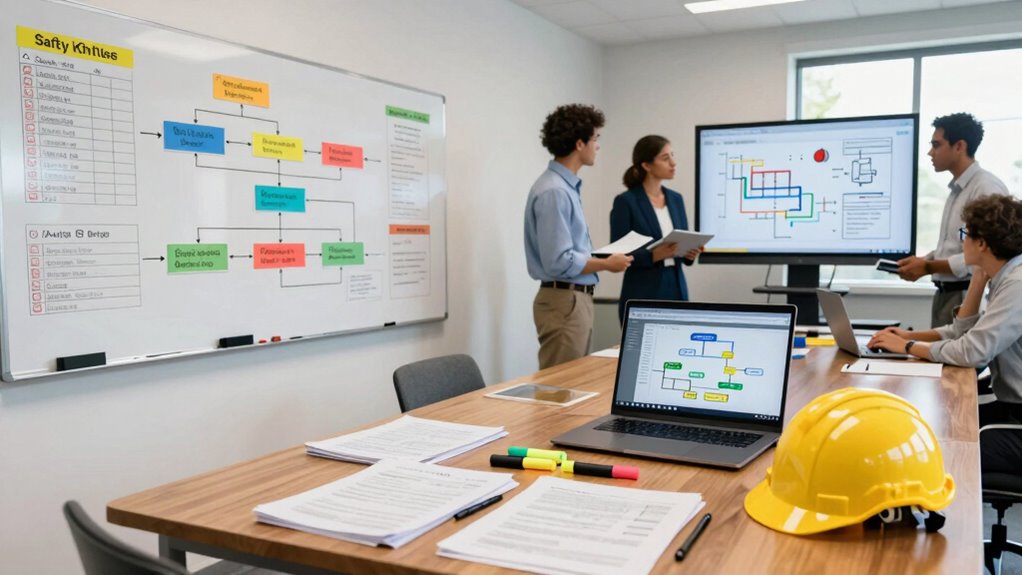
Preparing effectively for a HAZOP (Hazard and Operability) session is essential to identify potential risks and guarantee safety in your process design. To do this, you need to focus on a thorough risk assessment beforehand, which helps streamline the session and makes your team’s efforts more productive. When you’re clear on what hazards might exist, you can direct your team’s attention to the most critical areas, saving time and avoiding unnecessary discussions. This means reviewing process diagrams, operating procedures, and past incident reports to pinpoint weaknesses or uncertainties. Your goal is to compile relevant data that can inform the team’s analysis, ensuring everyone arrives prepared with a solid understanding of the process and its potential fail points.
Thorough risk assessment prepares your team, focusing on critical hazards to enhance HAZOP session efficiency and safety.
Team collaboration plays an indispensable role in making your HAZOP session efficient. You want to foster an environment where everyone feels comfortable sharing insights, asking questions, and challenging assumptions. Before the session, it’s helpful to assign roles—such as a facilitator, scribe, and process experts—so the discussion flows smoothly and stays focused. Clear roles help prevent overlaps and confusion, allowing each team member to contribute their expertise without wasting time. Also, sharing the agenda beforehand ensures everyone understands the scope, objectives, and key areas for review, so they come ready to engage productively. Additionally, emphasizing the importance of risk assessment helps your team understand the critical role thorough preparation plays in safety analysis. Conducting a comprehensive review of process data ensures all relevant factors are considered during hazard identification. Incorporating up-to-date process information further enhances the accuracy of your hazard analysis.
Preparing detailed and accurate process descriptions is another critical step. You should verify that all process parameters, operating ranges, and control measures are up-to-date and well-documented. This clarity minimizes misunderstandings during the session, reducing the need for lengthy clarifications that can slow things down. If possible, perform a dry run of the HAZOP process, walking through the steps to identify potential issues in your preparation itself. This pre-emptive check can highlight gaps in your data or planning, allowing you to fill those gaps before the actual session. Additionally, maintaining up-to-date safety data and process documentation ensures your team is working with accurate information, which is vital for effective hazard identification.
Finally, remember that effective preparation isn’t a one-time effort—it’s an ongoing process. Regularly update your risk assessments and process documentation so that your team always works with the most current information. By doing so, you foster a proactive safety culture that’s better equipped to identify hazards early and act swiftly. When you combine thorough risk assessment, solid team collaboration, and meticulous planning, you’ll conduct HAZOP sessions that are efficient, focused, and highly effective at safeguarding your processes.
HAZOP session preparation checklist
As an affiliate, we earn on qualifying purchases.
As an affiliate, we earn on qualifying purchases.
Frequently Asked Questions
What Are Common Pitfalls During a HAZOP Session?
During a HAZOP session, you might stumble over common pitfalls like inadequate risk mitigation strategies or poor team collaboration. When team members don’t share insights openly, it hampers identifying potential hazards. To prevent this, foster an environment where everyone feels comfortable contributing. Focusing on thorough risk assessments and encouraging collaborative discussion ensures you cover all angles, reducing errors and improving safety. Active participation is key to effective hazard identification.
How Long Should a Typical HAZOP Session Last?
A typical HAZOP session lasts between four to eight hours, but sometimes it feels like an eternity or a flash of lightning. You should plan for around six hours, including breaks, to keep everyone alert and engaged. Proper session scheduling prevents fatigue, ensuring thorough hazard identification. Keep the duration realistic; overlong sessions can cause mistakes, while too-short ones might miss critical issues. Balance is key for effective hazard analysis.
Who Should Be Present at a HAZOP Meeting?
You should guarantee that the Hazop team includes diverse participant roles, such as process engineers, safety specialists, operators, and design engineers. Their combined expertise helps identify risks effectively. Including relevant stakeholders from different disciplines ensures thorough analysis. Make certain everyone understands their participant roles beforehand, so the session runs smoothly. By assembling the right Hazop team with clear roles, you facilitate a productive, focused hazard and operability study.
What Tools Are Best for Documenting HAZOP Findings?
You should use hazop software combined with documentation templates to streamline your findings. These tools help you quickly capture observations, risks, and recommendations during the session, making documentation clear and organized. Hazop software automates data entry and analysis, saving time, while templates ensure consistency across reports. Together, they keep your documentation accurate, accessible, and ready for review, so you can concentrate on identifying hazards rather than wrestling with paperwork.
How to Handle Disagreements During a HAZOP Session?
When disagreements arise during a HAZOP session, you should focus on conflict resolution by encouraging open communication and listening actively to all viewpoints. Facilitate decision making by guiding the team toward consensus, ensuring everyone’s concerns are addressed. Keep discussions focused on safety and process integrity, and consider using a structured approach like a decision matrix to weigh options objectively. This approach promotes collaboration and helps reach effective, timely resolutions.
Conclusion
By preparing thoroughly for a HAZOP session, you’ll avoid wasting time and guarantee a smooth, productive discussion. Remember, the effort you put in now is like planting seeds for a forest—you’ll reap safety, efficiency, and confidence in every corner of your project. Don’t underestimate the power of preparation; it’s the key to transforming a potentially chaotic meeting into a well-oiled machine. Stay organized, be proactive, and watch your safety standards soar to new heights!
Fall Picks
fall essentials
As an affiliate, we earn on qualifying purchases.



![New AI Tutor Achieves 0.71-1.30 SD Effect Size In Dartmouth Course [Pdf]](https://chemicalceo.com/wp-content/uploads/2026/07/new-ai-tutor-achieves-0-71-1-30-sd-effect-size-in-dartmouth-course-pdf-featured-560x300.jpg)