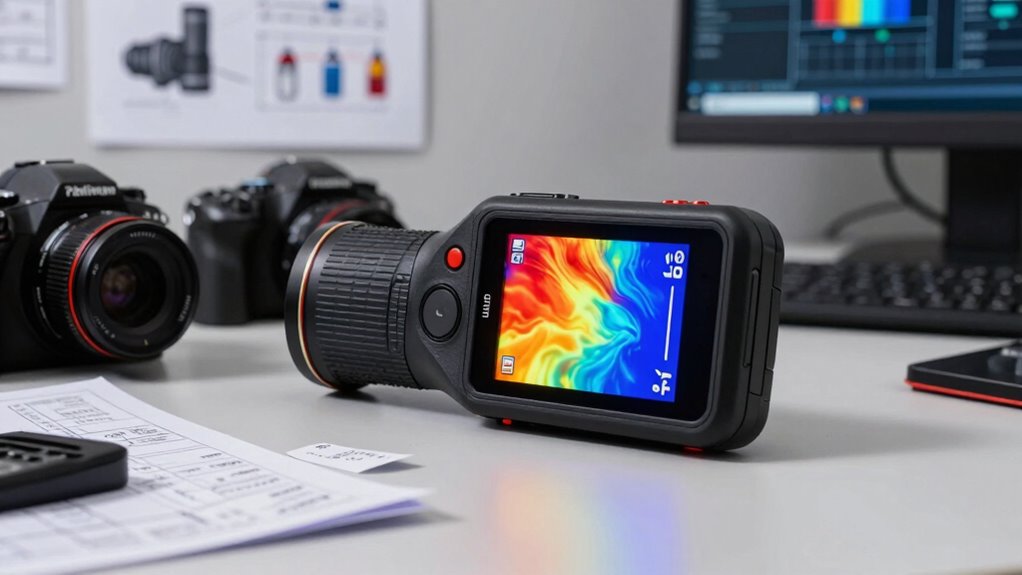
To choose a thermal imaging camera without overbuying, focus on matching its resolution and features to your specific inspection needs. Higher resolution cameras provide more detail but come at a higher cost, so consider what level of detail is essential for your tasks. Avoid extra features you won’t use, and prioritize calibration options for accuracy. Understanding your core requirements helps you make cost-effective choices. If you want expert tips, you’ll find useful insights to guide your decision.
Key Takeaways
- Assess your specific inspection needs to determine the minimum resolution required, avoiding unnecessary higher specs.
- Match camera features, like calibration and image quality, to your workflow for accurate diagnostics.
- Consider long-term value by balancing initial cost with potential repair savings from better resolution.
- Avoid overbuying by focusing on essential features rather than extra functionalities you won’t use.
- Evaluate additional factors such as usability, battery life, and compatibility to ensure the camera fits your tasks.
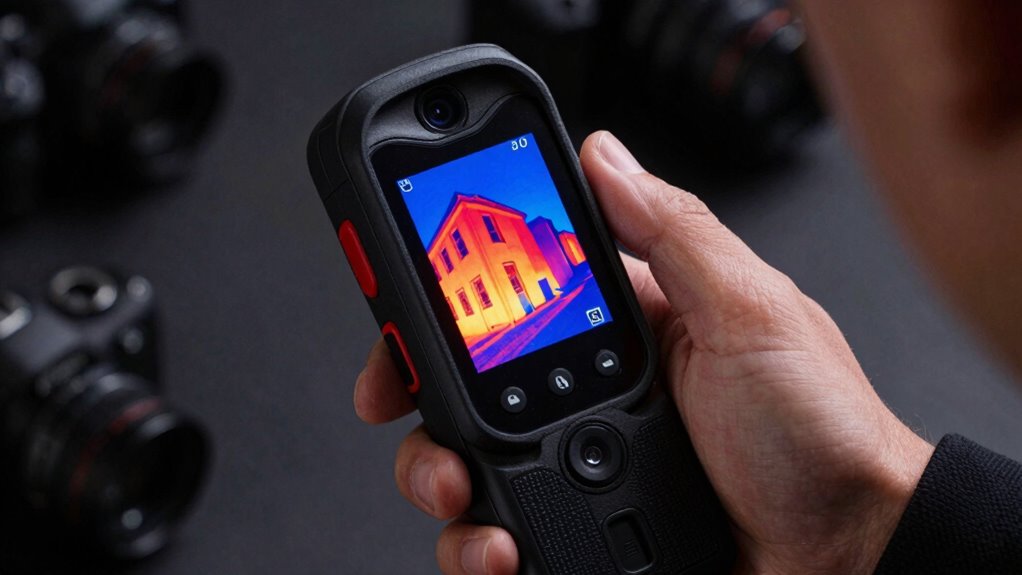
Choosing the right thermal imaging camera can substantially impact your ability to detect issues, save energy, or conduct inspections effectively. When evaluating options, two critical features to take into account are infrared resolution and battery life. Infrared resolution determines how detailed your thermal images will be. Higher resolution means more pixels and finer detail, which is crucial if you need precise diagnostics or want to identify small temperature differences. If you’re inspecting electrical panels, HVAC systems, or building envelopes, a camera with at least 160×120 pixels can provide a good balance between detail and cost. For more demanding applications, such as electrical troubleshooting or scientific research, opting for 320×240 pixels or higher ensures you won’t miss critical details. Remember, a lower resolution might save you money upfront but can lead to missed issues that could become costly later. Additionally, understanding your core needs helps prevent unnecessary overbuying, which can save you money in the long run. Considering key features that match your workflow can also help you avoid overbuying and ensure you select a camera suited to your specific needs. Being aware of thermal image quality and how it influences your inspections can further help you make an informed decision. Moreover, paying attention to image calibration can ensure consistent and accurate results over time, especially for critical inspections.
thermal imaging camera 160×120 resolution
As an affiliate, we earn on qualifying purchases.
As an affiliate, we earn on qualifying purchases.
Frequently Asked Questions
What Is the Typical Lifespan of a Thermal Imaging Camera?
A thermal imaging camera typically lasts around 5 to 10 years, but your experience depends on careful sensor calibration and battery longevity. Imagine the camera as a vigilant scout, whose sensor needs regular calibration to maintain sharpness, while a sturdy battery keeps it alive in the field. Proper maintenance, like updating firmware and replacing batteries, can extend its lifespan, ensuring you get reliable images for years to come.
Are There Any Maintenance Tips for Thermal Cameras?
You should follow regular maintenance schedules to keep your thermal camera in top shape. This includes cleaning the lens gently with a soft cloth and avoiding harsh chemicals. Additionally, calibrate the camera according to the manufacturer’s instructions, typically annually or after extensive use. Proper calibration guarantees accurate temperature readings, and routine checks can help identify issues early, extending your camera’s lifespan and maintaining its performance.
How Do Weather Conditions Affect Thermal Imaging Accuracy?
Imagine you’re inspecting a building on a foggy morning. Weather conditions like humidity interference and fog distortion can reduce thermal imaging accuracy by scattering infrared signals. High humidity or fog absorbs and distorts thermal radiation, making it harder to identify heat differences. To guarantee accurate readings, use cameras with adjustable settings for weather conditions, and avoid operating in extreme weather. Regular calibration also helps mitigate weather-related inaccuracies.
Can Thermal Cameras Be Used Underwater?
Yes, thermal cameras can be used underwater, but you’ll need an underwater thermal imaging device with waterproof camera features. These specialized cameras are designed to withstand water pressure and prevent damage, allowing you to perform underwater thermal imaging effectively. When selecting one, verify it’s rated for the depth you’ll be working at and check for features like waterproof seals and corrosion resistance to guarantee durability and accurate results underwater.
What Safety Precautions Should I Take When Using a Thermal Camera?
Think of your thermal camera as a delicate instrument that needs gentle handling. Always follow safety protocols and handling guidelines to prevent damage or injury. Keep it away from water or extreme heat, and wear protective gear if you’re working in hazardous environments. Be aware of your surroundings, avoid pointing at people’s eyes, and handle it with clean, dry hands. These precautions guarantee safe and effective use of your thermal imaging device.
professional thermal camera calibration
As an affiliate, we earn on qualifying purchases.
As an affiliate, we earn on qualifying purchases.
Conclusion
Choosing the right thermal imaging camera doesn’t have to feel like searching for a needle in a haystack. By understanding your needs, setting a budget, and comparing features, you guarantee you don’t overbuy or underperform. Think of it as finding the perfect key—fit for your specific lock. With a little research, you’ll access the power of thermal imaging without breaking the bank. After all, the right camera is out there waiting—just like your perfect fit.
handheld thermal imaging camera for electrical inspection
As an affiliate, we earn on qualifying purchases.
As an affiliate, we earn on qualifying purchases.
budget thermal imaging camera for home use
As an affiliate, we earn on qualifying purchases.
As an affiliate, we earn on qualifying purchases.