To build an effective lab inventory system, combine barcode and RFID tags to streamline tracking and updates. Use barcodes for quick scanning of consumables and equipment, while RFID can track multiple items simultaneously without line-of-sight. Focus on monitoring items like reagents, pipettes, filters, and high-value equipment with detailed records, including serial numbers, purchase dates, and calibration history. Keep your system secure and compliant—exploring these strategies further can help you optimize your lab management approach.
Key Takeaways
- Incorporate barcodes and RFID tags to enable quick, accurate asset identification and real-time inventory updates.
- Track consumables, high-value equipment details, and maintenance schedules for comprehensive inventory management.
- Use automated data entry and scanning technologies to reduce manual errors and improve efficiency.
- Implement maintenance and calibration reminders linked with inventory data to ensure equipment reliability.
- Ensure data security and compliance by encrypting sensitive information and maintaining audit trails.

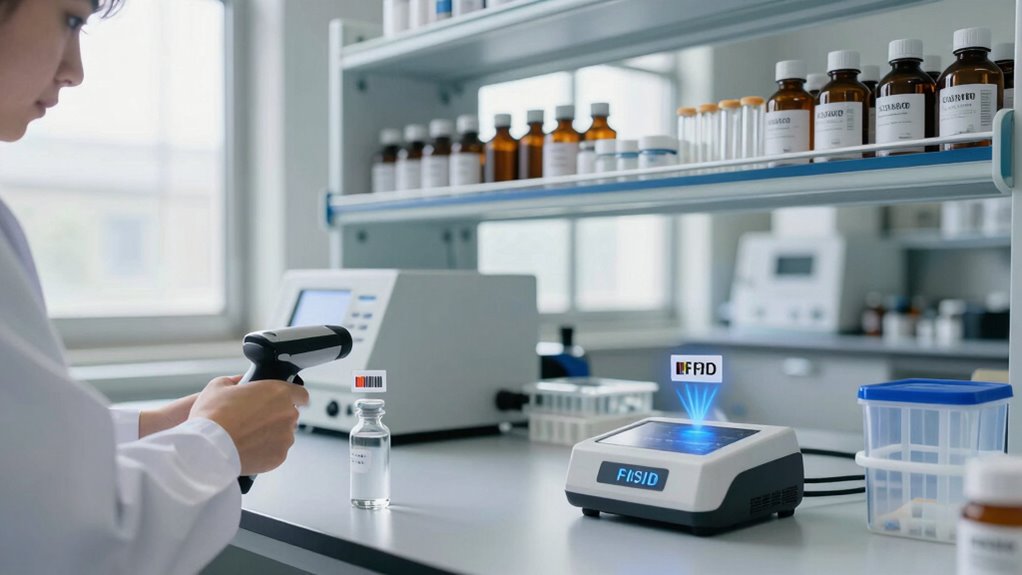
Managing lab supplies and equipment efficiently is essential for smooth operations, and a lab inventory system makes this task much easier. When you implement a robust system, tracking every item becomes straightforward, reducing errors and saving you time. One of the key elements of an effective inventory system is leveraging technology like barcodes and RFID tags. These tools automate data entry, minimize manual errors, and streamline the process of checking items in and out. With barcodes, you can quickly scan equipment or supplies as they move through your lab, instantly updating your records. RFID technology takes this a step further by allowing you to track multiple items simultaneously without direct line-of-sight scanning, which is especially useful in busy labs with numerous assets.
Implementing barcode and RFID technology streamlines lab inventory management, reduces errors, and enhances asset tracking efficiency.
In addition to tracking, a good system supports equipment maintenance by providing timely reminders for calibration, servicing, or repairs. This helps prevent equipment failures that could compromise experiments or safety. When your inventory system is integrated with maintenance schedules, you can set automated alerts, ensuring that no equipment is overlooked. Not only does this improve reliability, but it also extends the lifespan of your assets, saving money in the long run. Incorporating reliable tracking methods helps ensure your data remains accurate and consistent across devices and platforms. Data security is another critical aspect you must consider. Your lab handles sensitive data—whether it’s experimental results, proprietary protocols, or personnel information—so safeguarding this data is non-negotiable. An effective inventory system employs encryption, access controls, and audit trails to prevent unauthorized access and maintain compliance with data protection standards. This way, you can rest assured that your valuable data remains confidential and intact.
Tracking what to monitor within your inventory is just as important as the technology you choose. You should keep tabs on consumables like reagents, pipettes, and filters, as well as high-value equipment such as microscopes, centrifuges, and spectrometers. Maintaining accurate records of serial numbers, purchase dates, warranty information, and calibration history allows you to quickly identify when replacements or servicing are due. Having a detailed database helps streamline ordering processes, prevents stockouts, and optimizes usage.
Ultimately, building a lab inventory system that incorporates barcodes, RFID, and detailed tracking ensures your lab operates efficiently, securely, and reliably. It simplifies equipment maintenance, enhances data security, and keeps your supplies organized, so you spend less time managing assets and more time focusing on your research. With the right tools and strategies, you turn a complex task into an organized, manageable process that supports your lab’s success.

LabelTac GHS Industrial Vinyl Label Printer
COMPACT DESIGN – The LabelTac Pro X blends industrial-grade durability with a compact frame, making it perfect for...
As an affiliate, we earn on qualifying purchases.
Frequently Asked Questions
How Can I Ensure Data Security in My Inventory System?
To guarantee data security in your inventory system, you should implement strict access control so only authorized personnel can access sensitive data. Additionally, use data encryption both at rest and during transmission to protect information from breaches. Regularly update your security protocols and monitor activity logs for suspicious behavior. These steps help safeguard your inventory data, maintaining confidentiality and integrity in your lab environment.
What Is the Cost Difference Between Barcodes and RFID?
Did you know RFID tags can cost up to 50% more than barcode labels? In the cost comparison, barcodes are markedly cheaper, often just a few cents per tag, while RFID pricing varies from 20 cents to several dollars each depending on features. If you’re budget-conscious, barcodes offer a cost-effective solution, but RFID provides faster, more automated tracking. Consider your lab’s needs to choose the best option.
How Do I Handle Inventory Updates During Equipment Maintenance?
During equipment maintenance, you should update your inventory by marking items as under preventive maintenance. Use your system to temporarily suspend these items from active inventory, then perform regular inventory reconciliation once maintenance completes. This guarantees accurate tracking, prevents misplacement, and maintains system integrity. Automate updates where possible, and document maintenance periods thoroughly to keep your inventory data reliable and up to date, reducing errors and streamlining audits.
Can the System Integrate With Existing Laboratory Management Software?
Yes, your system can integrate with existing laboratory management software. You’ll want to guarantee it supports software integration features like APIs or data import/export options. This allows for seamless data synchronization, keeping your inventory and management data current across platforms. Proper integration minimizes manual updates, reduces errors, and streamlines workflows, ensuring your lab operates efficiently without disrupting your current processes.
What Training Is Needed for Staff to Use RFID Technology Effectively?
Did you know that proper RFID training can boost staff efficiency by up to 30%? To use RFID technology effectively, you need thorough staff education that covers system operation, troubleshooting, and safety protocols. RFID training should include hands-on practice and clear instructional materials. Investing in this training ensures your team can confidently manage inventory, reduce errors, and maximize the benefits of RFID integration within your lab.

YANZEO SR300 UHF RFID Reader 860Mhz-960Mhz RFID Scanner Wireless Bluetooth Handheld RFID Reader, UHF Tag Reader for Clothing, Shoes, Jewellery Shop and Warehouse Inventory
Efficient Inventory Management: YANZEO SR300 UHF RFID Reader for 860-960MHz frequency range, ideal for clothing, shoe, jewelry stores,...
As an affiliate, we earn on qualifying purchases.
Conclusion
Implementing a lab inventory system with barcodes and RFID can boost efficiency by up to 30%, saving you time and reducing errors. By accurately tracking items like reagents, equipment, and samples, you ensure better accountability and streamlined workflows. Don’t overlook the importance of selecting the right technology for your needs. Embrace these tools, and you’ll transform your lab into a more organized, productive space—making your work easier and more reliable every day.

Rayoungtek Android Barcode Scanner UHF RFID Reader, Android 12 4+64GB, Built-in Zebra SE4710 Scanner Impinj E710 RFID Tag Reader, 4G Wireless Mobile Computer
【Powerful Barcode Scanning】Equipped with the built-in Zebra SE4710 scan engine, it effortlessly reads both 1D and 2D barcodes—even...
As an affiliate, we earn on qualifying purchases.

YANZEO SR290 UHF RFID Reader Handheld Terminal Barcode Scanner 1D/2D QR Barcode Reader Bluetooth 2.4 GHz+Wired USB Bar Code Reader for Jewelry/Clothing/Shoe Store, Supermarket, Warehouse
【Three Ways of Connection】This handheld barcode scanner offers three convenient ways of connection - Bluetooth, 2.4G, and USB...
As an affiliate, we earn on qualifying purchases.