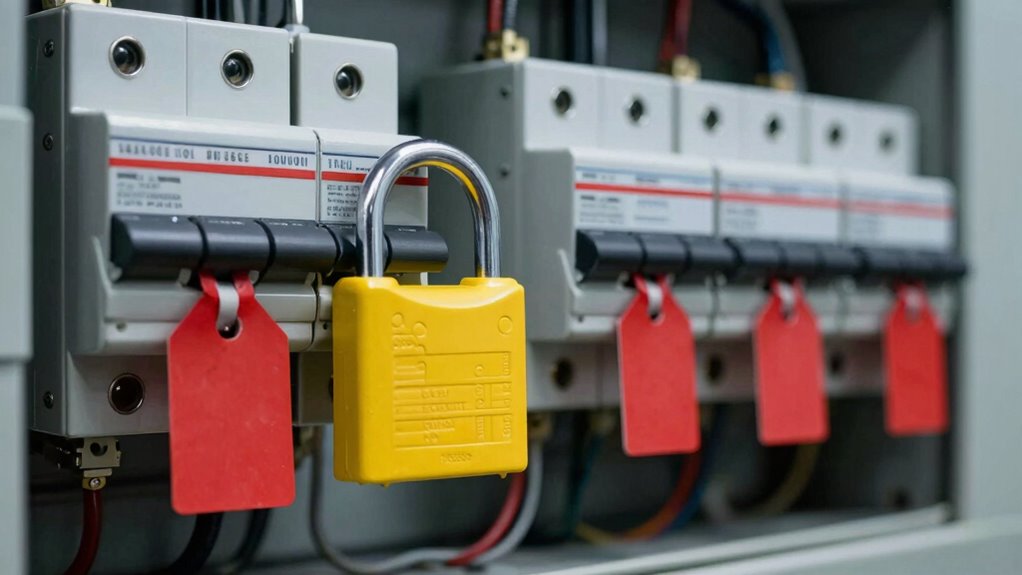
Many labs and plants skip the vital step of thorough hazard identification before locking out equipment. This step is essential because it helps you spot energy sources like stored heat, residual electricity, or mechanical forces that could cause injuries if overlooked. Ignoring this phase can make your lockout/tagout procedures ineffective, risking accidents or harm. To truly protect yourself and others, focus on identifying hazards first. Continue to learn how proper hazard assessment can make your safety protocols rock solid.
Key Takeaways
- Hazard identification is often overlooked, making it the most skipped but crucial step in lockout/tagout procedures.
- Skipping hazard assessment can leave energy sources active, risking unexpected equipment energization.
- Proper hazard identification ensures tailored lockout plans, reducing workplace accidents during maintenance.
- Rushing this step compromises safety, increasing the likelihood of injuries or fatalities.
- Thorough hazard assessment fosters a proactive safety culture and enhances overall lockout/tagout effectiveness.

Lockout/tagout procedures are vital for ensuring safety in laboratories and industrial plants. They serve as a critical step in preventing accidental equipment startups that could lead to injuries or fatalities. Yet, despite their importance, many workers and supervisors overlook or rush through this process, often skipping crucial steps like hazard identification. Ignoring this key element can have serious consequences, as it leaves unseen risks unaddressed and increases the likelihood of accidents. When you perform lockout/tagout, you’re not just following a routine; you’re actively engaging in safety procedures designed to protect everyone involved.
The first step in a thorough lockout/tagout process is hazard identification. This means you must thoroughly assess the equipment and surrounding environment to pinpoint all energy sources—electrical, hydraulic, pneumatic, thermal, or mechanical—that could pose a threat during maintenance or repair. Proper hazard identification isn’t a quick glance; it requires detailed inspection and understanding of the equipment’s operation and potential failure points. This step helps you determine the appropriate lockout devices and safety measures needed to control each energy source effectively. Failing to identify hazards can result in incomplete lockout procedures, which leaves dangerous energy still accessible and puts workers at risk.
When you follow safety procedures, hazard identification is the foundation that guides all subsequent steps. It ensures that you don’t underestimate the risks, and it helps you develop a plan tailored to the specific equipment and environment. For example, if you overlook stored energy or residual heat, you might assume the machine is safe to work on when it’s not. By carefully examining the equipment, you can establish a comprehensive lockout plan that includes isolating, relieving, or dissipating energy sources before any maintenance begins. This detailed approach minimizes the chances of unexpected energization, which is a leading cause of workplace injuries. Additionally, implementing standardized procedures ensures consistency and thoroughness in hazard assessments across different teams and projects.
It’s tempting to see hazard identification as a tedious or optional part of safety procedures, but neglecting it can be fatal. It’s the step that ensures your lockout/tagout process isn’t just a formality but a reliable safeguard. You need to take the time to identify all hazards thoroughly, document your findings, and communicate them clearly to everyone involved. This proactive approach not only keeps you safe but also helps create a safety culture where hazards are recognized and controlled before anyone gets hurt. Remember, skipping hazard identification might save time momentarily, but it compromises the entire safety system and puts lives at risk.
Frequently Asked Questions
How Often Should Lockout/Tagout Procedures Be Reviewed?
You should review lockout/tagout procedures at least annually, integrating maintenance scheduling and equipment inspection. Regular reviews help guarantee safety protocols stay current, identify potential hazards, and address any procedural gaps. By consistently revisiting these procedures, you keep everyone informed and prepared, reducing risks. Don’t overlook this essential step, as ongoing review maintains a safe environment and complies with safety standards.
Who Is Responsible for Enforcing Lockout/Tagout Protocols?
You’re responsible for enforcing lockout/tagout protocols through regular safety audits and promoting employee accountability. It’s your role to guarantee everyone understands their duties and follows proper procedures. By actively monitoring compliance and providing ongoing training, you help create a safer environment. When safety measures are consistently enforced, it reduces risks and fosters a culture where safety is everyone’s priority, making sure protocols aren’t overlooked or skipped.
What Training Is Required for Employees Performing Lockout/Tagout?
You need to undergo thorough training that boosts your employee awareness and hazard recognition skills. This training covers lockout/tagout procedures, energy control methods, and the importance of following protocols precisely. You’ll learn how to identify hazards, understand the risks involved, and properly implement lockout/tagout steps. Regular refresher courses ensure you stay current, helping you protect yourself and your coworkers from potential injuries during maintenance or equipment servicing.
How Are Lockout/Tagout Procedures Documented and Tracked?
Did you know that 75% of safety violations go unnoticed without proper documentation? You should regularly audit compliance and make sure your lockout/tagout procedures are thoroughly documented and tracked. Keep detailed records of each lockout event, including date, equipment involved, and employee signatures. This not only helps verify procedures are followed but also improves documentation accuracy, making audits easier and enhancing overall safety management in your lab or plant.
What Are Common Mistakes to Avoid During Lockout/Tagout Implementation?
You should avoid rushing the lockout/tagout process, which can lead to equipment failure or incomplete lockout. Make certain all energy sources are properly isolated, and never rely on inadequate signage, as it can cause confusion or missed steps. Double-check that locks and tags are secure before work begins. Ignoring these details increases risk, so stay vigilant, follow procedures carefully, and communicate clearly to prevent accidents or equipment issues.
Conclusion
Don’t be the hero who skips lockout/tagout and ends up in a Shakespearean tragedy. Remember, safety isn’t a relic of the past—it’s your modern-day armor. Treat every machine like it’s a dragon guarding treasure, and don’t rush the process. If you keep this step in mind, you’ll avoid costly accidents and keep everyone safe. After all, even in the age of chariots and knights, one mistake could be your last. Stay vigilant!