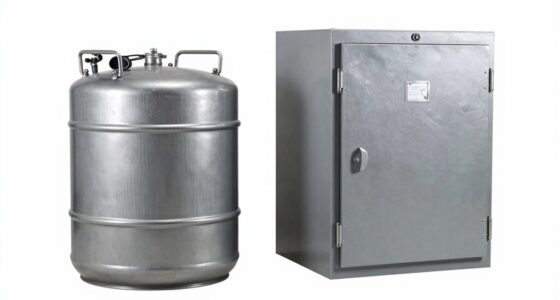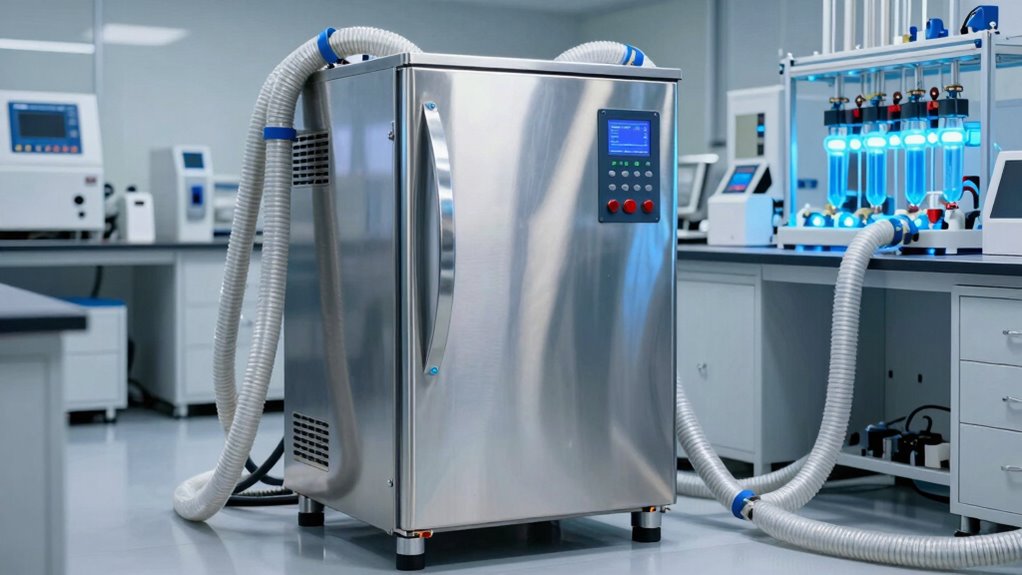

To make certain your recirculating chillers operate efficiently, you need to match their cooling capacity closely to your actual load. Oversized chillers waste energy and drive up costs, while undersized units can’t provide enough cooling, risking equipment failure. Proper load assessment allows you to optimize performance, save energy, and extend your equipment’s life. Keep in mind that paying attention to these factors helps you get the most reliable, cost-effective operation—there’s more essential info ahead.

Prime made for students and young adults
- Fast, free delivery for dorm and study essentials
- Prime Video and Amazon Music included
- Member-only deals
Key Takeaways
- Proper load assessment ensures the recirculating chiller provides adequate cooling without excess energy consumption.
- Matching capacity to real loads prevents equipment strain and extends chiller lifespan.
- Accurate sizing considers process requirements, ambient conditions, and heat loads for optimal performance.
- Regular maintenance maintains efficiency, ensuring the chiller operates at its matched capacity.
- Proper system design and expert consultation help select a chiller that aligns with actual cooling demands.
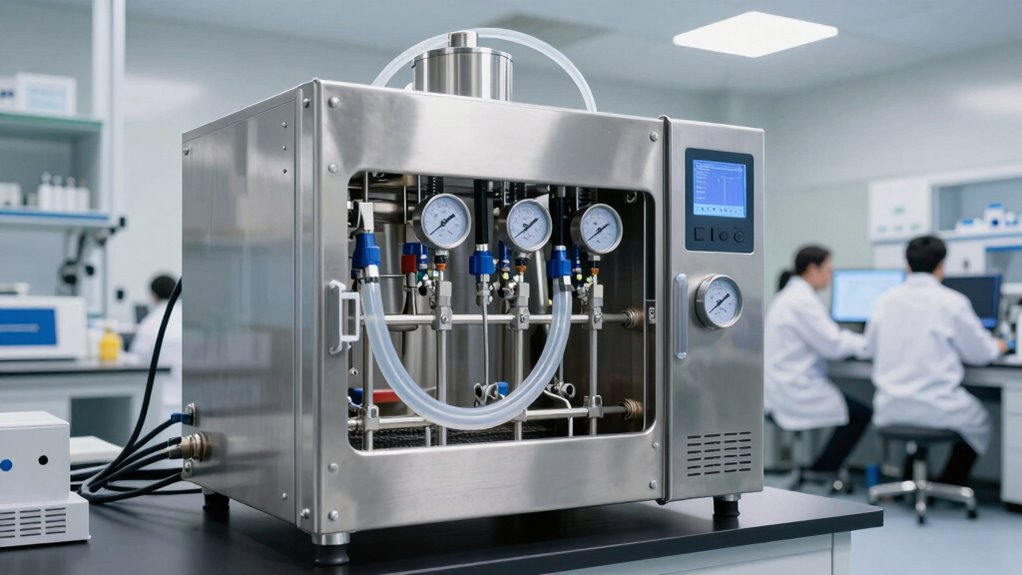
Recirculating chillers are vital cooling devices used across various industries to maintain precise temperature control of equipment and processes. When selecting a chiller, matching its cooling capacity to your real load is essential. Oversized chillers waste energy and increase costs, while undersized units can lead to inadequate cooling and equipment failure. Accurately evaluating your cooling load ensures you choose a chiller that operates efficiently, saving you money and reducing your energy consumption. Properly matched chillers operate closer to their peak efficiency, which minimizes energy waste and lowers your operating costs. This focus on energy efficiency becomes even more important as energy prices rise and companies seek sustainable solutions.
To determine your true cooling load, consider factors like heat generated by equipment, ambient temperature variations, and process-specific requirements. Using load calculations or consulting with experts helps you avoid the pitfalls of over- or under-sizing. Once you identify the appropriate capacity, you can select a recirculating chiller that provides reliable performance without unnecessary energy expenditure. Keep in mind that a well-matched chiller not only conserves energy but also extends its lifespan, reducing your maintenance requirements over time. Regular maintenance is vital for keeping your chiller running at peak efficiency, but choosing the right size minimizes the strain on components and lessens the frequency of repairs. Understanding your actual cooling load ensures your system remains efficient and reliable over its lifespan. Additionally, considering energy efficiency and the chiller’s design can further optimize performance and costs. Proper sizing and system design are crucial for achieving optimal cooling performance and energy savings.
A thorough understanding of your specific cooling requirements can help you select a chiller that balances capacity with energy conservation, leading to better long-term results. Regular maintenance requirements for recirculating chillers vary depending on usage, operating environment, and the quality of the unit. Routine tasks include checking refrigerant levels, cleaning filters, inspecting pumps, and ensuring that temperature controls are calibrated correctly. Maintenance practices play a significant role in maintaining optimal efficiency. Well-maintained chillers operate more efficiently, consume less energy, and experience fewer breakdowns, ultimately lowering your overall costs. To maximize your chiller’s lifespan and performance, follow the manufacturer’s recommended maintenance schedule and perform regular system audits. Implementing proper maintenance routines also helps identify potential issues early, preventing costly repairs and downtime.
recirculating chiller capacity calculator
As an affiliate, we earn on qualifying purchases.
As an affiliate, we earn on qualifying purchases.
Frequently Asked Questions
How Do I Calculate the Actual Cooling Load for My Application?
To calculate your actual cooling load, start with thermal modeling of your system to understand heat sources and transfer rates. Then, perform load estimation by measuring or estimating heat gains from equipment, lighting, and ambient conditions. Add these together to determine the total cooling requirement. This approach guarantees your recirculating chiller matches the real load, preventing inefficiencies or insufficient cooling.
What Are the Signs of an Undersized or Oversized Chiller?
If your chiller is undersized, you’ll notice inadequate cooling, frequent cycling, and increased energy bills, indicating poor chiller sizing. An oversized chiller causes short cycling, temperature fluctuations, and unnecessary energy consumption. To avoid these issues, accurate load estimation is essential. When sizing your chiller, carefully match its capacity to your real load demands, ensuring it operates efficiently without unnecessary wear or insufficient cooling.
How Does Ambient Temperature Affect Chiller Performance?
Did you know that ambient temperature can reduce chiller efficiency by up to 30%? Ambient influence and temperature fluctuations directly impact your chiller’s performance. Higher outdoor temperatures overload the system, making it work harder and consume more energy. Conversely, cooler environments improve efficiency. To optimize operation, consider climate conditions and adjust your chiller’s capacity accordingly, ensuring it handles temperature fluctuations effectively and maintains consistent cooling performance.
Can Recirculating Chillers Handle Variable or Fluctuating Loads?
Yes, recirculating chillers can handle variable or fluctuating loads effectively. They maintain thermal stability by adjusting their cooling capacity in real-time, ensuring consistent performance. This adaptability also enhances energy efficiency, as the chiller only uses the necessary power to meet current demands. By dynamically responding to load changes, these chillers provide reliable cooling while optimizing energy use, making them suitable for applications with unpredictable or varying thermal loads.
What Maintenance Is Required to Ensure Optimal Chiller Efficiency?
Did you know that improper maintenance can reduce chiller efficiency by up to 30%? To keep it running smoothly, you should regularly check for leaks, preventing refrigerant leaks that can impair performance. Proper refrigerant management guarantees peak cooling and energy efficiency. Additionally, clean heat exchangers, replace filters, and inspect electrical components. Consistent maintenance not only prolongs your chiller’s lifespan but also guarantees it delivers maximum cooling capacity when you need it most.
Conclusion
Just like tuning a musical instrument guarantees perfect harmony, matching your chiller’s capacity to your real load keeps your system running smoothly. I once saw a lab where an undersized chiller caused constant shutdowns, much like a guitar out of tune—disrupting the whole performance. By selecting the right-sized recirculating chiller, you prevent such missteps, ensuring efficient, reliable cooling that hits all the right notes. Trust the right match to keep your operations in perfect harmony.
Fall Picks
fall essentials
As an affiliate, we earn on qualifying purchases.