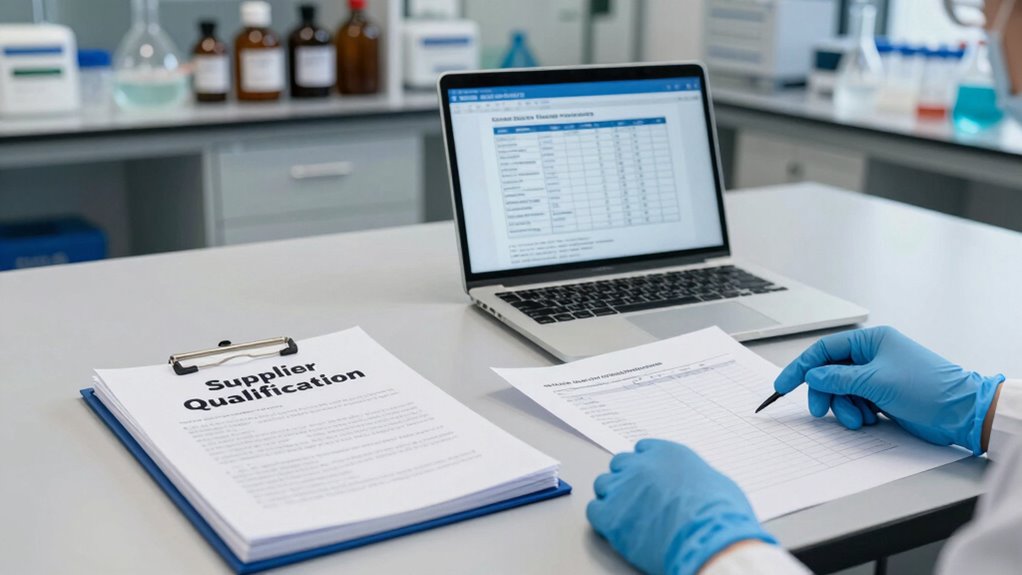

To qualify suppliers for chemical inputs, you should verify their compliance with industry standards and guarantee transparency in sourcing practices. Conduct thorough audits of their facilities, focusing on raw material handling, storage, and testing procedures. Confirm they follow ethical, sustainable sourcing and maintain detailed records for traceability. Assess their capacity to meet demand without sacrificing quality. Continuing with these steps will help you ensure consistent safety, quality, and regulatory adherence in your supply chain.

Get school and study supplies delivered free — and shop member deals
- Fast, free delivery on millions of items
- Access to Prime Big Deal Days deals on October 6–7
- Prime Video, Amazon Music and more included
Key Takeaways
- Verify supplier compliance with industry standards through documentation, audits, and ongoing monitoring.
- Assess sourcing transparency, traceability, and ethical practices for raw materials.
- Conduct comprehensive supplier audits covering raw material handling, testing, and storage procedures.
- Evaluate supplier capacity to meet volume demands without sacrificing quality or safety.
- Maintain detailed records to ensure traceability, accountability, and regulatory compliance.

Have you ever wondered how to guarantee the chemical inputs you use meet quality and safety standards? Confirming this starts with solid supplier qualification practices, especially when it comes to raw material sourcing. Your goal is to select suppliers who consistently deliver high-quality, compliant chemicals, minimizing risks of contamination, unsafe products, or regulatory issues. To do this effectively, you need to establish a thorough process that evaluates potential suppliers before committing to any transactions. This process begins with evaluating their raw material sourcing. You want suppliers who have transparent, traceable sourcing practices, meaning they can provide documentation proving the origin and quality of their raw materials. When evaluating these sources, look for suppliers who source ethically, sustainably, and in accordance with industry standards. Their raw material sourcing should be documented, auditable, and aligned with your safety and quality requirements. Ensuring suppliers follow industry standards helps maintain consistent quality and compliance throughout the supply chain. Establishing a clear understanding of their sourcing practices also helps prevent supplier-related risks, which can impact your product integrity. Additionally, verifying that suppliers adhere to recognized quality management systems can further enhance confidence in their processes. Incorporating traceability practices into your qualification process enables you to quickly identify and address issues related to raw material origin or quality. Once you’ve identified potential suppliers, supplier auditing becomes a critical step. Supplier auditing involves visiting their facilities, reviewing their processes, and verifying compliance with relevant standards. During audits, focus on how they handle raw material sourcing, manufacturing processes, storage conditions, and quality control measures. Check whether they have robust procedures for testing raw materials upon receipt and throughout production. Ensure they maintain detailed records, which are crucial for traceability and accountability. An effective supplier audit also assesses their capacity to meet your volume demands without compromising quality. If the supplier employs reliable testing methods and adheres to Good Manufacturing Practices (GMP), you can feel more confident about their ability to deliver safe, compliant chemicals consistently.
chemical supplier qualification audit checklist
As an affiliate, we earn on qualifying purchases.
As an affiliate, we earn on qualifying purchases.
Frequently Asked Questions
How Long Does the Supplier Qualification Process Typically Take?
The supplier qualification process typically takes anywhere from a few weeks to several months, depending on the complexity of your risk assessment and the thoroughness of documentation standards. You’ll review supplier credentials, perform audits, and evaluate their compliance. Staying organized and prompt in your communication helps speed things up. However, rushing can compromise quality, so make certain you carefully assess all risks and verify documentation to secure a reliable supply chain.
What Are Common Challenges Faced During Supplier Qualification?
You often face challenges like incomplete documentation requirements and steering risk assessments, which can slow down qualification. Coincidentally, many struggle with inconsistent data or overlooked safety standards, making risk assessment tricky. You need detailed documentation to verify supplier credibility, but gaps might exist. Balancing all-inclusive evaluations while managing limited resources is tough. Staying organized and proactive helps you overcome these hurdles, ensuring a smoother qualification process.
How to Handle Non-Compliance Issues With Suppliers?
When you encounter non-compliance issues with suppliers, address them promptly through contractual negotiations, clearly outlining expectations and consequences. Maintain open communication to foster supplier transparency, which helps identify root causes quickly. Work collaboratively to develop corrective action plans, and monitor progress regularly. If issues persist, consider alternative suppliers. Your proactive approach guarantees compliance, reduces risks, and strengthens your supply chain’s reliability.
What Are the Latest Trends in Chemical Supplier Qualification?
You’re riding the wave of innovation, and supplier qualification is evolving rapidly. You’ll find that innovative assessment tools, like digital audits and real-time data analytics, are leading the charge. Supplier transparency becomes your lighthouse, guiding you through the fog of uncertainty. These trends help you build stronger, more reliable partnerships, ensuring chemical inputs meet safety and quality standards while keeping pace with industry advancements.
How Do Regulatory Changes Impact Supplier Qualification Processes?
Regulatory changes greatly impact your supplier qualification processes by requiring stricter adherence to compliance standards and industry regulations. You need to stay updated on evolving laws, which may involve revising your validation procedures or updating documentation to demonstrate regulatory compliance. This guarantees your chemical inputs meet industry standards, minimizes legal risks, and maintains supply chain integrity. Adapting quickly to these changes helps you sustain quality and avoid potential penalties.
Conclusion
By thoroughly qualifying your chemical suppliers, you’re building a sturdy bridge that connects quality and safety. Think of this process as tending a garden—you need to nurture relationships, weed out risks, and guarantee your supply chain blooms with reliability. When you invest time and effort into supplier qualification, you create a resilient foundation that supports your business’s growth. Remember, a well-qualified supplier is the compass guiding you safely through the complex landscape of chemical inputs.
Halloween Picks
halloween
As an affiliate, we earn on qualifying purchases.