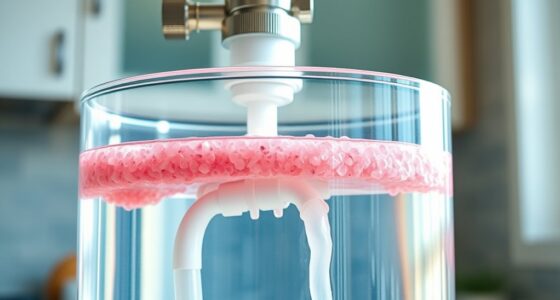
Dehumidifiers pull water from the air by cooling moist air on refrigerated coils, which causes the water vapor to condense into droplets. The device then collects this water in a tank or drains it away, helping reduce excess humidity. This process creates a drier, more comfortable environment and prevents issues like mold or dampness. To understand how this cycle works and how to optimize your dehumidifier’s performance, keep exploring the details behind its operation.

Prime made for students and young adults
- Fast, free delivery for dorm and study essentials
- Prime Video and Amazon Music included
- Member-only deals
Key Takeaways
- Dehumidifiers use refrigeration cycles to cool air, causing water vapor to condense into liquid droplets.
- Fans draw moist air over cold coils, where humidity turns into water and is collected.
- Removing excess moisture reduces mold, mildew, and dust mites, improving indoor air quality.
- Proper operation and placement enhance efficiency, maximizing water removal with less energy use.
- Excess moisture removal helps protect home structures and belongings from water damage and microbial growth.
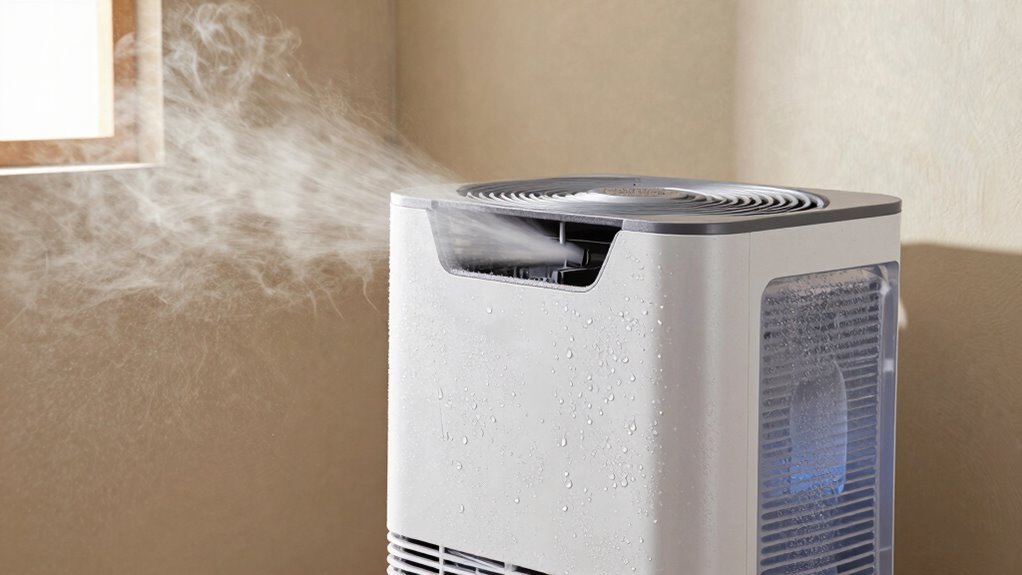
Have you ever wondered how dehumidifiers work to enhance your indoor air quality? It’s a fascinating process that involves pulling excess moisture from the air, making your home more comfortable and healthier. When humidity levels rise, they create a damp environment that can lead to mold, mildew, and dust mites. Dehumidifiers counteract this by removing water vapor, which otherwise would settle into surfaces and materials, encouraging microbial growth. By doing so, they help you breathe easier, protect your belongings, and reduce the need for costly repairs caused by moisture damage. Properly functioning dehumidifiers also contribute to energy efficiency, helping you save on electricity costs while maintaining optimal indoor conditions. Additionally, choosing the right size and features for your space ensures maximum effectiveness and energy savings.
Understanding why dehumidifiers pull water from the air begins with recognizing the importance of energy efficiency. Modern units are designed to consume less power while still performing effectively. They use refrigeration cycles similar to air conditioners, where a fan draws in moist air across cooled coils. As the air contacts the cold surface, water condenses into droplets, which then collect in a tank or drain away. This process requires a careful balance—if a dehumidifier isn’t energy-efficient, it might run excessively, increasing your electricity bill and wasting power. That’s why choosing an energy-efficient model not only saves money but also helps you operate the device sustainably. Proper placement and regular maintenance are also crucial to ensure the dehumidifier continues functioning efficiently.
Energy-efficient dehumidifiers save money and operate sustainably by using refrigeration cycles to condense moisture effectively.
Proper maintenance tips are essential to keep your dehumidifier functioning at its best. Regularly check and clean the air filters to prevent dust buildup that can hinder airflow and reduce efficiency. Empty the water collection tank frequently, or connect a drain hose if your unit supports continuous drainage. Keep the coils clean and free of dirt or mold, since dirty coils force the dehumidifier to work harder, consuming more energy. Additionally, place your dehumidifier in a central location away from obstructions to maximize airflow and moisture removal. Maintaining a clean environment around the unit can also prevent the buildup of dust and mold, which can impair its performance. Ensuring proper ventilation can further improve the unit’s ability to regulate humidity levels efficiently. Following these maintenance tips ensures your unit operates at peak performance, extending its lifespan and maintaining energy efficiency. Regular maintenance also helps prevent moisture-related issues, ensuring a healthier indoor environment for you and your family.
Ultimately, dehumidifiers pull water from the air because excess moisture poses risks to your home’s health and integrity. By removing humidity, they create a more comfortable indoor environment and prevent issues associated with dampness. When you select a model with good energy efficiency and follow routine maintenance tips, you ensure that your dehumidifier works effectively and economically. This not only improves your air quality but also saves you money over time. So, next time you see your dehumidifier in action, remember that its water-pulling process is a smart, energy-conscious way to keep your home dry, healthy, and comfortable.
energy-efficient dehumidifier for home
As an affiliate, we earn on qualifying purchases.
As an affiliate, we earn on qualifying purchases.
Frequently Asked Questions
How Much Water Can a Dehumidifier Typically Extract in a Day?
A dehumidifier typically extracts between 10 to 30 pints of water per day, depending on its water extraction capacity and efficiency. If you operate it in a damp environment, it works more efficiently, pulling more water from the air. Keep in mind that higher capacity units tend to remove more moisture, and maintaining your dehumidifier guarantees it works at the best possible efficiency, helping you control humidity levels effectively.
Do Dehumidifiers Work Effectively in Cold or Humid Climates?
Dehumidifiers are often less effective in cold or overly humid climates. About 80% of dehumidifiers are designed for temperatures above 65°F, making temperature compatibility a key factor. In high humidity levels, they struggle to remove enough moisture, especially in colder environments where their coils may freeze. To work efficiently, choose a model suited for your climate, ensuring it can handle the temperature and humidity levels you face daily.
Can Dehumidifiers Remove Odors Along With Moisture?
Yes, dehumidifiers can help remove odors along with moisture. They absorb odor-causing bacteria and mold spores through odor absorption, improving your air quality. Many models also feature air purification functions, trapping dust, allergens, and other pollutants. By reducing humidity and filtering the air, dehumidifiers create a fresher, cleaner environment, making your space smell better and feel more comfortable.
How Often Should I Clean or Replace the Dehumidifier’s Filter?
You should clean your dehumidifier’s filter every 2 to 4 weeks during regular use to maintain best performance. Follow the manufacturer’s recommended replacement schedule, usually every 6 to 12 months, or sooner if it becomes damaged or clogged. Regular filter maintenance ensures your dehumidifier operates efficiently, removes moisture effectively, and prevents mold or odors. Keep an eye on the filter’s condition and replace it as needed for the best results.
Are There Safety Concerns With Dehumidifiers Pulling Excess Water?
A stitch in time saves nine, so you should be aware of safety concerns with dehumidifiers pulling excess water. Excess moisture can lead to electrical safety hazards, like short circuits or fires, if the unit isn’t maintained properly. It also promotes mold growth, which can cause health issues. To stay safe, regularly check for leaks, guarantee proper drainage, and clean filters, preventing mold and safeguarding your home’s air quality.
Conclusion
So, now you see how dehumidifiers work—like silent guardians, they pull water from the air, turning moisture into dry comfort. They stand as your shield against dampness, battling humidity with quiet strength. Remember, every drop they extract is a step toward a healthier, more comfortable space. Embrace their power, and let them keep your air crisp and clear—because a dry home isn’t just a goal, it’s your sanctuary.
Halloween Picks
halloween
As an affiliate, we earn on qualifying purchases.