

Load containment with pallet wrappers isn’t just about wrapping; it’s a science involving understanding how loads behave during transit and how material properties affect stability. Proper tension, wrapping patterns, and environmental factors all play roles in preventing shifting, damage, or safety hazards. Choosing the right stretch film and applying it correctly is key to maintaining load security. If you want to master these principles and keep your loads secure, further insights await.

Prime made for students and young adults
- Fast, free delivery for dorm and study essentials
- Prime Video and Amazon Music included
- Member-only deals
Key Takeaways
- Load containment relies on scientific principles like tension, friction, and material properties to ensure stability during transit.
- Proper stretch film selection and application techniques are critical for effective load security.
- Environmental factors such as humidity and temperature affect stretch film performance and load stability.
- Achieving uniform tension and wrapping patterns prevents load shifting and enhances safety.
- Understanding load behavior as a science minimizes risks of damage, accidents, and delays in transportation.
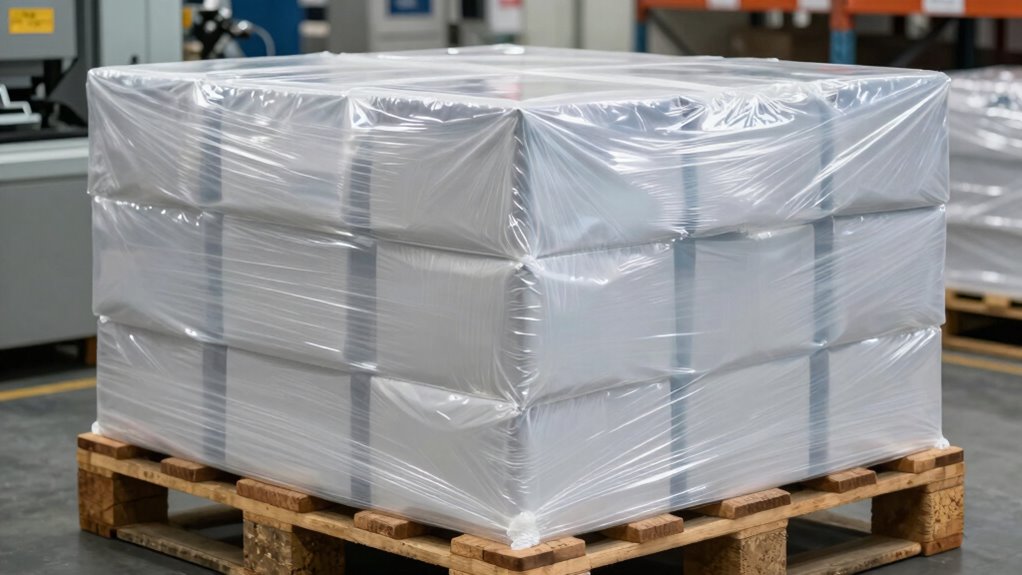
When it comes to securing loads on pallets, understanding load containment isn’t just a matter of wrapping; it’s a science. You need to think beyond simply wrapping your products with stretch film. Proper load containment involves understanding the mechanics of how your load behaves during transit and how to prevent shifting or collapsing. The right stretch film isn’t just about tightness; it’s about how effectively it works to enhance load stability. If your stretch film isn’t chosen and applied correctly, your load can become unstable, risking damage, safety hazards, and delays.
Proper load containment combines science and technique to ensure stability and safety during transit.
Load stability is key to safe transportation and storage. When you wrap a pallet correctly, you’re creating a cohesive unit that resists movement, even when subjected to vibrations or sudden stops. This means selecting the right stretch film, with the proper elasticity and strength, makes a difference. Thinner films might seem cost-effective but often compromise load stability, leading to potential failures. Conversely, thicker or more advanced stretch films maintain tension better, offering a more reliable containment solution. It’s about balancing cost, tension, and film characteristics to optimize the security of your load.
You also need to consider application techniques. Proper tension application ensures your stretch film adheres tightly without damaging your products. Too loose, and your load becomes unstable; too tight, and you risk damaging the items or the film itself. Learning the correct wrapping pattern—such as overlapping turns and securing the top and bottom—helps distribute tension evenly across the load. This uniform tension improves load stability, reducing the risk of shifting during handling or transit. application techniques play a crucial role in ensuring the effectiveness of your wrapping process.
Understanding the science behind load containment means recognizing how environmental factors affect your load. Humidity, temperature fluctuations, and handling vibrations all impact how your stretch film performs. For example, in colder environments, some stretch films become less elastic, decreasing their tension and, consequently, load stability. Choosing the right stretch film for specific conditions and applying it with proper technique ensures your load remains secure regardless of external influences. Additionally, awareness of material properties can help you select films that perform well under specific environmental stressors. Being mindful of these factors can significantly improve load security.
Moreover, staying informed about these factors allows for better risk mitigation strategies, reducing potential damages during transportation. In the end, mastering load containment isn’t just about wrapping; it’s about knowing your materials, applying them correctly, and understanding the physical principles that keep your load stable. When you pay attention to these details, you’re not just wrapping a pallet—you’re engineering a secure, reliable system that safeguards your products and ensures they arrive intact.
As an affiliate, we earn on qualifying purchases.
Frequently Asked Questions
How Do Different Pallet Shapes Affect Wrapping Effectiveness?
Different pallet shapes influence wrapping effectiveness because your wrapping technique needs to adapt accordingly. For example, a rectangular pallet allows for even wrap coverage, while irregular shapes like round or custom pallets require more precise adjustments to make certain load stability. You should select a wrapping technique that accounts for the pallet shape, using tighter wraps and strategic overlaps to prevent shifting, guaranteeing secure containment regardless of the pallet’s form.
What Environmental Factors Influence Pallet Load Stability?
Environmental factors act like an unpredictable storm, testing your load’s stability. Climate variations, such as humidity and temperature shifts, can weaken adhesives and materials, causing shifts or slips. Surface textures also play a role; rough surfaces grip better, while smooth ones may lead to slipping. You need to take into account these factors when securing loads, as they can turn a stable pallet into a toppled disaster if overlooked.
How Does Load Weight Distribution Impact Wrap Strength?
Your load weight distribution directly impacts wrap strength by affecting load balance. When weight is evenly distributed, compression tension on the pallet and wrap stays balanced, reducing the risk of shifting or collapsing. If the load is uneven, increased compression tension in certain areas strains the wrap, making it less effective. Proper weight distribution guarantees the wrap maintains its integrity, keeping your load stable and secure during transport.
Can Pallet Wrapping Be Optimized for Automated Systems?
Yes, you can enhance pallet wrapping for automated systems by fine-tuning stretch film application with automated tension controls. These systems adjust tension dynamically, ensuring consistent load containment and reducing film waste. By integrating sensors and computerized controls, you enhance wrap strength and stability, preventing load shifting. This approach streamlines your process, minimizes manual effort, and guarantees ideal load security, all while leveraging the science behind stretch film behavior and tension management.
What Safety Considerations Are Involved in Pallet Wrapping Processes?
Did you know that improper load securing causes over 25% of warehouse accidents? When wrapping pallets, you need to prioritize slip prevention by ensuring the wrap is tight and evenly distributed. Always check for stability before moving, and use safety gear to protect against potential injuries. Proper load securing minimizes the risk of load shifting, which keeps you safe and prevents accidents during transportation or handling.
Conclusion
You now see that load containment isn’t just about wrapping — it’s about understanding tension, balancing stability, and mastering technique. It’s about choosing the right materials, optimizing the process, and ensuring safety. It’s about precision, consistency, and control. When you grasp these elements, you create a secure, reliable load every time. In this science, your knowledge, your skills, and your attention to detail come together to protect your cargo, your team, and your business.
Halloween Picks
halloween
As an affiliate, we earn on qualifying purchases.