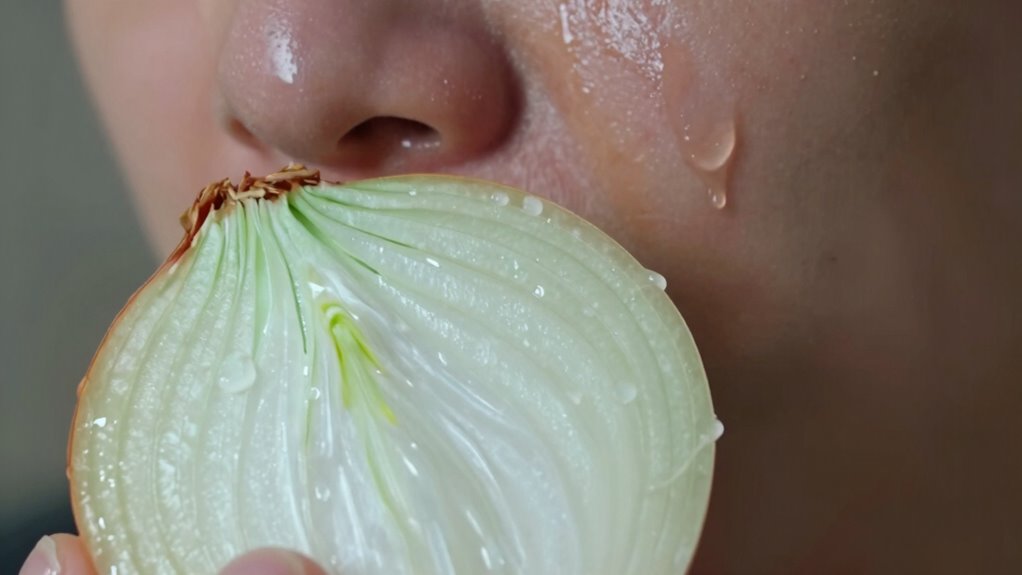

When you cut into an onion, its broken cells release sulfur-containing compounds. These volatile molecules react with the air and reach your eyes, causing irritation and triggering tears as a natural defense. The stronger the onion, the more of these compounds are released. Cooking or handling techniques can minimize this effect. If you want to understand how these chemicals develop and how to manage them better, there’s more to discover.

Get school and study supplies delivered free — and shop member deals
- Fast, free delivery on millions of items
- Access to Prime Big Deal Days deals on October 6–7
- Prime Video, Amazon Music and more included
Key Takeaways
- Cutting onions releases sulfur compounds that become volatile and reach your eyes.
- These compounds irritate the eyes’ mucous membranes, triggering tear production.
- The tears help flush out the irritants and protect the eyes from further harm.
- The chemical transformation during chopping increases the potency of the irritants.
- Cooking onions reduces sulfur compounds, decreasing eye irritation.
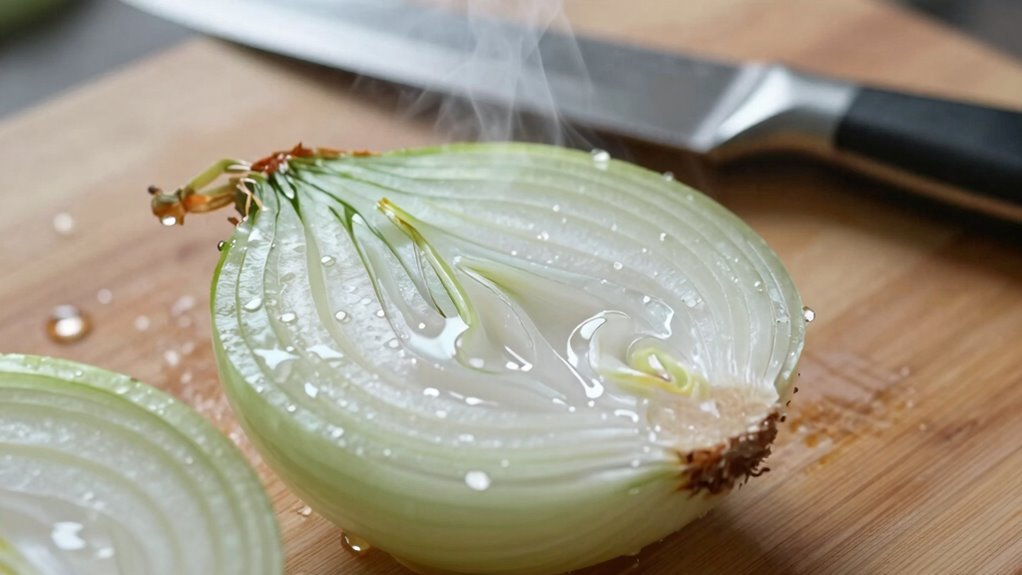
Have you ever wondered why onions make you cry? It all comes down to the powerful chemistry packed into this common vegetable. When you cut into an onion, you break its cells, releasing a mixture of flavor compounds that were once safely contained inside. Among these are sulfur-containing molecules that, when exposed to air, transform into volatile compounds. These compounds are what cause your eyes to water and sting. The primary culprits are sulfuric acids and other irritants that quickly evaporate and reach your eyes, stimulating your tear glands to produce tears as a defense mechanism.
Onions are packed with these flavor compounds, which give them their distinctive sharpness and pungency. But their role isn’t just about adding flavor; they are fundamental to various culinary uses. Chefs and home cooks worldwide rely on onions to build depth and richness in countless dishes. Whether sautéed to soften and sweeten, caramelized to develop a complex sweetness, or used raw in salads for a pungent bite, onions serve as a foundational ingredient in many cuisines. Their versatility makes them a staple in soups, stews, stir-fries, and even pickles. The flavor compounds are what make onions so adaptable—they can enhance the savory profile of a dish or add a sharp contrast to other ingredients. Understanding the chemistry behind onions is key to mastering their culinary potential, and knowing how to handle and cook onions can help minimize tears while maximizing flavor.
When you’re preparing onions, you might notice that cutting them causes tears, but it’s also an opportunity to understand their culinary uses better. The same compounds that make you tear up are what give onions their unique flavor. Cooking onions changes these flavor compounds, breaking them down into milder, sweeter substances, which is why cooked onions are less likely to make you cry and have a more caramelized, mellow flavor. Mastering onion preparation can greatly improve your cooking experience and help you create delicious dishes with less discomfort. This transformation is key to their culinary versatility, allowing you to use onions in different ways to achieve various textures and tastes. Additionally, understanding chemical reactions during cooking can help you control how onions develop their flavors and reduce eye irritation.
As an affiliate, we earn on qualifying purchases.
Frequently Asked Questions
Do All Onion Varieties Cause Tears Equally?
Not all onion varieties cause tears equally. Stronger onions like yellow and red tend to release more irritating compounds, leading to more tears, while milder varieties like sweet onions cause less discomfort. Despite the tear-inducing effect, all onions offer great nutritional benefits and distinct onion flavors. If you’re sensitive, choosing milder types can help you enjoy their health perks without as much eye irritation.
Can Cutting Onions Underwater Prevent Crying?
Cutting onions underwater can reduce tears, but it also dulls the onion’s flavor and isn’t practical for everyday cooking. While it might prevent eye irritation, it doesn’t fully eliminate the release of sulfur compounds. For kitchen safety and maintaining onion flavor, consider using a sharp knife, chilling onions beforehand, or working in a well-ventilated area. These methods protect your eyes and preserve the delicious taste of onions.
Are There Any Ways to Reduce Onion-Induced Tears?
To reduce onion-induced tears, store onions in a cool, dry place to slow down the release of irritating enzymes. Use a sharp knife to minimize cell damage and cut onions near good kitchen ventilation to disperse the fumes quickly. You can also chill onions before cutting or wear goggles to protect your eyes. These methods help lessen tears and make onion chopping more comfortable.
Why Do Some People Cry More Than Others When Cutting Onions?
Some people cry more than others when cutting onions because their tear reflex reacts more strongly to the onion aroma. Your tear glands are triggered by sulfur compounds released when you cut into an onion. If you have a sensitive tear reflex or produce more of these compounds, you’ll likely shed more tears. Factors like genetics and eye sensitivity influence how intensely you respond to the onion aroma, making some individuals more prone to crying.
Do Cooked Onions Make You Cry Less Than Raw Onions?
Imagine slicing into a cooked onion, and suddenly, the onion aroma fills the air, but you don’t tear up. Cooked onions make you cry less because heat breaks down the compounds responsible for tear production. Raw onions release sulfuric compounds that irritate your eyes, while cooking reduces these irritants, minimizing tears. So, yes, cooked onions cause less tear production than raw ones, making your cooking experience more comfortable.
Conclusion
So, next time you find yourself tearing up while chopping onions, remember it’s all about those sulfur compounds and enzymes working together. They’re just doing their job, even if it makes you cry. Isn’t it fascinating how something so small can cause such a big reaction? The next time you cook with onions, embrace the experience—after all, it’s a small price to pay for their incredible flavor. Who knew such a tiny vegetable could pack such a punch?
Halloween Picks
halloween
As an affiliate, we earn on qualifying purchases.