
TL;DR

Get school and study supplies delivered free — and shop member deals
- Fast, free delivery on millions of items
- Access to Prime Big Deal Days deals on October 6–7
- Prime Video, Amazon Music and more included
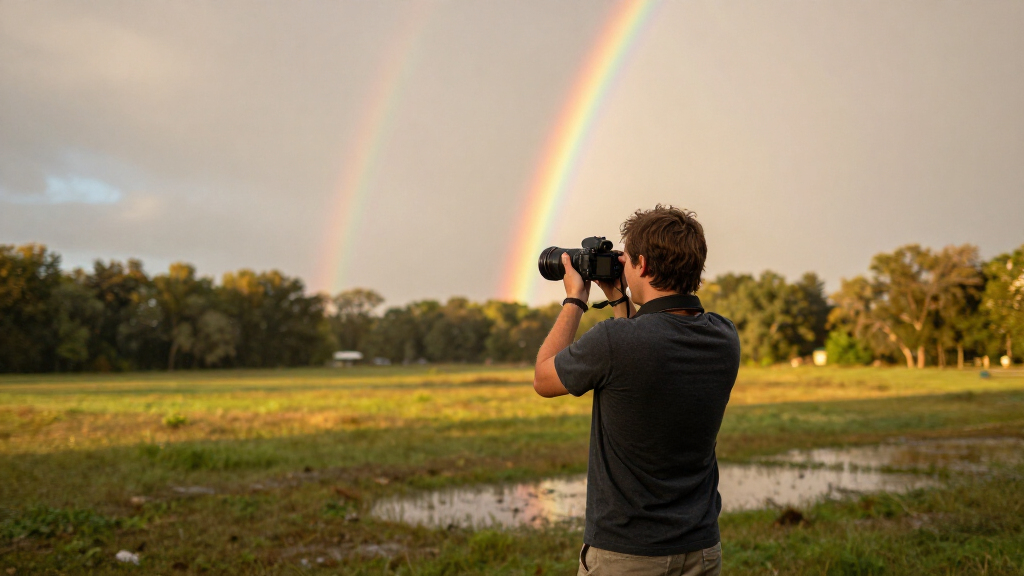
NASA’s Astronomy Picture of the Day for Oct. 4, 2026, features a photograph of at least five supernumerary rainbows over New Jersey’s Jersey Shore. The image was taken in 2018 after the remnants of Hurricane Florence passed through; the colored bands form when light waves interfere in similarly sized water droplets.
NASA’s Astronomy Picture of the Day on Oct. 4, 2026, features a photograph showing at least five supernumerary rainbows over the Jersey Shore in New Jersey. Photographer John Entwistle captured the display in 2018, after the remnants of Hurricane Florence passed; the closely spaced colored bands offer a visible example of light-wave interference in water droplets.
The NASA description says the Sun appeared after the storm remnants moved through, while the rainbow display formed in the opposite direction. Over the next half hour, the vivid extra bands faded in and out. Entwistle and his daughter watched the changing scene, and the featured single image recorded at least five of the bands.
These additional arcs are called supernumerary rainbows. NASA explains that they form when falling raindrops are nearly the same size, usually less than a millimeter across. Sunlight interacts within the droplets, and the resulting waves interfere with one another, producing the extra bands beside a primary rainbow.
The image is credited to John Entwistle, with copyright credited to the photographer. The APOD explanation lists Robert Nemiroff, Jerry Bonnell, Cecilia Chirenti and Keighley Rockcliffe among its authors and editors. The feature is part of NASA’s daily astronomy picture service, which pairs an image or photograph with an explanation written by a professional astronomer.
How Droplets Add Rainbow Bands
The photograph makes a subtle atmospheric effect visible: the extra arcs are not separate rainbows produced by a different weather event, but a consequence of how light behaves inside droplets. Their appearance depends on droplets being similar in size, allowing the light waves to form a discernible interference pattern rather than blending into a less distinct display.
NASA’s explanation also connects the sight to the history of physics. It says supernumerary rainbows can be explained only through the wave behavior of light, and that their recognition in the early 19th century was regarded as early evidence for light’s wave nature. For readers, the image links a brief local weather spectacle to a foundational idea about light, without requiring specialized equipment to observe the effect.
The APOD feature is a presentation of an existing photograph, not a report of a new storm or a newly discovered phenomenon. Its immediate value is educational: it identifies what the extra bands are and explains why a particular combination of sunlight and raindrop sizes can produce them.
water droplet size measurement kit
As an affiliate, we earn on qualifying purchases.
As an affiliate, we earn on qualifying purchases.
A Jersey Shore Image From 2018
The date of the APOD feature and the date of the photograph are different. NASA published the image as its Oct. 4, 2026, selection, while the scene itself followed the passage of Hurricane Florence’s remnants over the Jersey Shore in 2018. The source does not give a more precise date or time for the photograph.
NASA describes the Sun emerging in one direction and the rainbow display appearing opposite it. As with ordinary rainbows, the viewing geometry matters: an observer sees the arcs in the part of the sky opposite the Sun. The unusually numerous bands in Entwistle’s image are attributed in the APOD account to the conditions that allow supernumerary arcs to appear, especially the near-uniform size of the falling droplets.
APOD is a recurring NASA feature rather than a forecast or a live observation. Each day it presents a selected image or photograph of the cosmos, accompanied by an explanation. In this installment, the subject is an Earth-based optical phenomenon, with the caption using the storm’s aftermath and the photographer’s account to describe how the scene unfolded.
What the Caption Does Not Specify
NASA’s published description does not provide the photograph’s exact date, the precise location along the Jersey Shore, or measurements of the droplets involved. It says the droplets must be nearly the same size and typically under a millimeter, but does not report that the droplets in this particular scene were measured. The explanation gives the physical conditions associated with the phenomenon rather than presenting a field study of this event.
The caption identifies at least five supernumerary bands in the single featured image. It does not say that five was the maximum visible during the half-hour display, or provide a count of every band that appeared and faded. The source also does not give additional camera or exposure details beyond the photographer credit.
The Daily APOD Continues
NASA’s page identifies the next APOD selection as “open space,” but the source material does not provide further details about that image. No follow-up observation or new reporting about the 2018 rainbow display is announced. The Oct. 4 feature remains a retrospective presentation of Entwistle’s photograph and NASA’s explanation of the optics behind it.
Readers seeking more information about the original image can refer to NASA’s APOD page and its listed credit. Any additional account of the photograph’s exact date, location, or capture conditions would require details beyond those included in the published description.
Key Questions
What are supernumerary rainbows?
They are extra, closely spaced colored bands that can appear beside a primary rainbow. NASA explains that they result from wave interference as sunlight interacts within raindrops.
Where and when was the photograph taken?
The image shows the Jersey Shore in New Jersey after the remnants of Hurricane Florence passed in 2018. NASA’s caption does not state the exact date or a more precise location.
How many extra bands appear in the featured image?
NASA says at least five supernumerary rainbows were captured in the single image. The caption does not establish that this was the greatest number visible during the full display.
What conditions allow the extra bands to form?
The water droplets need to be nearly the same size, typically less than a millimeter across, according to NASA’s explanation. Under those conditions, light waves can interfere and produce the additional bands.
Was the rainbow display a new event in 2026?
No. NASA featured the photograph on Oct. 4, 2026, but the rainbow scene occurred in 2018. The APOD entry is a retrospective image feature, not a report of a new weather event.
Source: primary
Halloween Picks
halloween
As an affiliate, we earn on qualifying purchases.