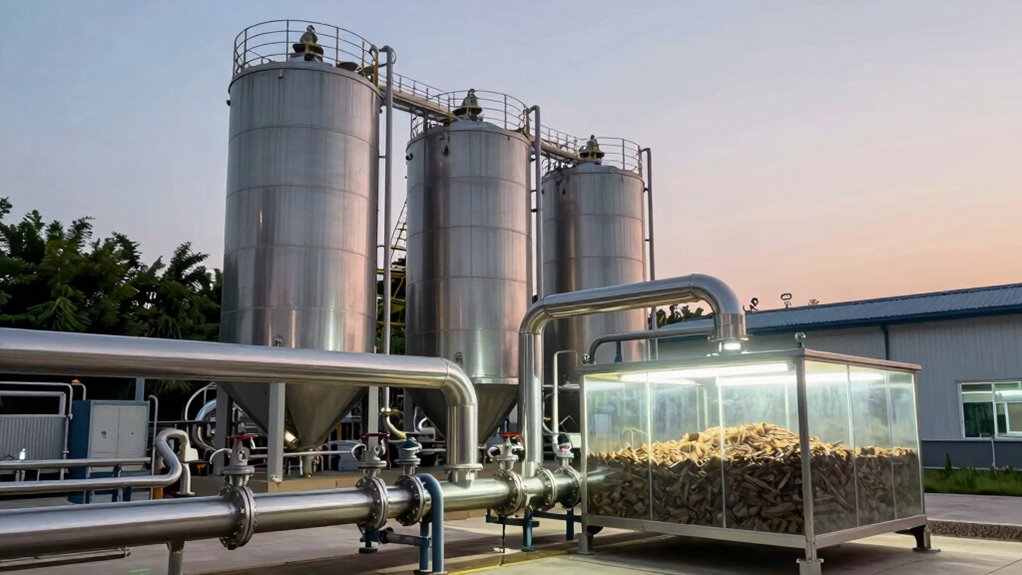

A biomass balance helps you track and verify the sustainable sourcing of raw materials from source to product, ensuring your processes are environmentally responsible and compliant. It accounts for greenhouse gas emissions through carbon accounting, providing insight into your environmental impact. By maintaining transparent supply chains and responsible harvesting practices, you can demonstrate leadership in sustainability. Keep exploring to find out how biomass balance can enhance your company’s environmental efforts and reputation.

Prime made for students and young adults
- Fast, free delivery for dorm and study essentials
- Prime Video and Amazon Music included
- Member-only deals
Key Takeaways
- Biomass balance tracks raw material flow, ensuring sustainable sourcing and accurate emissions accounting in chemical manufacturing.
- It establishes transparent supply chains, demonstrating responsible harvesting and aligning with sustainability commitments.
- Carbon accounting within biomass balance quantifies emissions, supporting climate impact reduction and sustainability strategies.
- Implementing biomass balance helps chemical companies meet regulations, improve reporting, and demonstrate leadership in clean energy.
- It incorporates biodiversity and land management considerations, reinforcing long-term environmental preservation and circular economy goals.
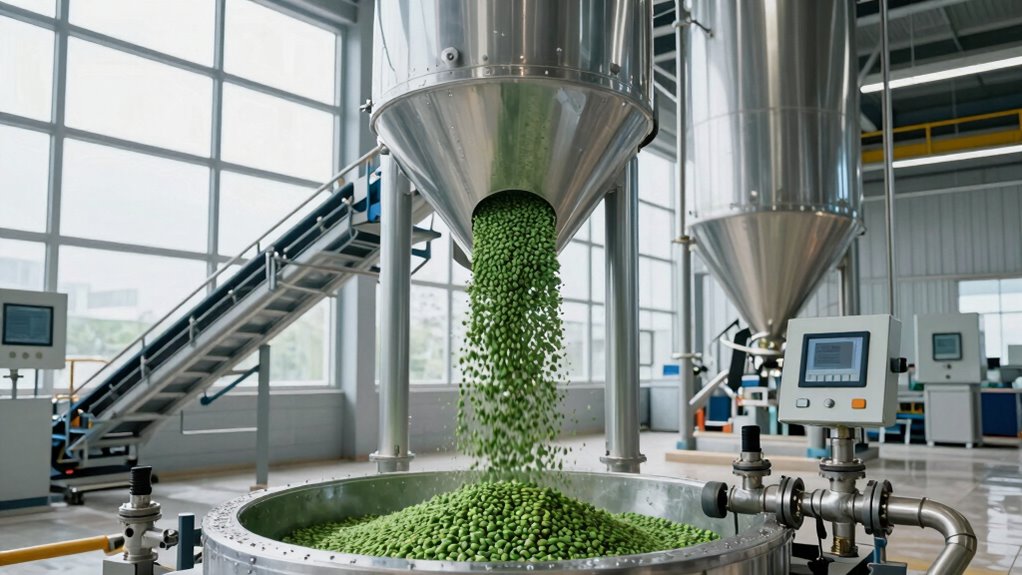
Have you ever wondered how we can effectively measure the sustainability of biomass energy? It’s a key question for chemical companies seeking to balance environmental responsibility with economic efficiency. Biomass balance offers a practical approach by tracking the flow of biomass materials from source to end product, verifying that the raw materials are sourced sustainably and that emissions are accurately accounted for through carbon accounting. This method helps you verify that the biomass you use originates from sustainable sourcing practices, which is vital for maintaining environmental integrity and meeting regulatory standards.
Biomass balance verifies sustainable sourcing and accurate emissions accounting for greener energy practices.
By implementing biomass balance systems, you can establish a transparent chain of custody for your biomass inputs. This transparency allows you to demonstrate that the raw materials are responsibly harvested, contributing to the broader goal of sustainability. Sustainable sourcing involves selecting biomass suppliers committed to environmentally friendly practices, such as reforestation, waste biomass utilization, or responsible land management. Tracking these sources through biomass balance ensures that your supply chain aligns with sustainability commitments. It also supports your company’s reputation by providing verified data that your biomass inputs are responsibly sourced, which appeals to eco-conscious consumers and partners.
Equally important is the role of carbon accounting within the biomass balance framework. Accurate carbon accounting quantifies the greenhouse gas emissions associated with biomass production, transportation, and processing. It helps you measure the net carbon impact of your biomass energy use, offering insight into whether your operations are genuinely reducing your carbon footprint. Incorporating carbon footprint considerations into your biomass management can further strengthen your sustainability strategy. The combination of biomass balance and carbon accounting allows you to verify that your biomass use is not only sustainable in sourcing but also aligned with climate goals. It provides a holistic view of your environmental impact, enabling you to make informed decisions about procurement, processing, and product development.
In essence, biomass balance acts as a bridge between sustainable sourcing and carbon accounting, ensuring that your biomass energy practices are transparent, traceable, and environmentally responsible. As a chemical company, adopting this approach helps you meet regulatory requirements, improve your sustainability reporting, and demonstrate leadership in the transition to cleaner energy sources. It’s a way to confidently prove that your biomass energy use supports a circular economy and contributes positively to climate mitigation efforts. Incorporating biodiversity considerations into your biomass sourcing practices further enhances the environmental benefits of your sustainability initiatives. Understanding the importance of carbon accounting can also help you optimize your processes for better environmental impact management, especially in relation to carbon neutrality goals. Additionally, integrating sustainable land management practices ensures your biomass sourcing aligns with long-term environmental preservation.
Popular right now

Apple AirPods Pro 3 Wireless Earbuds with Active Noise Cancellation

Roborock F25 XT Cordless Wet-Dry Vacuum Mop

Ninja Prestige Smart XL Pro Cook System 10-in-1 Air Fryer and Countertop Oven, Stainless Steel, DT551
As an affiliate, we earn on qualifying purchases.
Frequently Asked Questions
How Is Biomass Balance Different From Traditional Carbon Accounting?
Biomass balance differs from traditional carbon accounting by tracking renewable biomass in your supply chain, ensuring that the carbon emissions are offset by the biomass used. It enables you to demonstrate market adoption of sustainable practices and supports your company’s green credentials. You actively manage and verify biomass flows, making your sustainability claims transparent. This approach helps you meet evolving regulations and appeals to eco-conscious consumers, strengthening your market position.
What Types of Biomass Are Used in Biomass Balancing?
You’re really casting a wide net when it comes to biomass types used in biomass balancing. You might work with feedstocks like agricultural residues, forestry by-products, or organic waste. These options reflect feedstock diversity, but they also introduce supply chain complexities. By understanding these variations, you can better navigate sustainable sourcing and guarantee your biomass balance remains accurate and reliable, even when switching between different biomass sources.
How Do Certification Standards Verify Biomass Balance Claims?
Certification standards verify biomass balance claims through rigorous certification processes and verification procedures. You’ll find that independent auditors assess data, traceability, and supply chain documentation to guarantee claims are accurate. These procedures involve detailed record reviews, site inspections, and sampling. By adhering to strict guidelines, certification bodies confirm that the biomass input matches the claimed sustainable and renewable outputs, giving you confidence in the authenticity of the biomass balance claim.
What Are the Key Challenges in Implementing Biomass Balance?
You face key challenges in implementing biomass balance, especially within your supply chain and market integration. Ensuring traceability across multiple suppliers and maintaining data transparency can be difficult. Integrating biomass balance claims into existing systems requires effort and coordination. Additionally, aligning your processes with certification standards demands continuous monitoring and adaptation, making it essential to establish reliable data flows and foster collaboration across your supply chain to succeed.
How Does Biomass Balance Impact a Company’s Sustainability Reporting?
Did you know that integrating biomass balance can boost your sustainability reports by 30%? When you adopt biomass balance, you demonstrate your commitment to urban agriculture and waste management, showing responsible resource use. This transparency improves your company’s environmental impact, meeting stakeholder expectations. It also helps you accurately track renewable inputs, enhancing your sustainability metrics and positioning your brand as eco-conscious in a competitive market.
Conclusion
Understanding biomass balance helps you see how chemical companies can reduce reliance on fossil fuels and lower carbon footprints. By integrating sustainable biomass, companies can achieve significant environmental benefits while maintaining productivity. Did you know that using biomass can cut greenhouse gas emissions by up to 80%? This statistic highlights the immense potential of biomass balance to transform the industry, making it more sustainable and eco-friendly for the future. Embrace this shift, and you’ll be part of the green revolution.