
By using supported catalysts, you can substantially reduce the amount of precious metals like platinum or palladium needed for catalytic hydrogenations. Combining these catalysts with green hydrogen, produced from renewable sources, boosts efficiency while minimizing environmental impact. This approach not only cuts costs but also promotes more sustainable chemical processes. If you explore further, you’ll discover how these advancements are shaping greener, more resource-efficient methods for industrial hydrogenations.
Key Takeaways
- Metal supported catalysts increase metal surface area, enabling efficient hydrogenation with reduced precious metal usage.
- Incorporating green hydrogen enhances catalytic efficiency, allowing for lower noble metal requirements.
- Innovations in catalyst design improve activity and selectivity, decreasing dependence on costly metals.
- Supported catalysts enable sustainable hydrogenation processes, minimizing environmental impact and material costs.
- Advancements support industry shifts toward greener, more cost-effective catalytic hydrogenation methods.
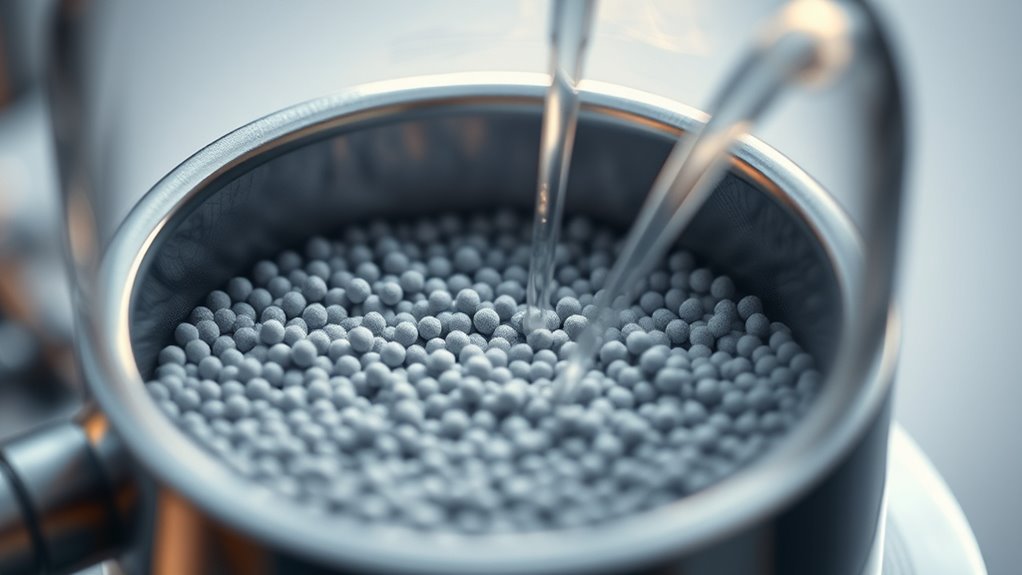
Have you ever wondered how certain chemical reactions can be accelerated so efficiently? One key lies in the use of metal supported catalysts, which play a pivotal role in catalytic hydrogenations. Traditionally, catalysts containing precious metals like platinum or palladium have dominated the scene due to their high activity. However, these metals come with drawbacks, including cost and limited availability. To address this, researchers are increasingly focusing on developing catalysts that use less of these rare metals or substitute them altogether. Metal supported catalysts involve dispersing a small amount of metal on a solid support, such as alumina or silica. This approach maximizes the metal’s surface area, enhancing its catalytic activity while drastically reducing the amount of precious metal needed. By doing so, the process becomes more economical and sustainable, especially for large-scale industrial applications.
Metal supported catalysts enhance efficiency by dispersing small amounts of metal on solid supports, reducing costs and increasing sustainability.
In recent years, there’s been a significant push toward utilizing green hydrogen sources in catalytic hydrogenations. Green hydrogen, produced through renewable energy-powered water electrolysis, offers a cleaner alternative to traditional hydrogen derived from fossil fuels. Incorporating green hydrogen into catalytic processes not only reduces carbon emissions but also aligns with global efforts to transition to sustainable energy systems. When combined with metal supported catalysts, green hydrogen sources enable more environmentally friendly reactions. You can imagine how this synergy allows industries to move away from reliance on fossil fuels, minimizing their carbon footprint.
Using these catalysts with green hydrogen sources can also improve the efficiency of hydrogenation reactions. Since the catalysts are designed to maximize the metal’s exposure and activity, they require less precious metal overall. This means you get the same or even better catalytic performance while using less material. Plus, the integration of green hydrogen reduces the environmental impact, making the entire process more sustainable. As a result, hydrogenation processes that once depended heavily on expensive, scarce metals are now becoming more accessible and eco-friendly.
In essence, leveraging metal supported catalysts alongside green hydrogen sources paves the way for more cost-effective and sustainable catalytic hydrogenations. You benefit from decreased material costs, lower environmental impact, and increased reaction efficiency. As advancements continue, you’ll see more industries adopting these innovative strategies to produce chemicals, fuels, and other products with a lighter ecological footprint. This shift not only supports economic goals but also aligns with the broader mission of building a sustainable future, where chemical processes are cleaner, greener, and more resource-efficient.
Frequently Asked Questions
What Are the Environmental Impacts of Using Less Precious Metals?
Using less precious metals in catalytic hydrogenations benefits the environment by promoting eco-friendly practices and conserving resources. You reduce the demand for rare, often environmentally damaging mining activities, leading to fewer land disturbances and less energy consumption. This shift helps lower pollution and carbon emissions, making processes more sustainable. By choosing catalysts with less precious metal, you support greener chemistry, contributing to overall environmental protection and responsible resource management.
How Does Catalyst Longevity Compare With Traditional Precious Metal Catalysts?
You’ll find that catalysts with less precious metal often have comparable or improved longevity, thanks to advancements in catalyst regeneration and longevity testing. Regular regeneration helps maintain activity, extending their lifespan. Through rigorous testing, manufacturers optimize these catalysts for durability, meaning you may experience fewer replacements and lower costs over time. While traditional precious metal catalysts are reliable, newer options with less precious metal now offer efficient, sustainable performance with enhanced longevity.
Are There Specific Reactions Where Less Precious Metals Perform Better?
Think of a chessboard where each piece’s moves symbolize reactions; less precious metals often excel in selective reduction, where precision matters most. You’ll find they perform better in reactions requiring high substrate specificity, such as targeted hydrogenations of specific functional groups. These catalysts can offer improved selectivity and efficiency, making them ideal for delicate transformations, where their subtle strength outshines traditional precious metals in achieving cleaner, more controlled results.
What Safety Precautions Are Needed for These Alternative Catalysts?
When handling alternative catalysts, you need to take safety seriously. Always wear protective equipment like gloves, goggles, and lab coats to prevent contact with powders. Handle catalyst powders in a well-ventilated area or under a fume hood to avoid inhalation. Keep catalysts away from heat or open flames, and store them in labeled, secure containers. Following these precautions helps guarantee safe and efficient catalytic hydrogenation processes.
How Cost-Effective Are These Catalysts in Large-Scale Industrial Applications?
You’ll find that these alternative catalysts are quite cost-effective in large-scale industrial applications, primarily due to their lower material costs. However, you might face scalability challenges, such as maintaining efficiency and catalyst stability at larger volumes. Overall, their economic feasibility improves with proper process optimization, making them a promising option for reducing expenses while achieving effective hydrogenation, especially when you consider the long-term savings on precious metals.
Conclusion
By exploring catalysts with less precious metal, you open more sustainable and cost-effective hydrogenation processes. These innovations act like a well-balanced orchestra, where each instrument plays its part harmoniously, reducing reliance on scarce resources. As you adopt these greener options, you’re not only advancing chemistry but also contributing to a healthier planet. Embrace these developments, and you’ll find that the future of catalytic hydrogenation is brighter and more accessible than ever before.