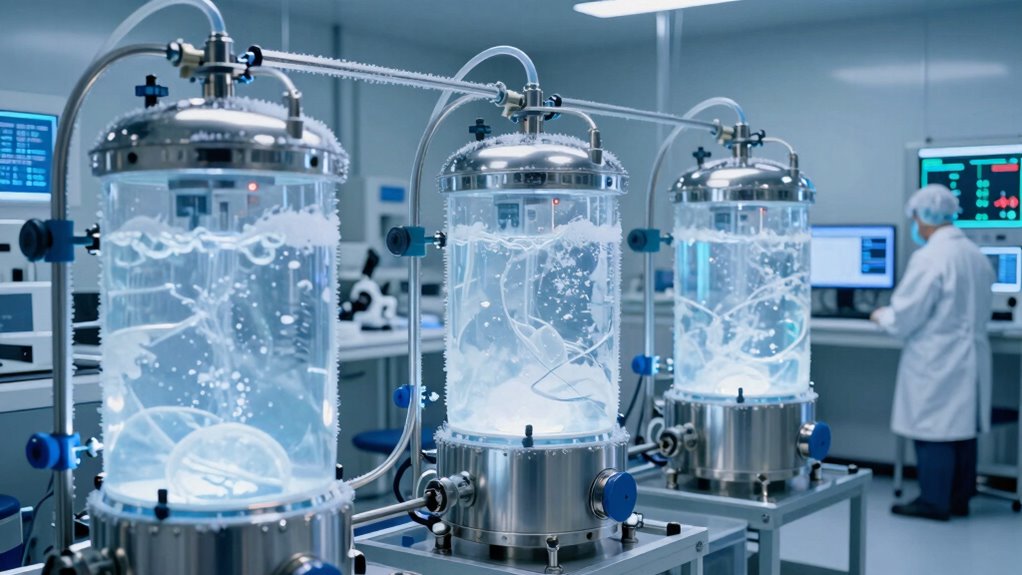

Cryogenic reactions can reduce energy use and waste, making them more eco-friendly, but they also require specialized equipment and energy-intensive cryogen production, which can offset these benefits. You need to weigh the environmental gains against the resource costs and safety challenges. Large-scale implementation involves significant infrastructure, and lifecycle impacts may lessen sustainability advantages. Understanding these trade-offs helps you decide if cryogenic processes truly align with your sustainability goals—more details follow.
Key Takeaways
- Cryogenic reactions reduce energy use and emissions but require energy-intensive cryogen production, which can offset environmental benefits.
- Sustainable sourcing and lifecycle management of cryogens are essential to minimize ecological impact.
- Large-scale implementation demands significant infrastructure and safety measures, affecting practicality and scalability.
- Evaluating the overall environmental trade-offs involves balancing initial resource investments against long-term benefits.
- Innovations aim to improve cryogen sustainability, but current challenges still influence operational and environmental considerations.

Cryogenic reactions are revolutionizing sustainable chemistry by enabling reactions at extremely low temperatures, which considerably reduces energy consumption and waste production. By operating at these frigid conditions, you can lower the energy needed to drive chemical processes, making them more energy-efficient. This shift not only cuts costs but also lessens the environmental footprint of manufacturing, as less fuel or electricity is required to maintain such temperatures. As you adopt cryogenic reactions, you’ll notice a significant reduction in greenhouse gas emissions tied to energy generation, directly impacting the environmental sustainability of your operations. These processes foster a cleaner, more eco-friendly approach that aligns with global efforts to combat climate change.
However, while focusing on energy efficiency and lowering environmental impact, you should also consider the trade-offs involved. Cryogenic systems require specialized equipment capable of reaching and maintaining ultra-low temperatures, often using liquefied gases like nitrogen or helium. Producing and managing these cryogens involves its own energy-intensive processes, which can offset some of the environmental benefits gained during the reaction phase. You might find that the initial energy expenditure and resource use for cryogen production lead to increased environmental impacts elsewhere in the supply chain. Additionally, innovations in cryogen production are ongoing, aiming to make these gases more sustainably sourced and processed. Moreover, assessing the entire lifecycle of cryogenic systems is essential to truly understand their environmental impact. Implementing sustainable cryogen sourcing practices can further enhance the overall eco-friendliness of cryogenic processes.
Another factor to weigh is the practicality and scalability of cryogenic reactions. Implementing these techniques on a large industrial scale demands significant investment in infrastructure, which can be a barrier for some organizations. The energy savings during the reaction may be undermined if the energy required for cryogen production and refrigeration outweighs the benefits. Additionally, the handling and storage of cryogenic gases pose safety concerns and require specialized training, adding further complexity. You need to balance the potential gains in sustainability with these logistical challenges to determine if cryogenic reactions truly serve your environmental and operational goals.
As an affiliate, we earn on qualifying purchases.
Frequently Asked Questions
How Do Cryogenic Reactions Compare Economically to Traditional Methods?
Cryogenic reactions are generally less cost-efficient than traditional methods due to high energy consumption and specialized equipment needs. However, recent technological advancements are improving their economic viability by reducing operational costs and increasing efficiency. You might find that, in the long run, cryogenic processes could outweigh traditional methods through benefits like higher purity and lower waste, but upfront costs and energy demands remain significant considerations for your investments.
What Safety Measures Are Essential for Handling Cryogenic Materials Sustainably?
You need to prioritize safety protocols like proper training, protective gear, and emergency procedures when handling cryogenic materials. Implement containment strategies such as secure storage and leak detection systems to prevent spills and exposure. Regular maintenance and safety audits are essential to sustain safe operations. By consistently applying these measures, you minimize risks, protect both personnel and the environment, and promote sustainable practices in cryogenic processes.
Can Cryogenic Processes Be Scaled for Large Industrial Applications?
Yes, cryogenic processes can be scaled for large industrial applications. You need to focus on reaction optimization by efficiently managing cryogenic material storage and transfer while maintaining safety standards. Larger setups require precise control of temperature and pressure to prevent hazards. With proper engineering, automation, and safety protocols, you can successfully implement cryogenic reactions at an industrial scale, boosting productivity and sustainability while minimizing environmental impact.
How Does Cryogenic Cooling Impact the Overall Lifecycle Environmental Footprint?
Cryogenic cooling can increase the overall lifecycle environmental footprint due to high energy consumption, leading to greater greenhouse gas emissions if powered by non-renewable sources. You should consider the environmental trade-offs, like energy use versus process efficiency, and evaluate lifecycle considerations to understand its sustainability. While it offers benefits like enhanced reaction control, balancing these factors helps you make informed decisions about its environmental impact over time.
Are There Emerging Technologies That Reduce Energy Consumption in Cryogenic Reactions?
Yes, emerging technologies are actively advancing to cut cryogenic consumption. You’ll find alternative insulation materials that insulate efficiently, minimizing energy loss. Energy recovery systems are also gaining ground, capturing and recycling cold energy to reduce overall power use. These innovations combine to create clever, cost-effective cooling solutions. By adopting these developments, you can considerably slash energy consumption, making cryogenic reactions more sustainable and environmentally friendly.
Conclusion
As you explore cryogenic reactions, remember that while they offer efficiency, they also consume significant energy—up to 50% more than traditional methods. This trade-off highlights the importance of balancing innovation with sustainability. By advancing renewable energy sources for cryogenic processes, you can help reduce environmental impact while enjoying the benefits of cutting-edge chemistry. Staying informed about these stats empowers you to make smarter, eco-conscious choices in scientific pursuits.