
Electrification plays a crucial role in making process heating greener by replacing fossil fuels with cleaner electric options like induction, resistance, or heat pumps. It pairs well with renewable energy sources such as solar and wind, reducing emissions and operational costs. Plus, it improves efficiency, supports sustainability goals, and boosts resilience to energy price changes. Continuing to explore this topic will reveal how these changes can help you achieve more sustainable industrial practices.

Get school and study supplies delivered free — and shop member deals
- Fast, free delivery on millions of items
- Access to Prime Big Deal Days deals on October 6–7
- Prime Video, Amazon Music and more included
Key Takeaways
- Electrification replaces fossil-fuel-based process heating, significantly reducing greenhouse gas emissions.
- It integrates with renewable energy sources like solar and wind for a cleaner, sustainable heat supply.
- Electric systems offer precise temperature control, improving efficiency and reducing operational costs.
- Utilizing energy storage and smart controls enhances reliability and enables better energy management.
- Transitioning to electric heating aligns industries with sustainability goals and future energy transition strategies.

Have you ever wondered how industries can reduce their carbon footprint while maintaining efficiency? One promising approach is embracing greener process heating solutions that leverage electrification. By shifting from traditional fossil-fuel-based methods to electric heating systems, you can substantially cut down on greenhouse gas emissions. This changeover is especially effective when powered by renewable energy sources, which provide cleaner electricity and support your emission reduction goals. Using renewable energy for process heating not only decreases your carbon footprint but also enhances your sustainability profile, making your operations more resilient against energy price fluctuations and supply uncertainties.
Electrification in process heating involves replacing conventional burners and boilers with electric alternatives such as induction, resistance, or heat pump systems. These technologies are more precise, responsive, and efficient, allowing you to control temperatures better and optimize energy use. When paired with renewable energy sources like solar, wind, or hydropower, these electric systems become even more environmentally friendly. As the grid becomes greener, so does your process heating, enabling your industry to meet increasingly strict emission standards while maintaining operational efficiency. Additionally, electric heating systems tend to have fewer moving parts and less maintenance requirements, which can reduce downtime and operational costs over time.
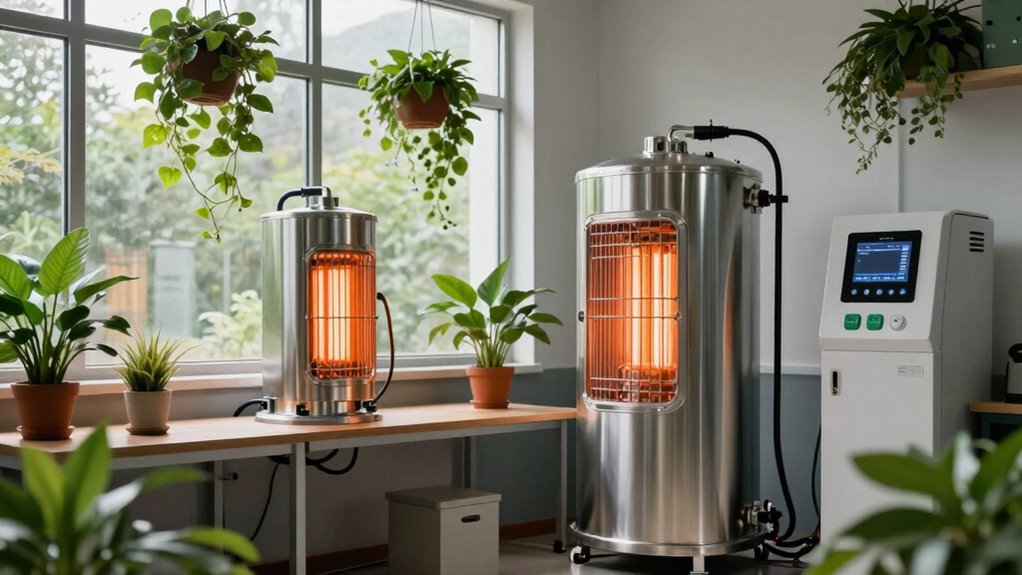
Electric process heating with renewable energy reduces emissions, enhances efficiency, and lowers maintenance for sustainable industrial operations.
Implementing electrification for process heating also opens the door to innovative energy management strategies. You can integrate smart controls, energy storage, and demand response systems to further lower your reliance on fossil fuels. During times of high renewable energy generation, you might increase your electric heating load, effectively utilizing excess renewable power and lowering overall emissions. This synergy creates a more sustainable energy ecosystem within your operations, aligning your industry’s growth with environmental responsibility. Furthermore, government incentives and policies supporting renewable energy adoption can make this transition more financially attractive, accelerating your journey toward greener process heating. Additionally, expanding the use of renewable energy sources can significantly amplify the environmental benefits of electrification. Incorporating energy storage solutions further enhances your ability to utilize renewable power efficiently and reliably. By integrating these clean energy solutions, your industry can reduce its environmental impact and contribute to a healthier planet.
Embracing these innovations can also position your industry as a leader in sustainable practices, attracting environmentally conscious customers and partners.
Ultimately, the shift to electrification backed by renewable energy is a strategic move that boosts your industry’s sustainability credentials while maintaining productivity. It’s a practical way to achieve emission reduction targets without sacrificing operational efficiency. As technology advances and renewable energy becomes more accessible and affordable, adopting electric process heating will become an increasingly viable and essential component of responsible industrial practices. Investing in energy efficiency measures can further optimize your operations and maximize the benefits of electrification. By making this changeover, you are not only reducing your environmental impact but also positioning your industry for long-term success in a world that values sustainability and clean energy solutions.
electric induction heating system
As an affiliate, we earn on qualifying purchases.
As an affiliate, we earn on qualifying purchases.
Frequently Asked Questions
What Are the Main Barriers to Electrifying Process Heating?
The main barriers to electrifying process heating include high upfront costs, limited renewable integration, and concerns about grid resilience. You might face challenges in upgrading infrastructure to support electrification, and fluctuations in renewable energy supply can impact consistent operation. Additionally, existing processes may be incompatible with electric heating, requiring significant adjustments. Overcoming these barriers involves investing in smarter grid solutions and expanding renewable capacity for reliable, sustainable process heating.
How Cost-Effective Is Electrification Compared to Traditional Methods?
Electrification often proves cost-effective over traditional methods when you conduct a thorough cost analysis, considering long-term savings on energy and maintenance. Your investment strategies should focus on upfront costs versus operational savings, incentives, and potential scalability. While initial expenses might be higher, the reduced carbon footprint and energy efficiency can lead to significant savings over time, making electrification a financially sound choice for sustainable process heating.
What Types of Industries Benefit Most From Electrified Process Heating?
They say, “The early bird catches the worm,” and industries embracing electrified process heating gain a head start. You’ll find manufacturing, glass, and chemical industries benefit most, especially when powered by renewable energy. Electrification helps reduce your carbon footprint and boosts sustainability. By switching to electric heating, you’re not just cutting emissions—you’re also enhancing efficiency, making your operations greener and more competitive in today’s eco-conscious market.
How Does Electrification Impact Overall Energy Consumption?
Electrification can lower your overall energy consumption by improving efficiency and reducing waste. It facilitates renewable integration, allowing you to utilize cleaner energy sources, and supports energy storage solutions that balance demand. This means you can optimize energy use during peak times and decrease reliance on fossil fuels. As a result, your operations become more sustainable, cost-effective, and resilient, contributing to a greener and more stable energy future.
What Policies Support the Adoption of Greener Process Heating?
Imagine a future where your factory runs on bright, clean energy. Policies like renewable incentives encourage this changeover, making it easier for you to adopt greener process heating. They support technology integration, helping you access advanced electrification solutions. These policies lower costs, reduce emissions, and accelerate your progression to sustainable practices. By aligning regulations and incentives, governments empower you to innovate and lead in green manufacturing.
Conclusion
Imagine transforming your entire heating system into a blazing, eco-friendly powerhouse that zips past traditional methods, leaving pollution in the dust! Electrification isn’t just a step forward; it’s a leap into a cleaner, brighter future where your processes run smoother, faster, and greener than ever before. By embracing this shift, you’re not just heating—you’re igniting a revolution that could light up the world with sustainability. Get ready to see your operations soar into a radiant, carbon-free horizon!
Halloween Picks
halloween
As an affiliate, we earn on qualifying purchases.