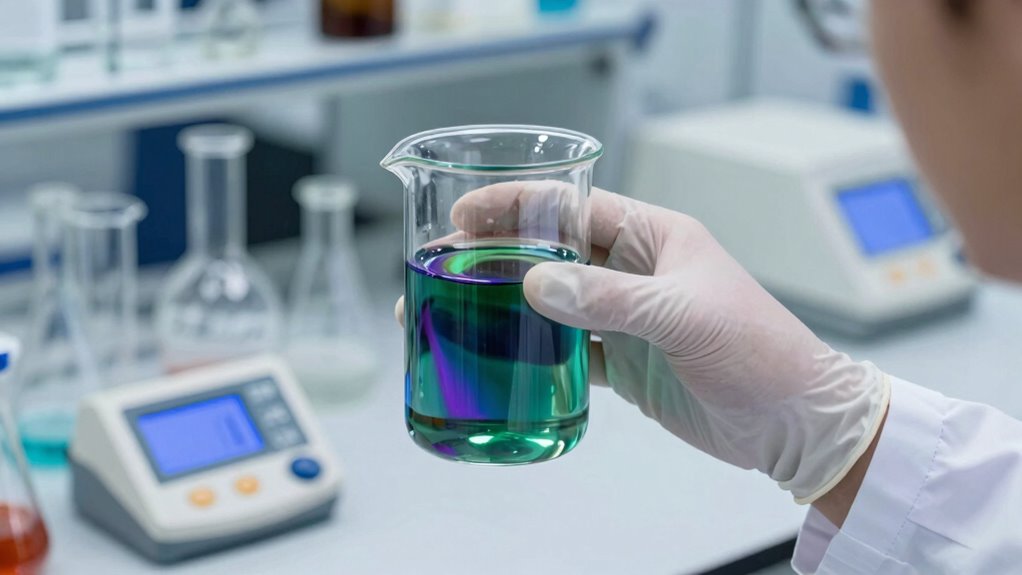

Understanding wastewater chemistry helps you optimize treatment processes and reduce environmental impact. By analyzing pollutants, concentrations, and chemical forms, you can tailor treatments to specific water compositions. This minimizes chemical use, lowers costs, and improves efficiency. Routine monitoring detects issues early, while advanced techniques offer deeper insights for continuous improvement. Mastering these aspects empowers you to develop sustainable solutions that protect ecosystems and promote responsible water management—if you stay engaged, you’ll discover more ways to innovate.
Key Takeaways
- Chemical analysis informs tailored treatment strategies, reducing chemical use and energy consumption for sustainable wastewater management.
- Monitoring wastewater chemistry enables early detection of issues, optimizing processes and ensuring regulatory compliance.
- Advanced analytical techniques deepen understanding of complex wastewater matrices, supporting continuous process improvement.
- Chemical data guides innovative, eco-friendly treatment technologies that minimize environmental impact and resource use.
- Understanding chemical interactions helps develop sustainable solutions that enhance efficiency and promote environmentally responsible practices.
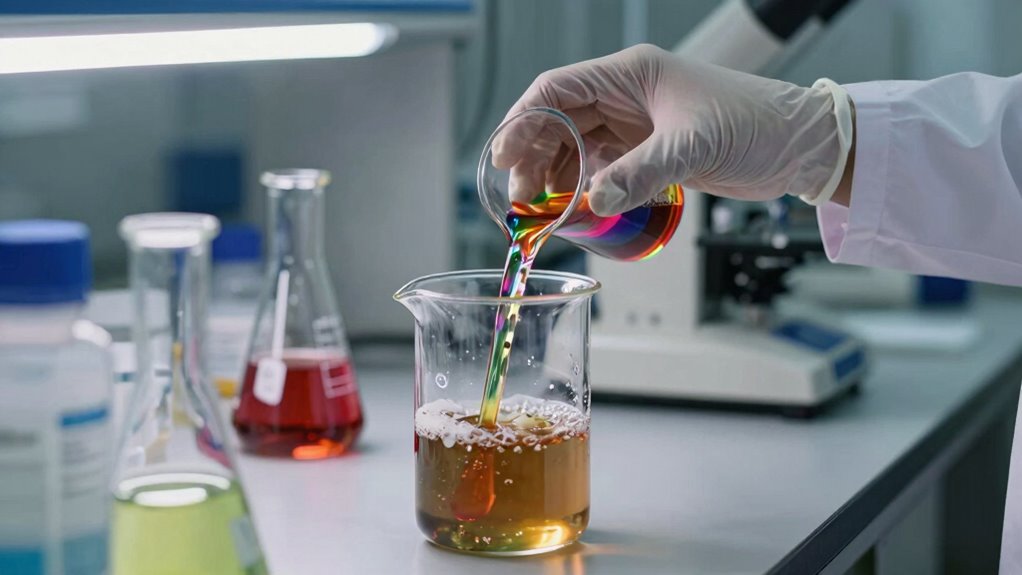
Understanding wastewater chemistry is essential for sustainability teams aiming to reduce environmental impact and improve treatment processes. When you delve into chemical analysis, you gain critical insights into the specific pollutants and compounds present in the water. This step isn’t just about identifying contaminants; it’s about understanding their concentrations, chemical forms, and interactions. With precise data from chemical analysis, you can tailor treatment strategies that target the unique composition of each wastewater stream, making processes more efficient and effective. This targeted approach helps prevent overuse of chemicals and energy, ultimately reducing costs and environmental footprint.
Once you have accurate chemical data, treatment optimization becomes much more straightforward. Instead of applying generic solutions, you adjust processes based on the actual chemistry of the wastewater. For example, if analysis shows a high level of organic matter, you can optimize biological treatment stages to maximize microbial activity, ensuring more complete breakdown of pollutants. If heavy metals or toxic substances are detected, you can implement specific removal techniques, such as chemical precipitation or advanced filtration, precisely calibrated to handle those contaminants. This level of customization not only improves treatment performance but also minimizes the generation of secondary waste and reduces chemical consumption. Understanding the chemical interactions within wastewater can also help predict how pollutants might behave during treatment, leading to more robust process design. Additionally, considering the chemical behavior of pollutants during various stages of treatment can help prevent the formation of harmful byproducts, improving overall safety.
Incorporating chemical analysis into your routine monitoring allows you to track changes over time, helping to identify trends or emerging issues early. This proactive approach means you can adjust treatment parameters on the fly, maintaining compliance with regulations and protecting ecosystems. It also enables you to evaluate the effectiveness of your current processes, pinpoint inefficiencies, and implement improvements that lead to better resource management. As you refine your treatment methods, you’ll find that treatment optimization becomes an ongoing process, driven by data and scientific understanding rather than guesswork. Regular chemical analysis enhances your ability to adapt and innovate in wastewater management. Furthermore, leveraging advanced analytical techniques can provide even deeper insights into complex wastewater matrices, supporting more innovative treatment solutions. Developing a comprehensive understanding of wastewater chemistry is essential for implementing sustainable and efficient management practices.
Furthermore, understanding wastewater chemistry enhances your ability to innovate. You can experiment with new treatment technologies or reagent combinations, knowing exactly how they will interact with the specific chemical makeup of your wastewater. This precision helps you develop sustainable solutions that minimize chemical use and energy consumption. Ultimately, the combination of thorough chemical analysis and diligent treatment optimization empowers you to create wastewater management systems that are not only compliant but also environmentally responsible and economically sustainable. This integrated approach positions your team as a leader in sustainable water treatment practices, fostering long-term benefits for communities and ecosystems alike.
wastewater chemical analysis kit
As an affiliate, we earn on qualifying purchases.
As an affiliate, we earn on qualifying purchases.
Frequently Asked Questions
How Can Wastewater Chemistry Improve Overall Sustainability Efforts?
Wastewater chemistry enhances your sustainability efforts by optimizing chemical balancing, which reduces excess reagent use and minimizes environmental impact. It also enables effective resource recovery, allowing you to reclaim valuable materials like nutrients and metals from wastewater. By improving treatment processes, you cut down on energy consumption and waste, making your operations more sustainable. Overall, understanding and applying wastewater chemistry helps you create cleaner, more efficient systems that support long-term environmental and economic goals.
What Are the Latest Innovations in Wastewater Treatment Technologies?
You’re on the brink of exciting advancements in wastewater treatment. Cutting-edge innovations include innovative bioreactors that optimize biological processes, making cleanup more efficient and eco-friendly. Additionally, nanotechnology applications are revolutionizing contaminant removal, targeting pollutants at a microscopic level. These breakthroughs not only enhance purification but also support sustainability goals, helping you achieve cleaner water with fewer resources. Embracing these technologies positions you at the forefront of environmental progress.
How Does Wastewater Chemistry Impact Regulatory Compliance?
Wastewater chemistry directly impacts your ability to meet regulatory compliance because proper chemical balancing ensures pollutants stay within permitted levels. By accurately detecting contaminants, you can adjust treatment processes promptly, preventing violations. Regular contaminant detection helps identify emerging issues early, while chemical balancing optimizes treatment efficiency. Together, these practices enable you to consistently adhere to regulations, avoid fines, and promote environmental safety through effective wastewater management.
What Training Is Needed for Sustainability Teams on Wastewater Chemistry?
Imagine a team gathered around a lab bench, mastering chemical analysis to track pollutant levels. You need training in wastewater chemistry that covers chemical analysis techniques, pollutant identification, and pollution control strategies. This knowledge helps you interpret data accurately, guarantee regulatory compliance, and optimize treatment processes. You’ll learn about sampling methods, chemical reactions, and safety protocols, empowering you to manage wastewater sustainably and prevent environmental harm effectively.
How Can Data From Wastewater Analysis Inform Environmental Policy Decisions?
You can use wastewater analysis data to identify pollution sources and detect harmful chemicals early. This information helps you develop targeted policies to reduce specific pollutants, improve water quality, and protect ecosystems. By monitoring chemical detection levels over time, you can evaluate the effectiveness of existing regulations and adjust them as needed. Ultimately, this data-driven approach empowers you to make informed environmental policy decisions that promote sustainability and public health.
Conclusion
By understanding wastewater chemistry, you empower your sustainability efforts and make smarter environmental choices. Did you know that treating wastewater accounts for nearly 3% of global energy consumption? That’s a huge chunk of resources—so mastering this chemistry isn’t just eco-friendly, it’s essential for reducing costs and environmental impact. Keep exploring and applying this knowledge, and you’ll be instrumental in creating a more sustainable future for everyone. Your efforts truly make a difference!