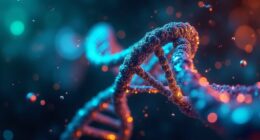
CRISPR is revolutionizing immune therapies by allowing precise editing of your immune cells to create super-targeted treatments. You can modify cells like T cells to better recognize and fight specific diseases, such as cancer or infections. This technology enables personalized, highly effective therapies with fewer side effects. As scientists continue to innovate, you’ll see more advanced strategies that could transform how we combat resistant illnesses. Keep exploring to discover how these breakthroughs are shaping the future of medicine.
Prime for Young Adults — start your free trial
Fast free delivery, streaming and member deals for eligible 18–24 year olds.
As an affiliate, we earn on qualifying purchases.
Key Takeaways
- CRISPR enables precise editing of immune cells to enhance their ability to target specific diseases like cancer and infections.
- Gene modifications can disable immune checkpoints or exhaustion genes, boosting immune cell effectiveness.
- Custom receptor insertion via CRISPR allows immune cells to recognize and attack unique pathogens or tumor markers.
- Advanced visualization technologies support understanding and refining immune cell edits for safer, more effective therapies.
- Personalized gene editing creates tailored immune treatments, improving efficacy and reducing side effects for individual patients.

Have you ever wondered how scientists are harnessing gene editing to enhance human immunity? The breakthrough technology known as CRISPR has revolutionized the way we approach medical research, especially in the domain of immune cells. By precisely editing genes, researchers can now modify immune cells to better recognize and fight diseases. This process involves editing the DNA within immune cells to improve their natural ability to respond to threats, making therapies more targeted and effective. When you think about the immune response, it’s usually a complex, multi-step process, but with gene editing, scientists can streamline and strengthen this response at the cellular level.
Using CRISPR, scientists can cut specific sections of DNA within immune cells, such as T cells or natural killer cells, to disable genes that hinder their effectiveness or to insert new genes that boost their activity. For example, they might remove genes that cause immune cells to become exhausted or less responsive over time. Alternatively, they can insert genes that encode for receptors specifically designed to recognize cancer cells or viruses. This targeted approach ensures that immune cells become super-efficient fighters, honing their ability to detect and destroy harmful pathogens or abnormal cells.
CRISPR edits immune cells to disable inhibitors or add receptors, making them more efficient at fighting diseases.
The real power of gene editing in immune therapy lies in its precision. Unlike traditional treatments that broadly suppress or stimulate the immune system, CRISPR allows for customized modifications tailored to individual patient needs. This means you could potentially have immune cells engineered to target a specific cancer’s unique markers, making the therapy highly personalized. Such precision not only enhances the immune response but also minimizes side effects, which are common with less targeted treatments.
Furthermore, integrating advanced projector technology into research environments can accelerate the visualization and understanding of cellular modifications, enhancing the development of these therapies. As scientists continue to refine these techniques, the hope is that edited immune cells will provide long-lasting protection against recurrent infections and resistant cancers. Furthermore, editing human immune cells opens doors for tackling previously incurable diseases. Conditions like HIV, certain autoimmune diseases, and some forms of leukemia could all benefit from immune cells that are more resilient and specifically programmed to fight these illnesses.
Essentially, gene editing transforms immune cells from their natural state into powerful therapeutic agents. It’s like giving your immune system a high-tech upgrade, allowing it to act more swiftly and accurately against threats.
CRISPR gene editing immune cells
As an affiliate, we earn on qualifying purchases.
As an affiliate, we earn on qualifying purchases.
Frequently Asked Questions
How Long Do Edited Immune Cells Last in the Human Body?
You might wonder how long edited immune cells last in your body. Cell longevity varies depending on the type of immune cell and how well it persists after editing.
Some cells, like memory T cells, can last for years, providing long-term immune persistence. Other cells may have shorter lifespans.
Are There Risks of Immune Rejection With Edited Cells?
Think of immune compatibility as a finely tuned orchestra. When you introduce edited immune cells, rejection risks can arise if your body perceives them as foreign instruments.
While scientists are working to reduce these risks, there’s still a chance of immune rejection, especially if the edited cells aren’t perfectly matched to your immune profile.
Ongoing research aims to enhance safety and guarantee your immune system welcomes the new players.
Can CRISPR Target Multiple Genes Simultaneously in Immune Cells?
You can use CRISPR for multiplex editing, targeting multiple genes simultaneously in immune cells. This approach allows you to harness gene synergy, enhancing immune responses or reducing adverse effects.
While technically challenging, advances in CRISPR technology make it possible to edit several genes at once, opening new possibilities for tailored therapies.
Just keep in mind, multiplex editing requires careful design to avoid unintended interactions and guarantee safety.
What Are the Potential Off-Target Effects in Immune Cell Editing?
Imagine the possibility of unintended consequences as off-target mutations, which can subtly alter your immune cells in unpredictable ways.
While CRISPR is precise, there’s always a chance of off-target effects happening during editing. These off-target mutations could influence cell behavior or function, raising concerns about safety.
It’s crucial to refine techniques to minimize these risks, ensuring you get targeted results without unintended changes that might compromise therapy outcomes.
How Scalable Is This Therapy for Widespread Clinical Use?
You might wonder how scalable this therapy is for widespread use. While promising, it faces manufacturing challenges and high costs that could limit rapid expansion.
To make it accessible, researchers need to focus on cost reduction strategies and streamline production. Although scaling up is complex, ongoing advancements could eventually make this personalized treatment more affordable and available for broader clinical application.
Conclusion
As you stand on the cusp of a new era, remember that like Icarus reaching for the sun, our ambitions with CRISPR can elevate us—but only if we proceed with caution. By editing human immune cells for super-targeted therapies, you’re wielding the power to transform medicine, echoing the myth of Prometheus giving fire to humanity. Embrace this frontier responsibly, and you’ll help forge a future where disease is conquered as surely as legends are told.
Fall yard work Picks
leaf blowers
As an affiliate, we earn on qualifying purchases.