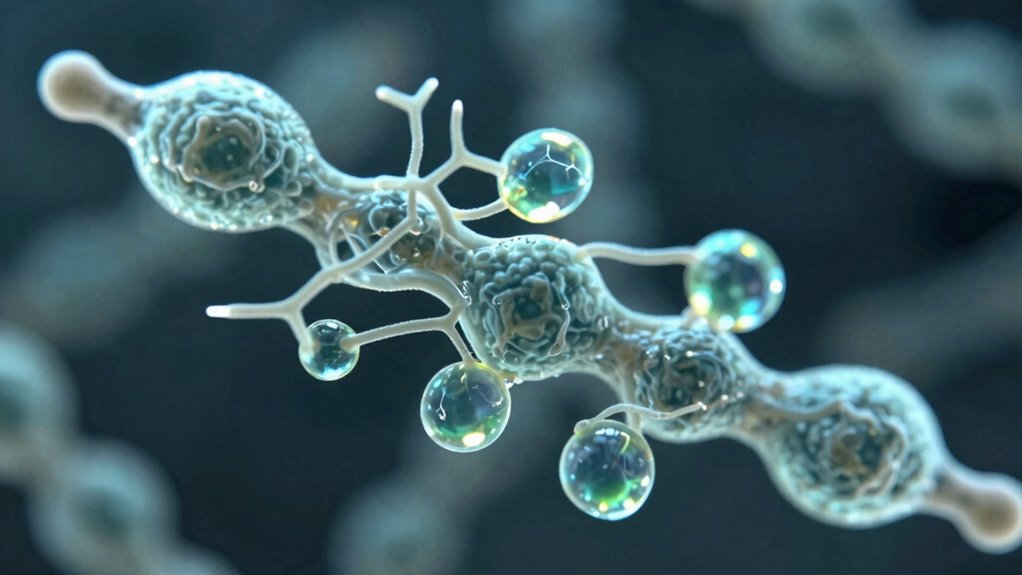

Cryoprotectants are chemicals that protect proteins during freezing and thawing. They prevent ice crystals from forming, which can damage or unfold the protein structures. By stabilizing proteins’ shapes and maintaining their functions, cryoprotectants keep enzymes active and prevent loss of biological activity. They also shield proteins from denaturation and aggregation caused by extreme temperatures. If you want to understand how these protectants work and their significance, keep exploring this essential topic.
Key Takeaways
- Cryoprotectants prevent ice crystal formation that can physically damage protein structures during freezing.
- They stabilize proteins’ native conformation, preserving their functional and enzymatic activity after thawing.
- Cryoprotectants reduce osmotic stress and biochemical changes in proteins and cells during cryopreservation.
- They replace water molecules around proteins, minimizing structural unfolding and aggregation.
- Proper use of cryoprotectants ensures long-term preservation of protein stability and biological activity.
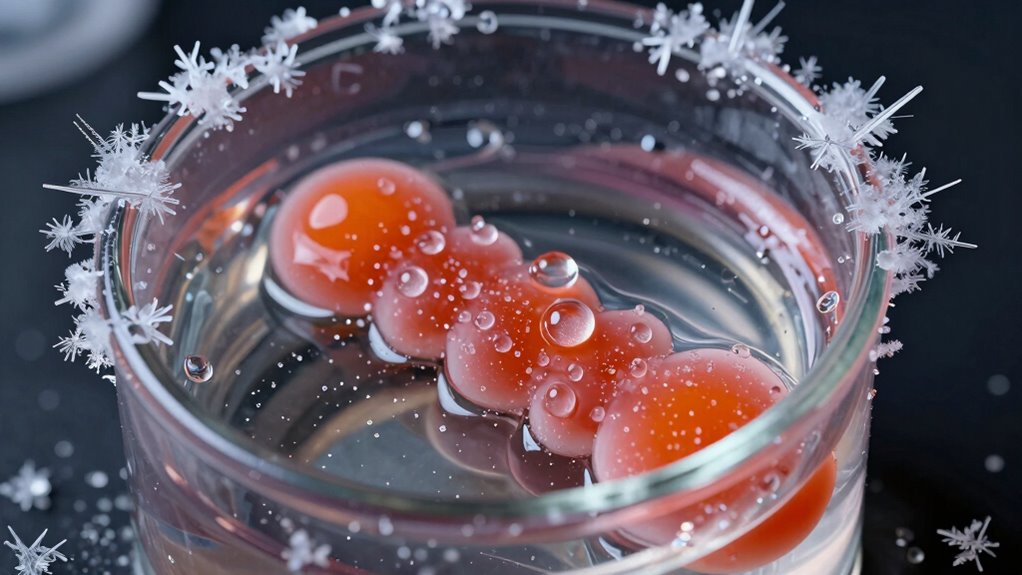
Cryoprotectants are substances used to protect biological tissues and cells from damage during freezing or thawing processes. When you’re dealing with cryogenic preservation, maintaining the integrity of proteins becomes essential, and cryoprotectants play a key role in that. Proteins are delicate molecules that can easily denature or lose their function if not properly shielded from the stresses of low temperatures. Without adequate protection, ice crystal formation can physically disrupt cell structures and damage proteins, leading to loss of biological activity. That’s where cryoprotectants step in, helping to stabilize proteins and preserve their functionality during the freezing process.
In cryogenic preservation, your main goal is to prevent the formation of damaging ice crystals. Cryoprotectants achieve this by lowering the freezing point and promoting a vitrified, glass-like state where water doesn’t crystallize. This process reduces physical stress on cells and proteins, preventing structural damage. When proteins are stabilized, they retain their native conformation, which is essential for preserving enzymatic activity, binding sites, and overall cellular function. Without this stabilization, proteins could unfold or aggregate, rendering them inactive once thawed. So, cryoprotectants don’t just protect the cell as a whole—they specifically guard the proteins within, ensuring that the biological molecules remain functional after preservation.
You’ll find that common cryoprotectants like glycerol, dimethyl sulfoxide (DMSO), and ethylene glycol are widely used because they penetrate cell membranes effectively and provide uniform protection. These substances help to replace water molecules around proteins, reducing the risk of ice damage and helping maintain the proteins’ three-dimensional structure. This chemical protection is essential, especially in applications like cryopreservation of sperm, eggs, or tissues, where protein integrity directly influences success rates. The role of cryoprotectants extends beyond just physical protection; they also minimize osmotic shock and biochemical changes that could otherwise compromise protein stability. Additionally, understanding the properties of cryoprotectants enables researchers to tailor protocols for different biological materials, improving preservation outcomes.
Furthermore, understanding the specific properties of cryoprotectants can help optimize preservation protocols for different biological materials. In essence, cryoprotectants enable you to perform cryogenic preservation more reliably by ensuring proteins stay stable through the freeze-thaw cycle. They act as chemical shields, preventing structural damage and maintaining biological activity. This protection is fundamental for research, medical treatments, and biotechnological applications, where the preservation of protein function can determine the difference between success and failure. When you understand the importance of cryoprotectants in stabilizing proteins during freezing, you appreciate their indispensable contribution to advances in cryogenic preservation and the ongoing quest to keep biological materials viable indefinitely.
cryoprotectant solutions for protein preservation
As an affiliate, we earn on qualifying purchases.
As an affiliate, we earn on qualifying purchases.
Frequently Asked Questions
How Do Cryoprotectants Affect Protein Function During Freezing?
Cryoprotectants help preserve protein function during freezing by stabilizing proteins and preventing ice formation. They inhibit ice crystal growth, which can damage protein structures, ensuring proteins remain intact and functional. When you add cryoprotectants, you effectively promote protein stabilization, reducing stress from freezing. This chemical protection maintains the integrity of your proteins, allowing them to perform properly once thawed, essential for research, storage, or medical applications.
Are There Natural Cryoprotectants Found in Organisms?
Yes, organisms have natural cryoprotectants as part of their adaptations to survive freezing temperatures. These natural substances, like glycerol and trehalose, help protect proteins and cell structures from ice damage. When you observe cold-hardy species, you’ll find they produce these compounds to prevent ice formation and preserve biological functions. Their ability to accumulate natural cryoprotectants is a key survival strategy in extreme environments.
Can Cryoprotectants Be Harmful to Human Cells?
Yes, cryoprotectants can be harmful to human cells if used improperly. They may affect cell membrane stability and cause toxicity concerns, especially with high concentrations or prolonged exposure. You need to carefully control their use to prevent damaging your cells, as some cryoprotectants can induce toxicity or compromise cell integrity. Proper protocols help balance protection with minimizing potential harm to human tissues during freezing processes.
What Are the Long-Term Effects of Cryoprotectant Use?
In a manner of speaking, the long-term effects of cryoprotectant use are still under scientific review, but you should consider potential toxicity concerns and impact on long-term stability. Prolonged exposure might lead to cellular stress or damage, although many cryoprotectants are designed to minimize such risks. Researchers continue to investigate, aiming to improve safety and guarantee that long-term storage doesn’t compromise cell integrity or cause adverse effects over time.
How Are Cryoprotectants Chosen for Different Proteins?
You choose cryoprotectants based on factors like protein stability, compatibility, and the specific properties of the protein. Cryoprotectant selection involves evaluating how well they prevent ice formation and minimize damage during freezing. You also consider their toxicity and how they interact with the protein’s structure. By tailoring the cryoprotectant to the protein’s characteristics, you optimize preservation and maintain its functionality over time.
Conclusion
You now understand why proteins need cryoprotectants—to shield them from ice damage, to preserve their structure, and to guarantee their function. Cryoprotectants act as guardians, protectors, and stabilizers, creating a barrier against freezing harm. They support your proteins like a shield, a cushion, and a safeguard, allowing biological systems to survive and thrive in cold conditions. With cryoprotectants, you see how chemical protection keeps proteins safe, stable, and functional through the chill.