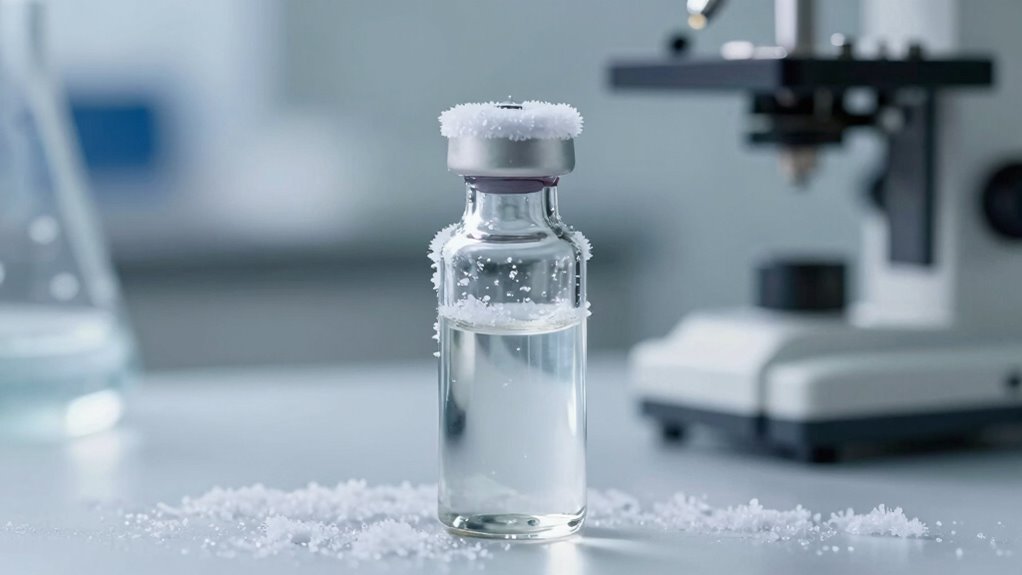

Lyophilized injectables are advanced pharmaceuticals that use freeze-drying to improve stability, potency, and shelf life. You freeze the drug solution at very low temperatures, then remove water through sublimation under reduced pressure, which prevents chemical degradation. This process creates a lightweight, stable product that resists microbial growth and can be quickly reconstituted. If you want to understand how this process guarantees medication safety and effectiveness, keep exploring the details behind freeze-drying techniques.

Prime made for students and young adults
- Fast, free delivery for dorm and study essentials
- Prime Video and Amazon Music included
- Member-only deals
Key Takeaways
- Lyophilized injectables are freeze-dried drugs designed for enhanced stability, extended shelf life, and rapid reconstitution.
- The process involves freezing solutions and sublimating ice under controlled conditions to preserve active ingredients.
- Proper formulation and process monitoring are essential for maintaining drug potency and batch consistency.
- Removing water through lyophilization prevents chemical degradation and microbial growth, ensuring drug safety.
- Advances in freeze drying technology improve efficiency, product stability, and quality control in injectable pharmaceutical manufacturing.
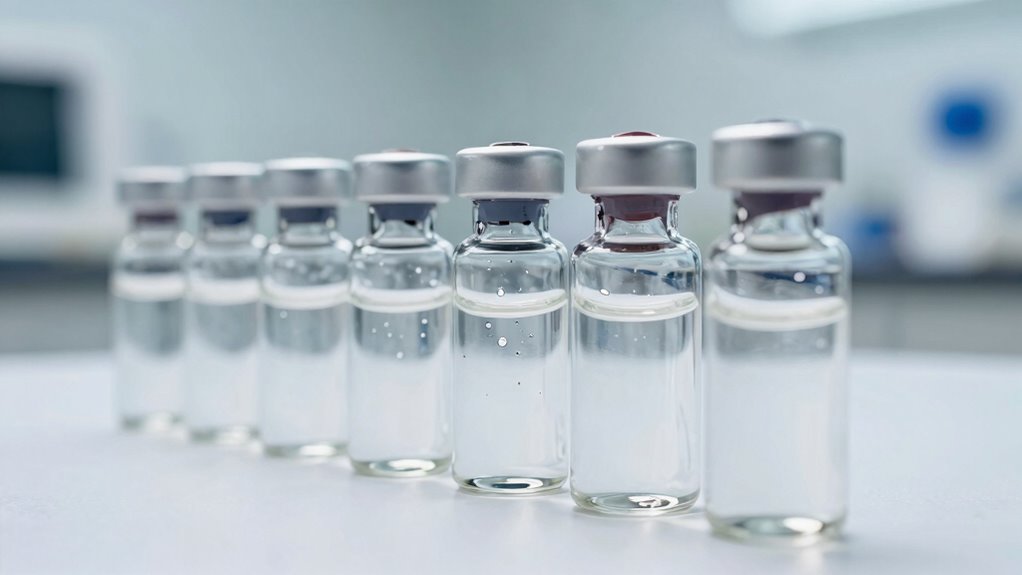
Lyophilized injectables, also known as freeze-dried pharmaceuticals, are essential in the healthcare industry for their stability and extended shelf life. Their unique properties stem from the freeze drying process, which involves carefully removing water content from the drug while maintaining its potency. This process relies heavily on advanced freeze drying techniques designed to optimize the drug’s integrity and efficacy. When you understand these techniques, you gain insight into how pharmaceutical manufacturers achieve stability enhancement, making these injectables suitable for long-term storage and rapid reconstitution when needed.
Freeze drying techniques involve freezing the drug solution at very low temperatures, creating a solid matrix that preserves the active ingredients. Once frozen, the pharmaceutical goes through sublimation, where ice transitions directly from solid to vapor under reduced pressure. This step is indispensable because it removes water efficiently without damaging the structure of the drug. The ability to precisely control temperature, pressure, and drying time during this process ensures that the active pharmaceutical ingredients are preserved in their most effective form. The resulting lyophilized product is lightweight, stable, and resistant to microbial growth, which contributes considerably to its shelf life. Additionally, the process requires precise temperature control to prevent damage to sensitive compounds, highlighting the importance of advanced equipment. The effectiveness of lyophilization in preserving the drug’s stability also depends on the use of appropriate formulation techniques, which optimize the process outcomes. Proper formulation ensures that the active ingredients are uniformly distributed and protected during the freeze-drying process, further enhancing stability. Enhancing the process monitoring techniques can also improve quality control and consistency across batches.
The stability enhancement achieved through these techniques is paramount for ensuring the drug’s effectiveness over time. Water often acts as a catalyst for chemical reactions that degrade pharmaceuticals, so removing it via lyophilization prevents such reactions and extends the product’s usability. Additionally, the process reduces the risk of contamination and microbial growth, which are common concerns with liquid formulations. When you reconstitute the injectable with sterile water, the drug quickly returns to its original state, ready for administration. The entire process ensures that the medication retains its potency, purity, and safety from manufacturing to patient use. Understanding freeze drying techniques is crucial for appreciating how pharmaceutical stability is maintained over extended periods. Moreover, advancements in freeze drying technology continue to improve the efficiency and reliability of producing lyophilized pharmaceuticals.
As an affiliate, we earn on qualifying purchases.
Frequently Asked Questions
How Does Lyophilization Affect Drug Stability Over Time?
Lyophilization considerably improves drug stability over time by removing water through freeze drying techniques, which halts degradation processes. This stability enhancement prevents microbial growth and chemical reactions that can spoil the drug. When you use lyophilized injectables, you guarantee a longer shelf life, easier storage, and maintained potency. Proper reconstitution is essential, but overall, freeze drying techniques effectively preserve drug efficacy during extended storage periods.
What Are Common Challenges in Scaling up Lyophilized Injectable Production?
You might face challenges like maintaining manufacturing efficiency while scaling up, which can lead to longer cycle times or equipment limitations. Ensuring consistent quality assurance becomes tougher with larger batches, risking variability in product performance. You need precise control over freezing and drying parameters, as well as robust validation protocols. Addressing these issues early helps prevent compromised stability or efficacy, ensuring your scaled-up production remains reliable and compliant.
How Do Storage Conditions Impact the Reconstitution Process?
Imagine your lyophilized injectables throwing a tantrum—if storage conditions aren’t ideal, reconstitution turns into a chaotic mess. Improper temperature or humidity can cause product degradation, compromising sterility and efficacy. Properly maintaining storage conditions ensures the freeze drying techniques preserve the drug’s stability. Sterile packaging acts as the guardian, preventing contamination. Keep storage suitable, and your reconstitution process will be smooth, safe, and effective—no drama required.
Are There Differences in Patient Outcomes With Lyophilized Versus Liquid Injectables?
You might notice differences in patient outcomes between lyophilized and liquid injectables. Lyophilized forms often improve stability and shelf life, leading to better patient compliance, especially in remote areas. However, manufacturing costs for lyophilized products tend to be higher, which could influence accessibility. Ultimately, these factors impact treatment effectiveness and patient adherence, making it essential to take into account both medical benefits and logistical challenges when choosing the appropriate injectable form.
What Innovations Are Emerging in Lyophilization Technology?
Imagine opening a treasure chest of innovations—new freeze drying techniques are making lyophilization more precise, reducing stress on sensitive drugs. Advances in container compatibility guarantee better seal integrity and stability. Emerging technologies like real-time monitoring and automation act as your navigators, guiding you through efficient, reliable processes. These innovations promise safer, more effective injectables, transforming how medicines are preserved and delivered, ultimately enhancing patient outcomes worldwide.
Conclusion
In summary, lyophilized injectables offer unmatched stability and extended shelf life, making them essential for modern medicine. While some worry about the reconstitution process, it’s straightforward and well-established, ensuring safety and efficacy. You can trust this method to preserve sensitive drugs without compromising quality. So, don’t let concerns hold you back—embrace lyophilization for reliable, effective treatments that reach patients when they need them most.
Halloween Picks
halloween
As an affiliate, we earn on qualifying purchases.