To safeguard your samples in minus 80 freezers, you need a thorough alarm strategy with multi-layered alerts. Equipping your freezer with advanced temperature monitoring systems ensures continuous tracking and instant detection of deviations. Visual, audible, and remote alerts help you respond quickly and prevent sample loss. Regular calibration and maintenance keep these alarms reliable. If you want to discover how to optimize your freezer’s alarm system further, keep exploring the essential strategies that safeguard your valuable samples.
Key Takeaways
- Multi-tiered alarm systems with visual, audible, and remote alerts ensure rapid response to temperature deviations.
- Continuous temperature monitoring with integrated sensors detects and records fluctuations in real-time.
- Immediate alerts enable quick actions like adjustments or contacting support to prevent sample damage.
- Regular calibration and maintenance sustain sensor accuracy and alarm system reliability.
- Understanding causes of fluctuations helps implement preventative measures for consistent sample preservation.
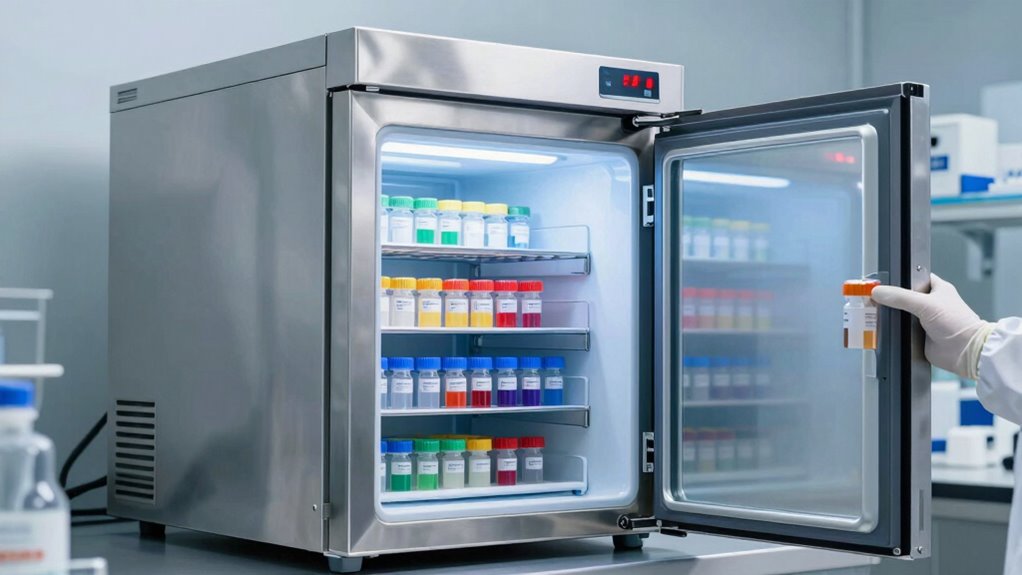
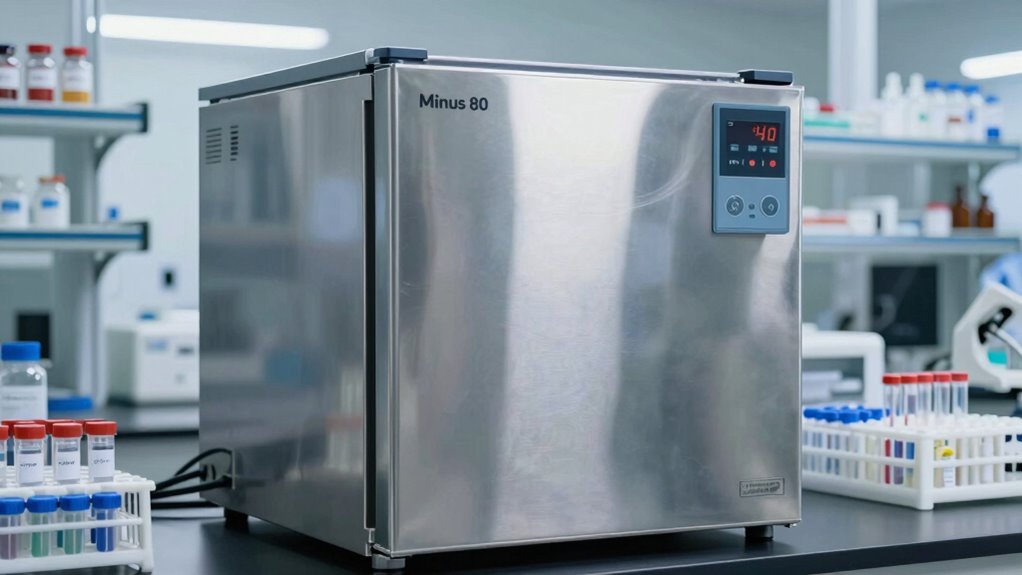
When it comes to preserving sensitive samples or storing valuable materials, minus 80 freezers are essential tools that deliver reliable, ultra-low temperature storage. These freezers are designed to maintain a consistent environment, crucial for effective sample preservation. You know that any fluctuation in temperature can jeopardize the integrity of your samples, which is why advanced temperature monitoring systems are a vital feature. They provide real-time data, alerting you immediately if temperatures drift outside acceptable ranges, so you can act before any damage occurs.
Minus 80 freezers ensure reliable, ultra-low temperature storage with real-time monitoring and immediate alerts to protect sample integrity.
In your day-to-day operations, you rely on these freezers to safeguard everything from biological specimens to chemical reagents. The importance of precise temperature control cannot be overstated—small deviations can lead to sample degradation or complete loss. That’s where robust temperature monitoring systems come into play. Modern minus 80 freezers often have integrated sensors that continuously track temperature, logging data for compliance and quality assurance. Many systems also include alarm strategies that activate if temperatures rise or fall unexpectedly. This proactive approach helps you respond swiftly, whether by checking the freezer, adjusting controls, or contacting support.
You also benefit from the layered alarm strategy implemented in these freezers. Typically, there are visual alarms, audible alerts, and remote notifications. Visual alarms might be flashing lights on the unit itself, drawing immediate attention. Audible alarms serve as a loud warning, ensuring that even if you’re not near the freezer, you’ll be alerted to an issue. Remote notifications, often via email or smartphone apps, let you monitor the freezer’s status from anywhere. This multi-tiered alarm strategy ensures you’re always aware of potential problems, reducing the risk of sample compromise. Additionally, understanding temperature fluctuations and their causes is critical in preventing sample damage. Regular calibration and maintenance of temperature sensors also help maintain the accuracy of monitoring systems, further protecting your samples. Maintaining an understanding of temperature stability is essential for ongoing sample integrity. It is also important to incorporate alarm strategies that adapt to different situations for comprehensive protection.

CDN FG80 Refrigerator/Freezer Thermometer | NSF Certified | Dual Scale -40 to 80°F | Ideal for Fridge & Freezer Monitoring | Stainless Clips | Durable Design | FG80
- Multi-Use Thermometer: Tests fridge and freezer temperatures
- Wide Temperature Range: -40°F to 80°F (-40°C to 27°C)
- Durable & Safe: Non-mercuric, durable glass design
As an affiliate, we earn on qualifying purchases.
As an affiliate, we earn on qualifying purchases.
Frequently Asked Questions
How Long Can Samples Be Stored at Minus 80°C?
You can store samples at minus 80°C for several years if you maintain consistent temperatures and prevent fluctuations. Proper storage minimizes sample degradation caused by temperature shifts, which can compromise sample integrity over time. Regularly checking your freezer’s alarms and ensuring stable conditions helps prevent accidental thawing. With proper management, your samples remain viable for long-term research and analysis, making minus 80°C an excellent choice for preserving biological materials.
What Are Common Causes of Freezer Failure?
Did you know that nearly 25% of freezer failures are caused by power outages? You need to prioritize temperature monitoring and have reliable power backup systems in place. Common causes include electrical failures, equipment malfunctions, and human errors. Regular maintenance and monitoring can catch issues early, preventing sample loss. Make certain your freezer has alarms and backup power sources to protect valuable samples from unexpected failures.
Are There Portable Minus 80°C Freezers Available?
Yes, portable minus 80°C freezers are available for your storage needs. These units are ideal for on-the-go applications or temporary storage, offering reliable temperature control. You should consider models equipped with temperature monitoring features to guarantee your samples stay within the required range. Portable freezers provide flexibility, allowing you to transport critical samples securely while maintaining consistent, ultra-low temperatures essential for preserving sensitive materials.
How Often Should Alarm Systems Be Tested?
You should test your alarm systems weekly—because nothing screams “professional” like catching a failure before it destroys your precious samples. Regular alarm calibration guarantees sensors stay accurate, while system redundancy adds a safety net if one component fails. Don’t wait for disaster; proactively verify your alarms’ reliability to keep your samples safe. After all, a well-tested alarm system is the best insurance against costly, irreversible sample loss.
Can Alarms Be Integrated With Building Security Systems?
Yes, alarms can be integrated with building security systems, enhancing overall protection. By implementing building integration, you guarantee that alarm triggers activate security protocols like surveillance, access control, and notifications. This seamless connection allows for quicker response times and thorough monitoring. You should work with security providers to customize the integration, ensuring it aligns with your facility’s specific needs and maintains robust security protocols at all times.
Conclusion
Think of your samples as fragile treasures tucked safely in a vault—minus 80 freezers are their sturdy guardians. By implementing a robust alarm strategy, you turn potential disasters into mere whispers of a warning, giving you the power to act swiftly. Remember, neglecting these alarms is like ignoring a fire alarm in a burning building. Stay vigilant, stay prepared, and let your alarm system be the lighthouse guiding your precious samples safely to shore.