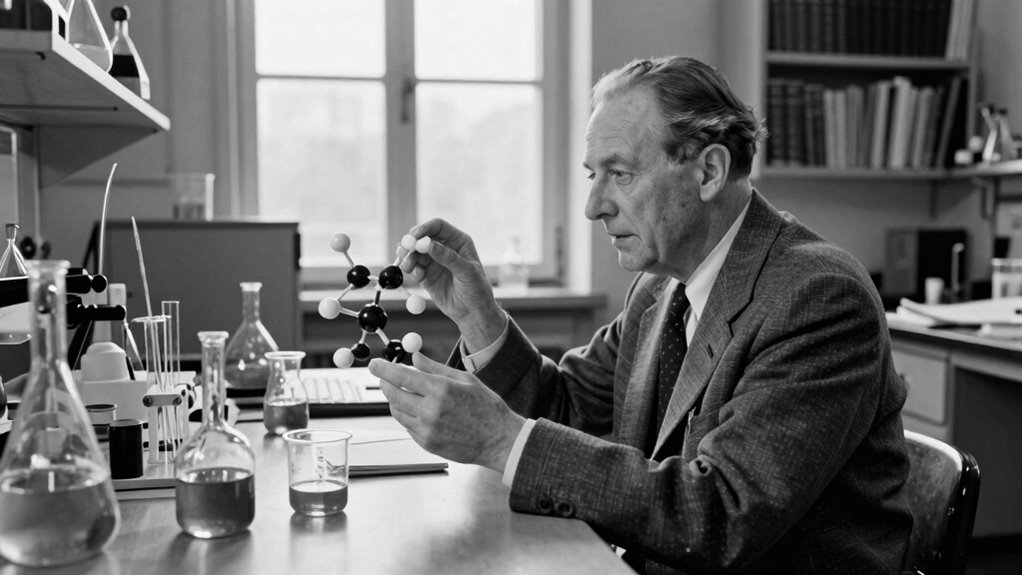

Herman Mark is known as a pioneer who laid the groundwork for modern polymer science, transforming how you understand and create plastics and fibers. His work connected polymer formation with material properties, enabling precise control over synthesis processes. Mark’s research revealed how molecular structure influences properties like strength and transparency. His discoveries have revolutionized industries from textiles to electronics. If you explore further, you’ll uncover how his insights continue to drive innovations in material design today.

Prime made for students and young adults
- Fast, free delivery for dorm and study essentials
- Prime Video and Amazon Music included
- Member-only deals
Key Takeaways
- Herman Mark’s pioneering work established the fundamental principles of modern polymer science.
- He connected polymer synthesis processes with material properties, advancing understanding of structure-property relationships.
- Mark emphasized mechanistic control of polymerization, enabling precise tailoring of polymer characteristics.
- His research propelled technological innovations across industries like textiles, electronics, and aerospace.
- Mark’s contributions transformed polymer science from empirical to a rigorous, science-based discipline.
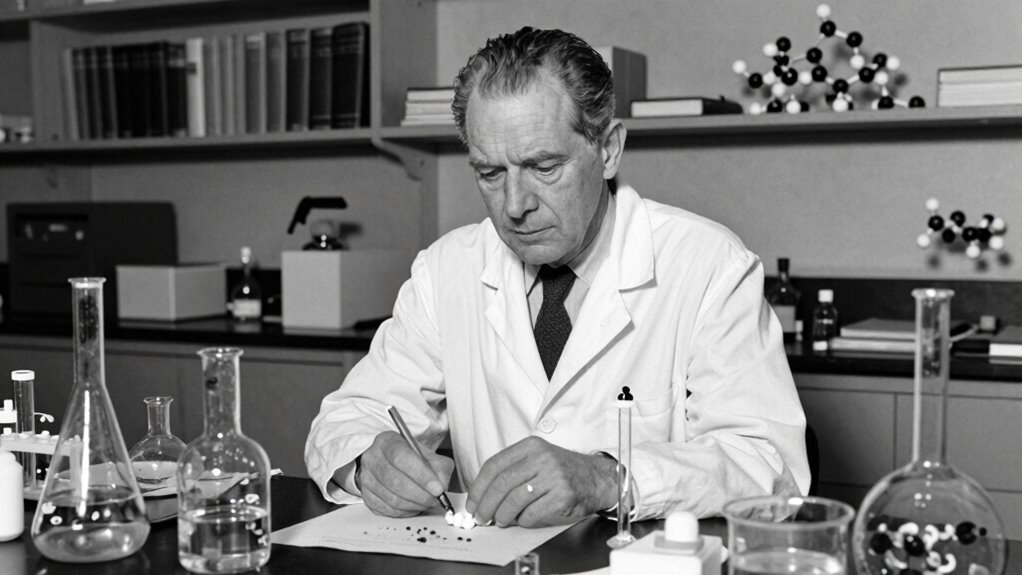
Have you ever wondered how the modern field of polymer science was built? It all started with pioneers like Herman Mark, whose groundbreaking work laid the foundation for understanding and manipulating polymers. Mark’s contributions revolutionized how scientists approach polymer synthesis, enabling the creation of countless materials we rely on today. His research helped establish the fundamental principles that connect the process of forming polymers with their resulting material properties, bridging chemistry and engineering in ways that opened new technological doors.
Herman Mark’s pioneering work laid the foundation for modern polymer science and material innovation.
When you think about polymer synthesis, you’re looking at more than just creating long chains of molecules. It’s about controlling the process—selecting monomers, reaction conditions, and catalysts to produce polymers with specific characteristics. Mark emphasized the importance of understanding the mechanisms behind polymerization reactions, which meant that scientists could design polymers with tailored properties. His work demonstrated that by tweaking synthesis methods, you could influence material properties like elasticity, strength, transparency, and durability. This insight turned polymer science into a precise and predictable discipline, rather than a trial-and-error endeavor.
Material properties, in turn, became a central focus of Mark’s research. He showed that the physical and chemical attributes of polymers aren’t random—they’re directly linked to their molecular structure and the way they’re synthesized. Whether you need a polymer to be flexible for medical devices or rigid for structural components, Mark’s findings provided the guidelines for predicting and controlling these traits. His studies helped scientists understand how factors like chain length, branching, and crystallinity impact performance, making it possible to develop materials optimized for specific applications. Additionally, his work contributed to the development of structure-property relationships, which remain fundamental in designing new polymer materials today.
As you explore the evolution of polymer science, it’s clear that Mark’s influence extends beyond basic research. His work fostered innovations in industries ranging from textiles and packaging to aerospace and electronics. By elucidating the relationship between polymer synthesis techniques and material properties, he empowered engineers and chemists to push the boundaries of what polymers could do. Today, the ability to engineer materials with precise characteristics traces back to Herman Mark’s pioneering efforts, which transformed a nascent science into a crucial technological cornerstone. You can see his legacy in every plastic product, synthetic fiber, or advanced composite material—testament to how foundational understanding of polymer synthesis and material properties continues to shape the world.
A key aspect of his legacy is the development of polymerization mechanisms, which are fundamental to controlling and designing new materials.
As an affiliate, we earn on qualifying purchases.
Frequently Asked Questions
What Inspired Herman Mark to Pursue Polymer Science?
You’re inspired by the fascinating history of polymers and how material innovations revolutionized industries. Herman Mark’s curiosity about the molecular structure of polymers and their potential applications sparked your interest. His pioneering work in polymer science shows how understanding material properties can lead to groundbreaking advances. This drive to explore polymer history and develop innovative materials motivates you to contribute to the evolving field of polymer science.
How Did Mark’s Work Influence Modern Polymer Research Techniques?
Imagine a web of molecular threads where your understanding deepens—Mark’s work revolutionized modern polymer research techniques. You now use advanced polymer characterization methods and molecular modeling to visualize complex structures, much like tracing intricate lacework. His pioneering research laid the groundwork for precise analysis and simulation, empowering you to innovate in polymer development. Mark’s influence fuels your exploration, transforming raw materials into sophisticated materials with remarkable properties.
Were There Any Significant Challenges Mark Faced During His Career?
You might find that Herman Mark faced significant challenges during his career, including career setbacks and funding obstacles, especially due to the political climate of his time. These hurdles could have slowed his research progress or limited resources, but he persisted, demonstrating resilience. His dedication ultimately helped him make groundbreaking contributions to polymer science, showing that overcoming such challenges is essential for scientific advancement.
What Are Some Lesser-Known Contributions by Herman Mark?
You might not know that Herman Mark contributed profoundly to understanding polymer properties through molecular modeling techniques. He pioneered methods to predict how polymers behave at a molecular level, which helped in designing new materials. His lesser-known work includes applying these models to improve polymer transparency and flexibility. These contributions advanced the field, providing valuable insights into how molecular structures influence polymer characteristics, ultimately impacting material development and application.
How Is Mark’s Legacy Preserved in Today’s Scientific Community?
You can see Mark’s legacy preserved through his lasting historical impact and ongoing academic recognition. His pioneering research laid the groundwork for modern polymer science, influencing countless scientists today. Universities and research institutions honor his contributions with dedicated lectures, awards, and named programs. His pioneering ideas continue to inspire new generations, ensuring his influence remains central in the scientific community and shaping the future of polymer research.
Conclusion
You see, Herman Mark’s pioneering work laid the groundwork for polymer science, inspiring innovation, shaping understanding, and advancing technology. His insights transformed raw ideas into tangible materials, driving progress in research and industry alike. By exploring molecular structures, mastering processing techniques, and fostering collaboration, he set a standard for excellence. Ultimately, his legacy endures in every polymer product you use, in every scientific breakthrough, and in the continuous pursuit of knowledge that defines this essential field.
Fall Picks
fall essentials
As an affiliate, we earn on qualifying purchases.