
TL;DR

Prime made for students and young adults
- Fast, free delivery for dorm and study essentials
- Prime Video and Amazon Music included
- Member-only deals
Researchers are using large language models (LLMs) to analyze 17th-century alchemical texts and decode old letters. This approach aims to uncover lost knowledge and better understand early scientific practices. The development is still in early stages, with promising but unconfirmed results.
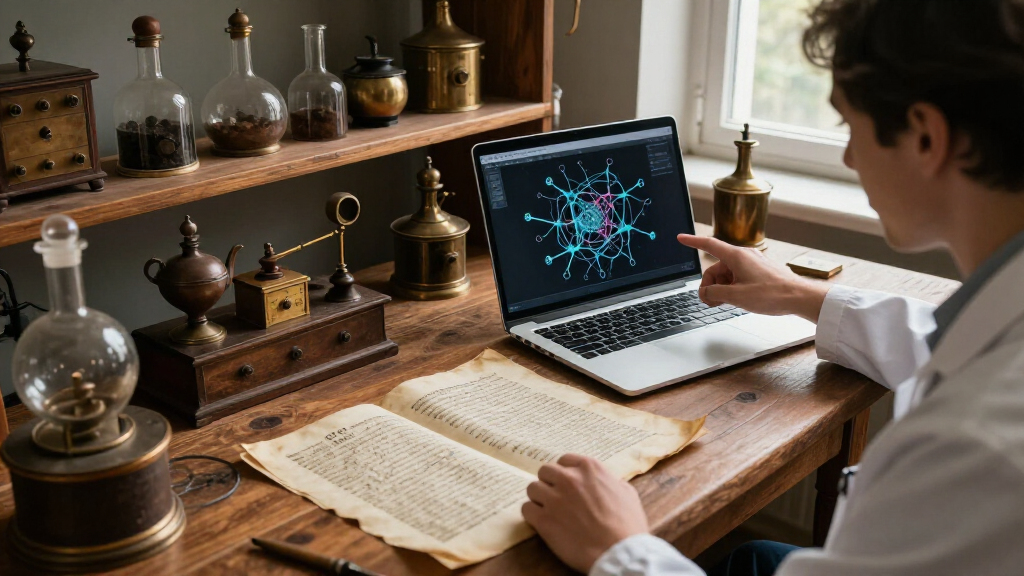
Researchers are deploying large language models (LLMs) to analyze 17th-century alchemical texts and decode handwritten letters from that era, aiming to recover lost scientific knowledge. This innovative approach could transform historical research by providing new insights into early chemistry and alchemy, and it is currently in the early stages of development.
Recent efforts involve training LLMs on digitized collections of alchemical manuscripts and correspondence from the 1600s. These models are used to identify and interpret obscure terminology, symbols, and handwriting styles that have challenged historians for centuries. According to sources familiar with the project, initial tests have successfully extracted meaningful information from complex handwritten letters, some of which previously defied traditional transcription methods.
One research team, working in collaboration with digital humanities institutes, reports that the models can recognize and contextualize alchemical symbols and terminology, offering a new way to reconstruct the knowledge networks of early chemists and mystics. The process involves feeding the models large datasets of transcribed texts, which they then use to analyze untranscribed handwritten documents, potentially revealing insights into early experiments, theories, and practices.
While these developments are promising, experts caution that the models are still in experimental phases. They require further refinement to handle the idiosyncrasies of historical handwriting and the specialized language of alchemy. Nonetheless, the potential to automate the transcription and interpretation process could significantly accelerate research in historical science and literature.
Potential to Unlock Lost Scientific Knowledge
The use of LLMs to analyze historical alchemical texts represents a significant advancement in digital humanities. It offers the possibility of uncovering long-lost knowledge about early chemistry, medicine, and mystical practices that have been obscured by centuries of handwritten manuscripts. If successful, this technology could lead to a reevaluation of the history of science, revealing connections and insights previously hidden due to transcription difficulties.
Moreover, this approach could set a precedent for applying AI to other fields of historical research, including deciphering ancient scripts, reconstructing lost languages, and analyzing handwritten archives. The ability to rapidly process and interpret large volumes of handwritten documents could democratize access to historical data and foster new scholarly collaborations across disciplines.
handwritten manuscript digitization scanner
As an affiliate, we earn on qualifying purchases.
As an affiliate, we earn on qualifying purchases.
Growing Interest in AI for Historical Text Analysis
The trend of applying machine learning and AI to historical and linguistic research has been gaining momentum over recent years. Researchers have increasingly used neural networks to transcribe and analyze ancient manuscripts, old newspapers, and archival records. The specific focus on alchemical texts and 17th-century correspondence reflects a broader interest in uncovering early scientific ideas and the evolution of knowledge.
This surge in interest is partly driven by advances in LLMs like GPT and related models, which have demonstrated remarkable capabilities in understanding and generating human language. The current efforts are building on these developments, seeking to adapt them to the unique challenges posed by historical handwriting and specialized vocabularies. While there has been no formal announcement from major research institutions, the trend signals a growing recognition of AI’s potential to revolutionize the humanities.
Limitations and Challenges in Applying AI to Historical Documents
While initial results are promising, significant challenges remain. The models currently struggle with the variability and deterioration of 17th-century handwriting, as well as the specialized and often arcane language of alchemy. It is not yet clear how well these models can generalize across diverse manuscripts or handle highly damaged documents. Additionally, the risk of misinterpretation or contextual errors remains, requiring human oversight and validation.
Experts caution that further refinement and training are needed before these tools can reliably replace manual transcription or interpretation. The extent to which AI can fully understand the nuances of historical texts is still an open question, and ongoing research will determine their ultimate utility.
Next Steps in Developing AI for Historical Text Analysis
Researchers plan to expand their datasets by including more varied samples of alchemical manuscripts and handwritten letters. They aim to improve the models’ accuracy in recognizing difficult handwriting and interpreting complex symbols. Future efforts will also involve collaboration with historians and linguists to validate the AI’s outputs and refine its understanding of historical context.
Additionally, pilot projects are expected to test these models on larger archives, with the goal of creating publicly accessible digital repositories of transcribed and interpreted texts. As the technology matures, it could become a standard tool in the digital humanities toolkit, enabling broader access to rare and fragile documents.
Key Questions
How accurate are the current AI models in transcribing 17th-century handwriting?
Initial tests show promising accuracy, but models still face challenges with deteriorated handwriting and complex symbols. Human oversight remains essential.
Can AI fully understand the meaning behind alchemical symbols?
While AI can recognize symbols and associate them with known terminology, understanding their full contextual meaning requires further development and expert input.
Will this technology replace human historians?
Not entirely. AI is expected to assist and accelerate transcription and analysis, but expert interpretation and contextual understanding will remain vital.
What are the main limitations of applying AI to historical documents?
Challenges include handwriting deterioration, complex and arcane language, and ensuring accurate contextual interpretation. Ongoing research aims to address these issues.
When might this technology be widely available for research use?
It is still in early development stages. Broader deployment could take several years, depending on further refinements and validation efforts.
Source: hn
Fall Picks
fall essentials
As an affiliate, we earn on qualifying purchases.