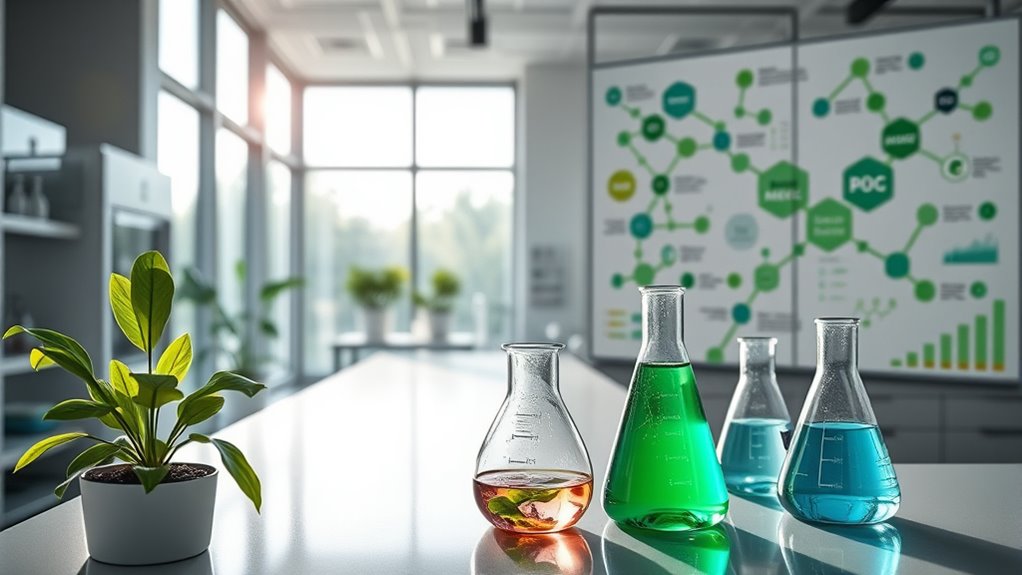

Green chemistry started as a way to reduce environmental harm by making chemical processes safer, cleaner, and more sustainable. Its 12 principles focus on waste prevention, safer chemicals, energy efficiency, and using renewable resources. The goal is to redesign traditional methods to minimize pollution and conserve resources. This approach results from ongoing innovation and a proactive mindset towards sustainability. Keep exploring to uncover how these principles shape environmentally responsible chemistry.
Open a free Amazon Business account
Business pricing, bulk buying and tax-exempt orders.
As an affiliate, we earn on qualifying purchases.
Key Takeaways
- Green Chemistry originated from efforts to develop safer, cleaner, and more sustainable chemical processes.
- The 12 Principles were formulated to guide environmentally responsible chemical practice and waste prevention.
- They emphasize atom economy, safer chemicals, energy efficiency, and waste minimization in chemical syntheses.
- The principles were developed to reimagine traditional chemistry in harmony with ecological and health priorities.
- They reflect a strategic shift towards sustainable innovation and responsible chemical manufacturing.
Have you ever wondered how chemistry evolved to become more environmentally friendly? The origin of green chemistry lies in a conscious effort to make chemical processes safer, cleaner, and more sustainable. It’s driven by the desire to reduce waste, eliminate hazardous substances, and conserve resources. This shift didn’t happen overnight; it’s the result of deliberate sustainable practices and continuous chemical innovation. These efforts aim to reimagine traditional chemistry methods, making them more aligned with ecological and human health priorities. By focusing on designing safer chemicals and processes from the outset, scientists and industry leaders have paved the way for a more responsible approach to chemistry.
Green chemistry emerged from efforts to create safer, cleaner, and more sustainable chemical processes for a healthier planet.
The foundation of green chemistry is built on 12 principles that guide sustainable practices across the industry. These principles emphasize waste prevention rather than cleanup, promoting the idea that designing processes to minimize waste is more effective and environmentally friendly. They also prioritize atom economy, encouraging reactions that incorporate most of the starting materials into the final product, therefore reducing by-products and pollution. This approach reflects a strategic focus on chemical innovation—finding smarter, cleaner ways to synthesize substances without sacrificing efficiency. It’s about making each step in the chemical process count, reducing unnecessary reagents, and avoiding toxic intermediates.
Another key principle is the use of safer chemicals and solvents, steering away from hazardous substances that pose risks to health and the environment. This shift not only helps in reducing toxicity but also simplifies waste management. Designing for energy efficiency is also critical; green chemistry advocates for processes that operate at ambient temperature and pressure whenever possible, minimizing energy consumption and greenhouse gas emissions. These sustainable practices are made possible by innovative thinking—developing new catalysts, alternative reaction pathways, and greener solvents that maintain productivity while reducing environmental impact. Moreover, adopting life cycle assessment ensures that chemical products are evaluated for their environmental footprint from creation to disposal.
The principles further encourage the integration of renewable feedstocks, such as bio-based raw materials, instead of finite petroleum resources. This transition supports a circular economy, where materials are reused and recycled, lessening the strain on natural resources. Overall, the origin of green chemistry is rooted in a proactive mindset—aiming to redesign chemical processes with environmental and societal benefits in mind. It’s a continuous journey driven by chemical innovation, where each new discovery and approach helps forge a more sustainable and healthier future. You can see that this evolution isn’t just about cleaner chemicals; it’s about fundamentally rethinking how chemistry interacts with the planet, ensuring progress in harmony with nature.
As an affiliate, we earn on qualifying purchases.
Frequently Asked Questions
Who Pioneered the First Green Chemistry Initiatives?
You should know that Paul Anastas and John Warner pioneered the first green chemistry initiatives. They focused on creating sustainable innovations and developing eco-friendly materials to reduce environmental impact. By emphasizing safer chemical processes and designing products with sustainability in mind, they transformed the industry. Their work laid the foundation for green chemistry, inspiring countless efforts to make chemistry more environmentally responsible and innovative.
How Has Green Chemistry Evolved Over the Decades?
Green chemistry has grown greatly over the decades, guiding you toward sustainable innovation and eco-friendly practices. You’ve seen advancements from simple solvent swaps to complex, safer chemical processes. This evolution emphasizes reducing waste, conserving resources, and minimizing pollution. As awareness rises, you’re encouraged to adopt greener methods, pushing industries toward environmentally responsible routines. The journey continues, shaping a future where chemistry harmonizes with nature, making your efforts impactful and innovative.
What Industries Most Benefit From Green Chemistry Principles?
You’ll find that industries like pharmaceuticals, textiles, and cosmetics benefit most from green chemistry principles. These sectors adopt sustainable manufacturing practices and eco-friendly innovations to reduce hazardous waste, lower energy use, and minimize environmental impact. By integrating green chemistry, you can develop safer products, improve efficiency, and meet increasing consumer demand for environmentally responsible solutions, ultimately fostering a more sustainable and healthier future for all.
Are There Any Global Policies Promoting Green Chemistry?
Yes, there are global policies promoting green chemistry. You’ll find initiatives encouraging sustainable manufacturing and eco-friendly innovations, such as the European Union’s Green Deal and the United Nations Sustainable Development Goals. These policies aim to reduce environmental impact, promote cleaner production methods, and foster innovation in green technologies. By supporting these policies, you help advance eco-conscious practices that benefit both the environment and industry, creating a more sustainable future.
How Do Green Chemistry Principles Influence Environmental Legislation?
Like a compass guiding a ship, green chemistry principles steer environmental legislation toward sustainable manufacturing and pollution reduction. You’ll see policies increasingly favor processes that minimize waste and hazardous substances, embodying these principles. They inspire regulations that promote safer chemicals and cleaner production methods, effectively transforming industry standards. As a result, green chemistry becomes a catalyst for legislative change, helping protect ecosystems and public health by embedding sustainability into legal frameworks.
Conclusion
You now see how green chemistry’s 12 principles emerged to make your actions more sustainable. By reducing waste and avoiding hazardous substances, you contribute to a healthier planet. Remarkably, green chemistry has helped decrease the use of hazardous solvents by up to 50% in some industries. Embracing these principles isn’t just good for the environment; it also boosts efficiency and innovation in your work. Together, you can make a real difference in creating a sustainable future.
NFL season / tailgating Picks
team gear
As an affiliate, we earn on qualifying purchases.