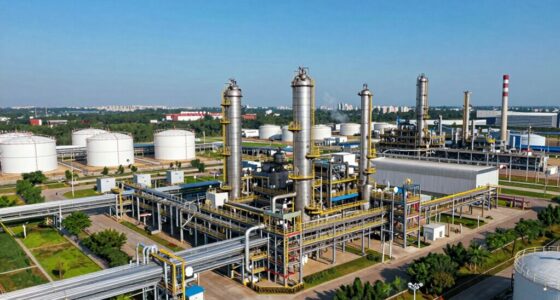
AI is transforming process control in the chemical industry by enabling you to integrate sensor data for real-time monitoring of variables like temperature, pressure, and chemical composition. This allows you to use predictive maintenance to anticipate equipment issues and optimize operations automatically. As a result, you can boost efficiency, safety, and product quality while reducing costs. Continuing to explore this topic will reveal how these innovations shape a smarter, more resilient industry.

Get school and study supplies delivered free — and shop member deals
- Fast, free delivery on millions of items
- Access to Prime Big Deal Days deals on October 6–7
- Prime Video, Amazon Music and more included
Key Takeaways
- AI analyzes sensor data in real-time to optimize chemical process parameters and improve product quality.
- Machine learning detects patterns and anomalies, enabling predictive maintenance and reducing equipment downtime.
- AI-driven insights facilitate adaptive process control, increasing efficiency, safety, and sustainability.
- Integration of AI with sensor data accelerates innovation and supports rapid process improvements.
- Automated AI systems enable proactive decision-making, fostering resilient and flexible manufacturing environments.

Chemical Industry 4.0 is transforming how companies operate by integrating advanced digital technologies into traditional manufacturing processes. As you embrace these innovations, you’ll find that sensor integration plays a vital role in gathering real-time data from your equipment and production lines. Sensors monitor variables such as temperature, pressure, flow rate, and chemical composition, providing continuous feedback that helps you maintain ideal conditions.
This constant stream of information enables you to make more informed decisions, optimize processes, and improve product quality. With sensor integration, you’re no longer relying solely on periodic manual inspections or outdated data; instead, you gain a dynamic, real-time view of your entire operation. Sensor data becomes a crucial component in achieving operational excellence and maintaining competitive advantage.
One of the most notable benefits of sensor integration is its impact on predictive maintenance. Instead of waiting for equipment to fail or degrade considerably, you can leverage data from sensors to anticipate issues before they become critical.
Predictive maintenance relies on analyzing sensor data trends to detect early signs of wear, corrosion, or other potential failures. This proactive approach minimizes unplanned downtime, reduces maintenance costs, and extends the lifespan of your machinery. Additionally, the use of automated data analysis enhances your ability to interpret complex sensor information quickly and accurately.
By implementing predictive maintenance, you’re shifting from a reactive mindset to a preventative one, ensuring your processes run smoothly and efficiently.
As you incorporate AI into your process control systems, these technologies work hand-in-hand with sensor data to enhance your operations further. AI algorithms process the vast amounts of sensor information, identifying patterns and anomalies that might escape human detection.
This capability enables you to fine-tune your processes in real-time, adjusting parameters automatically to maximize yield, reduce waste, and ensure safety. AI-driven process control also enhances your ability to respond swiftly to changing conditions, maintaining consistent quality even amid variability in raw materials or external factors.
Furthermore, integrating these digital tools isn’t just about improving efficiency—it’s about transforming your entire approach to process management. You can develop smarter automation systems that learn from sensor data over time, continually improving their performance.
This evolution leads to a more resilient, flexible manufacturing environment capable of adapting to market demands and regulatory requirements more effectively.
Embracing sensor integration and predictive maintenance within the framework of Chemical Industry 4.0 empowers you to stay competitive, innovate faster, and achieve higher standards of safety and sustainability.
Ultimately, these advancements create a more intelligent, responsive, and efficient process control ecosystem that benefits your bottom line and your long-term growth.
Frequently Asked Questions
How Does AI Improve Safety in Chemical Manufacturing?
You can see that AI improves safety by enhancing hazard detection and emergency response. It continuously monitors chemical processes, quickly identifying potential risks before they escalate.
When a hazard is detected, AI helps you respond swiftly with automated alerts and actions, reducing human error. This proactive approach minimizes accidents, protecting your team and environment, and guarantees safer chemical manufacturing operations overall.
What Are the Costs of Implementing AI in Chemical Processes?
Imagine revealing a new frontier in your operations—AI implementation. The costs aren’t just dollars; they involve a detailed cost analysis and overcoming implementation challenges.
Initial investments in technology, training, and infrastructure can seem intimidating. But, as you navigate these hurdles, you’ll find the long-term gains—efficiency, safety, and innovation—well worth the effort.
Preparing for these costs now guarantees your process stays competitive and future-ready.
How Is Data Security Managed With Increased AI Integration?
You should be aware that with increased AI integration, managing data security is essential. Implementing strong cybersecurity protocols helps protect sensitive information from cyber threats.
Data encryption adds an extra layer of security, ensuring that your data remains confidential during transmission and storage.
Regular security audits and staff training also help identify vulnerabilities and maintain a secure environment, preventing unauthorized access and safeguarding your operations effectively.
Can AI Predict Equipment Failures More Accurately Than Traditional Methods?
You might wonder if AI can predict equipment failures more accurately than traditional methods. The answer is yes. AI enhances predictive maintenance by analyzing vast amounts of data for failure diagnostics.
It identifies patterns and early warning signs that humans might miss, enabling you to address issues before costly failures occur. This proactive approach minimizes downtime and improves overall efficiency, making AI an invaluable tool in modern process control.
What Skills Are Needed for Workers in Ai-Driven Chemical Plants?
Skills shape success in AI-driven plants. You’ll need digital literacy to navigate new tools and technical training to understand complex systems.
Adaptability and analytical thinking allow you to tackle technological shifts confidently. Embrace continuous learning, stay curious, and sharpen problem-solving skills.
With these abilities, you’ll thrive in the transforming landscape, turning technological challenges into opportunities and ensuring safety, efficiency, and innovation in modern chemical processes.
Conclusion
Just like a skilled conductor guides an orchestra, AI is orchestrating a new era in chemical process control. You now have the power to optimize operations, reduce waste, and enhance safety with smarter, more responsive systems. Embracing Chemical Industry 4.0 isn’t just an upgrade—it’s a transformation that can propel your business into the future. So, step into this digital symphony and let AI help you hit every note perfectly.
Fall Picks
fall essentials
As an affiliate, we earn on qualifying purchases.