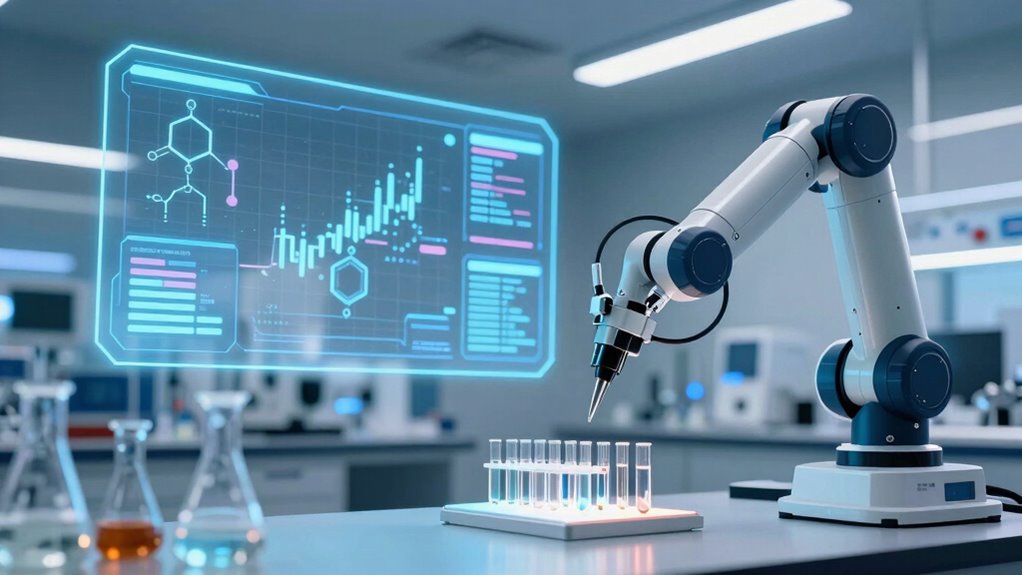

AI is revolutionizing chemical QA/QC by integrating data from labs, sensors, and inspections in real-time. It enables you to detect anomalies faster, predict equipment failures, and automate process adjustments. With AI, you can shift from reactive to proactive quality management, improving efficiency and safety. This next wave transforms operations into smarter, more reliable systems. Keep exploring to discover how these innovations can boost your manufacturing performance and quality outcomes.

Prime made for students and young adults
- Fast, free delivery for dorm and study essentials
- Prime Video and Amazon Music included
- Member-only deals
Key Takeaways
- AI integrates diverse data sources to enable real-time monitoring and early detection of quality issues.
- Sensor automation allows continuous data collection and instant anomaly detection, reducing manual checks.
- Predictive analytics forecast equipment failures, enabling proactive maintenance and minimizing downtime.
- AI-driven QA/QC automates process adjustments, ensuring consistent quality and operational efficiency.
- The technology transforms quality management from reactive to predictive, enhancing safety and reliability.

Have you ever wondered how artificial intelligence is transforming quality assurance (QA) and quality control (QC)? It’s revolutionizing how you monitor, analyze, and improve chemical manufacturing processes. With AI-powered tools, you gain the ability to integrate data seamlessly from diverse sources—this is data integration—allowing you to create a thorough view of your operations. Instead of juggling separate datasets from lab tests, process sensors, and manual inspections, AI consolidates this information into a unified system. This integration helps you identify patterns and anomalies faster, giving you real-time insights that were once impossible. It’s like having a digital nerve system that constantly senses your plant’s health and performance.
AI integrates data from labs, sensors, and inspections for faster insights and smarter decision-making in chemical manufacturing.
Sensor automation plays a critical role in this transformation. Imagine sensors embedded throughout your manufacturing line, continuously collecting data about temperature, pressure, pH levels, and other critical parameters. Thanks to AI, these sensors don’t just record data—they analyze it instantly. When sensor automation detects a deviation from set standards, AI algorithms can trigger immediate alerts or corrective actions. This means you no longer have to wait for manual checks or delayed lab results. Instead, you get instant feedback, enabling you to make adjustments on the fly, preventing defects before they occur. This proactive approach minimizes waste, reduces downtime, and boosts overall product quality.
AI enhances QA/QC by enabling predictive analytics, which forecasts potential issues before they happen. By analyzing historical data patterns and real-time sensor inputs, AI models can predict equipment failures or process deviations. With this foresight, you can schedule maintenance proactively, avoiding costly breakdowns and ensuring consistent quality. Incorporating advanced analytics and automation ensures your quality management systems stay ahead of potential problems, making your operations more resilient. Using machine learning techniques further refines these predictions, continuously improving the system’s accuracy over time. Furthermore, data integration promotes a comprehensive view that enhances decision-making and operational agility. Additionally, the integration of real-time data processing allows for even faster response times, creating a more agile quality management system. Leveraging AI-driven decision support can help operators make smarter choices based on comprehensive insights.
Moreover, AI-driven QA/QC systems streamline decision-making. Instead of relying solely on manual inspections or isolated test results, you benefit from automated, continuous monitoring. This reduces human error and speeds up the entire quality management process. AI algorithms can even help optimize your processes—adjusting parameters automatically to maintain ideal conditions without human intervention.
In essence, AI’s integration of data and sensor automation transforms your approach to chemical quality operations from reactive to predictive and proactive. You gain more control, better accuracy, and faster responses, all of which elevate your quality standards and operational efficiency. This next wave of AI-powered QA/QC isn’t just a technological upgrade; it’s a fundamental shift in how you ensure the highest quality in your processes, making your operations smarter, safer, and more reliable.
As an affiliate, we earn on qualifying purchases.
Frequently Asked Questions
How Does AI Handle Complex Chemical Mixture Analysis?
AI handles complex chemical mixture analysis by using spectral analysis to identify unique chemical signatures. You can rely on AI-powered algorithms for chemical fingerprinting, which quickly match spectral data to known compounds or detect anomalies. This process enhances accuracy and speed, allowing you to efficiently analyze intricate mixtures, verify quality, and make informed decisions. AI’s ability to process vast data sets simplifies what used to be a highly challenging and time-consuming task.
What Are the Cost Implications of Implementing AI in Qa/Qc?
Implementing AI in QA/QC involves a significant upfront investment, but the cost assessment often shows long-term savings through increased efficiency and reduced errors. You should consider investment strategies like phased deployment to manage expenses and maximize ROI. While initial costs may seem high, AI can streamline processes, lower labor costs, and improve product quality, making it a financially sound decision over time.
How Is Data Privacy Managed With Ai-Driven Quality Systems?
You guarantee data privacy in AI-driven quality systems by prioritizing data security and adhering to privacy compliance standards. Implement encryption, access controls, and regular audits to protect sensitive information. Use anonymization techniques where possible, and stay updated on regulations like GDPR or HIPAA. By maintaining strict data governance, you safeguard customer and company data, minimizing risks and building trust in your AI-enabled quality operations.
Can AI Adapt to Evolving Chemical Standards Automatically?
Think of AI as a chameleon, automatically adapting to changing environments. Yes, it can adjust to evolving chemical standards by analyzing data from multiple sources, ensuring regulatory compliance. With advanced data integration, AI continuously updates its algorithms, staying current with new regulations. This dynamic capability helps keep your operations compliant and efficient, reducing the need for manual intervention and ensuring your quality processes stay ahead of industry changes.
What Training Is Required for Staff to Operate AI Qa/Qc Tools?
You’ll need staff training focused on AI integration to operate AI QA/QC tools effectively. This includes understanding the software’s functions, interpreting data outputs, and troubleshooting issues. Hands-on sessions help build confidence, while ongoing education ensures staff stay updated on new features and standards. Emphasizing practical experience and clear communication guarantees your team can seamlessly incorporate AI into your chemical quality operations.
Conclusion
Think of AI in QA/QC as a vigilant lighthouse guiding your chemical operations through turbulent waters. It shines a steady beam, illuminating flaws before they reach the shore, and guarantees your processes stay on course. As the waves of innovation swell, this lighthouse becomes even more essential—steadfast, reliable, and ever-watchful. Embrace this guiding light, and navigate your quality landscape with confidence, knowing AI will steer you safely toward excellence in every batch.
Fall Picks
fall essentials
As an affiliate, we earn on qualifying purchases.