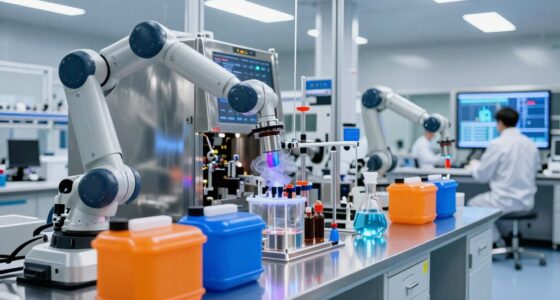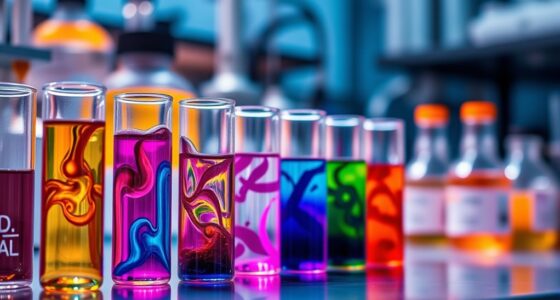
Specialty carbonates and electrolytes are key to developing next-gen batteries that offer higher stability, safety, and performance. You’ll benefit from materials designed to withstand high voltages, temperature changes, and fast charge cycles, ensuring longer-lasting, more reliable energy storage. Advances in synthesis improve purity and chemical robustness, which prevents degradation and enhances ion transport. To learn how these innovations are shaping the future of energy, keep exploring these cutting-edge materials.
Open a free Amazon Business account
Business pricing, bulk buying and tax-exempt orders.
As an affiliate, we earn on qualifying purchases.
Key Takeaways
- Specialty carbonates and electrolytes are engineered for high stability to improve battery safety and lifespan.
- Optimized synthesis techniques produce purer materials, reducing impurities that cause degradation.
- Advanced carbonate structures enhance ionic conductivity, enabling faster charge/discharge cycles.
- Improved thermal stability and safety features prevent thermal runaway and ensure reliable operation.
- Tailored electrolyte compositions support compatibility with next-generation electrode materials for superior performance.

Specialty carbonates and electrolytes play a critical role in various industrial applications, especially in energy storage and chemical manufacturing. When it comes to next-generation batteries, understanding the importance of electrolyte stability is essential. You need electrolytes that can withstand high voltages, temperature fluctuations, and repeated charge-discharge cycles without degrading. Achieving this stability ensures your battery maintains its capacity, safety, and longevity over time. One key factor in this process is the development of electrolytes with enhanced chemical robustness, which often involves optimizing the composition and structure of carbonate-based electrolytes. These carbonate electrolytes are designed to resist decomposition, preventing the formation of unwanted byproducts that could compromise performance or safety.
Specialty carbonate electrolytes enhance stability and safety in next-generation energy storage solutions.
Carbonate synthesis plays a fundamental role here. It’s the process by which you produce the carbonate compounds used in electrolytes, and improvements in this area directly impact battery efficiency. Advanced synthesis techniques allow for the creation of purer, more uniform carbonate materials, which translate into more stable electrolytes. This stability is essential for next-gen batteries, especially those intended for electric vehicles and grid storage, where reliability and safety are paramount. By refining carbonate synthesis methods, you can reduce impurities that might catalyze undesirable side reactions, consequently prolonging battery life and improving overall performance.
You’ll find that the choice of carbonate compounds influences ion transport properties within the electrolyte. When carbonate electrolytes are properly synthesized, they offer high ionic conductivity, enabling faster charging and discharging. Additionally, their chemical compatibility with electrode materials helps prevent issues like dendrite formation, which can cause short circuits or battery failure. Achieving this balance requires precise control over the synthesis process, ensuring that the carbonate molecules are tailored for excellent electrochemical activity. Furthermore, research into the top-performing carbonate structures has shown promising results in enhancing electrolyte stability under harsh operating conditions.
Moreover, the stability of these electrolytes directly impacts battery safety. You’re less likely to encounter thermal runaway or leakage if the carbonate electrolyte remains stable under demanding conditions. As research advances, innovative synthesis routes are emerging, allowing you to produce carbonate electrolytes with enhanced thermal stability and reduced volatility. These improvements make next-generation batteries safer, more durable, and better suited for high-performance applications.
high stability carbonate electrolyte for batteries
As an affiliate, we earn on qualifying purchases.
As an affiliate, we earn on qualifying purchases.
Frequently Asked Questions
How Do Carbonate-Based Electrolytes Compare to Other Electrolyte Types?
You’ll find carbonate-based electrolytes offer good electrolyte stability and are cost-efficient compared to other types like sulfates or phosphates. They enable better ionic conductivity, which improves battery performance. While some alternatives might provide higher stability at extreme conditions, carbonate electrolytes are more affordable and easier to produce, making them ideal for large-scale applications. Overall, their balance of stability and cost efficiency makes them a popular choice for next-generation batteries.
What Are the Environmental Impacts of Producing Specialty Carbonates?
Imagine a factory polluting nearby waterways during carbonate production, highlighting its environmental footprint. Producing specialty carbonates involves mining raw materials, which can strain resource sustainability and generate waste. This process often releases greenhouse gases and chemicals, impacting ecosystems and communities. While advances aim to reduce these impacts, it’s essential to contemplate these environmental costs to guarantee responsible manufacturing and safeguard our planet’s future.
How Do Electrolyte Additives Improve Battery Performance?
You’ll find that electrolyte additives improve battery performance by enhancing additive stability and enabling performance enhancement. They stabilize the electrolyte, preventing degradation over time, which extends battery life. Additives also improve charge capacity, reduce internal resistance, and enhance safety features. By supporting the electrolyte’s stability, these additives guarantee consistent operation under various conditions, making your batteries more reliable, longer-lasting, and better suited for demanding applications.
What Are the Safety Concerns With Next-Gen Electrolyte Materials?
Safety screams surface when you consider next-gen electrolyte materials, especially due to fire hazards and chemical stability concerns. You might worry about volatile reactions, thermal runaway, and instability under stress. Ensuring chemical stability reduces risks of leaks and degradation, but fire hazards remain a serious safety concern. You should prioritize rigorous testing, advanced safety protocols, and protective measures to prevent potential accidents and protect both users and devices from harm.
How Scalable Are These New Carbonate and Electrolyte Production Methods?
You’ll find that these new carbonate and electrolyte production methods are increasingly scalable, but manufacturing challenges remain. Scaling up requires optimizing processes and ensuring consistent quality, which can strain the supply chain. As demand grows, you’ll need to address raw material availability and logistics. While advancements are promising, overcoming these manufacturing hurdles is vital for widespread adoption and reliable supply of next-gen battery components.
Conclusion
As you explore the world of specialty carbonates and electrolytes, remember they’re the backbone of next-generation batteries. Just like a vital puzzle piece, they fit perfectly to boost performance and longevity. By advancing these materials, you’re helping to open up safer, more efficient energy storage. Your efforts are like the spark that ignites a revolution, powering a sustainable future. Keep pushing boundaries—your innovations are the key to brighter, cleaner energy for everyone.
NFL season / tailgating Picks
team gear
As an affiliate, we earn on qualifying purchases.