
Digital twins for chemical plants create real-time virtual models that help you monitor operations, predict equipment failures, and optimize processes. By simulating different scenarios, they enable you to prevent costly breakdowns, extend machinery life, and improve safety protocols—all while reducing downtime and operational costs. These digital replicas allow for smarter decision-making and increased efficiency, ultimately saving you money. Keep exploring to see how implementing digital twins can transform your plant’s performance.
Key Takeaways
- Digital twins enable real-time monitoring, allowing proactive decisions that reduce downtime and operational costs.
- They predict equipment failures early, minimizing costly repairs and extending machinery lifespan.
- Virtual process simulations optimize operations, increasing efficiency and reducing waste in chemical plants.
- Digital twins enhance safety planning and regulatory compliance through scenario testing and detailed record-keeping.
- Integration with control systems streamlines processes, lowers operational expenses, and boosts overall plant profitability.

Digital twins are transforming the way chemical plants operate by providing real-time digital replicas of physical assets and processes. With these virtual models, you gain the ability to monitor equipment and systems continuously, enabling proactive decision-making that can considerably reduce downtime and operational costs.
Digital twins enable continuous monitoring and proactive management of chemical plant assets and processes.
One of the key advantages is predictive maintenance. Instead of waiting for machinery to fail or showing signs of wear, you can use the digital twin to foresee potential issues before they happen. By analyzing data from sensors embedded in physical assets, the digital twin predicts failures and suggests maintenance schedules. This approach not only prevents costly unplanned outages but also extends the lifespan of your equipment.
Moreover, process optimization becomes more achievable with digital twins. You can simulate different operational scenarios within the virtual environment to identify the most efficient settings for your plant. For example, adjusting flow rates, temperatures, or chemical concentrations in the digital twin allows you to evaluate outcomes without risking actual production. Simulating operational scenarios enables you to make data-driven decisions that enhance efficiency.
By fine-tuning processes digitally, you’re able to implement improvements in the real plant, boosting productivity and product quality while minimizing waste. This iterative testing helps you identify bottlenecks and inefficiencies that might be invisible through traditional monitoring methods.
In addition, digital twins facilitate better safety management. You can simulate emergency situations or process deviations in the virtual model to develop more effective response strategies. This proactive planning enhances safety protocols and reduces the likelihood of accidents.
The real-time data streaming from physical assets to the digital twin means you stay constantly updated, enabling quick reaction times and informed decision-making.
Implementing digital twins also supports regulatory compliance. With detailed digital records of operations and maintenance, you can easily generate reports required by authorities, ensuring transparency and adherence to industry standards.
Additionally, integrating digital twins with existing control systems streamlines operations, making adjustments faster and more precise. As you harness the power of these virtual models, you’ll notice a tangible impact on your bottom line through reduced operational costs, minimized downtime, and improved process efficiency.
Ultimately, digital twins aren’t just about technology—they’re about transforming your approach to plant management. They empower you to be more predictive, efficient, and safe, and as the technology advances, the potential for AI-driven optimization continues to grow.

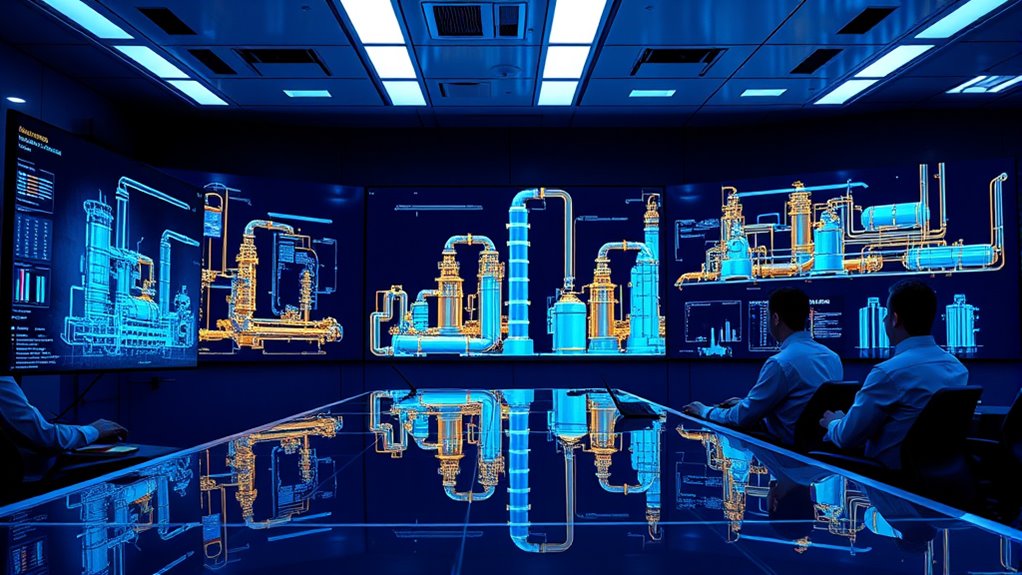
Generation and Update of a Digital Twin in a Process Plant
As an affiliate, we earn on qualifying purchases.
As an affiliate, we earn on qualifying purchases.
Frequently Asked Questions
How Do Digital Twins Adapt to Process Changes Over Time?
When process changes occur, you can adapt digital twins through process calibration, ensuring the model reflects current operations.
By continuously updating data synchronization, the twin stays aligned with real-time data, capturing any modifications.
This ongoing calibration allows the digital twin to accurately simulate the plant’s behavior, helping you spot issues early and optimize performance without costly downtime or errors.
Ultimately, this approach improves efficiency and reduces costs.
What Are the Cybersecurity Risks Associated With Digital Twin Implementation?
You should be aware that digital twin implementation introduces cybersecurity threats like data breaches and unauthorized access. These risks can compromise sensitive data and disrupt operations.
To protect your virtual models, prioritize robust data protection measures, such as encryption and secure access controls.
Regular security audits and updates help identify vulnerabilities early.
Staying vigilant about cybersecurity threats guarantees your digital twin remains a safe and valuable asset for your chemical plant.
How Accurate Are Digital Twins Compared to Physical Plant Data?
You’ll find that digital twins are highly accurate when properly maintained. Sensor calibration guarantees data precision, while data synchronization keeps virtual models aligned with real-time plant operations.
Regular calibration minimizes discrepancies, and effective synchronization ensures your digital twin reflects current conditions. When these processes are well-managed, your digital twin can closely mirror physical plant data, enabling better decision-making, predictive maintenance, and operational efficiency.
What Initial Costs Are Involved in Creating a Digital Twin?
When considering the initial costs of creating a digital twin, you need to focus on cost estimation and technology integration.
You’ll invest in sensors, data collection tools, and advanced software to build an accurate virtual model.
Additionally, integrating this technology into your existing systems requires skilled personnel and infrastructure upgrades.
While upfront expenses can be substantial, they’re essential for achieving long-term operational efficiencies and cost savings.
Can Digital Twins Predict Equipment Failures Before They Occur?
You can use digital twins for predictive maintenance by leveraging real-time monitoring to detect potential equipment failures early. These virtual models analyze data continuously, identifying patterns that signal issues before they happen.
This proactive approach helps you schedule repairs efficiently, reduce downtime, and avoid costly breakdowns. Digital twins empower you to predict failures accurately, ensuring your chemical plant runs smoothly and safely without unexpected interruptions.
Conclusion
Imagine the future where your chemical plant runs smoother, safer, and more efficiently—all thanks to digital twins. But what if the real game-changer is just around the corner? As technology advances, these virtual models could reveal secrets you haven’t even considered yet, saving you money and preventing disasters before they happen. Are you ready to embrace this innovation and stay ahead of the curve? The next breakthrough might be closer than you think.