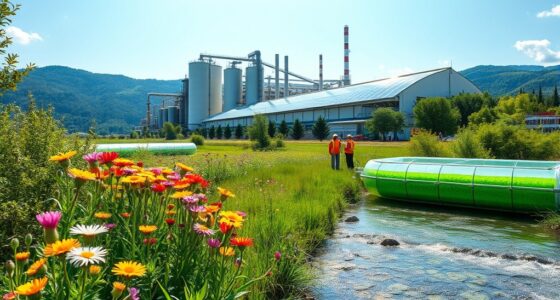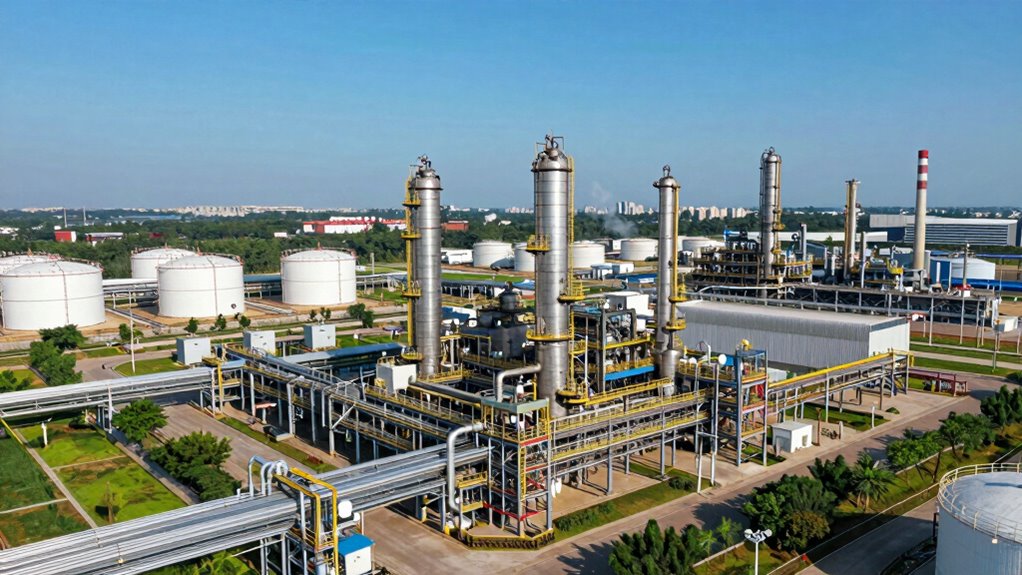

Chemical parks and industrial symbiosis are transforming industries by creating interconnected ecosystems that optimize resource use. You’ll see companies sharing raw materials, energy, and infrastructure, which reduces waste and lowers costs. This model promotes sustainability and innovation, helping businesses adapt to stricter regulations and resource scarcity. Digital tools further enhance efficiency through real-time data sharing. If you stay with this topic, you’ll uncover how these systems are shaping a more sustainable and resilient industrial future.
Key Takeaways
- Chemical parks promote resource sharing and waste reduction, enhancing overall industrial efficiency and sustainability.
- Industrial symbiosis enables companies to reuse by-products and energy, minimizing environmental impact.
- Digital tools facilitate real-time data sharing and resource optimization within chemical parks.
- Collaboration among stakeholders fosters innovation and resilience against resource scarcity and regulation changes.
- The model offers a competitive advantage by integrating eco-friendly practices and sustainable growth strategies.
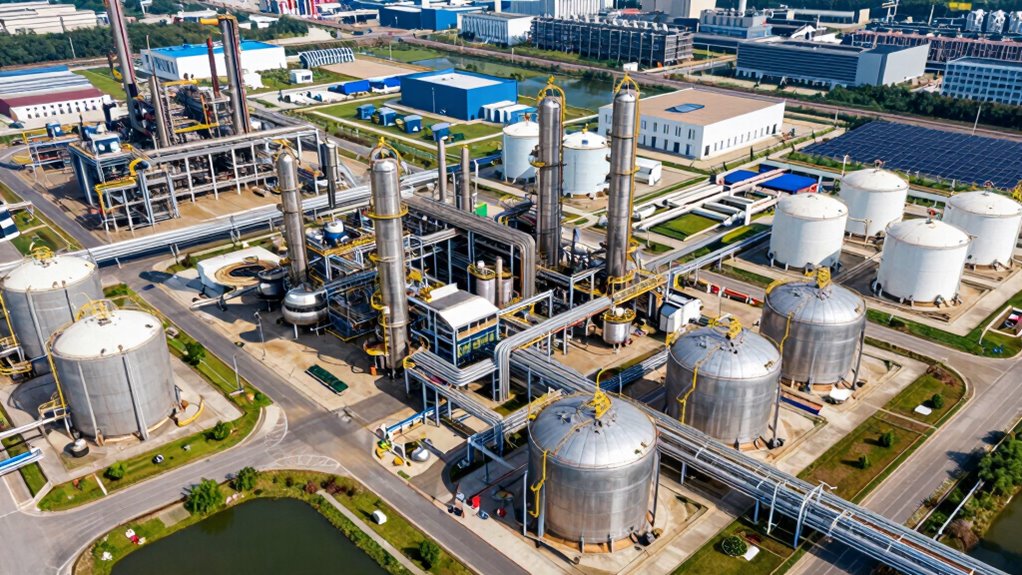
Have you ever wondered how chemical companies can collaborate more sustainably? The answer lies in the growing model of chemical parks and industrial symbiosis. These hubs bring together multiple companies in a shared location, allowing them to exchange resources and waste streams efficiently. By doing so, they foster sustainable innovation, where new methods and technologies prioritize environmental responsibility while maintaining economic viability. This approach isn’t just about reducing pollution; it’s about transforming the entire industry into a more resilient and eco-friendly system. Resource optimization becomes the core of this strategy, enabling companies to use raw materials more effectively and cut down on waste. Instead of each firm operating in isolation, they learn to share by-products, energy, and infrastructure, which minimizes unnecessary consumption and lowers operational costs.
Chemical parks and industrial symbiosis drive sustainable innovation through shared resources, reducing waste and boosting industry resilience.
In a chemical park, companies can capture and reuse waste streams that would otherwise be discarded. For example, excess heat from one plant can be used to power another, or by-products from one process can serve as raw materials for another. This interconnectedness creates a circular flow of resources that boosts efficiency and reduces environmental impact. As a result, you’ll notice that companies not only save money but also improve their sustainability profiles. This collaborative environment encourages innovative solutions that might not emerge in traditional settings, where companies tend to focus solely on their own production processes. Instead, they’re motivated to develop cleaner technologies and smarter resource management practices that benefit everyone involved.
Implementing industrial symbiosis within chemical parks also helps to future-proof the industry against resource scarcity and stricter regulations. As demands for sustainable practices increase, companies that embrace this model will have a competitive edge. They can adapt more quickly to new standards by leveraging shared infrastructure and knowledge. This system also promotes transparency and cooperation, which are essential for scaling sustainable innovation across the industry. The result is a more resilient supply chain that reduces reliance on finite resources and minimizes environmental footprint. Additionally, integrating cloud server solutions can enhance data sharing, monitoring, and coordination among companies, making these processes even more efficient. Such digital integration can facilitate real-time resource tracking and optimize operational performance across multiple entities. Moreover, fostering a culture of collaborative innovation within these ecosystems can accelerate the development of environmentally friendly technologies and practices. Embracing resource efficiency is key to ensuring long-term sustainability and competitiveness in this evolving landscape.
Furthermore, the adoption of digital tools and data-driven decision making can significantly improve the management of resource flows and environmental impact. You, as part of this evolving landscape, have a vital role in supporting and adopting these practices. Whether you’re a researcher, manager, or policymaker, understanding the importance of resource optimization and sustainable innovation can drive meaningful change. Chemical parks and industrial symbiosis aren’t just trends; they’re the future of responsible and efficient chemical manufacturing. By working together within this model, the industry can achieve significant progress toward sustainability and resilience, creating a cleaner, more sustainable world for everyone.

Declutter Your Photo Life: Curating, Preserving, Organizing, and Sharing Your Photos
As an affiliate, we earn on qualifying purchases.
As an affiliate, we earn on qualifying purchases.
Frequently Asked Questions
How Do Chemical Parks Impact Local Biodiversity and Ecosystems?
Chemical parks can threaten local biodiversity and ecosystems if not properly managed. You might see habitat loss, pollution, or chemical runoff that damage flora and fauna. However, with focused efforts on biodiversity conservation and sustainable practices, you can help safeguard ecosystem resilience. Implementing green buffers, monitoring emissions, and promoting eco-friendly operations ensure that chemical parks coexist with local ecosystems, minimizing negative impacts and supporting long-term environmental health.
What Are the Primary Challenges in Establishing Industrial Symbiosis?
You’ll face challenges like achieving effective sustainability integration and fostering stakeholder collaboration. Aligning diverse interests and balancing economic, environmental, and social goals can be complex. You need clear communication, trust, and shared vision to overcome resistance and coordinate resources. Addressing regulatory hurdles and managing logistical complexities also test collaboration efforts. Ultimately, your success depends on building strong partnerships and prioritizing sustainability to create a resilient and efficient industrial ecosystem.
How Do Regulatory Policies Influence Chemical Park Development?
Regulatory policies markedly influence chemical park development by shaping how companies approach regulatory compliance and benefit from policy incentives. You’ll find that clear, supportive regulations streamline processes and encourage sustainable practices, making it easier to develop eco-friendly facilities. Conversely, complex or uncertain policies can hinder progress. When governments offer policy incentives, they motivate industries to adopt innovative, efficient, and environmentally responsible solutions, accelerating the growth and success of chemical parks.
What Role Do Startups Play in Industrial Symbiosis Initiatives?
Think of startups as enthusiastic explorers in a vast, interconnected forest. They bring startup innovation that sparks fresh ideas, while their agility helps build collaborative networks essential for industrial symbiosis. You play a key role by fostering partnerships, sharing resources, and experimenting with new processes. Together, startups and established entities create a resilient ecosystem, transforming waste into value and driving sustainability through innovative, collaborative efforts.
How Is the Success of a Chemical Park Measured Long-Term?
You measure the long-term success of a chemical park through environmental integration and economic sustainability. If the park consistently reduces waste, lowers emissions, and efficiently uses resources, it indicates strong environmental integration. Simultaneously, sustained profitability, job creation, and low operational costs show economic sustainability. Monitoring these factors over time helps you determine whether the park effectively balances ecological responsibility with economic growth, ensuring its enduring success.

Thermal Engineering of Nuclear Power Stations
As an affiliate, we earn on qualifying purchases.
As an affiliate, we earn on qualifying purchases.
Conclusion
As you walk through these vibrant chemical parks, imagine the intricate dance of pipes and processes seamlessly sharing resources like a well-orchestrated symphony. Industrial symbiosis transforms once-isolated factories into a thriving ecosystem, where waste becomes fuel and efficiency blooms. This model paints a future where industry and environment coexist in harmony, fueling innovation and sustainability. Embrace this vision, and you’ll see how this vibrant, interconnected landscape can shape a cleaner, more sustainable tomorrow.

Evolution of Supply Chain Management: Symbiosis of Adaptive Value Networks and ICT
Used Book in Good Condition
As an affiliate, we earn on qualifying purchases.
As an affiliate, we earn on qualifying purchases.

Optimization Methods for User Admissions and Radio Resource Allocation for Multicasting over High Altitude Platforms
As an affiliate, we earn on qualifying purchases.
As an affiliate, we earn on qualifying purchases.