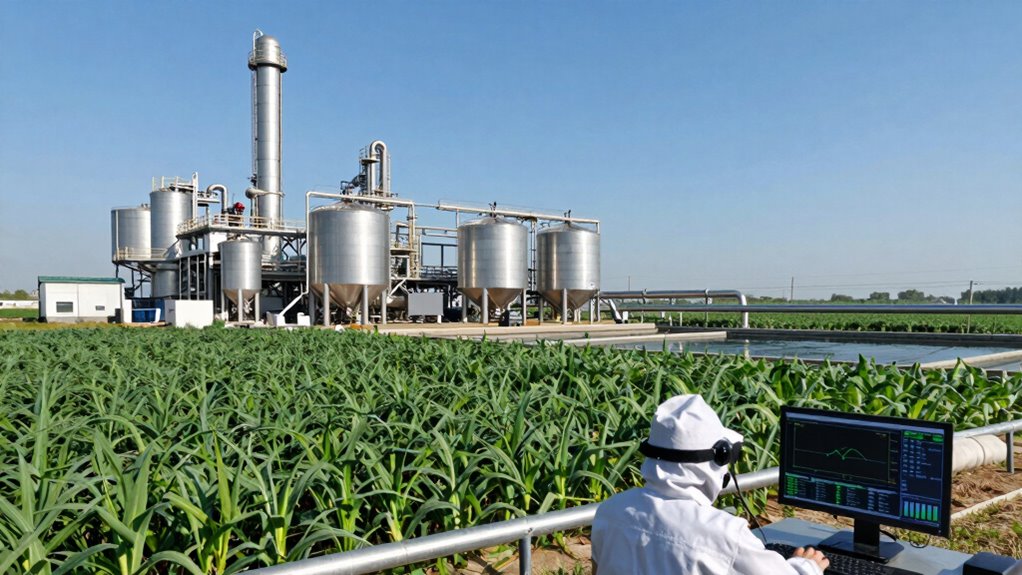

The new economics of low-carbon feedstocks revolve around combining innovative technologies, supportive policies, and market incentives to make sustainable raw materials mainstream. Governments offer subsidies, tax credits, and regulations that favor greener options, while advancements in biotech and biomass processing lower costs. This synergy helps reduce reliance on traditional, carbon-heavy sources and promotes greener practices across industries. Continuing this exploration will reveal how these trends are reshaping supply chains and driving a more sustainable future.
Key Takeaways
- Market incentives like policies, subsidies, and consumer demand are making low-carbon feedstocks more economically viable.
- Technological innovations improve efficiency, reduce costs, and support the scaling of sustainable raw material production.
- Integration of renewable energy and advanced processing methods accelerates the competitiveness of low-carbon feedstocks.
- Policy and technology synergy drives the mainstream adoption of sustainable raw materials across industries.
- Transitioning to low-carbon feedstocks enhances profitability while supporting environmental and long-term economic goals.
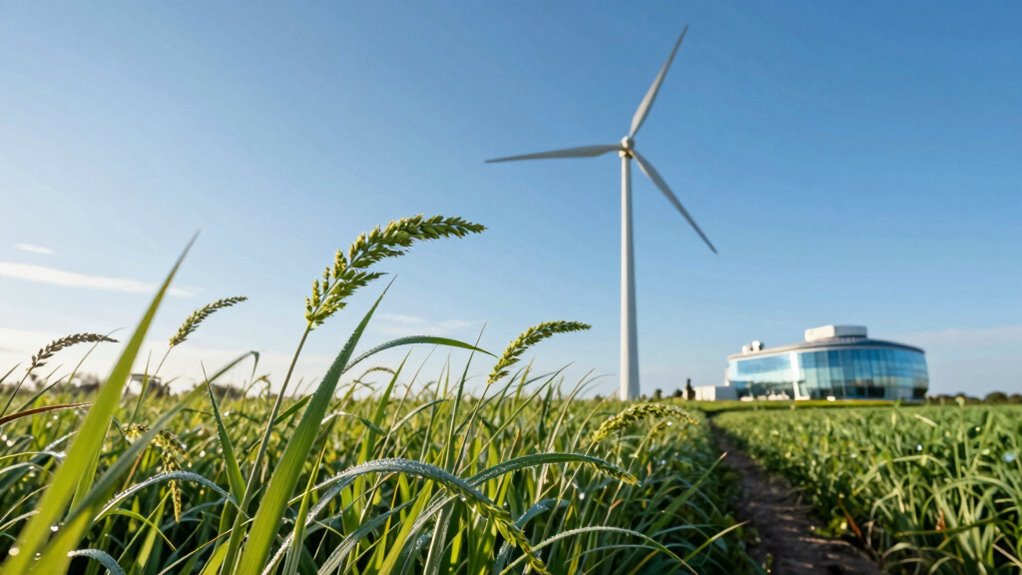
As the world races to reduce greenhouse gas emissions, low-carbon feedstocks have emerged as a game-changer in sustainable production. These materials, derived from renewable sources or processes that emit minimal carbon, are transforming industries by offering cleaner alternatives to traditional raw materials. Their increasing importance stems from a combination of market incentives and technological innovations that make them not only environmentally attractive but also economically viable. Governments and private sectors recognize the potential for low-carbon feedstocks to reshape supply chains, prompting investments and policy support that accelerate their adoption.
Market incentives play a crucial role in this shift. Governments worldwide are implementing policies such as carbon pricing, subsidies, and regulatory frameworks that favor low-carbon options. These incentives make traditional, carbon-intensive feedstocks less competitive, encouraging companies to seek sustainable alternatives. For example, tax credits and grants help offset higher initial costs associated with low-carbon feedstock production, making it an attractive option for industries looking to meet sustainability targets. Additionally, consumer demand for eco-friendly products pressures companies to incorporate low-carbon raw materials, further boosting market demand. As a result, a new economic landscape is forming where sustainability and profitability align, pushing industries toward greener practices. The development of sustainable supply chains further reinforces this transition by ensuring that low-carbon feedstocks are accessible and reliable. Moreover, fostering collaborative efforts among stakeholders enhances the deployment of low-carbon solutions across industries.
Technological innovations are equally vital in advancing the low-carbon feedstock economy. Breakthroughs in biotechnologies, such as genetically engineered microbes and advanced biomass processing techniques, allow for more efficient conversion of renewable resources into valuable raw materials. Innovations in renewable energy, like solar and wind, reduce the carbon footprint of feedstock production processes, making them more sustainable and cost-effective. Digital tools and data analytics optimize supply chains, decrease waste, and improve resource utilization, further lowering costs. These technological strides enable producers to scale up low-carbon feedstock manufacturing, reducing prices and increasing accessibility. Moreover, the integration of advanced processing techniques is essential for unlocking the full potential of low-carbon feedstocks and driving down costs further. As these innovations continue, the barriers to adopting low-carbon feedstocks diminish, making them increasingly competitive against traditional options.
Together, market incentives and technological innovations create a robust framework that accelerates the transition to low-carbon feedstocks. They foster an environment where sustainable raw materials become standard, not just an alternative. You, as a participant in this evolving economy, stand to benefit from these changes—whether through the adoption of greener practices, investment opportunities, or simply by supporting a more sustainable future. The convergence of policy support and technological progress ensures that low-carbon feedstocks will play a central role in shaping the new economics of sustainable production, making it clear that greener, cleaner raw materials are more than just a trend—they’re the future.
low-carbon feedstock products
As an affiliate, we earn on qualifying purchases.
As an affiliate, we earn on qualifying purchases.
Frequently Asked Questions
How Do Low-Carbon Feedstocks Impact Global Food Security?
Low-carbon feedstocks can positively impact your food security by promoting sustainable agriculture, which reduces environmental strain and conserves resources. By integrating these feedstocks, you help guarantee a stable food supply, even as climate challenges grow. They can also lower greenhouse gas emissions associated with food production, making the entire food system more resilient and sustainable for future generations. Your support for low-carbon options benefits both the planet and your food security.
What Are the Main Technological Barriers to Scalable Production?
You face bioengineering challenges like optimizing feedstock yields and developing efficient conversion processes, which hinder scalability. High production costs also pose significant barriers. To overcome this, you should focus on cost reduction strategies such as improving microbial strains, streamlining bioprocesses, and leveraging economies of scale. These efforts can make low-carbon feedstocks more viable for large-scale deployment, ultimately benefitting sustainable food and energy systems.
How Do Policy Incentives Influence Market Adoption?
Policy incentives like subsidies greatly influence market adoption by making low-carbon feedstocks more financially attractive. When governments offer policy subsidies, you’re more likely to see increased investment and innovation. These incentives also promote market integration, encouraging industries to adopt sustainable practices. Overall, effective policy incentives help bridge the gap between technological potential and real-world application, speeding up the shift to greener, low-carbon feedstocks.
What Are Potential Environmental Risks Associated With New Feedstocks?
You could unknowingly cause environmental chaos by introducing new feedstocks, risking massive biodiversity loss and water contamination. These risks might seem small now, but they could escalate into catastrophic ecological damage if not carefully managed. Your actions might disrupt delicate ecosystems or pollute water supplies, threatening wildlife and communities alike. It’s vital to rigorously assess these risks and implement safeguards before embracing new feedstocks to avoid irreversible environmental harm.
How Does Consumer Behavior Affect Low-Carbon Feedstock Markets?
Your consumer preferences directly influence low-carbon feedstock markets by shaping demand for sustainable options. When you prioritize eco-friendly products, market dynamics shift toward more sustainable feedstocks, encouraging producers to adopt greener practices. Conversely, if demand drops or favors cheaper, less sustainable options, it can slow innovation and sustainability efforts. Your choices therefore play an essential role in driving the growth and development of low-carbon feedstock markets, impacting environmental outcomes.
biotech biomass processing equipment
As an affiliate, we earn on qualifying purchases.
As an affiliate, we earn on qualifying purchases.
Conclusion
Now that you understand the new economics of low-carbon feedstocks, you’re on the brink of transforming how the world tackles climate change. With innovative strategies, you can make a massive impact—like shifting an entire planet toward sustainability! Embrace these changes boldly, because the future depends on your actions today. The power to revolutionize industries and save the Earth has never been more within your grasp. So, step up and be the change maker!

Designing Climate Solutions: A Policy Guide for Low-Carbon Energy
As an affiliate, we earn on qualifying purchases.
As an affiliate, we earn on qualifying purchases.

Advances in raw material industries for sustainable development goals
As an affiliate, we earn on qualifying purchases.
As an affiliate, we earn on qualifying purchases.