
Refineries are shifting from traditional fuel production to focused petrochemical manufacturing by adopting advanced catalysts that enable direct conversion of crude oil into high-value chemicals like ethylene and propylene. This market diversification reduces reliance on fuels, boosts efficiency, and aligns with sustainability goals. You’ll see how innovation helps refineries target new markets, improve product quality, and stay competitive amidst global energy transitions. Keep exploring to discover how these changes are shaping the future of petrochemicals.
Key Takeaways
- Refineries are transitioning from fuel production to petrochemical manufacturing using advanced catalysts for higher-value chemicals.
- Catalyst innovations enable selective conversion of hydrocarbons, expanding product portfolios to chemicals like ethylene and propylene.
- Market diversification reduces reliance on traditional fuels, boosting refinery resilience amid fluctuating oil prices and regulations.
- Enhanced catalysts improve process efficiency, yield, and environmental performance, supporting sustainable petrochemical growth.
- Refineries are evolving into versatile hubs, integrating technology and diversification strategies to meet modern industry demands.

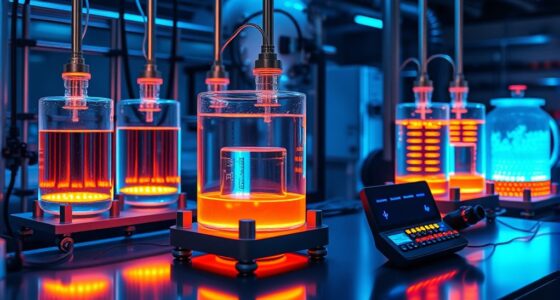
Oil-to-Chemicals (O2C) is a transformative process that converts crude oil and its derivatives into a wide range of essential chemicals used across industries. As refineries pivot toward petrochemicals, you’ll find that catalyst innovations play a vital role in this shift. New catalysts improve the efficiency and selectivity of chemical conversions, enabling refineries to produce a broader array of chemicals directly from crude oil. These advancements not only boost yields but also reduce energy consumption and operational costs, making petrochemical production more sustainable and profitable. By integrating cutting-edge catalysts, refineries can better adapt to changing market demands, creating opportunities to diversify their product portfolios.
Catalyst innovations enable refineries to efficiently diversify into high-value chemicals from crude oil.
Market diversification becomes central to the strategic evolution of refineries in this landscape. Instead of solely focusing on traditional fuels like gasoline and diesel, refineries aim to tap into the expanding demand for chemicals used in plastics, synthetic fibers, and specialty materials. This shift allows them to mitigate risks associated with fluctuating oil prices and regulatory pressures on fossil fuels. Diversification also opens new revenue streams, helping refineries stay resilient amid global energy transitions. You’ll notice that refineries investing in advanced catalysts are better equipped to produce a variety of chemicals, such as ethylene, propylene, and aromatic compounds, all of which are foundational to numerous industries.
Incorporating catalyst innovations facilitates the selective breakdown of complex hydrocarbons, enabling more precise control over chemical outputs. This precision supports market diversification efforts by allowing refineries to tailor their products to specific industrial needs. For example, producing high-purity chemicals for medical, electronics, or packaging applications becomes more feasible. Additionally, as regulations tighten around environmental impacts, catalyst improvements help reduce emissions during chemical processing, aligning refinery operations with sustainability goals. Furthermore, advancements in high-performance projectors can enhance the visualization of complex chemical processes, aiding in operational efficiency and training.
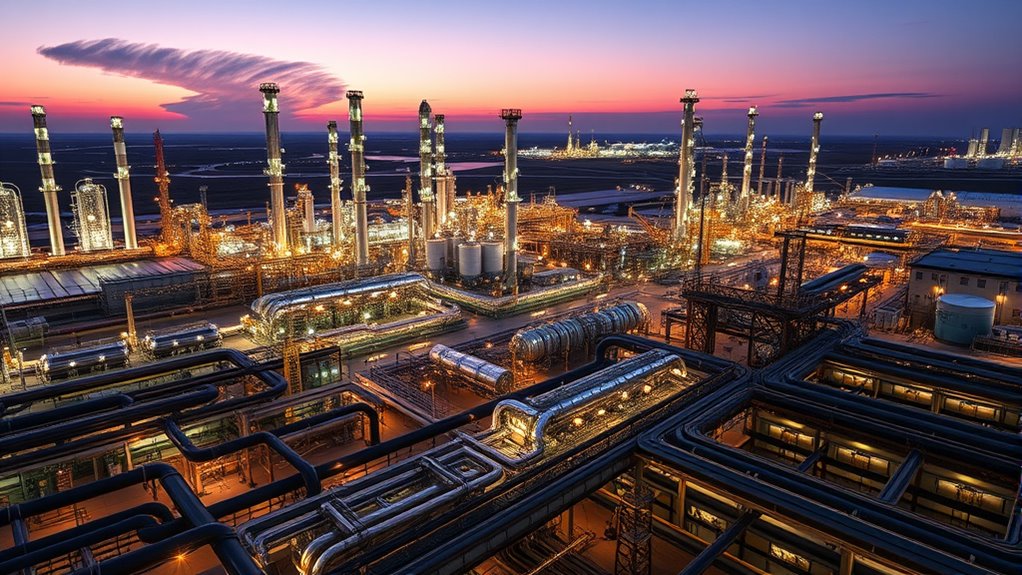
Through these innovations, refineries are transforming from traditional fuel producers into versatile petrochemical hubs. This transformation is driven by the recognition that chemicals derived from oil have a higher value and growth potential than fuels alone. With market diversification and catalyst advancements working hand in hand, you’ll see refineries expanding their product lines, entering new markets, and enhancing their competitiveness. They’re not just adapting to the future—they’re shaping it, turning raw hydrocarbons into a wide array of essential chemicals that power modern life.
Frequently Asked Questions
What Are the Main Challenges in Converting Refineries to O2C Plants?
You face challenges like managing complex supply chains and ensuring your workforce is properly trained for the new processes. Converting refineries to O2C plants requires significant logistical adjustments, which can cause delays. Additionally, you need to upskill your staff to handle advanced chemical operations, making workforce training a critical factor. Balancing these aspects while maintaining safety and efficiency makes the progression demanding but essential for success.
How Does O2C Impact Refinery Profitability and Operational Efficiency?
You’ll find that O2C boosts your refinery’s profitability by adding high-value chemical products, helping you stay competitive in the market. It streamlines operations, reducing costs and improving efficiency through integrated processes. To maximize benefits, you need smart investment strategies that focus on upgrading facilities and technology. This approach guarantees you capitalize on growing petrochemical demand while maintaining operational agility and strengthening your position in the evolving energy landscape.
What New Technologies Are Enabling Successful O2C Transitions?
Imagine transforming a struggling refinery into a thriving petrochemical hub. Advanced catalysts boost conversion efficiency, making O2C shifts smoother. Digital integration further streamlines operations, enabling real-time adjustments and predictive maintenance. For example, some refineries now use AI-driven systems to optimize processes, reducing downtime and costs. These innovations empower you to succeed in pivoting toward petrochemicals, ensuring higher profitability and operational resilience in a competitive market.
How Do Regulatory Policies Influence O2C Project Development?
Regulatory policies considerably impact your O2C project development. Environmental regulations can increase costs and complexity, requiring you to implement cleaner technologies and obtain permits. Conversely, tax incentives encourage your investments by reducing financial risks and boosting profitability. Staying compliant with these policies is essential, as they shape project timelines and budget planning. By understanding and leveraging these policies, you can accelerate your shift to petrochemicals while minimizing regulatory hurdles.
What Is the Timeline for Refineries to Fully Pivot to Petchem Production?
You’ll see refineries typically take 3 to 7 years to fully pivot to petchem production, driven by market dynamics and investment timelines. For example, a refinery in the Middle East started its progression in 2021 and, by 2028, aims to become primarily a petrochemical complex. This shift depends on factors like technology upgrades, regulatory approvals, and economic conditions, all influencing how quickly refineries can adapt.
Conclusion
Just like the phoenix rising from ashes, refineries are transforming from traditional oil producers into vibrant hubs of chemical innovation. This shift isn’t just a trend; it’s a rebirth, shaping a future where petrochemicals fuel industries beyond fuel itself. As you watch this evolution unfold, remember that today’s pivot could be the spark that ignites tomorrow’s sustainable and versatile economy. Embrace the change—you’re witnessing history in the making.