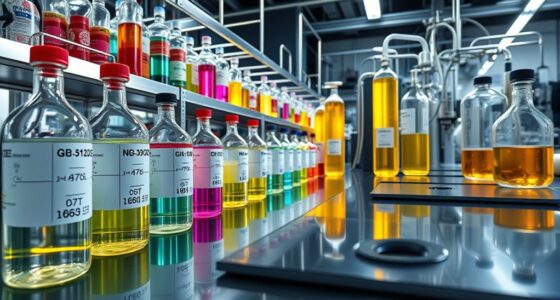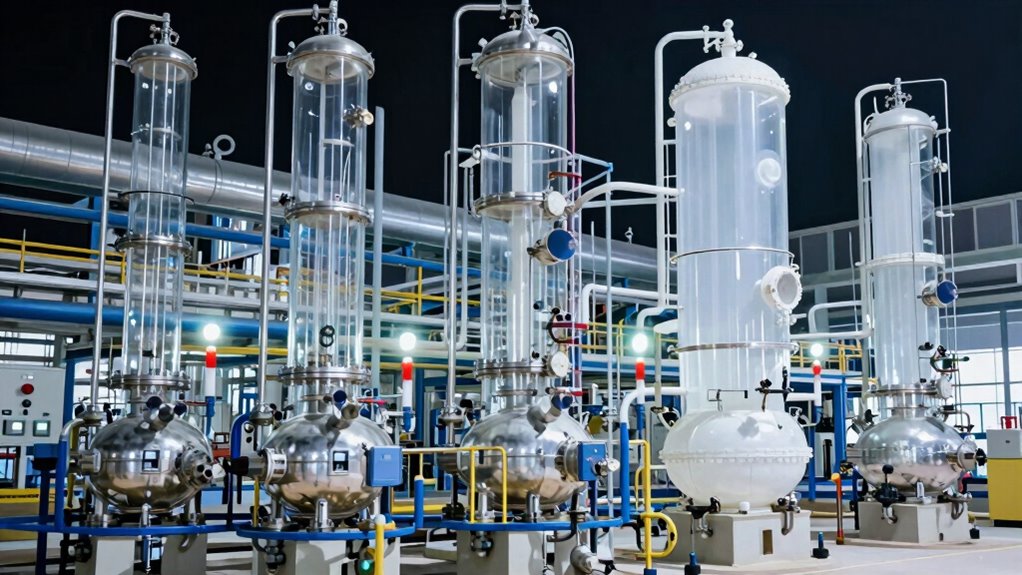

As cost pressures rise, solvent recovery systems are becoming mainstream because they help you cut expenses on raw materials and waste disposal. Modern distillation units improve energy efficiency through heat exchange and automation, lowering your operational costs while supporting sustainability goals. They also help you stay compliant with environmental regulations by controlling emissions and reducing hazardous waste. If you want to see how these systems can benefit your operations further, there’s more to explore below.
Key Takeaways
- Increasing regulatory pressures drive industries to adopt cost-effective solvent recovery systems to minimize waste and compliance costs.
- Advanced distillation units enhance energy efficiency, reducing operational expenses amid rising energy costs.
- Solvent recovery reduces raw material purchases and waste disposal, providing significant cost savings for manufacturers.
- Integration of automation and heat exchange technologies optimizes system performance and lowers maintenance costs.
- Growing demand for sustainable practices pushes companies to invest in solvent recovery solutions as a competitive advantage.
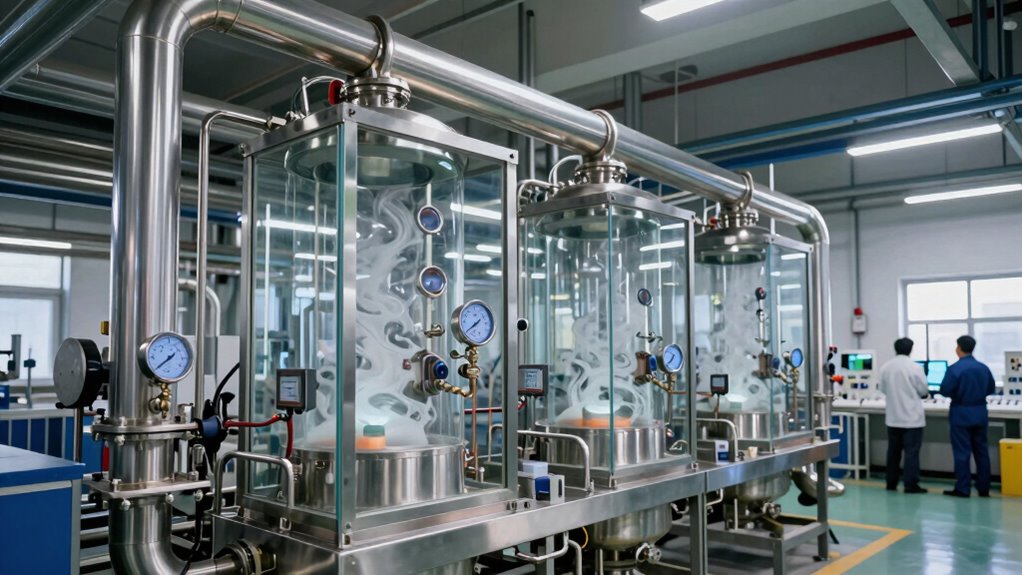
Have you ever wondered how industries minimize waste and cut costs while handling solvents? One of the most effective ways is through solvent recovery systems, especially distillation units. These systems are designed to reclaim valuable solvents from waste streams, reducing the need for purchasing new chemicals and cutting disposal costs. But beyond the immediate financial benefits, solvent recovery also plays a vital role in achieving energy efficiency and regulatory compliance. By optimizing how solvents are reused, companies can considerably lower their energy consumption, since recovering solvents often requires less energy than producing them from raw materials. This not only reduces operational costs but also minimizes the environmental footprint, aligning with sustainability goals. Additionally, regulatory agencies increasingly demand strict adherence to environmental standards, pushing industries to adopt cleaner, more efficient processes. Implementing distillation units for solvent recovery helps companies comply with these regulations by controlling emissions, managing waste responsibly, and documenting proper handling procedures. Incorporating Free Floating systems can further enhance process flexibility and integration with existing operations, making the transition smoother and more cost-effective.
As you consider investing in solvent recovery technology, it’s essential to evaluate the energy efficiency of different distillation units. Advanced systems are designed to operate with minimal energy input, using innovative heat exchange and automation features that optimize performance. These units often incorporate energy-saving modes, such as heat recovery loops, which reuse thermal energy within the process, reducing overall power consumption. When your systems are energy-efficient, you not only lower your operational costs but also demonstrate a commitment to sustainable practices, which can be advantageous in regulatory audits and public perception.
Regulatory compliance is another critical factor. Governments and environmental agencies have tightened regulations on volatile organic compounds (VOCs) and hazardous waste management. Installing solvent recovery units helps ensure your operations meet these standards by capturing emissions and reducing hazardous waste disposal. Properly maintained distillation units generate documentation and reports that support compliance audits, making it easier for your company to demonstrate adherence to legal requirements. Additionally, by proactively managing solvent emissions, you reduce potential penalties and safeguard your company’s reputation.
Frequently Asked Questions
What Are the Latest Innovations in Solvent Recovery Technology?
You’ll find that recent innovations in solvent recovery include membrane separation and cryogenic distillation. Membrane technology offers energy-efficient, compact solutions that quickly separate solvents from mixtures, reducing costs. Cryogenic distillation, on the other hand, enables high-purity recovery at ultra-low temperatures, improving efficiency and sustainability. These advancements help you lower operational expenses, meet environmental standards, and optimize your solvent recovery process effectively.
How Do Government Regulations Impact Solvent Recovery Investments?
Government regulations profoundly influence your solvent recovery investments by enforcing stricter standards for regulatory compliance, which can increase costs but also drive innovation. You might benefit from investment incentives designed to promote sustainable practices, making it more financially feasible to implement advanced recovery systems. Staying ahead of these regulations helps you avoid penalties and positions your business as environmentally responsible, ultimately supporting long-term profitability and operational efficiency.
What Are Common Challenges in Scaling Solvent Recovery Systems?
Ever wondered what makes scaling solvent recovery systems challenging? You’ll face hurdles like managing costs effectively and ensuring equipment scalability. As you expand, maintaining consistent performance without escalating expenses becomes tricky. Upgrading or modifying existing setups can be complex and costly. To succeed, you need to plan for flexible, scalable solutions from the start, and focus on cost management strategies that support growth without compromising efficiency.
How Does Solvent Purity Affect Distillation Unit Efficiency?
Solvent purity directly impacts distillation unit efficiency by influencing separation quality. When solvent contamination occurs, it complicates purity monitoring and can lead to inefficient recovery. High purity levels enable your system to operate smoothly, reducing energy consumption and processing time. Regular purity monitoring helps you detect contamination early, ensuring peak performance. Maintaining high solvent purity minimizes downtime and maximizes recovery, which ultimately saves costs and enhances overall system efficiency.
What Are the Environmental Benefits of Advanced Solvent Recovery Methods?
You’ll find that advanced solvent recovery methods promote environmental benefits like chemical reuse and waste minimization. By efficiently recycling solvents, you reduce hazardous waste, lowering pollution and conserving resources. This not only helps meet environmental regulations but also diminishes your company’s carbon footprint. Implementing these methods guarantees you operate more sustainably, saving costs and supporting eco-friendly practices while maintaining high-quality production standards.
Conclusion
As solvent recovery becomes mainstream, you’ll find cost pressures pushing you to optimize, innovate, and adopt new technologies. You’ll face rising energy costs, tighter regulations, and the need for efficiency—all demanding your attention. Embrace these challenges as opportunities to improve, to invest, and to stay ahead. Because, in this changing landscape, staying proactive, staying competitive, and staying committed to sustainable practices will guarantee your success in mastering solvent recovery.