Many labs are finally securing funding for green upgrades like renewable energy, energy-efficient equipment, and waste reduction strategies. These investments cut costs, lower environmental impact, and boost your institution’s sustainability reputation. Implementing solar panels, reusable supplies, and digital workflows not only saves money but also promotes innovation and responsibility. Keep exploring to discover how these eco-friendly efforts can transform your lab’s operations and make a lasting positive impact.
Key Takeaways
- Increasing recognition of long-term cost savings from renewable energy and energy-efficient equipment boosts budget approval.
- Demonstrating environmental and operational benefits aligns green upgrades with institutional sustainability goals.
- Successful pilot projects showcase measurable impacts, encouraging funding committees to invest in sustainable lab upgrades.
- Growing regulatory and societal pressure emphasizes eco-friendly practices, influencing budget allocations for green initiatives.
- Highlighting positive reputational effects and funding opportunities attracts support for sustainable lab enhancements.
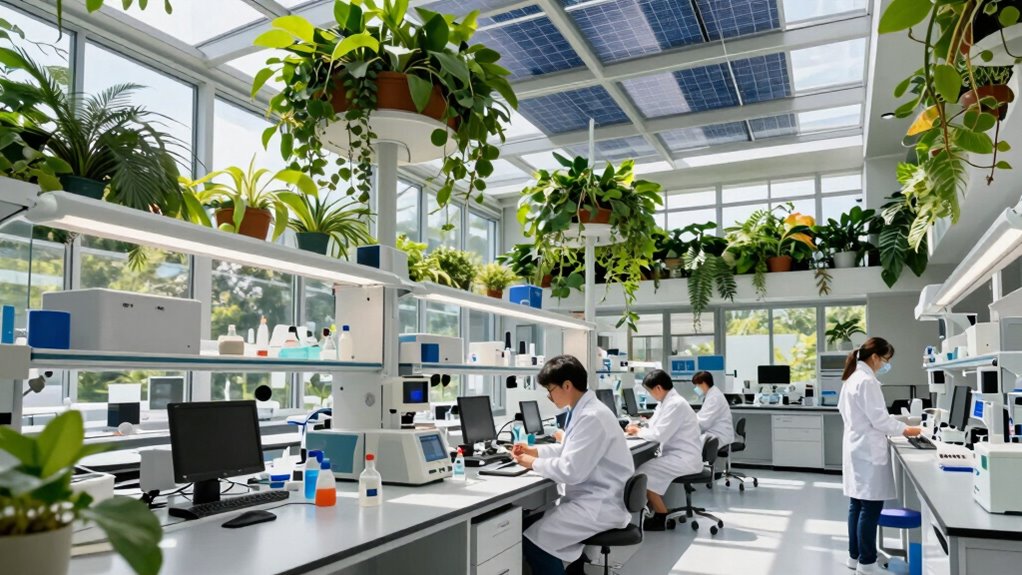
Sustainable labs are transforming the way scientific research is conducted by prioritizing environmental responsibility and resource efficiency. These labs are adopting innovative strategies to minimize their ecological footprint while maintaining high standards of scientific output. One of the most significant changes is the integration of renewable energy sources. Instead of relying solely on traditional power grids, which often depend on fossil fuels, these labs are investing in solar panels, wind turbines, and other renewable energy solutions. By generating their own clean energy, you reduce greenhouse gas emissions, lower operating costs, and promote a sustainable future. This shift not only helps combat climate change but also sets a precedent for other institutions to follow. Additionally, implementing energy-efficient equipment can significantly reduce overall power consumption, further supporting sustainability goals.
Waste reduction is another critical component of sustainable lab practices. You can implement all-encompassing waste management programs that emphasize recycling, composting, and reuse of materials. For instance, using reusable lab supplies and minimizing single-use plastics not only decreases waste but also reduces the environmental impact associated with manufacturing and disposal. Additionally, adopting digital record-keeping and paperless workflows decreases paper consumption, further supporting waste reduction efforts. This proactive approach to waste management ensures that you’re not just complying with regulations but actively contributing to environmental preservation.
These green upgrades are gaining traction as labs realize that sustainability and efficiency can go hand in hand. Budget approvals for such initiatives are becoming more common because they promise long-term savings. For example, investing in renewable energy infrastructure might require upfront costs, but the reduced utility bills over time make it a financially sound decision. Similarly, waste reduction strategies often lead to decreased disposal fees and procurement costs. As decision-makers recognize these benefits, they’re more willing to allocate funds toward green upgrades, understanding that sustainability can enhance operational resilience and reputation.
Incorporating renewable energy and waste reduction into your lab’s operations also aligns with broader institutional goals of social responsibility and environmental stewardship. It demonstrates your commitment to reducing environmental impact and can attract funding from organizations focused on sustainable development. Furthermore, these efforts often foster a culture of innovation and responsibility among staff and researchers, encouraging everyone to think creatively about resource use. As sustainable lab practices become more mainstream, you’ll find that they not only improve your environmental footprint but also position your institution as a leader in scientific and ecological responsibility.
Ultimately, embracing these green upgrades isn’t just a trend—it’s a strategic move that benefits your research, your institution, and the planet. With the right planning and investment, you can turn sustainability into a core strength, ensuring that your lab operates efficiently while championing environmental responsibility.
Frequently Asked Questions
What Are the Initial Costs of Green Lab Upgrades?
The initial costs of green lab upgrades vary depending on your project’s scope, but a thorough cost analysis helps you estimate expenses accurately. You might spend on energy-efficient appliances, LED lighting, water-saving fixtures, and sustainable materials. During budget planning, consider these costs carefully to guarantee funding covers essential upgrades. While upfront expenses can be significant, they often lead to long-term savings and environmental benefits, making them a valuable investment for your sustainable lab.
How Long Is the Typical ROI Period for Eco-Friendly Lab Improvements?
The typical ROI period for eco-friendly lab improvements is around 3 to 7 years, depending on the specific upgrades and usage. You’ll see energy savings quickly, which reduces operational costs and improves environmental impact over time. These upgrades help lower your lab’s carbon footprint, making your operations more sustainable. With energy-efficient equipment and optimized systems, you’ll not only save money but also contribute positively to environmental preservation.
Are There Specific Grants Available for Sustainable Lab Projects?
Imagine your lab bathed in sunlight, thriving with green energy. Yes, there are specific grant opportunities and green funding available for sustainable lab projects. These grants aim to support eco-friendly upgrades, making your vision a reality. You can explore government programs, research grants, and environmental organizations that prioritize sustainability. Securing these funds accelerates your lab’s green transformation, turning your eco-friendly dreams into tangible, impactful changes.
What Challenges Do Labs Face When Implementing Green Technologies?
You might face challenges like ensuring energy efficiency and establishing reliable supplier partnerships. It can be tough to find green technologies that fit your lab’s specific needs and budget. Additionally, building strong relationships with suppliers is essential but may require time and negotiation. Managing costs while prioritizing sustainability can also be tricky. However, overcoming these obstacles leads to more environmentally friendly operations and long-term savings.
How Do Green Upgrades Impact Lab Safety and Compliance Standards?
Green upgrades enhance lab safety by reducing hazardous waste and improving energy efficiency, which minimizes risks. They also help you meet compliance standards more easily, as eco-friendly technologies often align with regulatory requirements. By incorporating sustainable solutions, you guarantee a safer environment for everyone and demonstrate your commitment to responsible practices. This proactive approach not only boosts safety but also keeps your lab compliant with evolving environmental regulations.
Conclusion
Now’s your chance to embrace sustainable labs, to cut costs and protect the planet, to innovate and inspire. With green upgrades finally gaining budget approval, you can modernize your lab, reduce waste, and boost efficiency—all at once. Take action, lead change, and set a new standard for responsible research. Because when you prioritize sustainability, you don’t just transform your lab—you transform the future. Step up, make the difference, and be part of the green revolution.