For professionals in science, having reliable reference books is essential for accurate data, quick lookups, and staying current with complex concepts. The best overall pick, Reagent Chemicals, offers precise standards for lab work, while Science: The Definitive Visual Guide excels in providing clear, visual explanations for a broad audience. However, tradeoffs often involve balancing depth with accessibility—more comprehensive texts can be overwhelming, while simpler guides might lack technical detail. Continue reading for a detailed breakdown of the best options tailored to different professional needs.

Prime made for students and young adults
- Fast, free delivery for dorm and study essentials
- Prime Video and Amazon Music included
- Member-only deals
Key Takeaways
- The top-ranked books combine accuracy with usability, making them suitable for daily professional use.
- Visual guides like Science: The Definitive Visual Guide are ideal for quick comprehension, but may lack detailed technical data.
- Specialized references such as Reagent Chemicals are essential for lab standards but may not suit general scientific curiosity.
- Price and scope vary significantly; comprehensive encyclopedias are more expensive but offer broader coverage, while concise guides focus on core facts.
- Choosing the right reference depends heavily on the user’s specific field and how technical the information needs to be.
| Reagent Chemicals: Specifications and Procedures for Reagents and Standard-Grade Reference Materials (ACS Professional Reference Book) |  | Best for Laboratory Accuracy and Safety | Focus: Reagent specifications and procedures | Audience: Chemists, lab technicians | Coverage: Standard-grade reference materials | VIEW LATEST PRICE | See Our Full Breakdown |
| A PhD Is Not Enough!: A Guide to Survival in Science |  | Best for Early-Career Scientists | Focus: Career survival and professional development | Audience: Graduate students, early-career scientists | Coverage: Survival tips, career strategies | VIEW LATEST PRICE | See Our Full Breakdown |
| Science: The Definitive Visual Guide |  | Best for Visual Learners and General Understanding | Focus: Visual explanations of science | Audience: Students, educators, science enthusiasts | Coverage: Multiple scientific disciplines | VIEW LATEST PRICE | See Our Full Breakdown |
| Mathematical Handbook for Scientists and Engineers: Definitions, Theorems, and Formulas for Reference and Review |  | Best for Quick Mathematical Reference | Focus: Mathematical definitions and formulas | Audience: Scientists, engineers, students | Coverage: Definitions, theorems, formulas | VIEW LATEST PRICE | See Our Full Breakdown |
| Science: The Definitive Visual Guide | 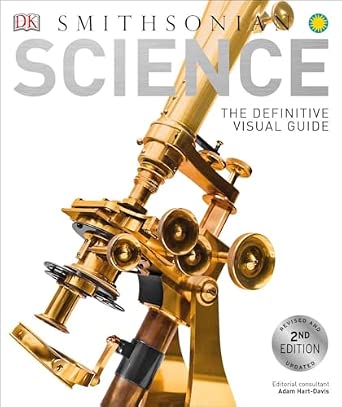 | Best for Broad Scientific Understanding | Focus: Historical and conceptual overview | Audience: General readers, students | Coverage: Science history, discoveries | VIEW LATEST PRICE | See Our Full Breakdown |
| McGraw-Hill Concise Encyclopedia of Science and Technology, 5th Edition |  | Best for Quick Reference and Broad Overview | Edition: 5th | Scope: Science and Technology | Format: Concise Encyclopedia | VIEW LATEST PRICE | See Our Full Breakdown |
| Sciencia: Mathematics, Physics, Chemistry, Biology, and Astronomy for All (Wooden Books, 37) |  | Best for Broad Scientific Curiosity | Subjects Covered: Math, Physics, Chemistry, Biology, Astronomy | Approach: Accessible explanations | Intended Audience: General readers and students | VIEW LATEST PRICE | See Our Full Breakdown |
| Encyclopedia of Genetics, Genomics, Proteomics, and Informatics |  | Best for Specialized Genetic and Molecular Research | Focus Areas: Genetics, Genomics, Proteomics, Informatics | Depth: Advanced research level | Content Type: Detailed explanations and current research | VIEW LATEST PRICE | See Our Full Breakdown |
| The Language of Colloid and Interface Science: A Dictionary of Terms (ACS Professional Reference Book) |  | Best for Precise Terminology Reference | Scope: Colloid and Interface Science | Content Type: Definitions | Audience: Students and professionals | VIEW LATEST PRICE | See Our Full Breakdown |
| CRC Handbook of Chemistry and Physics |  | Best for Extensive Data and Scientific Constants | Content Types: Data, Constants, Formulas | Size: Large, heavy | Coverage: Physical sciences | VIEW LATEST PRICE | See Our Full Breakdown |
| A Dictionary of Science (Oxford Quick Reference) |  | Best for Quick, Cross-Disciplinary Definitions | Edition: Oxford Quick Reference | Number of Entries: Approximately 8,000 | Format: Print, hardcover | VIEW LATEST PRICE | See Our Full Breakdown |
| science reference books for professional | Format | Edition | Audience | Coverage |
|---|---|---|---|---|
| Reagent Chemicals: Specificati | Technical manual | Latest edition | Chemists, lab technicians | Standard-grade reference materials |
| A PhD Is Not Enough!: A Guide | Guidebook with practical advice | Updated version | Graduate students, early-career scientists | Survival tips, career strategies |
| Science: The Definitive Visual | Visual encyclopedia | Latest edition | Students, educators, science enthusiasts | Multiple scientific disciplines |
| Mathematical Handbook for Scie | Reference handbook | Latest edition | Scientists, engineers, students | Definitions, theorems, formulas |
| Science: The Definitive Visual | Visual guide | Latest | General readers, students | Science history, discoveries |
| McGraw-Hill Concise Encycloped | Concise Encyclopedia | 5th | — | — |
| Sciencia: Mathematics | Overview book | Unknown | — | — |
| Encyclopedia of Genetics | Encyclopedia | — | — | — |
| The Language of Colloid and In | Dictionary | — | Students and professionals | — |
| CRC Handbook of Chemistry and | Reference Handbook | Latest | — | Physical sciences |
| A Dictionary of Science | Print, hardcover | Oxford Quick Reference | — | — |
More Details on Our Top Picks
Reagent Chemicals: Specifications and Procedures for Reagents and Standard-Grade Reference Materials (ACS Professional Reference Book)
This reference book stands out for its detailed specifications and procedures for reagent chemicals, making it indispensable for chemists who require precise and standardized materials. Unlike general science encyclopedias like Science: The Definitive Visual Guide, this manual focuses on the technical standards that underpin laboratory work, ensuring accuracy and safety. The tradeoff is that it is highly technical and may be overwhelming for those without a chemistry background or for casual readers. It’s ideal for professional chemists, lab managers, or technicians needing authoritative reference data, but it’s less suitable for those seeking broad scientific overviews.
Pros:- Provides comprehensive standards for reagent specifications
- Includes detailed procedures for reference materials
- Enhances laboratory safety and accuracy
Cons:- Lacks simplified explanations for non-specialists
- May be too dense for casual or interdisciplinary use
Best for: Chemists and laboratory technicians who need precise reagent specifications
Not ideal for: Casual science enthusiasts or non-technical users seeking general science information
- Focus:Reagent specifications and procedures
- Audience:Chemists, lab technicians
- Coverage:Standard-grade reference materials
- Format:Technical manual
- Edition:Latest edition
- Price:Premium technical reference
Our verdict“This book is essential for professionals requiring authoritative reagent data but less suited for non-technical audiences.”
A PhD Is Not Enough!: A Guide to Survival in Science
This book makes the list for its pragmatic advice on navigating a scientific career beyond earning a PhD, offering insights that complement the technical scope of Mathematical Handbook for Scientists and Engineers. While the latter provides formulas and definitions, A PhD Is Not Enough! focuses on career development, resilience, and professional skills. The tradeoff is that it doesn’t cover technical content and may not appeal to scientists seeking in-depth scientific knowledge. It’s particularly suited for graduate students, postdocs, or early-career researchers aiming to build a sustainable career in science, but it’s less useful for experienced professionals looking for technical references.
Pros:- Offers practical career advice and strategies
- Highlights common pitfalls and success tips
- Useful for early-stage scientific professionals
Cons:- Lacks technical or scientific content
- May not appeal to non-scientists or seasoned researchers
Best for: Early-career scientists and graduate students seeking career guidance
Not ideal for: Experienced researchers or those looking solely for technical scientific content
- Focus:Career survival and professional development
- Audience:Graduate students, early-career scientists
- Coverage:Survival tips, career strategies
- Format:Guidebook with practical advice
- Edition:Updated version
- Price:Moderate
Our verdict“A valuable guide for scientists starting their careers, but it doesn’t substitute technical references like <em>Mathematical Handbook</em>.”
Science: The Definitive Visual Guide
This comprehensive visual encyclopedia excels in providing stunning images and detailed explanations across scientific disciplines, making it ideal for those who prefer graphical learning. Compared with the highly technical Reagent Chemicals, this guide offers broad coverage, from physics to biology, with a focus on clarity and visuals. However, it lacks specific technical specifications or in-depth data, which limits its use for professionals needing precise standards or formulas. It’s best suited for students, educators, or science enthusiasts seeking an engaging overview rather than technical reference material.
Pros:- Rich visual content enhances understanding
- Extensive coverage of scientific topics
- Accessible language for non-specialists
Cons:- Lacks detailed technical data and specifications
- No price or edition details available
Best for: Students and visual learners seeking a broad overview of science concepts
Not ideal for: Scientists requiring detailed technical standards or formulas
- Focus:Visual explanations of science
- Audience:Students, educators, science enthusiasts
- Coverage:Multiple scientific disciplines
- Format:Visual encyclopedia
- Edition:Latest edition
- Price:Variable depending on edition
Our verdict“Ideal for learners who prefer images and straightforward explanations but not for professionals needing technical standards.”
Mathematical Handbook for Scientists and Engineers: Definitions, Theorems, and Formulas for Reference and Review
This handbook makes the list for its extensive collection of formulas, definitions, and theorems, serving as a handy resource for engineers and scientists who need quick access to mathematical data. Unlike Science: The Definitive Visual Guide, which emphasizes broad scientific concepts, this book zeroes in on mathematical tools essential for calculations and problem-solving. The main tradeoff is that it offers limited explanations, making it less suitable for those seeking to understand the underlying concepts. It’s ideal for professionals who already have a solid mathematical background and need a reliable quick-reference guide, but it’s less helpful for beginners or those requiring detailed explanations.
Pros:- Contains a comprehensive collection of formulas
- Useful for quick reference during technical work
- Suitable for both students and professionals
Cons:- Limited explanations for some theorems
- No digital or interactive features for ease of use
Best for: Engineers and scientists needing fast access to formulas and theorems
Not ideal for: Beginners or those seeking in-depth understanding of mathematical concepts
- Focus:Mathematical definitions and formulas
- Audience:Scientists, engineers, students
- Coverage:Definitions, theorems, formulas
- Format:Reference handbook
- Edition:Latest edition
- Price:Affordable
Our verdict“A practical quick-reference for mathematical formulas, best suited for experienced users needing immediate data.”
Science: The Definitive Visual Guide
This volume offers an expansive visual overview of scientific history, discoveries, and concepts, making it particularly appealing for readers interested in the wider context of science. Unlike the technical Reagent Chemicals or the formula-focused Mathematical Handbook, this guide emphasizes storytelling through images and explanations, providing a well-rounded perspective on science’s evolution. The lack of detailed authorship or edition information limits its credibility slightly, and it doesn’t include user ratings or specific technical data. It’s best suited for readers who want to grasp scientific fundamentals visually and historically, rather than for those needing precise technical specifications.
Pros:- Rich visual explanations aid comprehension
- Covers a broad spectrum of scientific topics
- Engaging for general readers and students
Cons:- Lacks specific technical details and standards
- No author or edition details provided
Best for: Readers interested in scientific history and conceptual understanding
Not ideal for: Professionals needing detailed technical standards, formulas, or reagent specifications
- Focus:Historical and conceptual overview
- Audience:General readers, students
- Coverage:Science history, discoveries
- Format:Visual guide
- Edition:Latest
- Price:Variable
Our verdict“Perfect for those seeking a visual and historical overview of science, but not for technical professionals needing precise data.”
McGraw-Hill Concise Encyclopedia of Science and Technology, 5th Edition
This edition of the McGraw-Hill Concise Encyclopedia of Science and Technology shines in providing a broad, yet succinct overview of numerous scientific disciplines. Compared to dedicated texts like the Encyclopedia of Genetics, Genomics, Proteomics, and Informatics, it offers a more generalist approach suitable for quick lookups rather than in-depth research. Its concise entries help professionals and students rapidly grasp complex concepts, but this brevity means it lacks the detailed descriptions needed for advanced study. It’s ideal for those needing fast access to core facts rather than comprehensive explanations.
Pros:- Wide-ranging coverage of science and technology topics
- Concise and straightforward language makes it easy to navigate
- Suitable for both students and mid-level professionals
Cons:- Lacks depth for advanced research and detailed analysis
- Entries may be too brief for in-depth exploration
Best for: Professionals and students who need a quick, authoritative overview of scientific topics for daily reference or introductory research.
Not ideal for: Researchers requiring detailed, in-depth analysis or latest research insights, as entries are too brief for extensive study.
- Edition:5th
- Scope:Science and Technology
- Format:Concise Encyclopedia
- Intended Audience:Students and Professionals
- Number of Topics:Wide coverage
- Accessibility:Easy to understand
Our verdict“This encyclopedia is perfect for quick reference needs but falls short for detailed scientific investigation.”
Sciencia: Mathematics, Physics, Chemistry, Biology, and Astronomy for All (Wooden Books, 37)
Sciencia offers a broad, approachable overview of the core sciences, making it ideal for readers seeking a general understanding across multiple disciplines. Unlike the CRC Handbook of Chemistry and Physics, which is highly technical and data-driven, this book emphasizes clarity and accessibility, making complex ideas understandable for non-specialists. However, its lack of detailed specifications and absence of reviews may leave those needing precise data or critical assessments wanting more. Its strength lies in providing a gentle, engaging entry point for curious minds.
Pros:- Covers multiple scientific disciplines in one volume
- Accessible explanations suitable for all levels
- Engaging and easy-to-read presentation
Cons:- Lacks detailed technical specifications
- No reviews or user ratings available for validation
Best for: Lay readers, educators, or students new to science who want a broad but accessible introduction to key scientific fields.
Not ideal for: Experienced scientists or professionals needing detailed technical data or current research updates, as it offers a high-level overview rather than in-depth content.
- Subjects Covered:Math, Physics, Chemistry, Biology, Astronomy
- Approach:Accessible explanations
- Intended Audience:General readers and students
- Format:Overview book
- Page Count:Not specified
- Edition:Unknown
Our verdict“Ideal for beginners or casual learners seeking a broad scientific overview without technical complexity.”
Encyclopedia of Genetics, Genomics, Proteomics, and Informatics
The Encyclopedia of Genetics, Genomics, Proteomics, and Informatics stands out for its comprehensive, detailed coverage of cutting-edge topics in genetics and related fields. Compared with the McGraw-Hill Concise Encyclopedia, it offers depth and current research insights, making it invaluable for researchers and advanced students. Its dense content may overwhelm casual readers, but for those engaged in genetic research, this resource provides authoritative explanations and references. The lack of pricing info and its complexity make it less appealing for quick or casual consultations.
Pros:- Extensive, detailed coverage of genetics and genomics topics
- Current research insights included
- Highly authoritative and well-referenced
Cons:- Dense and complex for casual or beginner readers
- No price information makes purchasing decisions harder
Best for: Genetics researchers, advanced students, and professionals needing an authoritative, detailed reference on genomic sciences.
Not ideal for: Casual readers or those new to genetics who might find the material too dense or technical without foundational knowledge.
- Focus Areas:Genetics, Genomics, Proteomics, Informatics
- Depth:Advanced research level
- Content Type:Detailed explanations and current research
- Intended Audience:Researchers and graduate students
- Format:Encyclopedia
- Publication Year:Not specified
Our verdict“This encyclopedia suits experts and researchers requiring detailed, authoritative genetic science content rather than general overviews.”
The Language of Colloid and Interface Science: A Dictionary of Terms (ACS Professional Reference Book)
This dictionary of terms excels in providing precise definitions for colloid and interface science terminology. It’s especially useful for students, researchers, or professionals seeking clear, authoritative explanations of specific terms. Compared to the McGraw-Hill Concise Encyclopedia, which covers broader topics, this book offers specialized, technical language that’s essential for accurate communication in the field. Its lack of additional content or contextual information makes it less suited for beginners or those requiring broader understanding, but it’s invaluable for precise terminology reference.
Pros:- Comprehensive collection of specialized terms
- Authoritative and precise definitions
- Ideal for technical communication and accuracy
Cons:- No additional content or explanations beyond definitions
- Too technical for casual or introductory readers
Best for: Graduate students, researchers, or professionals in colloid and interface science needing a definitive terms guide.
Not ideal for: Readers seeking explanations beyond definitions or those new to the field, as it offers no contextual or explanatory content.
- Scope:Colloid and Interface Science
- Content Type:Definitions
- Audience:Students and professionals
- Format:Dictionary
- Number of Terms:Extensive
- Special Features:Authoritative, technical
Our verdict“This dictionary is essential for precise terminology but not suitable for those seeking broader explanations or background.”
CRC Handbook of Chemistry and Physics
The CRC Handbook of Chemistry and Physics is a cornerstone resource for physical scientists, offering a vast array of data, constants, and formulas. Compared with the McGraw-Hill Concise Encyclopedia, which emphasizes summaries, this handbook provides detailed tables and precise numerical data crucial for laboratory work and detailed calculations. Its comprehensive nature makes it indispensable for professionals, but its size and weight can be a drawback for portable use. Casual users or those seeking simplified explanations might find it overwhelming, but for rigorous scientific work, it remains unmatched.
Pros:- Extensive and reliable data on scientific properties and constants
- Widely used and trusted in professional settings
- Includes a vast range of topics and formulas
Cons:- Large and heavy, less portable for field use
- Too technical for casual or introductory purposes
Best for: Scientists, engineers, and students who require detailed, reliable data and scientific constants for research and calculations.
Not ideal for: Casual learners or those needing quick, summarized information, as the volume and technical density can be intimidating.
- Content Types:Data, Constants, Formulas
- Size:Large, heavy
- Coverage:Physical sciences
- Intended Audience:Scientists, Engineers, Students
- Edition:Latest
- Format:Reference Handbook
Our verdict“This handbook is a must-have for professionals needing detailed data, though it isn’t suited for quick reference or casual use.”
A Dictionary of Science (Oxford Quick Reference)
This dictionary stands out for its broad coverage of scientific terms across multiple disciplines, making it a valuable quick-reference tool for professionals who need reliable definitions on the fly. Unlike the Encyclopedia of Genetics, Genomics, Proteomics, and Informatics, which offers more in-depth articles, this dictionary emphasizes brevity and clarity, enabling rapid understanding without overwhelming detail. However, it doesn’t include detailed explanations or context, limiting its usefulness for deeper research or complex concepts. The absence of digital or online access may hinder quick lookups for users who prefer electronic devices. Compared to the McGraw-Hill Concise Encyclopedia, which provides more comprehensive entries, this pick favors speed and simplicity, making it ideal for busy professionals needing quick clarification. The lack of multimedia or digital integration can be a drawback for those seeking interactive resources.
Pros:- Broad coverage of scientific terms across disciplines
- Clear and concise definitions for rapid understanding
- Useful for students, educators, and science communicators
Cons:- Lacks detailed explanations and context for complex terms
- No digital or online access included, limiting convenience
Best for: Scientists or educators who frequently need quick, reliable definitions across multiple scientific fields during teaching or research.
Not ideal for: Researchers requiring in-depth explanations or detailed background; students needing comprehensive study material, as it offers only brief definitions.
- Edition:Oxford Quick Reference
- Number of Entries:Approximately 8,000
- Format:Print, hardcover
- Languages:English
- Size:Small portable volume
- Intended Audience:Students, educators, science communicators
Our verdict“This dictionary is best suited for professionals who need quick, reliable definitions without the need for in-depth background or online features.”

How We Picked
The selection process focused on evaluating each book’s accuracy, depth of content, ease of use, and relevance for professional environments. We prioritized sources that provide validated information, clear organization, and practical utility for daily reference. Books that balanced comprehensive coverage with readability earned higher rankings, while overly niche texts or those with limited scope were rated lower. Our goal was to identify references that can serve as reliable, go-to resources for scientific professionals across disciplines.| science reference books for professional | Audience | Coverage |
|---|---|---|
| Reagent Chemicals: Specificati | Chemists, lab technicians | Standard-grade reference materials |
| A PhD Is Not Enough!: A Guide | Graduate students, early-career scientists | Survival tips, career strategies |
| Science: The Definitive Visual | Students, educators, science enthusiasts | Multiple scientific disciplines |
| Mathematical Handbook for Scie | Scientists, engineers, students | Definitions, theorems, formulas |
| Science: The Definitive Visual | General readers, students | Science history, discoveries |
| McGraw-Hill Concise Encycloped | — | — |
| Sciencia: Mathematics | — | — |
| Encyclopedia of Genetics | — | — |
| The Language of Colloid and In | Students and professionals | — |
| CRC Handbook of Chemistry and | — | Physical sciences |
| A Dictionary of Science | — | — |
Factors to Consider When Choosing Science Reference Books For Professionals
When choosing a science reference book for professional use, consider several factors beyond just content. The scope of the book should match your specific needs—whether you require broad encyclopedic knowledge or specialized standards. Usability, including layout and indexing, impacts how quickly you can find information in urgent situations. Durability and print quality matter if the book will see frequent use. Price can vary greatly, so balancing budget with the level of detail needed is key. Lastly, consider whether digital versions or supplementary online tools are available to enhance your experience.Scope and Specialization
Assess whether you need a broad overview or a focused reference. General encyclopedias and visual guides are great for quick understanding, whereas technical manuals and standards are better suited for detailed work. Picking a scope aligned with your daily tasks prevents wasting money on overly comprehensive or too narrow resources.
Ease of Use and Organization
Look for books with a logical structure, clear headings, and a comprehensive index. Well-organized references save time during critical moments when quick access to precise data is necessary. Consider whether the book includes features like tabs or color-coded sections to facilitate navigation.
Content Accuracy and Authority
Ensure the reference is authored or reviewed by reputable experts or organizations, such as ACS or Oxford. Inaccurate or outdated information can lead to costly mistakes. Check for recent editions or updates, especially in fast-evolving fields like genomics or materials science.
Physical Durability and Format
For frequent use, choose hardcovers or high-quality printing that withstands wear and tear. Digital formats can offer searchable text and portability but might lack the tactile reliability of physical books. Consider your working environment—lab settings may require sturdier options.
Price and Value
While investing in high-quality references pays off, balance your budget with the scope and depth of content needed. Expensive encyclopedias provide broad coverage, but if your work is highly specialized, a more affordable, targeted manual might be more practical. Look for editions that include updates or supplementary online resources for added value.
Frequently Asked Questions
Should I choose a visual guide or a technical manual for my daily work?
The choice depends on your workflow. Visual guides like Science: The Definitive Visual Guide excel at providing quick, intuitive understanding of complex topics, making them ideal for overview and teaching. Technical manuals or standards, such as Reagent Chemicals, deliver detailed, precise data necessary for laboratory procedures and compliance. Often, professionals benefit from having both types available—using visual aids for conceptual clarity and detailed manuals for technical accuracy.
How often should I update my reference books?
In fast-moving scientific fields, regular updates are crucial to stay current with new discoveries, standards, and methodologies. Many specialized references, like the CRC Handbook of Chemistry and Physics, publish new editions every few years. Check if digital versions or online databases are available, as they tend to update more frequently than print editions, ensuring you always access the latest validated data.
Is it worth investing in a comprehensive encyclopedia if I only need specific data?
If your work is highly specialized, a targeted manual or a focused reference might offer better value than a broad encyclopedia. However, a comprehensive resource can serve as a safety net for unexpected questions or interdisciplinary work, providing a solid foundation of general scientific knowledge. Consider your typical workload and whether broader coverage could prevent future gaps in your reference library.
Should I prioritize print or digital formats?
Print books are often more durable in environments like labs, where electronic devices may be vulnerable to spills or damage. They also offer tactile familiarity that some professionals prefer. Digital versions, however, provide searchability, portability, and easy updates, which can be invaluable if you need rapid access to specific data. Many professionals choose a combination—print for daily use and digital for quick lookups or updates.
How do I choose a reference book for interdisciplinary work?
For interdisciplinary applications, select references that cover multiple fields relevant to your work, such as combined chemistry, biology, and physics manuals. Encyclopedias with broad scope, like McGraw-Hill Concise Encyclopedia, can serve as a versatile starting point. Additionally, look for resources that include cross-referenced terms and comprehensive indexes to facilitate navigation across different scientific domains.