
For most home labs, I’d start with the Apera Instruments AI209-T PH20 Combo Kit: its dedicated pH testing focus and included calibration supplies make it a stronger all-around fit than basic multiparameter pens. The Apera AI501 PH700 is the standout for bench work, while the Bluelab pH Pen suits buyers who want a focused handheld meter with a double-junction probe. The main tradeoff is between a simple, portable tool and a more specialized instrument that takes more space and care; added TDS or EC functions can help with water work but do not replace pH calibration. Read on for the full comparison and guidance on choosing a meter for your samples.

Get school and study supplies delivered free — and shop member deals
- Fast, free delivery on millions of items
- Access to Prime Big Deal Days deals on October 6–7
- Prime Video, Amazon Music and more included
Key Takeaways
- Dedicated pH instruments lead for lab-focused work: the Apera AI209-T, Apera AI501, and Bluelab pH Pen prioritize pH measurement rather than bundling several water readings into one device.
- The AI501 is the bench-work choice, not the default for everyone: its benchtop format suits repeat testing and a fixed workspace, while handheld testers are easier to store and carry.
- Multiparameter meters trade specialization for convenience: PmoYoKo, VIVOSUN, UIUZMAR, and Ammsia combine pH with TDS, EC, or temperature, which can reduce tool changes but adds functions that need their own interpretation.
- Sample type should shape the probe choice: YINMIK’s spear-probe food meter is aimed at semi-solid samples, unlike water-oriented pens that are a better match for liquids.
- Replaceable probes and calibration support matter after purchase: a meter is only useful while its electrode is in working condition, so check replacement availability and calibration requirements before choosing a low-cost unit.
| PmoYoKo 3-in-1 Digital pH, TDS, and Temperature Meter | 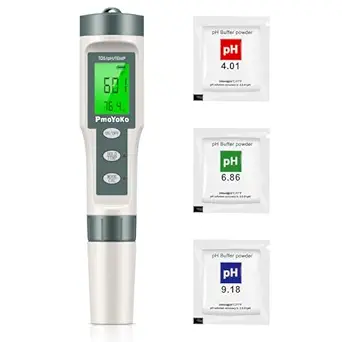 | Best Compact Multi-Parameter Pick | Measurements: pH, TDS, and temperature | pH range: 0–14 | pH resolution: 0.01 | VIEW LATEST PRICE | See Our Full Breakdown |
| VIVOSUN Digital pH, TDS, and EC Meter for Water |  | Best Multi-Meter Set for Hydroponics | Included testers: pH and TDS/EC testers | pH range: 0.00–14.00 | Stated pH accuracy: Conflicting listings: ±0.1 pH in description and ±0.01 pH in item highlight | VIEW LATEST PRICE | See Our Full Breakdown |
| Apera Instruments AI209-T PH20 pH Tester Combo Kit |  | Best for Calibration and Probe Care | Model: AI209-T PH20 | Measuring range: 0–14.0 pH | Accuracy: ±0.1 pH | VIEW LATEST PRICE | See Our Full Breakdown |
| LOHAND Portable pH Meter with ATC | 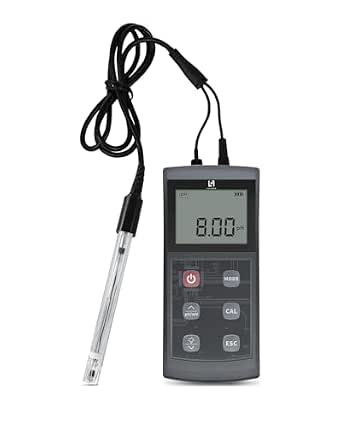 | Best for a Simple pH-Only Workflow | Model: LH-P220 | Measurement range: 0–14 pH | pH accuracy: ±0.01 pH | VIEW LATEST PRICE | See Our Full Breakdown |
| UIUZMAR 4-in-1 pH, EC, TDS, and Temperature Meter |  | Best for Hydroponic Parameter Coverage | Measurements: pH, EC, TDS, and temperature | Intended use: Hydroponic nutrient solutions and water | Display: Clear display | VIEW LATEST PRICE | See Our Full Breakdown |
| Apera Instruments AI501 PH700 Benchtop pH Meter with 3-in-1 pH/Temperature Electrode |  | Best for Precision Bench Work | Model: PH700 | pH range: 0 to 14.00 pH | pH resolution: 0.1 or 0.01 pH | VIEW LATEST PRICE | See Our Full Breakdown |
| YINMIK Digital Food pH Meter with Spear Probe |  | Best for Direct Food Sampling | Model: YK-2S | pH range: 0.00–14.00 | Accuracy: ±0.1 pH | VIEW LATEST PRICE | See Our Full Breakdown |
| YINMIK Digital pH Meter with Replaceable Probe |  | Best for Probe-Serviceability | pH range: 0–14 | Probe: Replaceable spear probe | Additional probe: Extra replaceable probe included | VIEW LATEST PRICE | See Our Full Breakdown |
| Bluelab pH Pen with Double-Junction Probe |  | Best Waterproof Portable Pick | Measurement increments: 0.1 pH | Probe: Double-junction | Calibration: Two-point | VIEW LATEST PRICE | See Our Full Breakdown |
| EZTOCH Digital Food pH Meter with Bluetooth |  | Best for App-Based Data Logging | Connectivity: Bluetooth connection to the YINMIK app | Data storage: Up to 1,000 readings | Included calibration solutions: pH 4.00 and pH 7.00 | VIEW LATEST PRICE | See Our Full Breakdown |
| Ammsia 3-in-1 Digital pH, TDS, and Temperature Meter |  | Best Compact All-in-One | Measurements: pH, TDS (ppm), and temperature | pH resolution: 0.01 | Calibration: 1-point or 3-point | VIEW LATEST PRICE | See Our Full Breakdown |
| Bluelab Combo Meter for pH, Temperature, and Conductivity | 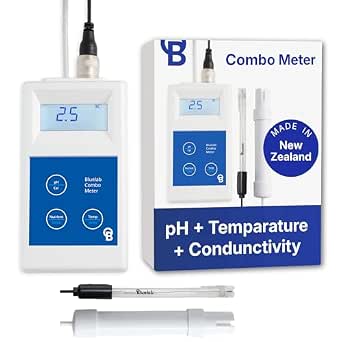 | Best for Hydroponic Measurement Flexibility | Measurements: pH, conductivity, and temperature | Conductivity scales: EC, PPM, and CF | Temperature compensation: Automatic | VIEW LATEST PRICE | See Our Full Breakdown |
| Divolight Digital pH Meter with ATC |  | Best for Straightforward pH-Only Checks | Measurement range: pH 0–14 | Temperature compensation: Automatic (ATC) | Calibration points: 6.86, 4.00, and 9.18 | VIEW LATEST PRICE | See Our Full Breakdown |
| VIVOSUN Digital pH Meter with 0.01 pH Accuracy |  | Best for Specified pH Accuracy | Accuracy: ±0.01 pH | Measurement range: 0.00–14.00 pH | Temperature compensation: Automatic | VIEW LATEST PRICE | See Our Full Breakdown |
| VIVOSUN Digital pH, TDS, and EC Meter for Water | 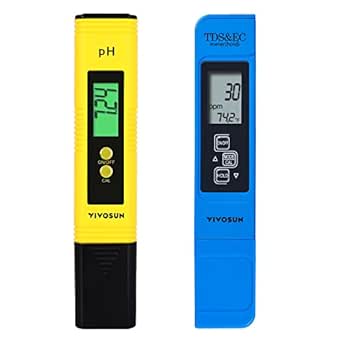 | Best Multi-Parameter Set | pH measurement range: 0–14 | pH accuracy: ±0.01 pH | TDS measurement range: 0–9990 ppm | VIEW LATEST PRICE | See Our Full Breakdown |
| digital pH meters for home lab | Temperature compensation | Weight |
|---|---|---|
| PmoYoKo 3-in-1 Digital pH | Automatic | — |
| VIVOSUN Digital pH | Automatic | — |
| Apera Instruments AI209-T PH20 | Automatic, 0–50°C | — |
| LOHAND Portable pH Meter with | Automatic | 9.6 ounces |
| UIUZMAR 4-in-1 pH | — | 12.3 ounces |
| Apera Instruments AI501 PH700 | — | — |
| YINMIK Digital Food pH Meter w | Automatic | — |
| YINMIK Digital pH Meter with R | Automatic | — |
| Bluelab pH Pen with Double-Jun | Automatic | 4.32 ounces |
| EZTOCH Digital Food pH Meter w | — | — |
| Ammsia 3-in-1 Digital pH | Automatic (ATC) | 2.88 ounces |
| Bluelab Combo Meter for pH | Automatic | 5.28 ounces |
| Divolight Digital pH Meter wit | Automatic (ATC) | 52 g |
| VIVOSUN Digital pH Meter with | Automatic | 0.11 kg |
| VIVOSUN Digital pH | — | 0.1 kg |
More Details on Our Top Picks
PmoYoKo 3-in-1 Digital pH, TDS, and Temperature Meter
For a home lab that moves between aquariums, garden water, and household samples, the PmoYoKo combines pH, TDS, and temperature in one pocket-sized tester. Automatic temperature compensation helps account for sample temperature, while the backlit screen makes readings easier to see in dim work areas. Compared with the VIVOSUN Digital pH, TDS, and EC Meter for Water, PmoYoKo is similarly focused on portable multi-parameter checks, but its listed measurements do not include EC. Its 0.01 pH resolution gives a detailed displayed value, though resolution alone does not establish measurement accuracy. Calibration requires buffer solutions, and the instructions recommend soaking it in clear water before its first calibration. I’d choose it for routine checks across several water sources, not for buyers who need documented accuracy or a bench-style lab setup.
Pros:- Measures pH, TDS, and temperature with one pocket-sized device
- Automatic temperature compensation supports readings across samples at different temperatures
- Backlit LCD is easier to read in dim work areas
- Compact form suits portable checks around the home
Cons:- The supplied product details do not state pH accuracy
- Requires buffer solutions for calibration and a clear-water soak before first calibration
- Does not list EC measurement, unlike the VIVOSUN multi-meter set
Best for: Home hobbyists who want one small tester for occasional pH, TDS, and temperature checks across aquariums, gardens, or household water.
Not ideal for: Hydroponic growers who need EC readings, or lab users who require a stated accuracy specification and a more documented calibration workflow.
- Measurements:pH, TDS, and temperature
- pH range:0–14
- pH resolution:0.01
- Temperature range:32°F–140°F (0°C–60°C)
- Temperature accuracy:±0.5°C
- Temperature compensation:Automatic
- Display:Backlit LCD
- Dimensions:1.5 × 7.2 inches
Our verdict“Choose the PmoYoKo for portable pH, TDS, and temperature checks, but skip it if you need EC or a published accuracy figure.”
VIVOSUN Digital pH, TDS, and EC Meter for Water
The VIVOSUN set is the most versatile pick here for growers who track pH, TDS, EC, and temperature rather than pH alone. Separate testers make it practical to move between acidity checks and nutrient-solution conductivity readings, while one-touch automatic calibration, hold functions, and backlit displays simplify routine measurement and recording. Compared with the PmoYoKo 3-in-1, this set adds EC and automatic calibration; that broader coverage is useful for hydroponic work, though it means keeping track of two meters. The main uncertainty is the conflicting pH accuracy information: the description says ±0.1 pH, while an item highlight claims ±0.01 pH. I would not choose it on the tighter figure without clarification. It suits home labs that value parameter coverage and convenience over a clearly specified accuracy claim.
Pros:- Set covers pH, TDS, EC, and temperature
- One-touch automatic calibration reduces setup steps
- Backlit displays and hold functions help with reading and recording results
- Includes dedicated pH and TDS/EC testers
Cons:- Product information conflicts on pH accuracy, listing both ±0.1 and ±0.01 pH
- Two separate testers require more storage and handling than the PmoYoKo all-in-one design
- The supplied details do not specify battery life
Best for: Home hydroponic growers who regularly check both acidity and nutrient-solution conductivity and want dedicated meters for those readings.
Not ideal for: Buyers who need an unambiguous pH accuracy specification or prefer a single all-in-one handheld tester.
- Included testers:pH and TDS/EC testers
- pH range:0.00–14.00
- Stated pH accuracy:Conflicting listings: ±0.1 pH in description and ±0.01 pH in item highlight
- TDS range:0–9999 ppm
- EC range:0–9999 µS/cm
- Temperature range:0.1–80°C / 32–176°F
- Temperature compensation:Automatic
- Calibration:One-touch automatic calibration
- Dimensions:1.22 × 0.65 × 6.23 inches
Our verdict“Pick this set if your home growing routine depends on pH and EC checks, but seek clarification on its stated pH accuracy first.”
Apera Instruments AI209-T PH20 pH Tester Combo Kit
The Apera PH20 kit earns its place for home lab users who want calibration and probe-care supplies included, not just a meter. Its package provides pH 4, 7, and 10 calibration solutions, KCL storage solution, a cleaning brush, and a solution holder, giving a new owner a clearer path to maintaining the probe than the LOHAND Portable pH Meter, whose listed kit includes buffer powder but no storage solution. The tester offers automatic calibration up to three points, temperature compensation, stable-reading indicators, and IP67 waterproof and dustproof construction. Its ±0.1 pH accuracy is less finely stated than LOHAND’s ±0.01 pH claim, so I’d favor Apera for a better-supported care routine rather than the tightest advertised figure. Solutions need periodic replacement, and the listed weight is unusually high for a handheld tester, so check the specifications if portability matters.
Pros:- Includes pH 4, 7, and 10 calibration solutions plus KCL storage solution
- Automatic calibration supports up to three points
- IP67 waterproof and dustproof construction
- Stable-reading indicators and stated battery life up to 2,000 hours
Cons:- Stated accuracy is ±0.1 pH, less fine than LOHAND’s listed ±0.01 pH
- Calibration solutions require regular replacement
- Requires four AAA batteries, and the listed weight is 3.3 pounds
Best for: Home lab beginners and aquarium keepers who want calibration, storage, and cleaning supplies bundled with a waterproof handheld tester.
Not ideal for: Buyers prioritizing the tightest stated pH accuracy or a lightweight tester for frequent carry between work areas.
- Model:AI209-T PH20
- Measuring range:0–14.0 pH
- Accuracy:±0.1 pH
- Calibration:Automatic, up to 3 points
- Temperature compensation:Automatic, 0–50°C
- Construction:IP67 waterproof and dustproof
- Battery life:Up to 2,000 hours
- Power:4 AAA batteries, included
- Included care supplies:pH 4, 7, and 10 calibration solutions, 3M KCL storage solution, cleaning brush, and solution holder
Our verdict“Choose the Apera PH20 if included probe-care supplies and waterproof construction matter more than the tightest stated accuracy or a light carry weight.”
LOHAND Portable pH Meter with ATC
LOHAND suits home labs that want a straightforward pH-focused meter rather than a bundle of conductivity functions. Its stated ±0.01 pH accuracy, automatic temperature compensation, one-click calibration, and large backlit display make the basic workflow appealing for pool, aquarium, and hydroponic samples. The carrying case, batteries, electrode, and buffer powder also give it a more ready-to-store kit than the PmoYoKo 3-in-1, which adds TDS but does not list an accuracy figure. The tradeoff is that LOHAND’s product details provide no waterproof or durability rating, and the supplied powder still means calibration is part of setup. Its narrow measurement focus is an advantage for buyers who only need pH, but a limitation for nutrient monitoring; the VIVOSUN set covers EC and TDS as well.
Pros:- Lists ±0.01 pH accuracy and automatic temperature compensation
- One-click calibration and a large backlit display support a simple routine
- Includes an electrode, buffer powder, batteries, screwdriver, and carrying case
- Portable format fits checks across multiple home water sources
Cons:- No waterproof or durability rating is provided
- Measures pH rather than the EC and TDS offered by the VIVOSUN set
- Requires calibration before use
Best for: Home users who mainly check pH in pools, aquariums, or hydroponic reservoirs and want a portable meter with a case and basic calibration supplies.
Not ideal for: Hydroponic growers who need EC or TDS readings, and users who need a specified waterproof rating for frequent wet-area work.
- Model:LH-P220
- Measurement range:0–14 pH
- pH accuracy:±0.01 pH
- Temperature accuracy:±0.5°C
- Temperature reading accuracy:±0.1°C
- Temperature compensation:Automatic
- Display:Large backlit display
- Weight:9.6 ounces
- Included components:pH meter, electrode, instruction manual, calibration buffer powder, 3 batteries, screwdriver, and carrying case
Our verdict“Choose LOHAND for portable pH-only checks with a simple setup kit, but select a multi-parameter meter if you monitor nutrient strength too.”
UIUZMAR 4-in-1 pH, EC, TDS, and Temperature Meter
The UIUZMAR is aimed squarely at indoor growers who want to track pH, EC, TDS, and temperature with one device. That combination maps well to routine nutrient-solution checks, while its clear display and probe intended for stable readings support repeated monitoring. Compared with the VIVOSUN Digital pH, TDS, and EC Meter for Water, UIUZMAR offers the same broad parameter mix in a single meter rather than a two-tester set. The limitation is how little the available product information tells a home lab buyer: it gives no measurement ranges, accuracy figures, or calibration details. That makes it harder to judge whether the readings match a particular testing routine. I’d shortlist it only when four-parameter coverage is the priority and the seller can clarify the missing specifications; otherwise, VIVOSUN provides more published operating detail.
Pros:- Measures pH, EC, TDS, and temperature in one device
- Designed for hydroponic nutrient solutions and indoor growing
- Clear display supports routine monitoring
- Single-meter format avoids managing the separate testers in the VIVOSUN set
Cons:- Product information does not specify measurement ranges
- No pH or other parameter accuracy figures are provided
- Calibration method and temperature compensation details are not listed
Best for: Indoor hydroponic growers seeking a single meter for pH, EC, TDS, and temperature who can confirm specifications before buying.
Not ideal for: Home lab users who need published measurement ranges, accuracy figures, or calibration instructions to judge suitability before purchase.
- Measurements:pH, EC, TDS, and temperature
- Intended use:Hydroponic nutrient solutions and water
- Display:Clear display
- Probe description:Probe intended to provide stable readings
- Dimensions:8.9 × 2.9 × 1.9 inches
- Weight:12.3 ounces
- Manufacturer:Jinan Runjie Electronic Technology Co., Ltd.
Our verdict“Consider UIUZMAR only if you want all four hydroponic measurements in one meter and can verify its missing performance specifications.”
Apera Instruments AI501 PH700 Benchtop pH Meter with 3-in-1 pH/Temperature Electrode
For a home lab that needs repeatable bench measurements, the Apera PH700 is the most precise fit in this group: its stated ±0.01 pH accuracy and selectable 0.1/0.01 resolution offer finer measurement than the YINMIK Digital Food pH Meter with Spear Probe, which is specified at ±0.1 pH. Automatic one-to-three-point calibration, temperature compensation, and included pH 4.00, 7.00, and 10.01 solutions make routine calibration more straightforward. The benchtop format also provides an electrode holder and storage for 50 readings, useful when comparing a series of samples rather than taking occasional spot checks. The tradeoff is portability: at 2.2 pounds, it suits a dedicated bench better than testing around a kitchen or workshop. The electrode warranty is only six months, shorter than the meter’s two-year warranty.
Pros:- Stated ±0.01 pH accuracy supports finer comparisons than the ±0.1 pH YINMIK spear-probe meter.
- Automatic one-to-three-point calibration with three buffer solutions included.
- Automatic or manual temperature compensation across a 0–100°C range.
- Holds up to 50 readings and includes an electrode holder.
Cons:- Benchtop size and power supply make it less convenient for portable testing.
- The electrode warranty is six months, shorter than the meter’s two-year warranty.
Best for: Home-lab users who run repeated sample measurements and need finer stated pH accuracy, calibration supplies, and onboard reading storage.
Not ideal for: People who need a pocketable meter for field or kitchen testing, or who want the electrode covered as long as the meter.
- Model:PH700
- pH range:0 to 14.00 pH
- pH resolution:0.1 or 0.01 pH
- pH accuracy:±0.01 pH ±1 digit
- Calibration:Automatic, 1 to 3 points
- Temperature range and compensation:0 to 100°C; automatic or manual compensation
- Data storage:50 groups
- Included accessories:3-in-1 pH/temperature electrode, holder, and pH 4.00, 7.00, and 10.01 solutions
Our verdict“Choose the PH700 for a home-lab bench where precision and stored readings matter more than portability.”
YINMIK Digital Food pH Meter with Spear Probe
The spear probe gives this YINMIK a specific job in a home lab: checking dough, cheese, meat, or other semi-solid samples directly, without first making a slurry. That practical advantage separates it from the Apera PH700, whose benchtop electrode and finer stated accuracy suit liquid measurements and controlled bench work better. This meter offers three-point auto-calibration and automatic temperature compensation, while the included buffer packets and KCL-moistened cap help with setup and probe storage. Its ±0.1 pH accuracy is a real limit for experiments that depend on small pH differences, and the product details do not specify a waterproof rating. I would pick it for food-focused sample checks, not as the most precise general-purpose meter in this roundup.
Pros:- Spear probe can enter food samples directly, avoiding a separate slurry step.
- Three-point auto-calibration helps cover a broader working range.
- Automatic temperature compensation supports samples measured at varying temperatures.
- Includes six buffer solution packets and a KCL-moistened probe cap.
Cons:- ±0.1 pH accuracy is less suitable for fine-grained lab comparisons than the Apera PH700.
- Waterproof rating is not specified in the supplied product information.
Best for: Home fermenters and food experimenters who need to measure pH inside dough, cheese, meat, or similar samples without preparing a liquid slurry.
Not ideal for: Users tracking subtle pH changes or working where a specified waterproof rating is required; its accuracy is ±0.1 pH and no rating is provided.
- Model:YK-2S
- pH range:0.00–14.00
- Accuracy:±0.1 pH
- Calibration:Three-point auto-calibration
- Temperature compensation:Automatic
- Probe type:Spear probe
- Included accessories:Six buffer solution packets and probe cap with KCL-moistened sponge
- Item weight:10.5 ounces
Our verdict“Choose this YINMIK when direct pH checks in semi-solid foods matter more than fine measurement precision.”
YINMIK Digital pH Meter with Replaceable Probe
For food-focused home labs, this YINMIK’s strongest distinction is its extra replaceable probe: a worn or damaged sensing tip need not make the whole meter disposable. The KCl-soaked cap is also a useful storage detail for a spear-style tip, which needs to stay hydrated between sessions. Compared with the YINMIK Digital Food pH Meter with Spear Probe, this model’s supplied information emphasizes spare-probe longevity rather than giving a stated accuracy figure or calibration-point count. It covers a 0–14 pH range and lists automatic temperature compensation, but buyers seeking a documented precision target should look to the Apera PH700, which specifies ±0.01 pH accuracy. Regular calibration may be needed to maintain readings, and the available details do not establish its measurement accuracy.
Pros:- Includes an extra replaceable probe, giving users a spare and a route to continued use.
- KCl-soaked cap helps keep the probe tip moist during storage.
- Automatic temperature compensation is listed for measurements across sample temperatures.
- Suitable for food samples such as sourdough, meat, cheese, and sauces.
Cons:- The supplied product data does not state measurement accuracy.
- Regular calibration may be needed, but the calibration method and point count are not specified.
Best for: Food and fermentation hobbyists who prefer a handheld spear-probe meter and want a spare probe available for ongoing use.
Not ideal for: Home-lab users who need a clearly stated accuracy, calibration procedure, or documented performance before choosing an instrument.
- pH range:0–14
- Probe:Replaceable spear probe
- Additional probe:Extra replaceable probe included
- Temperature compensation:Automatic
- Reading stability:Dual-chip stability
- Probe storage:Protective cap with KCl-soaked sponge
- Item weight:9.9 ounces
- Manufacturer:JiNan Huiquan Electronic Co., Ltd.
Our verdict“Pick this YINMIK for its spare-probe approach, but choose the Apera PH700 if documented precision is the priority.”
Bluelab pH Pen with Double-Junction Probe
The waterproof, floating design makes the Bluelab pH Pen the easiest pick here to carry between a home-lab bench and wet work areas. Its compact 4.32-ounce body contrasts with the stationary Apera PH700, which offers finer stated accuracy and stores 50 readings but is better suited to a dedicated workspace. Bluelab instead emphasizes practical handling: a double-junction probe, automatic temperature compensation, a backlit display, and included pH 7, pH 4, and KCl sachets. Its 0.1 pH increments are less suited to tracking small changes than the PH700’s 0.01 pH resolution, and calibration is required before first use. The product details also warn that tap, reverse-osmosis, and distilled water readings may be slow or unstable, so it is not a reliable choice for every low-ionic-strength sample.
Pros:- Waterproof body floats, reducing the risk of losing it in a container.
- Double-junction probe helps minimize contamination between samples.
- Automatic temperature compensation and backlit LCD support practical spot checks.
- Includes pH 4, pH 7, and KCl sachets for calibration and probe hydration.
Cons:- Measures in 0.1 pH increments, coarser than the Apera PH700’s 0.01 pH resolution.
- Requires calibration before first use.
- Readings in tap, reverse-osmosis, or distilled water may be slow or unstable.
Best for: Home-lab users who need a compact, waterproof meter for routine spot checks in wet areas and can work with 0.1 pH increments.
Not ideal for: Users requiring fine pH resolution or frequent measurements of tap, reverse-osmosis, or distilled water.
- Measurement increments:0.1 pH
- Probe:Double-junction
- Calibration:Two-point
- Temperature compensation:Automatic
- Waterproof and floating:Yes
- Display:Backlit LCD
- Weight:4.32 ounces
- Included sachets:pH 7, pH 4, and KCl, 20 ml each
Our verdict“Choose the Bluelab pH Pen for portable, wet-area testing, not for fine-resolution bench analysis.”
EZTOCH Digital Food pH Meter with Bluetooth
The EZTOCH stands apart through Bluetooth logging: its connection to the YINMIK app can store up to 1,000 readings, giving home-lab users a way to revisit trends across fermentation, brewing, canning, or baking sessions. That capacity far exceeds the Apera PH700’s 50 onboard readings, though the Apera supplies a stated ±0.01 pH accuracy while EZTOCH’s product details give neither an accuracy figure nor a pH range. That missing measurement information makes it harder to judge whether this is suitable for precision work; the app feature cannot fill that gap. Included pH 4.00 and 7.00 solutions and probe storage solution support basic setup and care, and the backlit display helps in dim work areas. Buyers also need a compatible app to use the main logging feature.
Pros:- Bluetooth app connection can save and review up to 1,000 readings.
- Designed for food and liquid checks across canning, fermentation, brewing, and baking.
- Includes pH 4.00 and pH 7.00 calibration solutions plus probe storage solution.
- Backlit display supports reading measurements in dim conditions.
Cons:- The supplied product information does not specify measurement accuracy or pH range.
- Bluetooth data features require a compatible app.
- Its listed 1.04-pound weight is less convenient for handheld spot checks than the Bluelab pH Pen.
Best for: Home fermenters and brewers who value searchable historical readings and are comfortable using a compatible smartphone app.
Not ideal for: Precision-focused users who need a published pH range and accuracy specification, or buyers who do not want app-dependent data features.
- Connectivity:Bluetooth connection to the YINMIK app
- Data storage:Up to 1,000 readings
- Included calibration solutions:pH 4.00 and pH 7.00
- Probe storage solution:30 ml included
- Display:Backlit
- Measurement accuracy:Not specified in supplied product data
- pH range:Not specified in supplied product data
- Item weight:1.04 pounds
Our verdict“Choose EZTOCH for app-based tracking across many sessions only if its unspecified accuracy and pH range meet your needs.”
Ammsia 3-in-1 Digital pH, TDS, and Temperature Meter
The Ammsia makes a practical case for a single pocket-sized tester: pH, TDS, and temperature appear together, so routine checks need fewer devices. Its three-point calibration option offers more flexibility than the Divolight’s listed calibration points, while automatic temperature compensation helps account for sample temperature. A backlit display is useful when checking tanks or indoor growing setups with limited light. The tradeoff is that the supplied details give no stated accuracy for its readings, so I would choose the VIVOSUN Digital pH, TDS, and EC Meter if published accuracy figures matter more than a compact one-device format. The Ammsia is suited to broad household water checks, but home-lab users seeking documented measurement performance may want a more fully specified instrument.
Pros:- Measures pH, TDS, and temperature on one screen
- Supports one-point or three-point calibration
- Automatic temperature compensation
- Backlit display and portable form
Cons:- No measurement accuracy specification is provided
- Does not list conductivity (EC) measurement
Best for: Home hydroponic and aquarium keepers who want to check pH, TDS, and temperature with one portable meter.
Not ideal for: Home-lab users who need a stated accuracy specification or conductivity readings; those details are not provided for this model.
- Measurements:pH, TDS (ppm), and temperature
- pH resolution:0.01
- Calibration:1-point or 3-point
- Temperature compensation:Automatic (ATC)
- Temperature range:32°F–140°F
- Display:Backlit
- Weight:2.88 ounces
Our verdict“Choose the Ammsia if you want a compact all-in-one tester for routine water checks and can work without a published accuracy figure.”
Bluelab Combo Meter for pH, Temperature, and Conductivity
The Bluelab Combo is the most purpose-built choice here for growers who need pH alongside conductivity, rather than a basic pH reading alone. It reports conductivity in EC, PPM, or CF, giving users room to match the scale used in their growing setup. The included pH probe, calibration solution, and batteries make it more ready to set up than the Ammsia, although the Ammsia also combines pH, TDS, and temperature in a pocket format. Bluelab’s five-year meter warranty is a strong distinction, but its pH probe warranty lasts only six months, and probe-care supplies are sold separately. I’d favor this model for a regular hydroponic workflow; for occasional household checks, its scale options and separate probe upkeep may be more than needed.
Pros:- Measures pH, conductivity, and temperature
- Offers EC, PPM, and CF conductivity scales
- Includes pH probe, calibration solution, and AAA batteries
- Five-year warranty for the meter
Cons:- pH probe warranty is six months
- Probe care kit is sold separately
Best for: Hydroponic growers who track pH and conductivity using EC, PPM, or CF scales and want a meter with a long meter warranty.
Not ideal for: Casual water testers seeking a simple low-maintenance pocket meter; probe-care supplies are separate and its conductivity options may go unused.
- Measurements:pH, conductivity, and temperature
- Conductivity scales:EC, PPM, and CF
- Temperature compensation:Automatic
- pH calibration:Two-point
- Included components:AAA batteries, pH probe storage cap, and calibration solution
- Warranty:5 years for meter; 6 months for pH probe
- Weight:5.28 ounces
Our verdict“Pick the Bluelab Combo for ongoing hydroponic work where flexible conductivity scales and a long meter warranty matter more than minimal upkeep.”
Divolight Digital pH Meter with ATC
The Divolight keeps the job focused: it measures pH across a 0–14 range and adds automatic temperature compensation, without bringing TDS or EC functions into the workflow. That simplicity suits users who mainly need to monitor water acidity or alkalinity. It comes with calibration solutions and is described as pre-calibrated, though I would still treat calibration as part of routine use. Compared with the VIVOSUN Digital pH Meter, the Divolight lists three calibration solutions and a wider stated temperature range, while VIVOSUN provides a specific ±0.01 pH accuracy figure and a backlit LCD. The Divolight’s main limitation for a home lab is that its listing gives no accuracy specification, making it harder to judge how closely its readings fit a measurement-sensitive task.
Pros:- Measures across a pH range of 0–14
- Automatic temperature compensation
- Includes calibration solutions
- Pocket-sized and battery powered
Cons:- No measurement accuracy specification is provided
- Measures pH only, with no TDS or conductivity function
Best for: Aquarium, pool, or hydroponic users who want a portable pH-only meter and calibration solutions in the package.
Not ideal for: Home-lab users who need documented pH accuracy or conductivity and TDS measurements from the same instrument.
- Measurement range:pH 0–14
- Temperature compensation:Automatic (ATC)
- Calibration points:6.86, 4.00, and 9.18
- Temperature range:32–158°F
- Power source:Battery powered
- Weight:52 g
- Included components:Calibration solutions
Our verdict“Choose the Divolight for portable, pH-only checks if a published accuracy figure is not a requirement.”
VIVOSUN Digital pH Meter with 0.01 pH Accuracy
For a home lab centered on pH rather than nutrient concentration, the VIVOSUN stands out by stating ±0.01 pH accuracy across a 0.00–14.00 range. It adds automatic temperature compensation, auto calibration, and a backlit LCD, which make readings and setup more manageable than the Divolight’s less fully specified presentation. The package also includes buffer powders, so users have calibration materials on hand. The tradeoff is scope: unlike the VIVOSUN Digital pH, TDS, and EC Meter, this model does not measure dissolved solids or conductivity. It also still requires calibration for accurate readings, so auto calibration should not be mistaken for zero maintenance. I’d choose it when pH is the main home-lab variable and skip it when one meter needs to cover nutrient strength too.
Pros:- States ±0.01 pH accuracy
- Automatic temperature compensation and auto calibration
- Backlit LCD with memory
- Includes three pH buffer powders
Cons:- Requires calibration for accurate readings
- Does not measure TDS or conductivity
Best for: Home-lab users and hobby growers who prioritize a stated pH accuracy figure and want a readable, pH-focused handheld meter.
Not ideal for: Users who want pH, TDS, and EC readings from a single instrument or prefer not to calibrate their meter.
- Accuracy:±0.01 pH
- Measurement range:0.00–14.00 pH
- Temperature compensation:Automatic
- Calibration:Auto calibration
- Display:Backlit LCD
- Included components:pH meter, user manual, two built-in 1.5V button cells, and 3 pH buffer powders
- Weight:0.11 kg
Our verdict“Choose this VIVOSUN when a stated pH accuracy figure matters more than having TDS and EC functions in the same meter.”
VIVOSUN Digital pH, TDS, and EC Meter for Water
This VIVOSUN set is the broadest match for a home lab that checks both pH and solution strength: it includes a pH meter plus a separate 3-in-1 TDS/EC meter, with temperature measurement and a protective case. The stated ±0.01 pH accuracy and ±2% TDS/EC accuracy give buyers clearer performance figures than the Ammsia listing provides. That extra coverage comes with a practical distinction from the Bluelab Combo: VIVOSUN supplies two handheld meters, while Bluelab combines pH, conductivity, and temperature in one meter and offers EC, PPM, and CF scales. The VIVOSUN includes three calibration buffers, but its TDS/EC accuracy is less exact than its pH figure, and it cannot test seawater. It makes sense for routine freshwater and hydroponic checks, not every lab sample.
Pros:- Measures pH, TDS, EC, and temperature
- States ±0.01 pH accuracy and ±2% TDS/EC accuracy
- Includes three calibration buffers and a protective case
- Supports automatic temperature compensation and auto calibration
Cons:- Cannot test seawater
- TDS/EC accuracy is ±2%, less precise than the stated pH accuracy
- Uses separate pH and TDS/EC handheld meters
Best for: Home hydroponic and aquarium users who want separate handheld meters for pH and TDS/EC, with stated accuracy figures and a storage case.
Not ideal for: Users testing seawater or those who prefer one combined instrument with multiple conductivity scales.
- pH measurement range:0–14
- pH accuracy:±0.01 pH
- TDS measurement range:0–9990 ppm
- EC measurement range:0–9990 µS/cm
- TDS/EC accuracy:±2%
- Temperature range:0.1–80.0°C (32.0–176.0°F)
- Included components:pH meter, 3-in-1 TDS meter, and 3 calibration buffers
- Weight:0.1 kg
Our verdict“Choose this set for freshwater home-lab checks where pH and TDS/EC coverage matter more than a single combined meter or seawater compatibility.”

How We Picked
I compared these 15 meters by how well their design fits home-lab workflows: the intended sample type, pH-focused performance, calibration and temperature features, display and controls, portability, probe construction, and maintenance needs. I also separated devices that measure pH alone from those that add TDS, EC, or other readings, since a longer feature list is useful only when it matches the buyer’s work.
The ranking favors tools with a clear role and practical support for repeatable measurements. Dedicated testers and the Apera benchtop meter rank ahead of general-purpose water pens for lab use, while food probes and multiparameter models remain useful for narrower jobs. Where product descriptions do not establish details such as electrode replacement or calibration process, I treat that uncertainty as a buying drawback rather than assuming the feature is present.
| digital pH meters for home lab | Temperature compensation |
|---|---|
| PmoYoKo 3-in-1 Digital pH | Automatic |
| VIVOSUN Digital pH | Automatic |
| Apera Instruments AI209-T PH20 | Automatic, 0–50°C |
| LOHAND Portable pH Meter with | Automatic |
| UIUZMAR 4-in-1 pH | — |
| Apera Instruments AI501 PH700 | — |
| YINMIK Digital Food pH Meter w | Automatic |
| YINMIK Digital pH Meter with R | Automatic |
| Bluelab pH Pen with Double-Jun | Automatic |
| EZTOCH Digital Food pH Meter w | — |
| Ammsia 3-in-1 Digital pH | Automatic (ATC) |
| Bluelab Combo Meter for pH | Automatic |
| Divolight Digital pH Meter wit | Automatic (ATC) |
| VIVOSUN Digital pH Meter with | Automatic |
| VIVOSUN Digital pH | — |
Factors to Consider When Choosing Digital PH Meters For Home Labs
For a home lab, the best meter is the one that fits your samples and routine, not the one with the longest feature list. I’d decide in this order: what you measure, how repeatable the readings need to be, where you’ll work, and how much upkeep you’re prepared to do.
Match the Electrode to the Sample
Water-oriented electrodes are not automatically suitable for every material a home lab may test. A narrow spear probe, such as the type used on food pH meters, is intended to reach into semi-solid samples where a standard bulb probe may only read surface liquid. For liquids, choose a probe designed for immersion and check how much sample depth it needs. Avoid pressing a delicate glass electrode into solids or scraping it against a container. If your work spans foods, slurries, and solutions, a specialized probe for the difficult sample may be more useful than one meter marketed as universal. Match both the probe and its cleaning routine to the sample.
Treat Calibration as Part of the Measurement
A digital display does not make a reading accurate on its own: the electrode needs calibration with suitable buffer solutions. Buyers often focus on the displayed resolution and overlook how frequently calibration is required and whether the meter makes the process clear. Choose buffers that bracket the pH range you expect to measure, rather than calibrating at only one point for samples far from that value. Keep buffers in clean, separate portions so a used probe does not contaminate the stock. If your testing schedule is irregular, favor a model with straightforward calibration instructions and keep a written calibration log. That routine can matter more to consistency than extra modes or a larger display.
Decide Whether a Handheld or Benchtop Setup Fits
A handheld pen is easy to store and useful when tests happen in different rooms or near the sample source. A benchtop meter takes up more space, but its layout can be more comfortable when you run repeated measurements at a fixed station. Think about sample vessels, spill risk, and whether you need a stable place to rinse and store the electrode. A portable meter is not automatically better for field use if it lacks a protective case or a practical way to manage the probe between readings. Conversely, a benchtop instrument may be excessive if you only check a few solutions now and then. Pick around your actual testing setup, not an imagined professional workflow.
Buy Extra Measurement Modes Only When You Use Them
Some models combine pH with TDS, EC, and temperature, which can be handy for water and hydroponic checks. These readings describe different properties: conductivity or dissolved-solids estimates do not verify pH, and one result cannot stand in for another. A combined meter can reduce the number of tools on a bench, but it may also complicate operation and leave you paying attention to features your experiments never use. Before choosing a multiparameter device, list the measurements your protocols actually require and check whether each mode has a clear calibration or setup process. For pH-centered work, a dedicated tester may be the simpler choice. Add-on functions earn their place when they support a real task.
Plan for Probe Care and Replacement
The electrode is a consumable part of the measurement system, and poor storage or dried-out junctions can lead to slow or unstable readings. Check the manufacturer’s storage guidance before buying; pH probes generally need an appropriate storage solution rather than being left dry or stored in purified water. Also look for replacement-electrode availability and whether the probe connects through a standard or proprietary fitting. A replaceable probe may extend the useful life of the meter, but only if a suitable replacement remains accessible. After testing, rinse the probe gently and avoid wiping or rubbing the sensing surface. Maintenance is part of ownership, not an occasional rescue step.
Interpret Accuracy Claims in the Context of Your Work
Resolution describes the smallest displayed increment, while accuracy describes how close a reading is to the true value; they are not interchangeable. A display that changes by hundredths of a pH unit does not prove that every measurement is accurate to that increment. For routine home projects, repeatability and a sound calibration routine may matter more than a headline decimal place. If your work needs tighter control, check the stated accuracy, calibration points, temperature compensation behavior, and measurement range against your protocol. Automatic temperature compensation helps account for electrode response as temperature changes, but it does not correct every chemical effect of temperature on a sample. Choose claims that connect to a documented need rather than buying digits for their own sake.
Frequently Asked Questions
Can I use a water pH pen to test food or soil?
Not automatically. A water-oriented pen may work with a liquid extract, but its probe is not designed to be pushed into solid food or soil, and direct contact can damage the electrode or produce poor contact. The YINMIK spear-probe model is the more relevant option here for suitable food samples. Soil testing often calls for a prepared slurry or a probe specifically suited to soil, depending on the method you need to follow. Check the meter’s sample instructions before putting the probe into anything thick or abrasive.
Is a meter that reads to 0.01 pH more accurate than one that reads to 0.1?
Not necessarily. The displayed increment is resolution, not a guarantee of accuracy, and electrode condition and calibration affect the result. A meter showing hundredths can still give unreliable readings if it is poorly calibrated, stored incorrectly, or used with a fouled probe. Compare the stated accuracy and calibration procedure, then consider whether your work can meaningfully use that level of detail. For many home tasks, consistent readings from a well-maintained meter are more useful than extra digits on the screen.
Do I need a benchtop pH meter for a home lab?
A benchtop model makes sense when you run frequent, repeated tests at one stable workstation and want a dedicated setup. For occasional checks or work spread across locations, a handheld tester is easier to store and move. The Apera AI501 is the lineup’s bench-focused option, while the AI209-T and Bluelab pH Pen fit portable use more naturally. Before choosing a bench unit, make sure you have space for the meter, sample vessels, buffers, and proper probe storage. A larger format cannot compensate for an unsuitable electrode or inconsistent calibration.
Are pH, TDS, and EC interchangeable readings?
No. pH describes acidity or alkalinity, while EC measures electrical conductivity and TDS is generally an estimate related to dissolved ions. A multiparameter meter can report several readings from one device, but each answers a different question. If a protocol calls for pH, a TDS reading cannot substitute for it, even when both are used to evaluate water. Choose combined functions when you have a real use for each measurement and follow the appropriate calibration guidance for each mode.
What supplies should I budget for beyond the meter?
Plan for calibration buffers and the recommended electrode storage solution, along with clean containers for measuring and rinsing. Depending on the meter and how often you use it, replacement probes may also be a future expense, so check availability before purchase. Distilled or deionized water is useful for rinsing, but it should not be treated as a substitute for proper probe storage. Keep buffers uncontaminated by pouring small working portions rather than dipping the electrode into the stock bottle. A simple maintenance routine helps protect readings and the life of the probe.
Conclusion
For a dedicated, portable home-lab pH tool, I’d choose the Apera Instruments AI209-T PH20 Combo Kit as the best overall fit in this lineup. The Apera AI501 PH700 is my premium pick for a fixed bench and repeated testing; the VIVOSUN Digital pH Meter with 0.01 pH Accuracy is a value-minded option for buyers who want a basic pH-focused handheld, provided its calibration and care needs fit their routine. Beginners who want a kit-oriented starting point should compare the AI209-T with simpler VIVOSUN or LOHAND pens and choose based on the included support and instructions. For food samples, the YINMIK spear-probe meter has the clearest specialized role, while water users who also need conductivity or dissolved-solids readings can look to the multiparameter VIVOSUN, PmoYoKo, UIUZMAR, or Ammsia models. Match the probe and measurement modes to your samples first; that choice matters more than having the most features.
Fall Picks
fall essentials
As an affiliate, we earn on qualifying purchases.