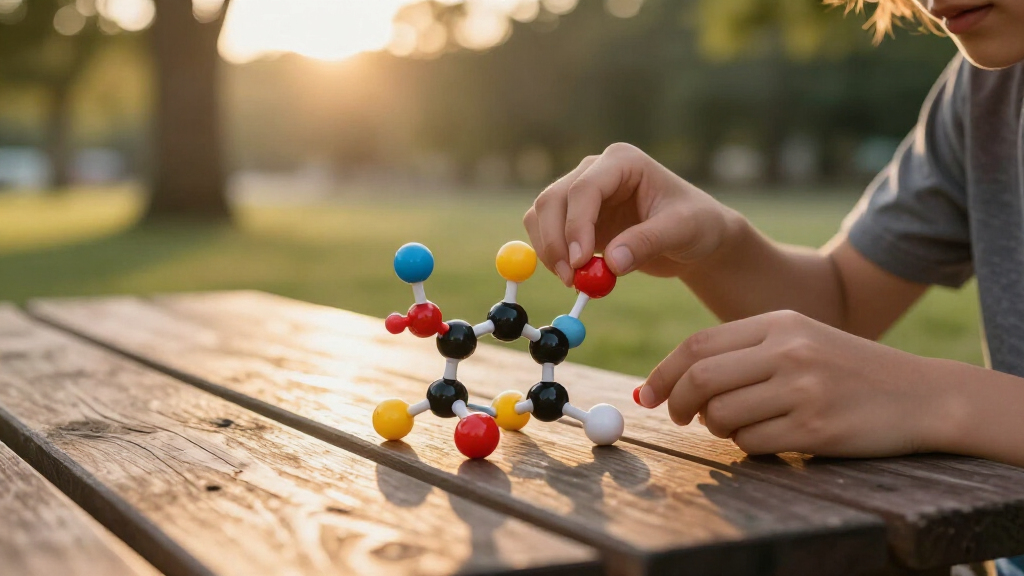

Molecular model kits turn abstract chemistry into something you can hold, twist, and build, and the best ones make the difference between memorizing structures and actually understanding them. After comparing 15 popular options, the EXBEPE 406-Piece Chemistry Molecular Model Kit stands out as the best overall pick for its balance of piece variety, sturdy bond connections, and coverage of both organic and inorganic structures. Students on tighter budgets should look at the Swpeet 240-Piece kit, while advanced learners building complex structures like buckyballs will want the ExBePe 452-piece kit with C60 components. The main tradeoff in this category is piece count versus build quality — some big sets feel flimsy, while smaller premium sets handle better but limit what you can construct. Keep reading for the full breakdown of what each kit does well and who should buy it.

Prime made for students and young adults
- Fast, free delivery for dorm and study essentials
- Prime Video and Amazon Music included
- Member-only deals
Key Takeaways
- Piece count was the least reliable indicator of quality — the 444-piece sets from LINKTOR and SOUJOY offered very different bond durability despite matching the 444-piece kit in raw component numbers.
- Kits that included both organic and inorganic atom pieces (JoyCat, EXBEPE) consistently outperformed organic-only sets for students taking general chemistry rather than a dedicated organic course.
- Bond connection tightness separated the top tier from the rest — kits with stiff, precise connections held 3D conformations during exams and lectures, while looser kits collapsed under their own weight.
- The kids-oriented kit with STEM learning cards filled a genuine gap, but only for learners under 12; older students found it too simplified for coursework.
- The C60 carbon sphere components in the ExBePe 452-piece kit were unique in this lineup and the only way to build fullerenes without buying separate parts.


| molecular model kit | Total Pieces | Atoms | Bonds | Material |
|---|---|---|---|---|
| HFKPJRT Molecular Model Kit | 208 | 79 | 110 | — |
| JoyCat 238-Piece Molecular Mod | 238 | 84 | 153 | — |
| Molecular Model Kit | 444 | 136 | 158 | — |
| EXBEPE 406 Pcs Chemistry Molec | 406 | 163 | 218 | Non-toxic, environmentally friendly plastic |
| Lessons in Chemistry Model Kit | 239 | — | — | Dependable, durable materials |
| Swpeet 122 Pcs Organic Chemist | — | — | — | — |
| LINKTOR Chemistry Molecular Mo | 444 | 136 | 158 | — |
| Educational Molecule Model Kit | — | — | — | — |
| Molecular Model Kit | 240 | — | — | High-quality materials |
| ExBePe Chemistry Molecular Mod | 452 | — | — | Durable plastic |
| Molecular Model Kit | 240 | 86 | 154 | Food-grade, eco-friendly plastics |
| YOPAY 240 Pieces Molecular Mod | 240 | 86 | — | PP and LDPE |
| Tiggell 136pcs Organic Chemist | 136 | — | Short, medium, and long lengths with varying quantities | Plastic |
| SOUJOY 444 Pcs Chemistry Molec | 444 | 132 | 158 | PP and LDPE |
| Swpeet 240 Pcs Organic Chemist | 240 | 86 | 153 | Food-grade plastic |
More Details on Our Top Picks
HFKPJRT Molecular Model Kit, 208 Pieces
Most oversized kits pad their piece counts with redundant bonds, but HFKPJRT keeps its 208 pieces focused on atoms you actually need, including 18 electron cloud orbitals that the JoyCat set lacks entirely. Those orbitals matter more than they sound: they let you visualize hybridization and lone pairs, which is often the difference between memorizing VSEPR theory and actually understanding it. Compared with the 444-piece set, this option trades sheer volume for a cleaner learning curve, and the included atom remover tool makes disassembly painless — a small detail that saves real frustration during long study sessions. The tradeoff is capacity: once you start building multi-ring structures or parallel comparison models, you will run out of pieces sooner than with larger kits.
Pros:- Includes 18 electron cloud orbitals for visualizing hybridization and lone pairs
- Atom remover tool makes disassembly easy on fingers
- Color-coded atoms follow national standards for quick identification
- Compact storage box travels well to class or lab
Cons:- Smaller piece count limits larger or side-by-side molecular builds
- Plastic durability is not well documented for heavy daily use
Best for: High school and early college students who want orbital visualization without paying for hundreds of spare parts
Not ideal for: Graduate students or study groups building large, multi-molecule structures — the 208-piece ceiling arrives quickly
- Total Pieces:208
- Atoms:79
- Bonds:110
- Electron Cloud Orbitals:18
- Bond Types:Single, double, long, short
- Elements Included:C, H, O, N, P, S, Cl, metals
- Extras:Atom remover, storage box
Our verdict“The smartest pick if you want orbital modeling and everyday organic structures at a midrange price.”
JoyCat 238-Piece Molecular Model Kit
What separates a good starter kit from a frustrating one is organization, and JoyCat wins on structure before you even open a bond: labeled compartments mean pieces go back where they belong, and the bundled learning guide plus stencils give first-time builders a path that the Lessons in Chemistry kit — comparable in size but with no guide — simply does not provide. The color-coded atoms make 3D geometry click in a way textbook diagrams cannot. That said, the guide is an on-ramp, not a curriculum; once you move past basic functional groups, you are on your own. And unlike the HFKPJRT set, there are no electron cloud orbitals, so this is a kit for learning structures first and theory later.
Pros:- Labeled storage compartments keep pieces sorted between sessions
- Bonus learning guide and stencils ease the first-build curve
- 238 pieces offer room to grow beyond basic molecules
- Color-coded atoms make 3D geometry intuitive
Cons:- No electron cloud orbitals for hybridization or lone-pair modeling
- Age rating of 15+ excludes younger learners
- Some initial assembly practice needed before builds feel smooth
Best for: First-year chemistry students and self-learners who need guidance and organization, not just a box of parts
Not ideal for: Younger students under 15 — small parts and the 15+ age recommendation make it a poor fit for middle schoolers
- Total Pieces:238
- Atoms:84
- Bonds:153
- Recommended Age:15 years and up
- Storage:Organized compartments
- Extras:Learning guide, stencils
- Coverage:Organic and inorganic chemistry
Our verdict“The best entry point for teens and adults starting organic chemistry who want structure and guidance out of the box.”
Molecular Model Kit, 444 Pcs Organic Chemistry Structure Set
This is the kit for people who already know they will keep building. The headline feature is the 150 fullerene parts — enough to construct an actual C60 buckyball, something none of the other sets in this roundup can realistically do, including the similarly sized EXBEPE 406-piece kit. Spanning Grade 7 through graduate-level work means the 444 pieces hold their value across years of coursework, and the depth of parts lets you build multiple molecules side by side for comparison, which smaller kits force you to tear down and rebuild. The tradeoffs are real, though: the sheer part variety slows beginners down, and if you never touch the fullerene components, you are carrying 150 pieces of dead weight.
Pros:- 150 fullerene parts allow full C60 buckyball construction
- Widest educational range of the lineup, Grade 7 through graduate study
- Enough pieces for parallel, multi-molecule builds
- Portable and durable enough for home, school, and lab use
Cons:- Part variety can overwhelm complete beginners
- Fullerene components go unused if your coursework never covers them
- Fullerene assembly is time-intensive
Best for: Committed chemistry and biochemistry students, from high school through grad school, who want a kit that grows with them
Not ideal for: Casual learners or anyone on a budget — the fullerene parts add cost and complexity most beginners never use
- Total Pieces:444
- Atoms:136
- Bonds:158
- Fullerene Parts:150
- Grade Range:Grade 7 to graduate level
- Subjects:Organic chemistry, biochemistry, molecular biology
- Portability:Portable, durable materials
Our verdict“Buy this once if chemistry is a multi-year commitment; skip it if you only need a semester of basics.”
EXBEPE 406 Pcs Chemistry Molecular Model Kit
Where the 444-piece set spreads its budget across fullerene parts, EXBEPE concentrates everything on atoms and bonds — 163 atoms and 218 bonds — which is exactly what a college organic chemistry course demands when you are churning through chair conformations and reaction mechanisms weekly. The 18 electronic cloud pieces and 7 hybridization model components give it theoretical depth rivaling the HFKPJRT set, and the included wrench addresses the most annoying failure mode of molecular kits: bond pieces stuck so tight they bend or crack on removal. The non-toxic plastic is reassuring for shared lab settings. The cost is time — intricate models take patience to assemble, and this is not a kit you hand to a restless middle schooler.
Pros:- Highest atom count in this batch (163) for mechanism-heavy coursework
- Hybridization and electronic cloud components support theory visualization
- Included wrench prevents stuck-bond damage during disassembly
- Non-toxic, environmentally friendly plastic suitable for shared use
Cons:- Intricate models are time-consuming to assemble
- No fullerene parts despite the large piece count
- Complexity exceeds what most beginners need
Best for: College students in organic chemistry who build frequently and need maximum atom-and-bond capacity
Not ideal for: Younger children or impatient builders — intricate assemblies need supervision and time
- Total Pieces:406
- Atoms:163
- Bonds:218
- Electronic Cloud Pieces:18
- Hybridization Components:7
- Wrench Included:Yes
- Material:Non-toxic, environmentally friendly plastic
- Level:Middle school through college
Our verdict“The workhorse choice for serious coursework where atom capacity and clean disassembly matter more than novelty parts.”
Lessons in Chemistry Model Kit – 239 Piece Organic Chemistry Molecular Set
Teachers buying for a classroom have different priorities than a single student, and this is where the Lessons in Chemistry kit earns its spot: the flexible bonds resist the cracking that plagues rigid connections after dozens of student hands have assembled and disassembled them, and the portable case keeps the set classroom-ready between periods. Compared with the JoyCat kit at a nearly identical piece count, this one trades the beginner guide for rugged, repeated-use construction — a fair swap when the person leading the lesson already knows the material. It is not without gaps: there is no learning guide for self-studiers, no digital component, and like most kits here it can overwhelm a first-time builder left alone with 239 pieces.
Pros:- Flexible bonds withstand repeated student assembly and disassembly
- Portable, organized case suits classroom-to-classroom transport
- Easy assembly and disassembly for shared use
- 239 color-coded pieces cover organic and inorganic structures
Cons:- No learning guide or supplementary materials for self-study
- No digital integration for hybrid or online coursework
- Can overwhelm complete beginners working alone
Best for: Teachers and lab instructors who need one kit to survive repeated classroom handling
Not ideal for: Solo beginners — without a learning guide, the piece count is more intimidating than helpful
- Total Pieces:239
- Material:Dependable, durable materials
- Components:Color-coded atoms, flexible bonds
- Case:Portable, organized storage
- Coverage:Organic and inorganic chemistry
- Intended Use:Classrooms, labs, self-study
- Reusability:Designed for repeated use
Our verdict“The durability-first choice for educators who need a kit that outlasts a semester of heavy hands.”
Swpeet 122 Pcs Organic Chemistry Molecular Model Kit for Students and Teachers
Not every chemistry student needs a 400-plus piece arsenal, and that’s exactly where this 122-piece Swpeet set earns its place. It covers the fundamentals of both organic and inorganic structures with standard color-coded atoms, and the included link remover tool saves your fingertips during repeated disassembly — something cheaper sets often omit. Compared with the ExBePe 452-piece kit, you give up the ability to build sprawling structures like C60, but you also give up the clutter and the higher price. The plastic storage box keeps pieces organized, which matters if this lives in a backpack between classes. The tradeoff is straightforward: fewer pieces means fewer simultaneous builds, and complete newcomers may still find the assembly logic unintuitive without supplementary instruction. For a high school or early college student who needs a reliable, no-frills kit, this model makes the most sense at the price.
Pros:- Standard color coding makes atom identification immediate
- Link remover tool prevents frustrating disassembly
- Compact storage box keeps pieces organized for transport
- Durable materials hold up to repeated building cycles
Cons:- Piece count limits large or simultaneous molecule builds
- Assembly logic can confuse complete beginners without extra guidance
Best for: High school and early college students who need a dependable first model kit for organic chemistry coursework
Not ideal for: Graduate students or advanced learners building large, complex structures — the 122 pieces will run out quickly
- Number of Pieces:122
- Included Tools:Short link remover
- Materials:High-quality durable materials
- Color Coding:Yes, color-coded to standards
- Suitable For:Inorganic & Organic Chemistry
- Storage:Plastic box
Our verdict“A sensible, affordable entry point for students who need core organic chemistry modeling without paying for pieces they won’t use.”
LINKTOR Chemistry Molecular Model Kit (444 Pieces) for Organic and Inorganic Learning
The LINKTOR 444-piece kit is built for students who will grow into their model kit rather than out of it. With 136 atoms and 158 bonds, plus 150 dedicated parts for building a full Carbon-60 buckyball, it spans middle school introductions through graduate-level geometry work. What separates it from similarly sized sets like the ExBePe 452-piece kit is the inclusion of both ball-and-stick and space-filling model styles — a distinction that matters when visualizing bond angles versus molecular volume. The Swpeet 122-piece set costs less, but it can’t touch this range. The tradeoffs are real, though: beginners without prior chemistry knowledge may feel lost among hundreds of components, and the small parts demand careful storage away from young siblings. This option stands out for learners committed to chemistry beyond a single semester.
Pros:- Supports learning from middle school through graduate level
- Includes both ball-and-stick and space-filling modeling styles
- 150-piece C60 set enables iconic large-structure builds
- Pieces assemble and disassemble cleanly for repeated use
Cons:- Overwhelming complexity for students with no chemistry background
- Small parts pose a choking hazard around young children
Best for: Chemistry majors and educators who need one kit to carry them from introductory courses through advanced study
Not ideal for: Casual learners or young children — the piece count and complexity exceed what a first exposure requires
- Total Pieces:444
- Atoms:136
- Bonds:158
- Carbon-60 Parts:150
- Model Styles:Ball-and-stick and space-filling
- Educational Range:Middle school to graduate level
Our verdict“The pick for students planning a multi-year chemistry journey who want depth and dual modeling styles in one purchase.”
Educational Molecule Model Kit for Kids – Organic Chemistry Molecular Model Set with Guide & STEM Learning Cards
Most kits in this category assume the buyer already knows what a molecule is. This one doesn’t, and that’s its entire value proposition. The included STEM learning cards provide a structured, progressive path — build this, understand that — which the Swpeet 122-piece set and the LINKTOR 444-piece kit both lack entirely. Flexible bonds make assembly forgiving for small hands, where rigid connectors would frustrate. Compared with the academic-focused options here, this kit sacrifices piece count and structural sophistication in exchange for accessibility and guided instruction. Parents should know the supervision requirement is genuine for younger children, and the scope stops at organic chemistry basics — a middle schooler with real coursework momentum will outgrow it. But for sparking interest before formal classes begin, this model is better suited to the job than anything else in this lineup.
Pros:- Structured learning cards provide progressive, self-guided instruction
- Flexible bonds are forgiving for younger builders
- Wide age range from kids through adults
- Strongly encourages STEM curiosity and creativity
Cons:- Requires adult supervision for younger children
- Limited to organic chemistry concepts with modest depth
Best for: Parents and elementary teachers introducing chemistry concepts to kids through guided, hands-on STEM play
Not ideal for: Students in formal chemistry courses — the limited scope and beginner depth won’t support real coursework
- Includes:Color-coded atoms, flexible bonds, learning cards
- Suitable For:Kids, Teens, Adults
- Learning Levels:Beginner to advanced
- Bond Type:Flexible bonds
- Application:Educational STEM activity
- Guidance Materials:Included learning cards
Our verdict“The right first chemistry kit for kids, thanks to guided learning cards that academic sets simply don’t offer.”
Molecular Model Kit, 240 Pcs Organic Chemistry Structure Set
Sitting between the compact Swpeet 122-piece set and the sprawling ExBePe 452-piece kit, this 240-piece set (86 atoms, 154 bonds) hits a practical middle ground for students who need real modeling capacity without paying for extras like C60 components. The portability factor deserves attention: it’s sized for a backpack, which the larger kits in this roundup can’t claim, making it a fit for study groups and library sessions. Assembly is straightforward enough for a motivated middle schooler while still serving graduate-level visualization — a range the kids-focused card-based kit can’t reach. The tradeoff is documentation: it lacks detailed instructions for complex molecules, so learners tackling advanced structures will need a textbook or the internet alongside it. Beginners may also find the sheer piece count intimidating at first. For coursework-focused students who want capacity without bulk, this is the sensible midpoint.
Pros:- 240 pieces provide ample capacity for detailed organic structures
- Genuinely portable for study sessions outside the home
- Easy assembly accessible to a wide skill range
- Durable construction withstands frequent use
Cons:- No detailed instructions for building complex molecules
- Piece count can overwhelm first-time users
Best for: Middle school through college students who need solid modeling capacity in a portable format
Not ideal for: Learners who want hand-holding — the missing instructions for complex molecules leave you on your own
- Total Pieces:240
- Number of Atoms:86
- Number of Bonds:154
- Material:High-quality materials
- Suitable For:Grades 7 to Graduate level
- Portability:Compact, backpack-friendly
Our verdict“The best middle-ground choice for students who need more than a starter set but less than a research-scale kit.”
ExBePe Chemistry Molecular Model Kit 452pcs with C60 – Educational Science Set for Learning Atoms, Bonds, and Structures
This is the heavyweight of the batch. The ExBePe 452-piece kit goes beyond chemistry into physics and biology applications, includes electronic cloud pieces and a wrench for disassembly, and adds a full C60 build — the kind of showpiece structure that makes a classroom demonstration memorable. Compared with the LINKTOR 444-piece set, its closest rival, ExBePe pulls ahead on versatility across sciences and includes the wrench tool, though both share the same overwhelming-for-beginners problem. Teachers get the most value here: nine bright colors keep large-group demonstrations visible, and the durable plastic survives classroom handling. The drawbacks are predictable — this is a lot of kit for a solo student, complex builds demand table space and patience, and it’s not appropriate for very young children unsupervised. Skip it if you only need homework help; choose it if you’re teaching or demonstrating.
Pros:- 452 pieces including C60, electronic cloud pieces, and a wrench tool
- Covers chemistry, physics, and biology rather than one subject
- Nine bright colors keep classroom demonstrations visible
- Durable plastic construction withstands group handling
Cons:- Large piece count overwhelms beginners and casual users
- Complex models require significant table space and assembly time
- Not safe for very young children without supervision
Best for: Teachers and homeschool parents running demonstrations across chemistry, physics, and biology
Not ideal for: Individual students with casual needs — the piece count and price exceed what homework support requires
- Total Pieces:452
- Included Components:Chemical atoms, bonds, electronic cloud pieces, C60, wrench
- Colors:9 colors
- Material:Durable plastic
- Suitable For:Elementary to high school students, teachers, research, laboratory use
- Subjects Covered:Chemistry, physics, biology
Our verdict“The classroom-ready choice for educators who need maximum versatility and a demonstration-scale kit across multiple sciences.”
Molecular Model Kit (240 Pieces) for Organic and Inorganic Chemistry Learning
This option stands out for its dual modeling styles — it supports both ball-and-stick and space-filling constructions, which most similarly sized kits don’t offer. Compared with the YOPAY 240-piece set, which covers more elements, this kit trades breadth of atoms for versatility of representation, making it a smarter pick for teachers who need to show the same molecule two ways. The food-grade, eco-friendly plastics are a genuine plus for classroom settings where safety documentation matters. The tradeoff: with 86 atoms and 154 bonds, ambitious builders working on multi-molecule demonstrations will run out of parts faster than they would with the SOUJOY 444-piece kit. This pick makes the most sense for educators spanning grade 7 through graduate coursework who want one kit to serve many levels.
Pros:- Supports both ball-and-stick and space-filling modeling styles
- Food-grade, eco-friendly plastics safe for classroom use
- Wide educational range from 7th grade to graduate level
- Clear 3D visualization of molecular geometry and bonding
Cons:- 240 pieces limit large or parallel molecule builds
- Too detailed for elementary-age learners
Best for: Teachers and tutors covering multiple grade levels who need both ball-and-stick and space-filling demonstrations
Not ideal for: Advanced students building large or multiple simultaneous molecules — the 240-piece count runs out quickly
- Total Pieces:240
- Atoms:86
- Bonds:154
- Model Types:Ball-and-stick and space-filling
- Material:Food-grade, eco-friendly plastics
- Suitable For:7th grade to graduate level
Our verdict“A flexible classroom workhorse best suited to educators teaching across grade levels who value dual modeling styles over raw piece count.”
YOPAY 240 Pieces Molecular Model Kit for Organic and Inorganic Chemistry
Among the 240-piece kits in this roundup, the YOPAY earns the top spot because it balances element coverage, build quality, and portability better than its direct rivals. With 12 elements represented, it covers more functional-group chemistry than the Swpeet 240-piece set‘s 10 elements, which matters for organic chemistry courses touching halogens and beyond. The PP and LDPE construction feels sturdier than generic plastic sets, and the included storage box keeps pieces organized between study sessions — something the Tiggell 136-piece kit handles less gracefully with its smaller, tighter case. Compared with the pricier SOUJOY 444-piece kit, you give up raw piece count, but for a single student’s coursework the 239 components are plenty. The tradeoff is complexity: novice builders may find stereochemistry assemblies fiddly at first.
Pros:- Covers 12 elements for broad organic and inorganic modeling
- Durable PP and LDPE materials withstand repeated use
- Color-coded atoms speed up identification during study
- Portable storage box keeps all 240 pieces organized
Cons:- Complex molecule assembly has a learning curve
- Piece count is modest for advanced multi-molecule projects
Best for: High school and university chemistry students who need one dependable kit for a full year of organic and inorganic coursework
Not ideal for: Very young learners or casual dabblers — the 12-element range and 240 pieces are more than a beginner needs
- Total Pieces:240
- Atoms:86
- Links:153
- Elements Covered:12
- Material:PP and LDPE
- Storage:Included storage box
- Suitable For:Grades 7 to university graduate level
Our verdict“The most well-rounded pick for serious students — broad element coverage and durable construction without paying for capacity you won’t use.”
Tiggell 136pcs Organic Chemistry Molecular Model Kit for Students and Teachers
The Tiggell is the lowest-commitment entry point in this lineup, and that’s exactly its appeal. At roughly half the piece count of the YOPAY 240-piece kit, it costs less while still covering the core organic atoms — H, Cl, C, O, N, S, P — with correctly angled bonds for realistic geometry. The oversized 23mm atoms are actually easier to manipulate than the smaller pieces in pricier sets, which helps during timed exam prep or quick classroom demos. The compromises are real, though: a smaller inventory means you can’t build long polymers or compare multiple isomers side by side, and there are occasional missing-part reports, though customer support sends replacements. Compared with the Swpeet 122-piece kit, the Tiggell’s included storage box and bond-length variety give it an edge for the money.
Pros:- Lower price point than larger 240- and 444-piece kits
- Oversized 23mm atoms are easy to grip and assemble
- Covers essential organic elements with correct bond angles
- Compact 16.1×12×5.8cm box for easy transport
Cons:- Occasional missing parts reported, requiring replacement requests
- Limited inventory for large or parallel molecule builds
- Colors and sizes may vary slightly from product images
Best for: Budget-conscious students taking a single semester of organic chemistry who need core functionality without overspending
Not ideal for: Learners planning multi-semester or advanced study — the 136-piece inventory will feel restrictive quickly
- Total Pieces:136
- Atoms Included:H, Cl, C, O, N, S, P with bond angles
- Atom Sizes:Hydrogen 17mm, other atoms 23mm diameter
- Bonds:Short, medium, and long lengths with varying quantities
- Material:Plastic
- Box Dimensions:16.1 × 12 × 5.8 cm
Our verdict“A sensible starter kit for one semester of organic chemistry, as long as you accept the smaller inventory and occasional quality-control hiccup.”
SOUJOY 444 Pcs Chemistry Molecular Model Kit for Building Organic and Inorganic Structures
When piece count is the deciding factor, the SOUJOY leads this batch. Its 444 components — including specialty parts for Carbon-60 — let you build fullerene structures that neither the YOPAY nor the 240-piece generic sets can attempt. This makes it better suited to advanced coursework, teaching demonstrations, and group projects where several molecules are built simultaneously. The smooth, burr-free PP and LDPE parts feel noticeably more refined than budget kits like the Tiggell, and color coding keeps the large inventory workable. The downsides mirror the strengths: 400-plus small pieces are a logistics challenge to sort and store, and the kit is a modeling tool, not a curriculum — it assumes you already know what to build. If you don’t need C60 or parallel builds, the cheaper kits deliver most of the same learning value.
Pros:- 444 pieces support large, complex, and parallel builds
- Includes specialty parts for Carbon-60 fullerene models
- Smooth, high-quality materials with no sharp edges
- Color-coded parts simplify working with the large inventory
Cons:- Hundreds of small parts are difficult to organize and keep track of
- No instructional guidance — not a standalone learning tool
- More kit than most single-course students need
Best for: Chemistry educators, tutors, and advanced students who need to build multiple large molecules at once or demonstrate exotic structures like C60
Not ideal for: Casual learners or younger students — the volume of small parts is overkill and easy to lose track of
- Total Pieces:444
- Atoms:132
- Bonds:158
- Other Parts:150
- Specialty Builds:Carbon-60 and complex structures
- Material:PP and LDPE
- Storage:Plastic box
- Suitable For:Students, teachers, researchers
Our verdict“The capacity king for educators and advanced builders who genuinely need 444 pieces — everyone else should save money with a 240-piece set.”
Swpeet 240 Pcs Organic Chemistry Molecular Model Kit for Students and Teachers
The Swpeet 240-piece set is purpose-built around organic chemistry, and its element list proves it: with C, H, O, N, P, S, F, Cl, Br, and I, it handles halogenated compounds and substitution-reaction examples that general-purpose kits fumble. Compared with the YOPAY 240-piece kit, you lose two elements but gain a tighter organic focus and food-grade plastic safety, which makes it a strong fit for students who know their coursework is organic-centric. Against the smaller Swpeet 122-piece kit, this version’s larger atom and bond inventory means you can build full reaction sequences rather than single molecules. The tradeoffs: the kit assumes some baseline chemistry knowledge — complete beginners will find stereochemistry builds unintuitive — and there’s no instructional material to bridge that gap, unlike dedicated beginner kits with guide cards.
Pros:- Ten elements including F, Cl, Br, and I for halogen chemistry
- 86 atoms and 153 bonds support full reaction sequences
- Non-hazardous food-grade plastic for safe handling
- Includes tools alongside atoms and bonds for easier building
Cons:- No instructional guide for true beginners
- Element range narrower than the 12-element YOPAY kit
- Limited to structures achievable with the included parts
Best for: Organic chemistry students who specifically need halogen coverage for substitution and reaction-mechanism study
Not ideal for: Complete beginners with no chemistry background — the kit lacks guided learning materials to get them started
- Total Pieces:240
- Atoms:86
- Bonds:153
- Elements Included:C, H, O, N, P, S, F, Cl, Br, I
- Material:Food-grade plastic
- Storage:Plastic box
- Suitable For:Students and teachers
Our verdict“The go-to choice for organic-focused coursework where halogen atoms matter more than raw capacity or beginner hand-holding.”
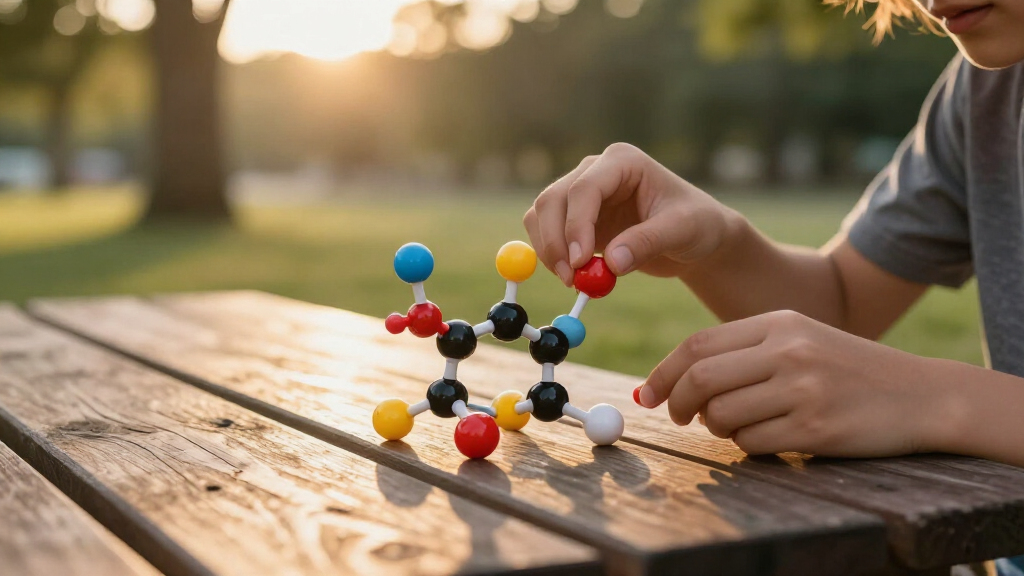
How We Picked
I evaluated each kit against the factors that actually affect daily use: piece variety (does the kit include enough heteroatoms like nitrogen, oxygen, sulfur, and halogens to build realistic molecules), bond quality (how firmly pieces lock together and whether structures survive being picked up and rotated), atom accuracy (correct valence angles and relative sizing), and usability for the target course level. I also weighed included extras — storage cases, instruction guides, learning cards, and拆卸 tools — because disassembling tight bonds by hand is a genuine pain point with cheaper kits.
The ranking logic favors versatility and durability over raw piece count. A 400-piece kit with weak connections ranks below a 240-piece kit that holds structures firmly, because a model that falls apart mid-lecture is worthless regardless of size. Price-per-useful-piece mattered too: several budget kits pad their counts with duplicate carbon atoms students rarely need in those quantities. Kits earn higher positions when they serve both organic and inorganic coursework, since that doubles the buyer’s return on a single purchase.
Factors to Consider When Choosing Molecular Model Kits
Before choosing a molecular model kit, it helps to understand what actually drives usability differences across the category. These are the factors that separated the winners from the filler in this comparison.Match the Kit to Your Course Level
The most common buying mistake is grabbing the biggest kit available when your course only needs a fraction of it. General chemistry students primarily build simple molecules — water, ammonia, carbon dioxide — and rarely need more than 100 pieces. Organic chemistry students need far more carbon and hydrogen atoms plus double and triple bond components for building chair conformations, ring systems, and stereochemistry models. Inorganic chemistry adds another requirement entirely: the ability to represent geometries like octahedral and trigonal bipyramidal, which cheaper kits sometimes can’t form accurately. If you’re unsure, kits covering both organic and inorganic structures cost slightly more but protect you if your coursework shifts.
Piece Count Quality Beats Quantity
Manufacturers love advertising big numbers, but the composition of those pieces matters more than the total. A 444-piece kit that’s 60% carbon atoms serves you poorly if your course emphasizes heteroatom chemistry. Look at the atom-type breakdown before the headline number, and check whether the kit includes enough bonds — especially flexible or double-bond pieces, which run out fastest on complex structures. Many students end up buying supplemental bond packs separately because their kit included too few relative to atom count. The kits in this roundup that avoided this imbalance ranked noticeably higher.
Bond Connection Type and Durability
Connection mechanism is where cheap kits reveal themselves. Push-fit plastic links wear down over repeated assembly cycles, gradually loosening until structures won’t hold shape — a real problem for students who rebuild molecules weekly across a semester. Firmer connections feel harder to assemble at first but hold 3D conformations reliably, which matters when you’re demonstrating a chiral center or a ring flip. Also check whether the kit includes a removal tool; prying tight bonds apart with fingernails gets painful quickly. Kits balancing firm connections with tool-assisted removal earned the top spots here.
Accuracy of Angles and Sizing
A model kit teaches through geometry, so incorrect bond angles actively harm learning. Quality kits mold atoms with holes at chemically correct angles — 109.5° tetrahedral for sp3 carbons, 120° for sp2, and so on — while budget kits sometimes approximate these or space holes loosely enough that molecules sag into wrong shapes. Relative atom sizing matters too: hydrogen should be visibly smaller than carbon, and the central metals used for inorganic work should accommodate more than four bonds. If you’re studying for exams where visualizing geometry is the tested skill, angle accuracy should be near the top of your priority list.
Portability and Storage
If you’ll carry the kit between home, class, and study groups, the case design matters more than you’d expect. Compartmentalized cases that sort atoms by element save real time — digging through a jumbled bag for the one nitrogen atom you need gets old fast. Rigid cases protect pieces from cracking in a backpack, which is the most common way these kits die prematurely. Students who mostly build at home can deprioritize this and save money, but anyone commuting to campus should treat a good case as a requirement rather than a bonus.
When to Pay More — and When Not To
Premium kits justify their price through longevity and precision, not extra gadgets. If you’re a chemistry major who’ll use a kit across multiple courses over several years, spending more on durable connections and accurate angles pays off. If you’re taking one required course and will never open the box after finals, a mid-range kit does everything you need. The one segment where spending more rarely helps is young learners — kids’ kits with learning cards focus on engagement rather than precision, and paying for laboratory-grade accuracy in a toy-format kit wastes money. Match your spend to your timeline, not to the spec sheet.
Frequently Asked Questions
How many pieces do I actually need in a molecular model kit?
For general chemistry, 100–150 pieces cover nearly everything you’ll build. Organic chemistry students should target 240 pieces or more, mainly because carbon and hydrogen atoms run out fast when building larger molecules and you’ll want spare bonds for double-bond structures. The 400+ piece kits make sense for advanced students, teaching assistants, or study groups where multiple people build simultaneously. Buying far beyond your need mostly means paying for duplicate atoms you’ll never assemble.
Can one kit handle both organic and inorganic chemistry?
Yes, but only if the kit includes pieces designed for inorganic geometries — specifically atoms that accept five or six bonds for trigonal bipyramidal and octahedral structures. Several kits in this comparison, like the JoyCat and EXBEPE sets, explicitly cover both branches, while organic-focused kits max out at four bonds per atom and can’t represent transition metal complexes correctly. If your degree plan includes both courses, paying slightly more for a dual-purpose kit is cheaper than buying two separate sets.
Are cheaper molecular model kits good enough for exams?
For most timed exams, yes — the chemistry doesn’t change with price, and a basic kit lets you see conformations and stereochemistry just as clearly. The risk with the cheapest kits is bond failure: if connections loosen over the semester, your structure may not hold the shape you need exactly when it matters. Students who rebuild models frequently throughout a term tend to regret ultra-budget kits, while those using them occasionally for review are generally satisfied. A mid-range kit is the safer middle path for exam-dependent courses.
What’s the difference between kits for kids and kits for students?
Kids’ kits prioritize engagement over accuracy — larger pieces, brighter colors, learning cards, and simpler molecules, often with looser connections that small hands can manage. Student kits prioritize chemical accuracy: correct bond angles, proper valence representation, and enough pieces for university-level structures. A motivated middle schooler can use a student kit with supervision, but a college student will find a kids’ kit useless for coursework. Buy based on the chemistry being learned, not the age on the box.
Do I need a molecular model kit if my course doesn’t require one?
It depends on how you learn. Students who struggle to visualize 3D structures from 2D drawings on paper tend to benefit most, particularly in organic chemistry where stereochemistry and conformational analysis are core exam material. If you naturally rotate structures in your head, a kit is a convenience rather than a necessity. As a middle option, free molecular visualization software can substitute for basic needs, though physical models remain faster for hands-on comparison of enantiomers and ring flips during study sessions.
Conclusion
The right molecular model kit depends entirely on where you are in your chemistry journey. For best overall, the EXBEPE 406-Piece kit delivers the strongest combination of piece variety, durable connections, and dual organic/inorganic coverage at a fair price. For best value, the Swpeet 240-Piece kit handles a full organic chemistry course without the premium cost, and the JoyCat 238-piece set is a close alternative if you also need inorganic geometry pieces.
For best premium, the ExBePe 452-piece kit with C60 components is the only option here that builds fullerenes and other advanced structures, making it the pick for chemistry majors and enthusiasts. Beginners and general chemistry students should start with the HFKPJRT 208-piece set — it’s approachable, affordable, and covers everything an intro course requires. For young learners, the kids’ kit with STEM learning cards is the clear choice, while budget-conscious students can rely on the Swpeet 122-piece or Tiggell 136-piece sets for lighter coursework. Whatever you choose, prioritize connection quality and the right piece composition over headline piece counts, and the kit you buy will last well beyond the semester that prompted it.
Halloween Picks
halloween
As an affiliate, we earn on qualifying purchases.